
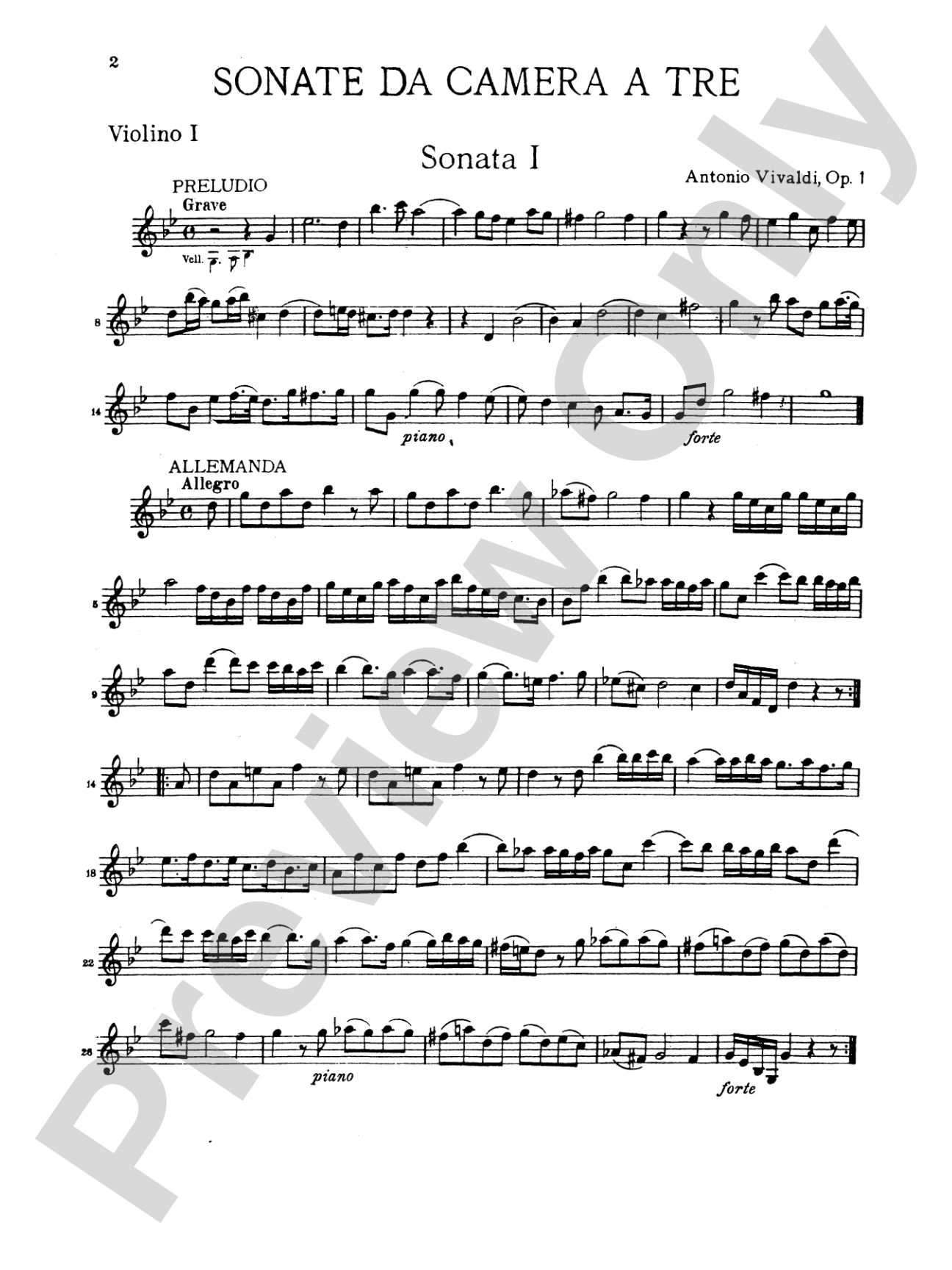
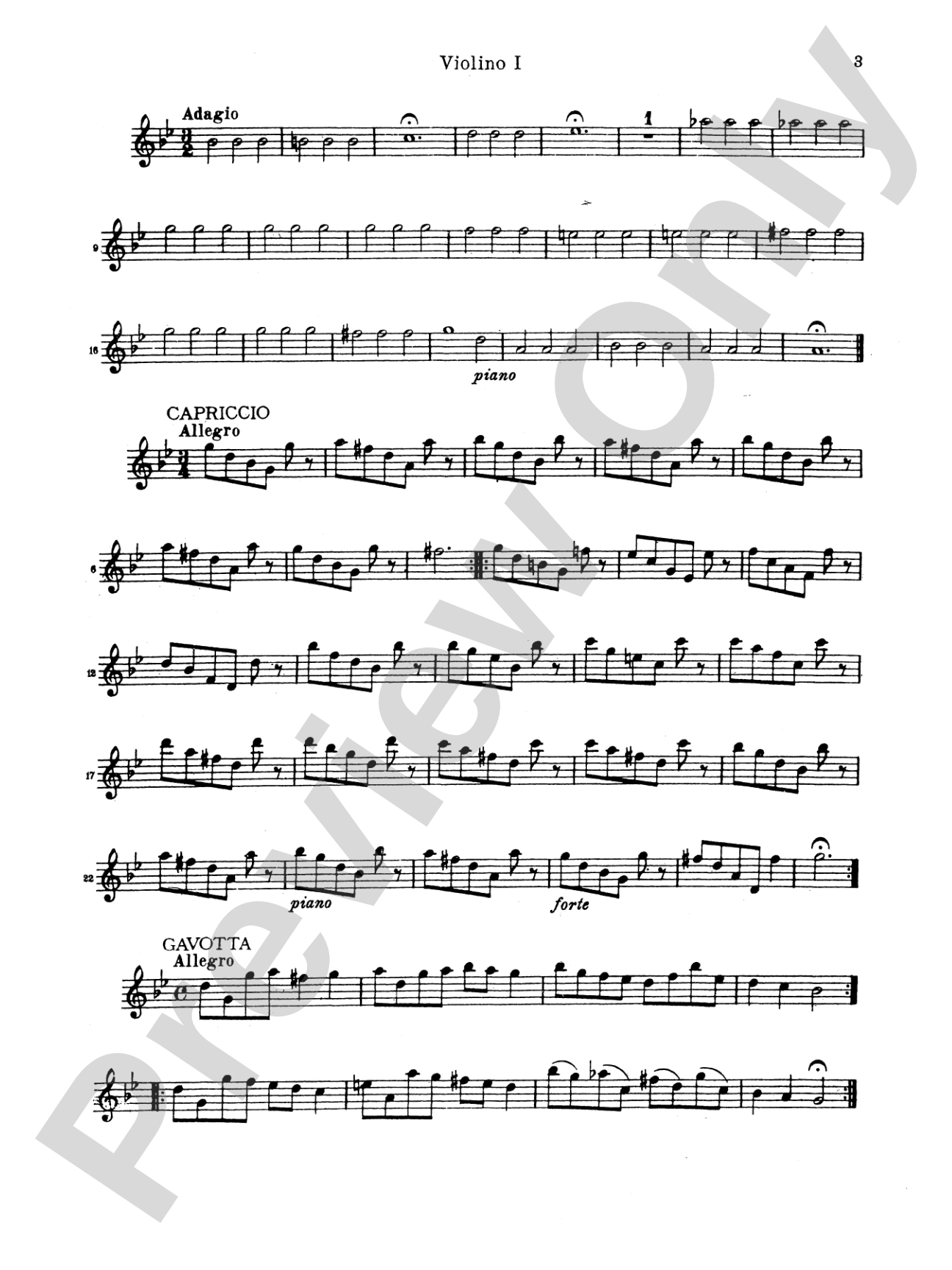

Vivaldi: Sonatas da Camera a Tre (Book I, Nos. 1-6): String Trio Score & Parts
By Antonio Vivaldi
Item: 00-PK-0003615

$17.99
Pickup currently not available
Buy Extra Parts (Digital PDF Download)
Parts Added to Cart!
Related Items
Sonatas da Camera a Tre, Opus 1 (Volume I, Nos. 1-6): String Trio Score & Parts |
$17.95
|
View |
Description


Don't just read it, hear it, play along with it, and watch your students grow with it. In MakeMusic Cloud, Vivaldi: Sonatas da Camera a Tre (Book I, Nos. 1-6): String Trio Score & Parts comes alive with professional accompaniment, adjustable tempo, and built-in practice tools that turn solo practice into real progress.
Open in the Player
Jump straight in and assign it today.
Start Your Free Trial
Open this title and explore the full library in minutes.
Sample Audio
No sample audio found.
Sample Video
No sample videos found.
Additional Details
Series:
Kalmus Edition
Publisher:
Alfred Music
Page Count:
32
SKU:
00-PK-0003615
Instrumentation:
with Piano
More about this title
About the Composer: Antonio Vivaldi
Antonio Vivaldi (1678-1741) was a Venetian priest and virtuoso violinist whose prolific output shaped the Baroque concerto and chamber music repertoire. His mastery of string writing and rhythmic vitality established models that composers across Europe studied and emulated for generations.
Vivaldi's chamber works occupy a crucial space between intimate domestic music-making and public performance. The Sonatas da Camera demonstrate his gift for constructing compelling trio textures where each voice maintains independence while contributing to larger harmonic designs, a skill that became foundational to the Classical composers who followed.
Why we love this
These six sonatas offer your trio students direct access to authentic Baroque chamber writing without the density of later trio repertoire. The scoring balances real musical substance with achievable technical demands, making them ideal for advancing ensembles preparing for festival adjudication or seeking to build Baroque style literacy.
What to expect
These sonatas radiate the energy and rhythmic clarity of Venice's musical life. Each movement unfolds with graceful counterpoint and lyrical melody, balancing formal structure with spontaneous-sounding figuration that reflects Vivaldi's keyboard training and gift for instrumental color.
Who it's for
String trio ensembles working at intermediate to advanced levels who want to develop Baroque style and interplay. Chamber players preparing for competitions or recitals will find these works offer both musical substance and technical opportunity.
How to get the most out of it
- Shape each phrase with a sense of forward motion characteristic of Baroque practice; avoid the sustained, singing tone that works for Romantic repertoire.
- Balance the two violin parts carefully so that accompanying figures in the second violin remain audible without overwhelming the first violin's line.
- Work the cello and first violin as a duet in passages where the second violin provides harmonic foundation; this clarifies the trio texture and prevents muddiness.
- Coordinate articulation across all three parts to define phrase structure, since barlines alone do not always indicate where musical thoughts begin and end.
How to use it
Program one or more of these sonatas as period anchors on a chamber recital or as festival contest material where Baroque repertoire is required. They pair naturally with contemporary works by Corelli or Purcell, or they can stand alone on a concert devoted entirely to Venetian chamber music.
Skills your students will build
- Baroque bowing and articulation conventions
- Independent voice leading in trio texture
- Ornamentation and stylistic interpretation of Baroque melody
- Balance and dialogue between upper and lower voices
- Counting and executing rhythmic figures typical of Baroque dance forms