Vivaldi: Six Sonatas for Cello and Basso Continuo Sheet Music Preview

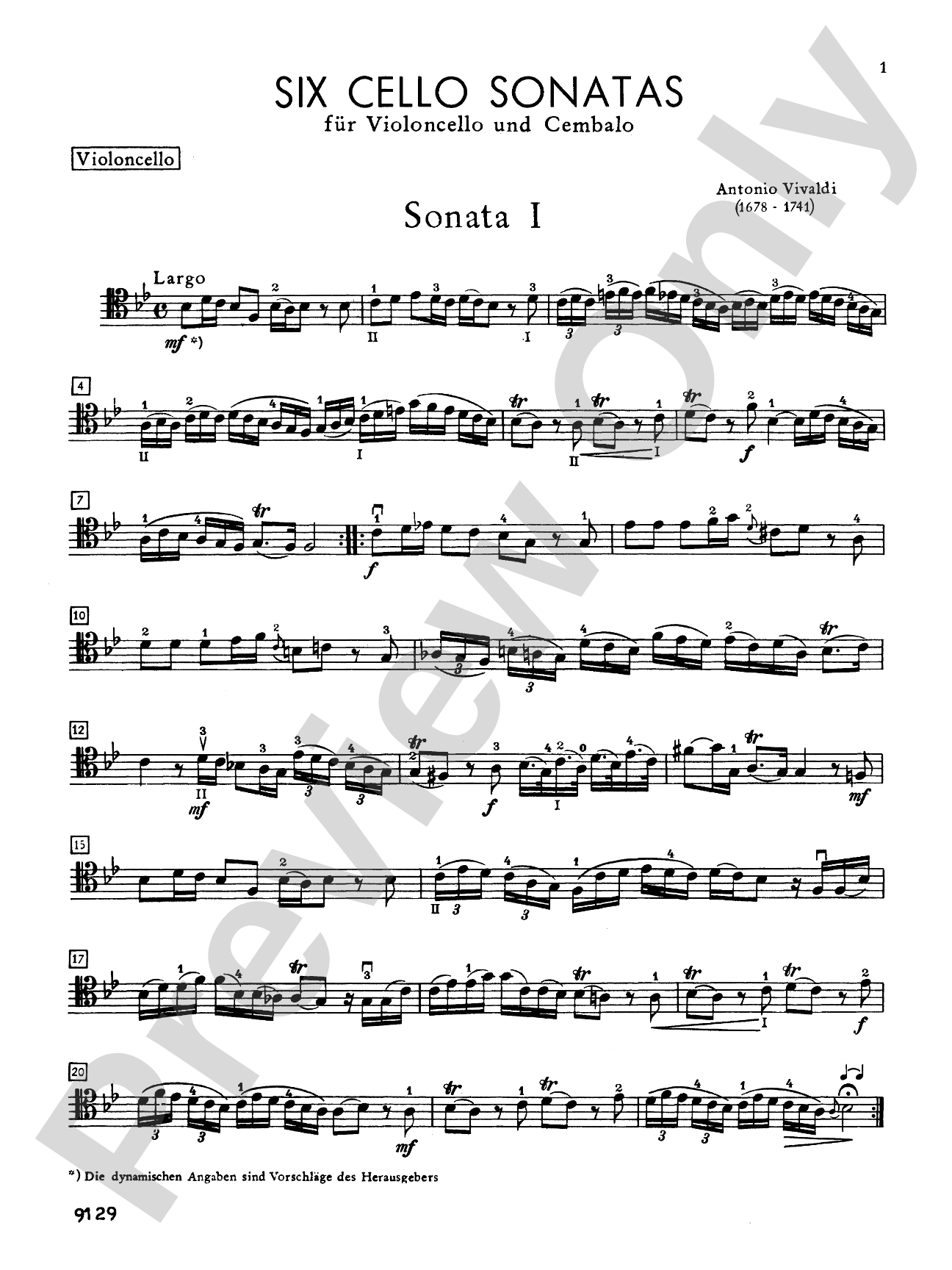
Vivaldi: Six Sonatas for Cello and Basso Continuo

By Antonio Vivaldi

Item: 00-PC-0011774

Digital Download
$0.99
Description
Complete score and parts, with keyboard or piano part.

Don't just read it, hear it, play along with it, and watch your students grow with it. In MakeMusic Cloud, Vivaldi: Six Sonatas for Cello and Basso Continuo comes alive with professional accompaniment, adjustable tempo, and built-in practice tools that turn solo practice into real progress.

Sample Audio
No sample audio found.
Sample Video
Additional Details
Series: Kalmus Edition
Publisher: Alfred Music
Page Count: 84
SKU: 00-PC-0011774

More about this title

About the Composer: Antonio Vivaldi

Antonio Vivaldi (1678-1741) stands as one of the most prolific composers of the Baroque era, with an output that shaped instrumental music across Europe. A virtuoso violinist himself, Vivaldi understood the technical and expressive possibilities of string instruments at a level few composers could match, and his cello works reflect both deep knowledge of the instrument and genuine affection for its voice.

Vivaldi's sonatas for cello represent a crucial moment in the instrument's development. Before his time, the cello was primarily a continuo instrument; Vivaldi helped establish it as a solo voice worthy of lyrical expression and technical display. His sonatas balance the emerging solo cello tradition with the Baroque continuo aesthetic, making them essential repertoire for cellists seeking to understand the instrument's baroque roots.

Why we love this

Vivaldi's sonatas sit at the sweet spot between melodic accessibility and genuine musical substance. The cello writing is idiomatic and comfortable on the instrument while remaining stylistically authentic to the period, making these works reliable for both strong student cellists and advanced amateurs preparing for concerto competitions or auditions.

What to expect

These sonatas breathe with the measured elegance and vocal lyricism characteristic of Vivaldi's instrumental writing. The cello emerges from its continuo role as a singing voice, supported by the keyboard's harmonic foundation, creating an intimate dialogue that balances virtuosity with expressive depth across movements that shift between lyrical slow passages and energetic allegros.

Who it's for

Advanced high school cellists, college-level students, and adult amateur cellists seeking foundational Baroque chamber repertoire. This collection works especially well for cellists preparing for music conservatory auditions or those exploring the cello's historical development alongside more familiar Romantic-era works.

How to get the most out of it

  • Treat the continuo part as an active collaborator, not accompaniment. The keyboard or piano should dialogue with the cello's phrases, particularly in the faster movements where a responsive basso continuo creates rhythmic vitality.
  • Shape long melodic lines with careful attention to phrase structure and harmonic movement. Vivaldi's sonatas reward singers on the cello; resist rushing and allow the Baroque phrasing to breathe naturally across bar lines.
  • Balance technical passage work with musical intention in fast movements. Sixteenth-note figurations should serve the harmonic and melodic design, not overshadow it with mere display.

How to use it

Program one or two of these sonatas on a chamber music recital featuring Baroque strings and continuo, pairing them with other period works for variety in key and character. They also serve as excellent educational programming for baroque music festivals or community concert series exploring the cello's pre-classical repertoire.

Skills your students will build

  • Reading Baroque phrasing and applying historically informed articulation
  • Sustaining lyrical melodic lines over harmonic changes
  • Collaborating with continuo accompaniment in real time
  • Building technical facility in Baroque figurations and passage work
  • Understanding the cello's role in transitioning from continuo to solo voice

You May Also Like