

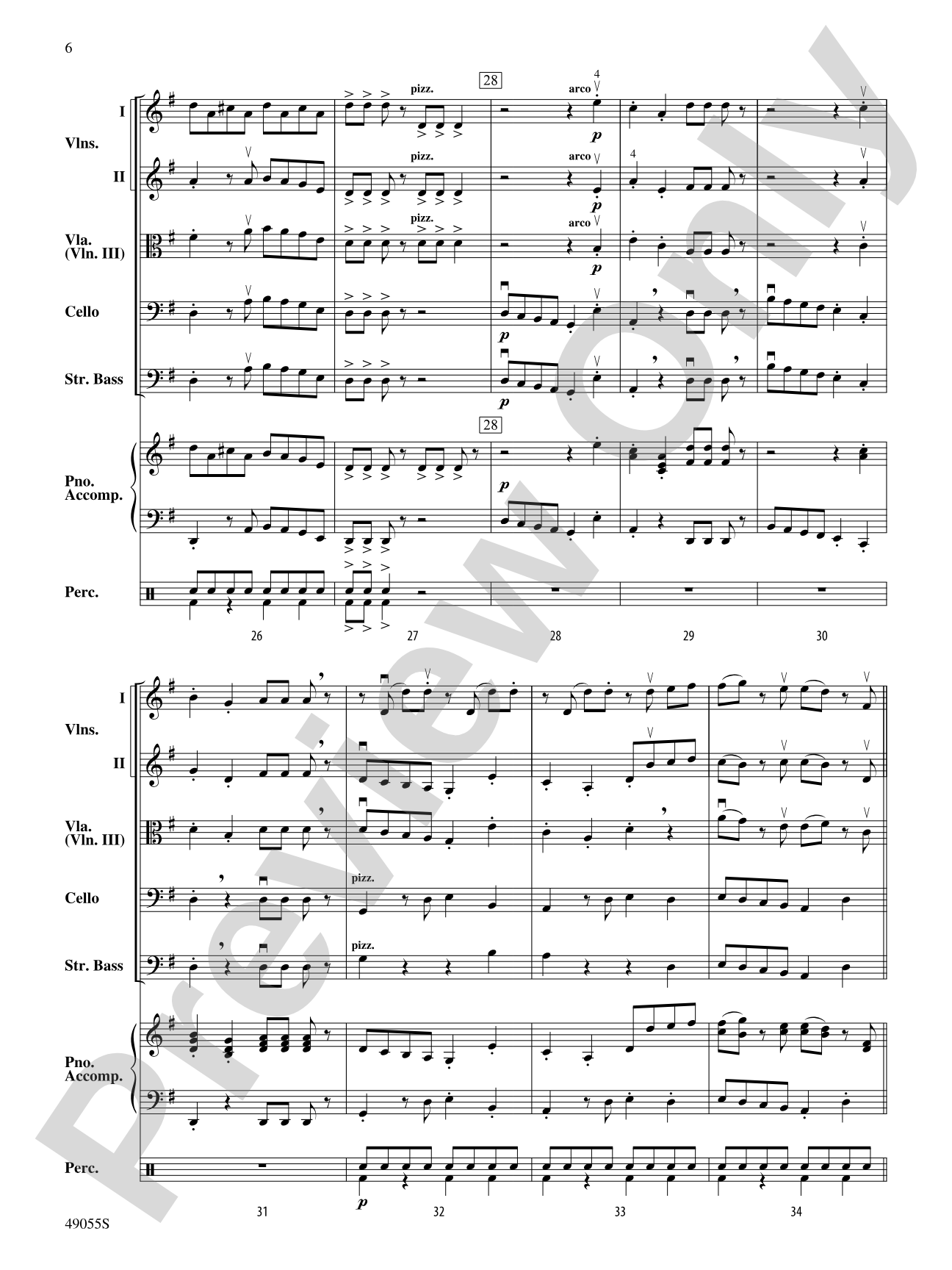
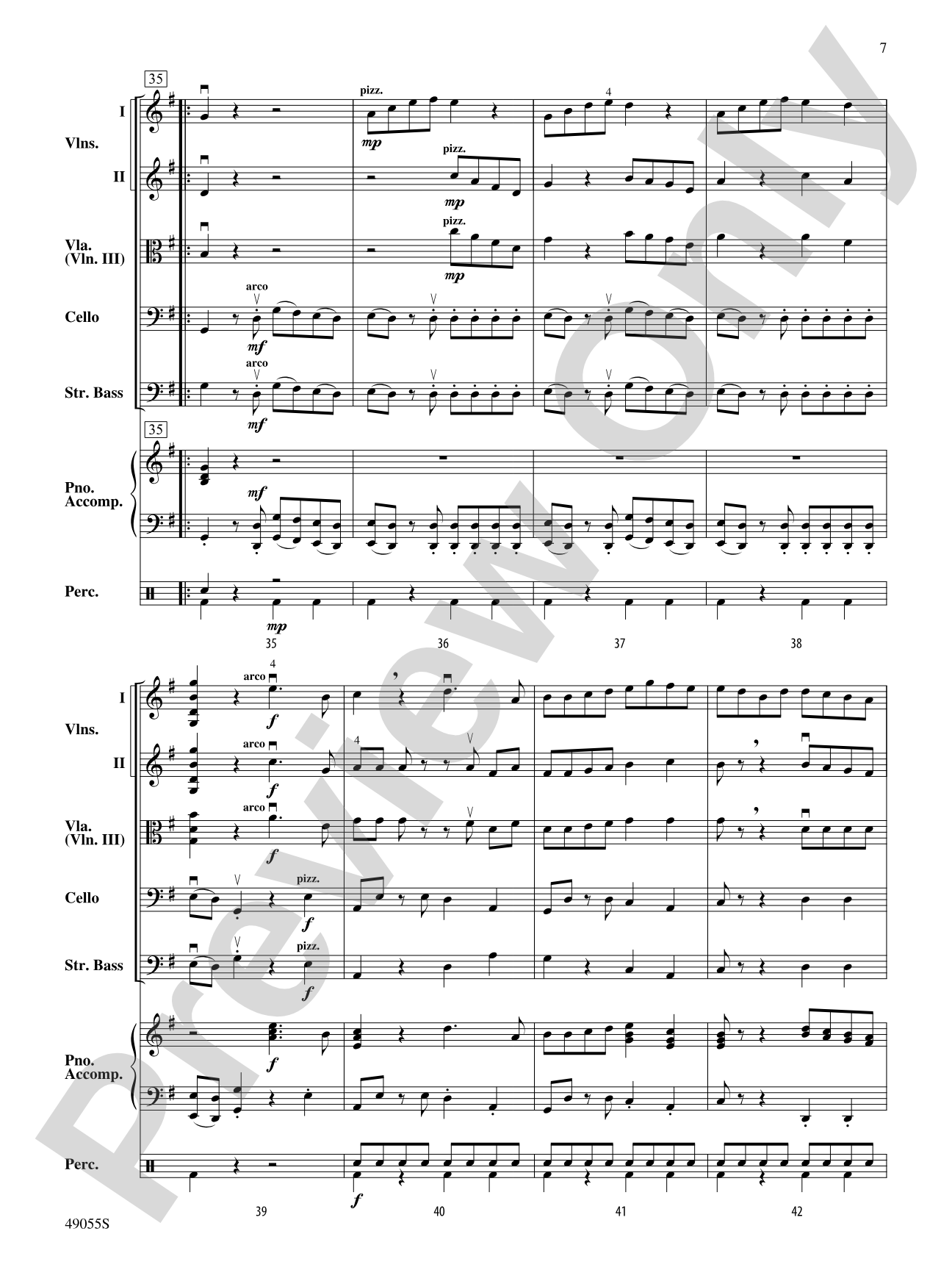
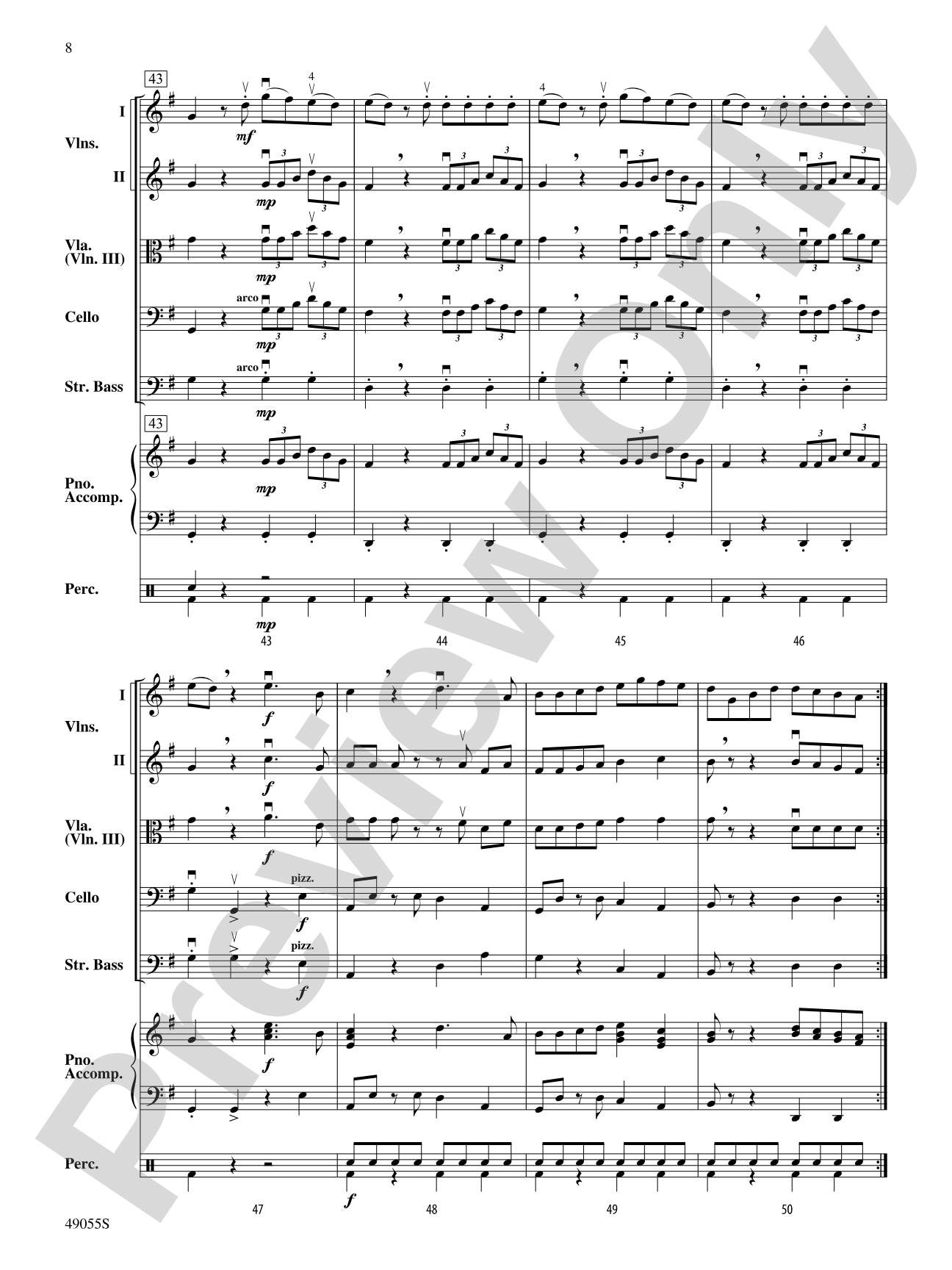
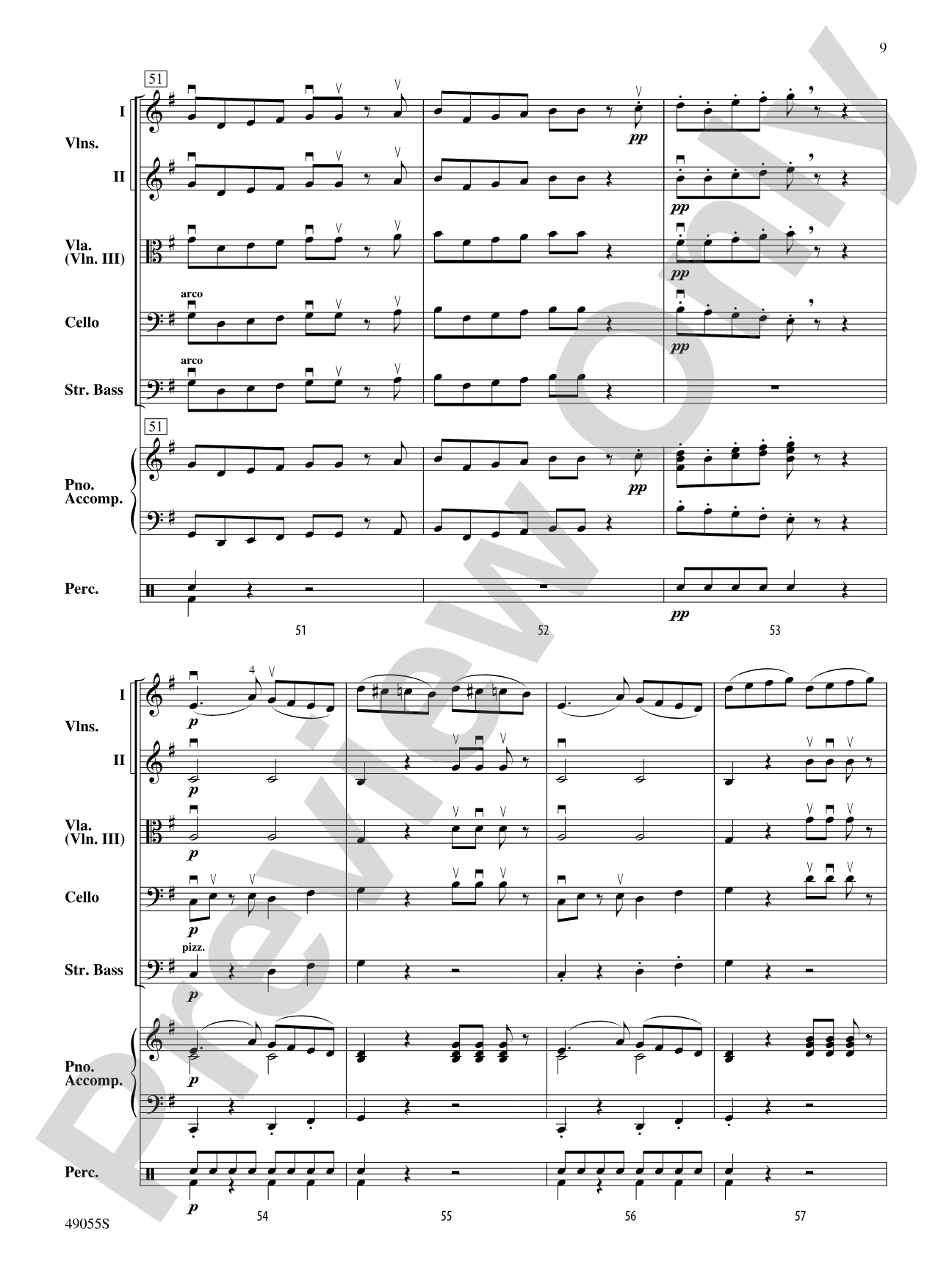
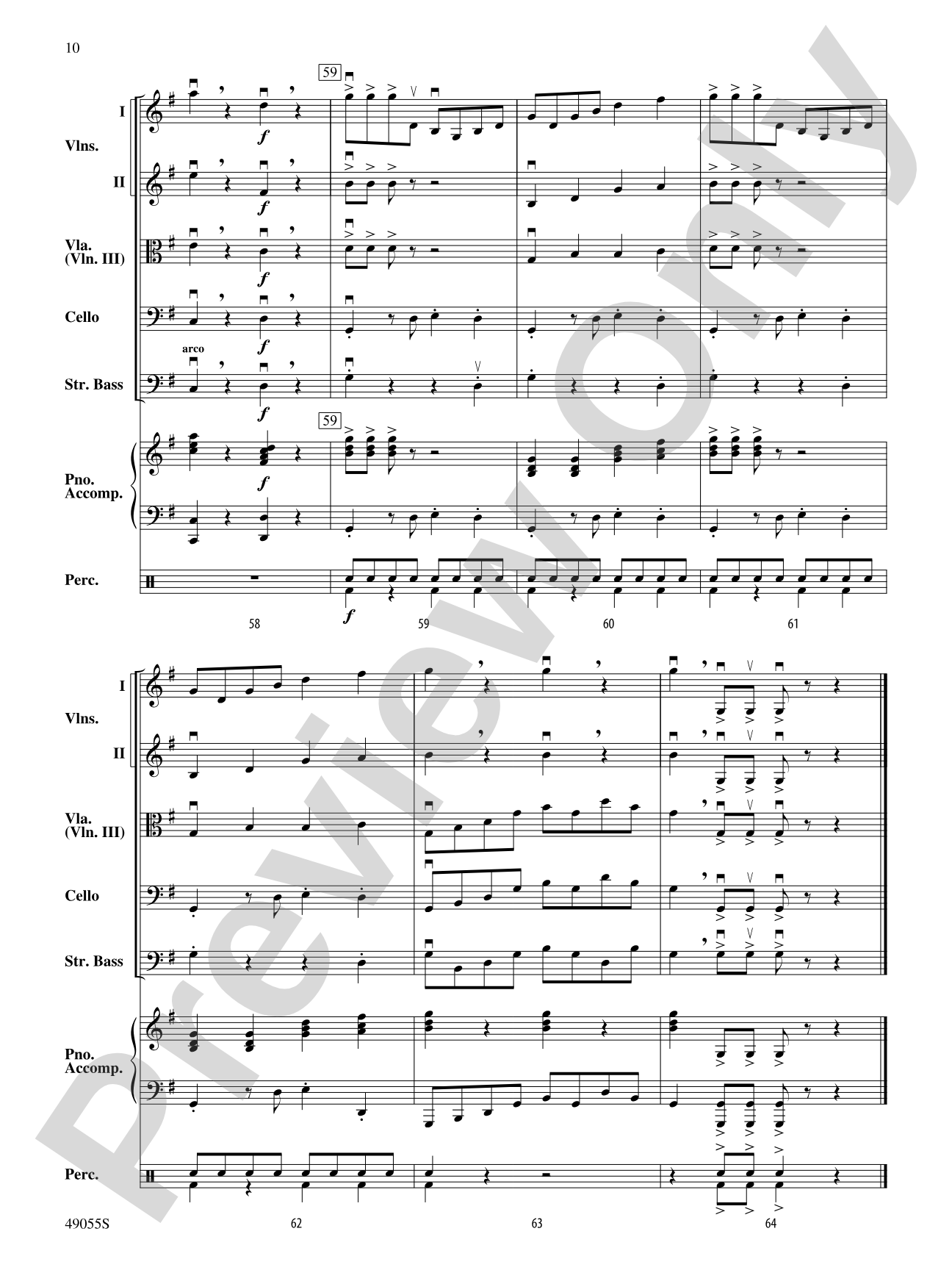

Viva Amadeus!: String Orchestra Conductor Score & Parts
Based on Eine Kleine Nachtmusik
By Wolfgang Amadeus Mozart / arr. Richard Meyer
Grade: 2
Item: 00-PK-0008360

$50.00
Pickup currently not available
Buy Extra Parts (Digital PDF Download)
| Product | Price | Quantity |
|---|---|---|
| Viva Amadeus!: Score | $9.00 | |
| Viva Amadeus!: 1st Violin | $3.00 | |
| Viva Amadeus!: 2nd Violin | $3.00 | |
| Viva Amadeus!: 3rd Violin (Viola [TC]) | $3.00 | |
| Viva Amadeus!: Viola | $3.00 | |
| Viva Amadeus!: Cello | $3.00 | |
| Viva Amadeus!: String Bass | $3.00 | |
| Viva Amadeus!: Piano Accompaniment | $3.00 | |
| Viva Amadeus!: 1st Percussion | $3.00 |
Parts Added to Cart!
Description
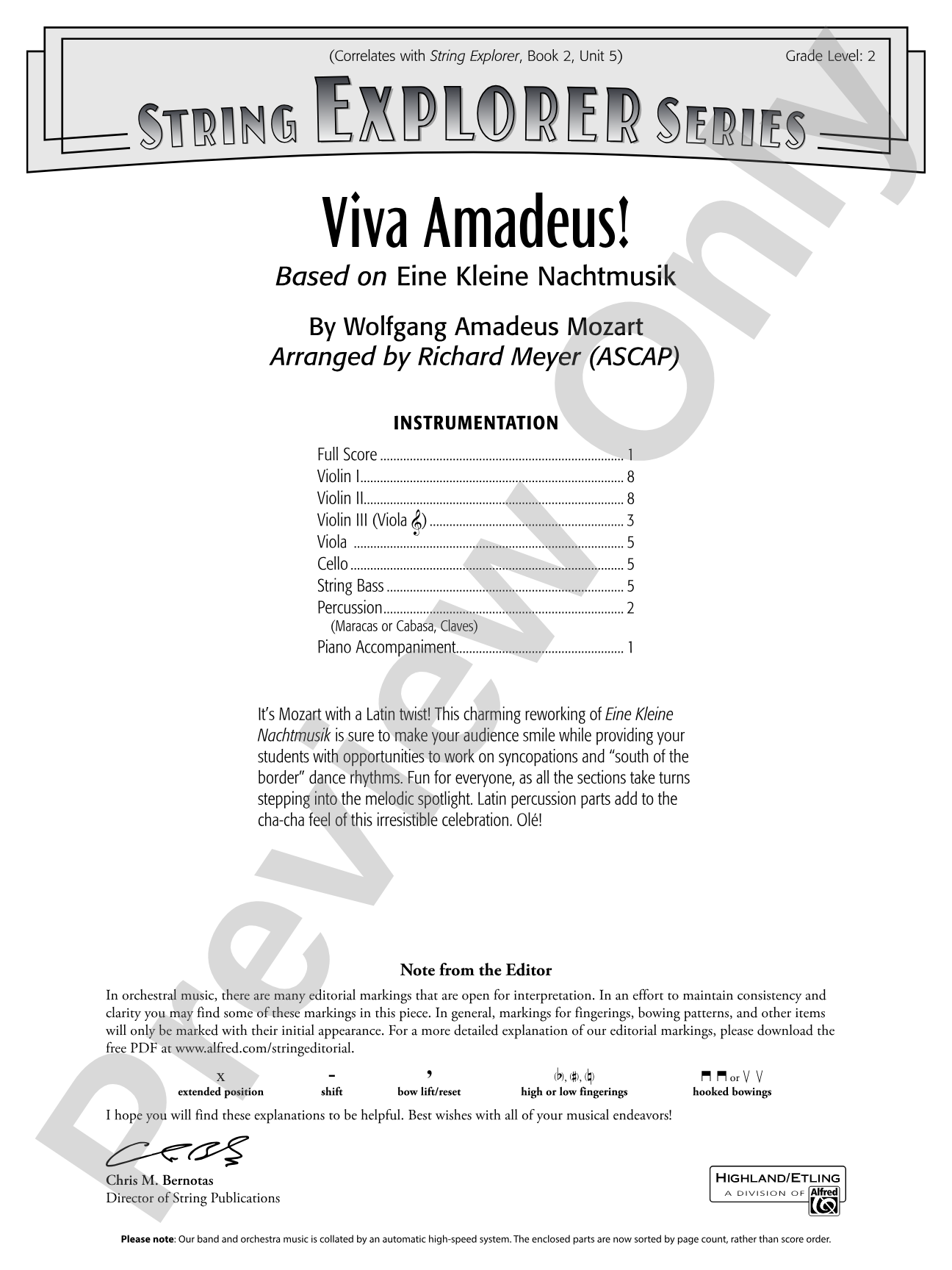
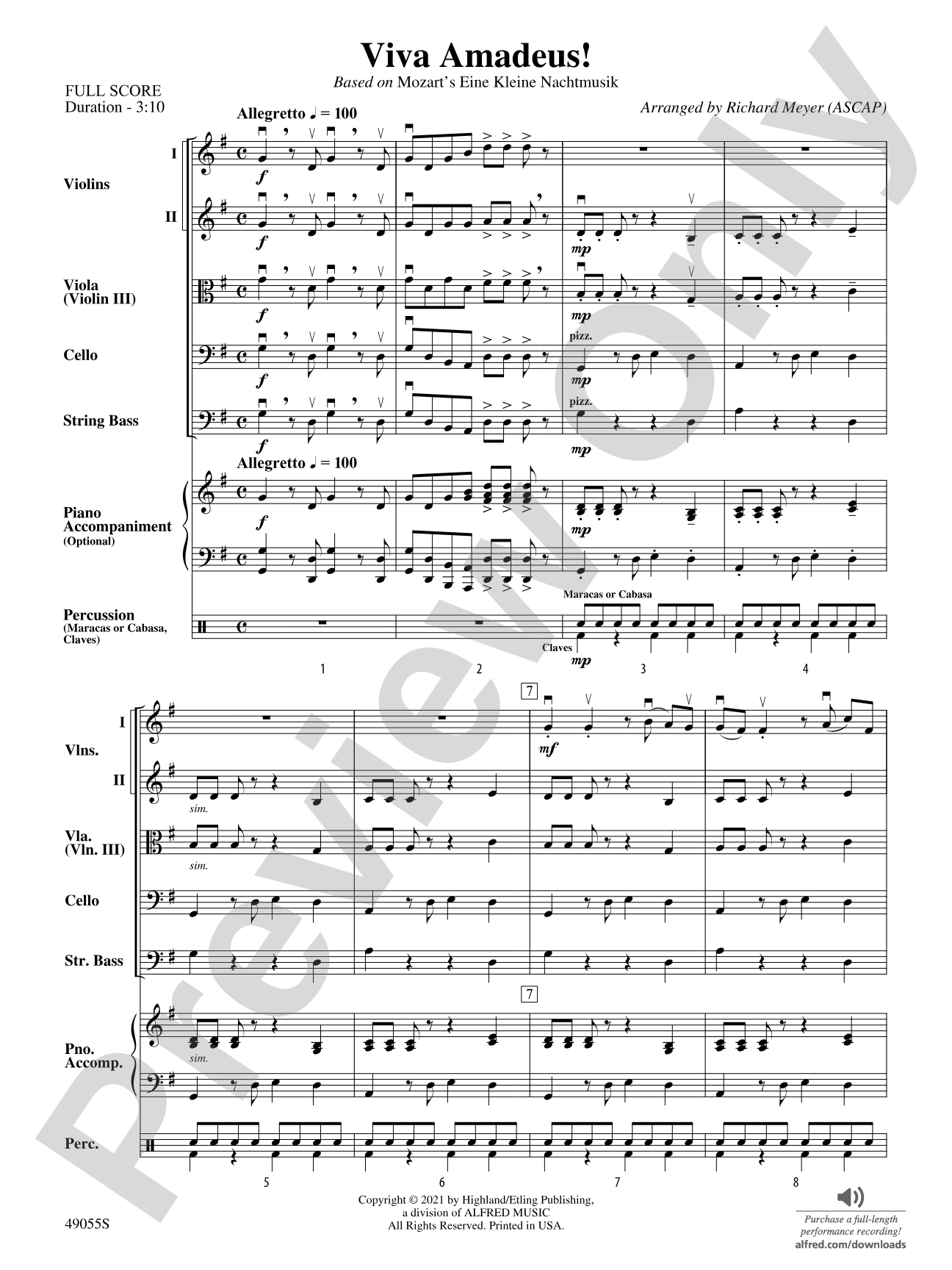
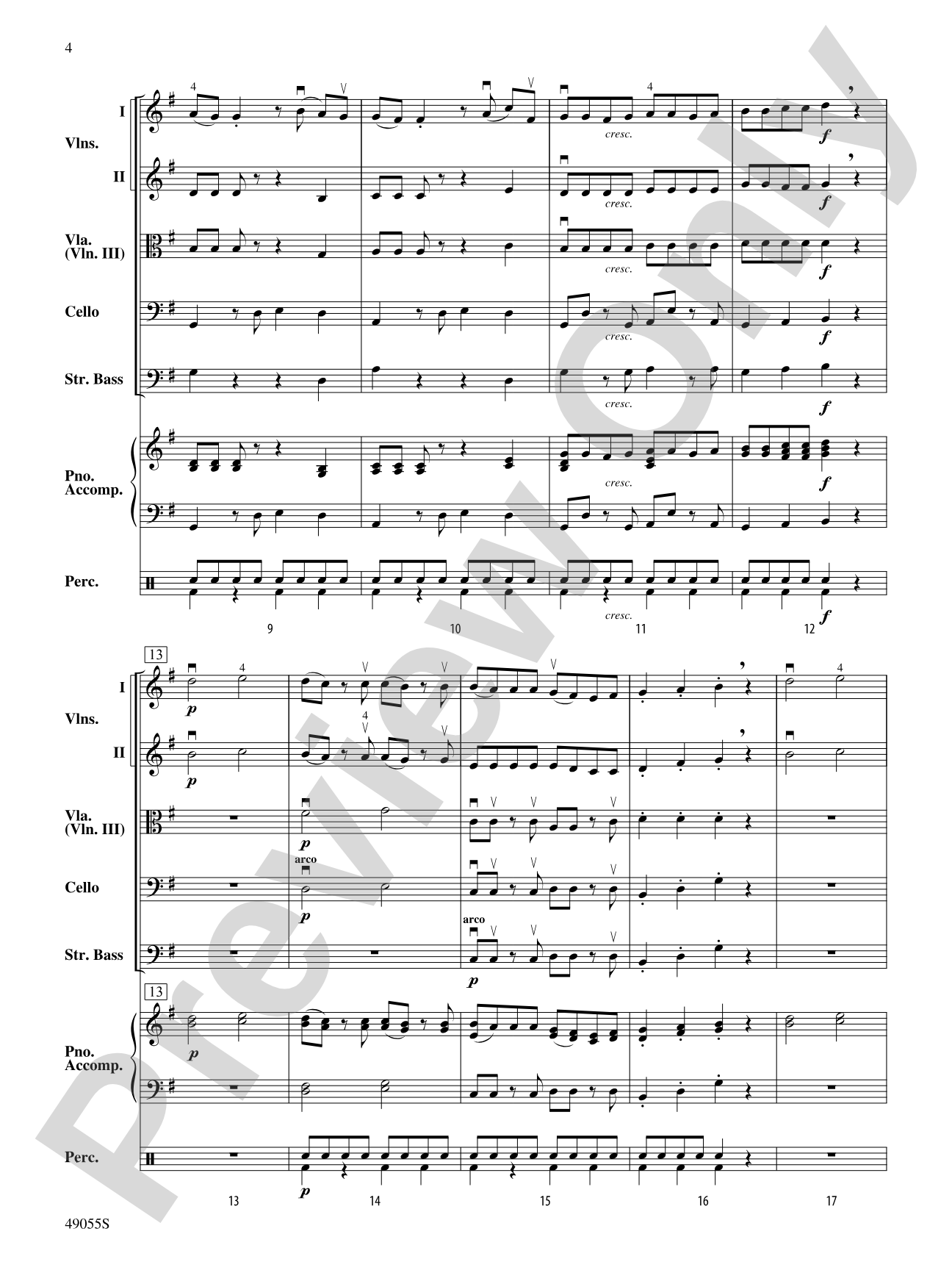
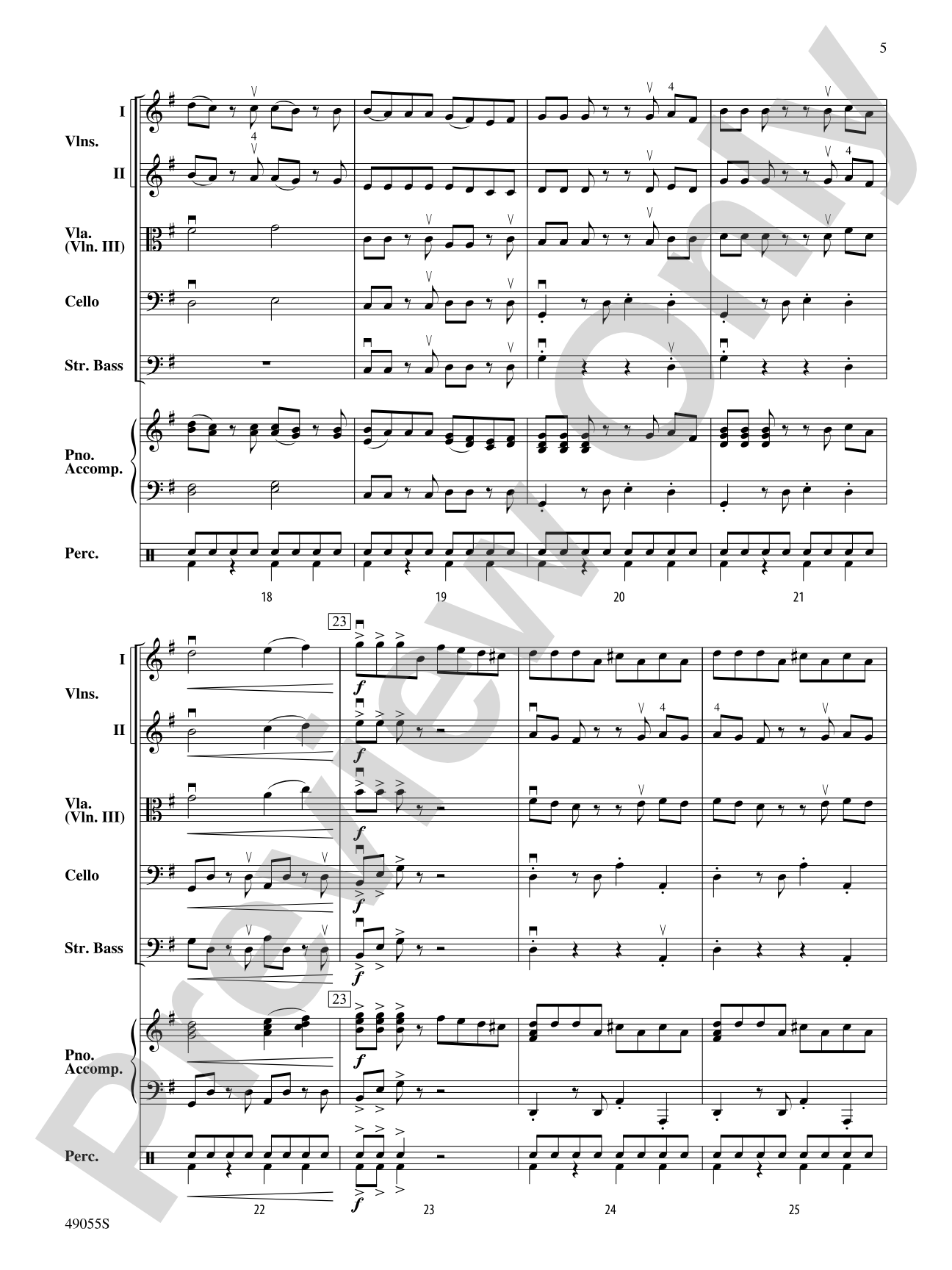
It's Mozart with a Latin twist! Viva Amadeus!, arranged by Richard Meyer, is a charming reworking of Eine Kleine Nachtmusik. It is sure to make your audience smile while providing your students with opportunities to work on syncopation and "south of the border" dance rhythms. Fun for everyone, as all the sections take turns stepping into the melodic spotlight. Latin percussion parts add to the cha-cha feel of this irresistible celebration. Olé! (3:15)


Don't just read it, hear it, play along with it, and watch your students grow with it. In MakeMusic Cloud, Viva Amadeus!: String Orchestra Conductor Score & Parts comes alive with professional accompaniment, adjustable tempo, and built-in practice tools that turn solo practice into real progress.
Open in the Player
Jump straight in and assign it today.
Start Your Free Trial
Open this title and explore the full library in minutes.
Sample Audio
1
Audio File
--:--
0:00
0:00
Sample Video
Additional Details
Series:
Highland/Etling String Explorer
Publisher:
Alfred Music
Page Count:
91
SKU:
00-PK-0008360
More about this title
About the Composer: Wolfgang Amadeus Mozart
Wolfgang Amadeus Mozart (1756-1791) stands as one of the most prolific and influential composers in Western music history. Born in Salzburg, Austria, he mastered multiple instruments as a child and began composing before age five, eventually producing over 600 works across every major genre. His music combines structural clarity with emotional depth, making his compositions enduringly popular in concert halls and, increasingly, in educational settings where his melodic gift and balanced orchestration serve as models for young musicians.
Why we love this
Richard Meyer's arrangement captures the elegant simplicity of Eine kleine Nachtmusik while injecting genuine rhythmic energy that engages students without condescending to them. The Latin percussion parts and syncopated figures transform a Renaissance-fair favorite into something that feels contemporary and playful, giving your orchestra a concert piece that lands with the audience while building real musicianship around rhythmic precision and sectional independence.
What to expect
Sophisticated fun. Mozart's elegant melodic voice meets the forward-motion energy of a cha-cha, creating something that feels both respectful to the original and genuinely joyful. The piece dances; it doesn't plod.
Who it's for
Grade 2 string orchestras ready to explore rhythms beyond straight classical patterns. This arrangement works equally well for students who know Eine kleine Nachtmusik and want to hear it reimagined, and for ensembles experiencing Latin dance rhythms for the first time.
How to get the most out of it
- Establish the cha-cha pulse early in rehearsal with a full run-through before diving into measures. The Latin rhythms feel natural once the ensemble locks into the groove together.
- Balance the Latin percussion parts so they enhance rather than bury the strings. These colors should sparkle, not overwhelm.
- Give each section clear cues when they take the melodic spotlight so transitions feel intentional and confident.
- Keep the tempo steady and dance-like throughout. The piece's charm relies on rhythmic buoyancy, not sluggish rubato.
How to use it
Program this as a concert opener or closer to set a celebratory tone. It pairs well alongside more traditional Mozart or other classical repertoire, offering a moment of stylistic playfulness that audiences find refreshing. The 3:15 duration makes it an ideal filler piece for spring pops concerts or end-of-year celebrations.
Skills your students will build
- Reading and executing syncopated rhythms in a Latin dance context
- Maintaining steady pulse while sections rotate melodic responsibility
- Balancing tuning and tone across sections during moment-to-moment texture changes
- Coordinating with Latin percussion parts to lock the ensemble into a dance groove