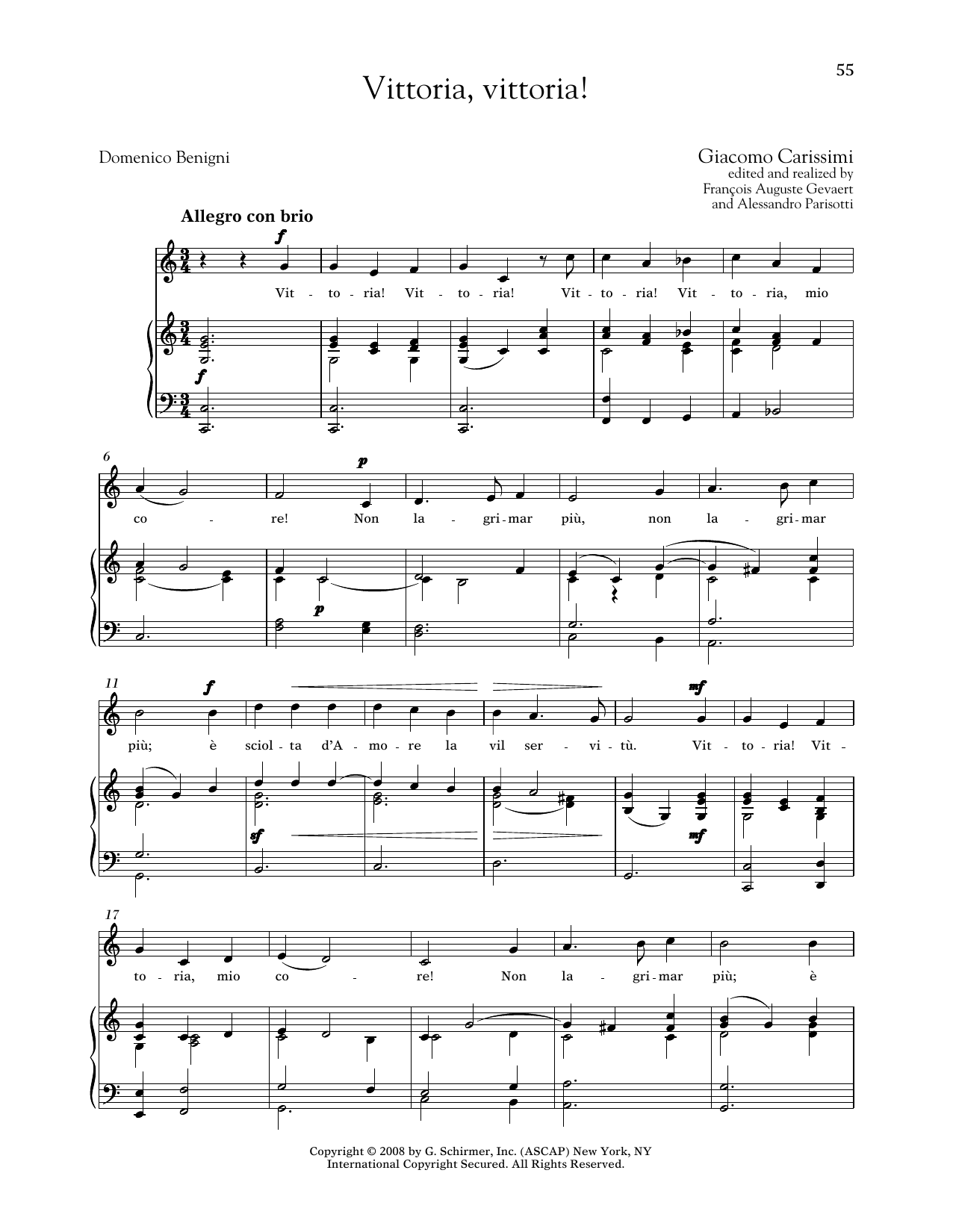
Vittoria, Vittoria! (Medium High Voice) Sheet Music Preview

Vittoria, Vittoria! (Medium High Voice): Piano Vocal

Edited by Alessandro Parisotti (ed.) / Edited by Francois Auguste Gevaert (ed.)

Item: 35-DS01576628

Digital Download
$5.99
Description

Vittoria, Vittoria! (Medium High Voice): Piano Vocal isn't in MakeMusic Cloud just yet...but it could be. Let us know you'd like to see it, and you'll help shape what comes next. In the meantime, start a free trial and dive into thousands of interactive titles your students can play along with today.

Sample Audio
No sample audio found.
Sample Video
Additional Details
Publisher: Hal Leonard
Page Count: 5
SKU: 35-DS01576628

More about this title

About the Composer: Giacomo Carissimi

Giacomo Carissimi (1605-1674) was a Roman composer whose sacred vocal works established him as a master of the oratorio and cantata. His gift for expressive melody and dramatic text-setting made him one of the most performed composers of the seventeenth century, and his influence on Handel and other Baroque masters remained profound throughout his life.

Carissimi spent most of his career as maestro di cappella at the Jesuit Collegio Germanico in Rome, a position that gave him access to exceptional singers and the creative freedom to develop new forms. His ability to marry Italian lyricism with sacred devotion produced works that remain rewarding vehicles for singers seeking both technical challenge and spiritual depth.

Why we love this

This is a soprano showpiece that actually sits well for medium high voices, avoiding the stratospheric demands that make many Baroque vocal selections impractical for student singers. The text setting is singable yet never feels simplified; Carissimi's melodic instinct means the music itself does the dramatic work without requiring unnatural vocal acrobatics.

What to expect

This is joyous and bright without being lightweight. The title itself (Victory, Victory!) sets an triumphal tone, yet Carissimi grounds that exuberance in the disciplined elegance of mid-Baroque melody. Singing it feels purposeful and complete.

Who it's for

Solo singers preparing repertoire for auditions, juries, or recitals will find this a strong choice for showcasing Baroque style without extreme tessatura demands. Teachers building a collection of accessible Italian sacred vocal music will appreciate its musicianship and relative restraint.

How to get the most out of it

  • Shape each phrase as a miniature arc rather than pressing through from beginning to end. The Baroque love of ornamentation works best when you breathe the drama rather than force it.
  • Balance vocal projection with the piano part; this isn't a recital hall showstopper but an intimate chamber work where clarity of text matters as much as vocal bloom.
  • Treat the melismatic sections as opportunities for control and precision. Clean passagework at a comfortable tempo reads better than rushing ornaments that muddy the line.

How to use it

Pair this with other Carissimi cantatas or with solo works by his contemporaries for a program exploring seventeenth-century Italian vocal writing. It works equally well as a standalone recital piece or as the centrepiece of a Baroque vocal recital that mixes sacred and secular texts.

Skills your students will build

  • Baroque ornamentation and passagework at a sustainable tempo
  • Stylistically appropriate text projection in Italian
  • Shaping long vocal lines with minimal text repetition
  • Balance between solo voice and keyboard accompaniment

You May Also Like