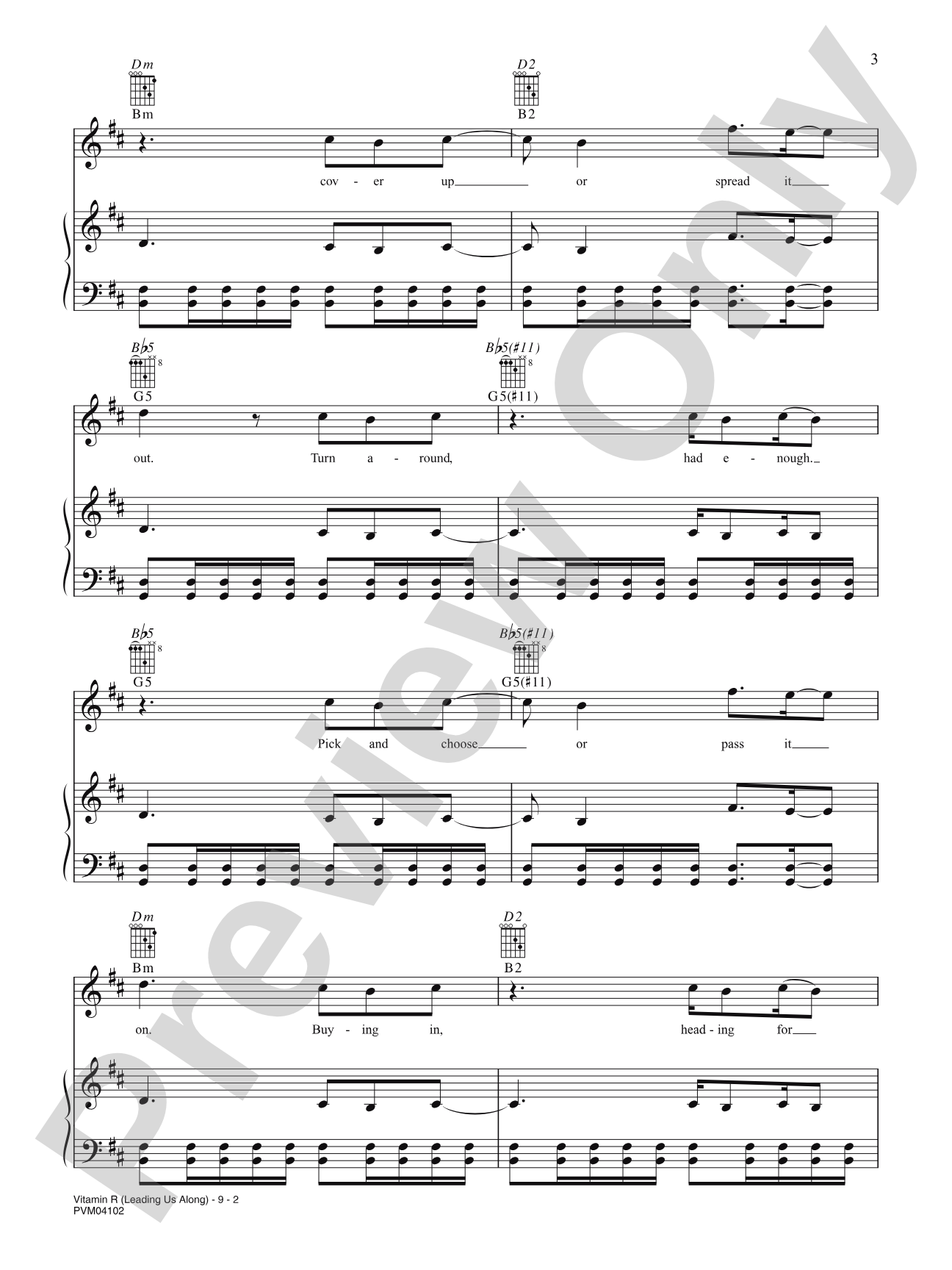
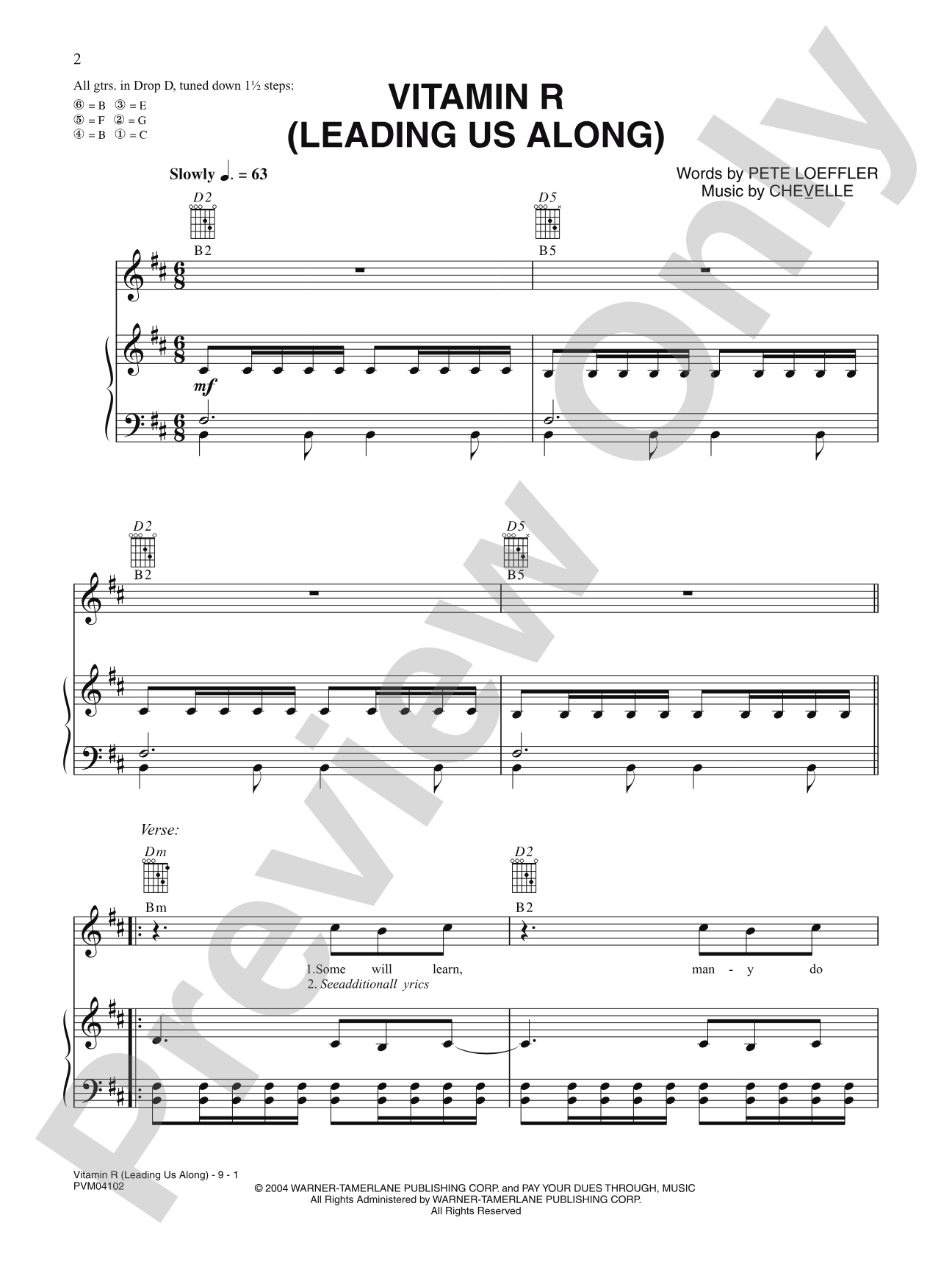
Vitamin R (Leading Us Along) Sheet Music Preview

Vitamin R (Leading Us Along): Piano/Vocal/Chords

Recorded by Chevelle

Item: 00-PIP-000605

Digital Download
$3.99

One moment…

Description

Vitamin R (Leading Us Along): Piano/Vocal/Chords isn't in MakeMusic Cloud just yet...but it could be. Let us know you'd like to see it, and you'll help shape what comes next. In the meantime, start a free trial and dive into thousands of interactive titles your students can play along with today.

Sample Audio
No sample audio found.
Sample Video
Additional Details
Publisher: Alfred Music
Page Count: 10
SKU: 00-PIP-000605

More about this title

About the Artist: Chevelle

Chevelle formed in 1995 and built a devoted following through a distinctive blend of heavy alternative rock and introspective songwriting. The band's approach to composition balances aggressive instrumental textures with melodic sensibility, creating songs that reward close listening across multiple genres and skill levels.

Their work has influenced how contemporary metal and hard rock can function in educational settings, demonstrating that intensity and musicianship coexist naturally. Chevelle's catalog spans nearly three decades, establishing them as consistent voices in modern rock composition.

Why we love this

This arrangement gives pianists and singers genuine access to modern rock writing without sacrificing the song's weight and character. The vocal line sits naturally for a range of voices, and the chord structures are clear enough for ensemble work while retaining the song's original intensity. Including contemporary rock in your program signals to students that serious musicianship exists outside classical and traditional jazz vocabularies.

What to expect

Heavy but introspective; the harmonic language feels modern and slightly unsettling, which matches Chevelle's ability to marry aggressive instrumentation with genuine melodic depth. The piano part carries both rhythmic weight and harmonic sophistication, creating a soundscape that's complex without becoming precious. Singing over this backdrop demands commitment and emotional presence.

Who it's for

Pianists and singers working with contemporary rock repertoire, from high school jazz or rock ensemble students to college-level musicians exploring modern songwriting. This arrangement opens conversations about genre and musicianship for students who may not connect with classical or jazz standards. Teachers programming rock-forward concerts or introducing students to 21st-century composition will find this especially valuable.

How to get the most out of it

  • Anchor the left-hand groove early in rehearsal. The rhythmic foundation drives the entire arrangement, so lock this in before layering vocals and right-hand countermelodies.
  • Balance the vocal line against the keyboard texture. The singer shouldn't strain to cut through; instead, shape dynamics so the voice sits naturally within the harmonic environment.
  • Pay attention to the minor key and the emotional quality it creates. Let dissonance breathe rather than rushing past it; Chevelle's songwriting often makes tension itself expressive.
  • Experiment with tempo slightly. While the chart provides specific markings, modern rock benefits from subtle flexibility in phrasing that reflects the lyrical content and vocal inflection.

How to use it

Pair this with other modern rock arrangements to build a full contemporary set, or use it as a focal point in a concert exploring how different genres approach melody and harmony. It works especially well in rock-focused ensembles or as a bridge between instrumental and vocal programming. Consider programming it near other pieces that challenge harmonic expectations; it will resonate more in that context than isolated among traditional repertoire.

Skills your students will build

  • Reading chord charts and chord-based notation
  • Playing rhythmic grooves in minor keys
  • Balancing vocal lines with accompaniment textures
  • Interpreting modern songwriting across piano and voice
  • Understanding contemporary harmonic language and dissonance

You May Also Like