
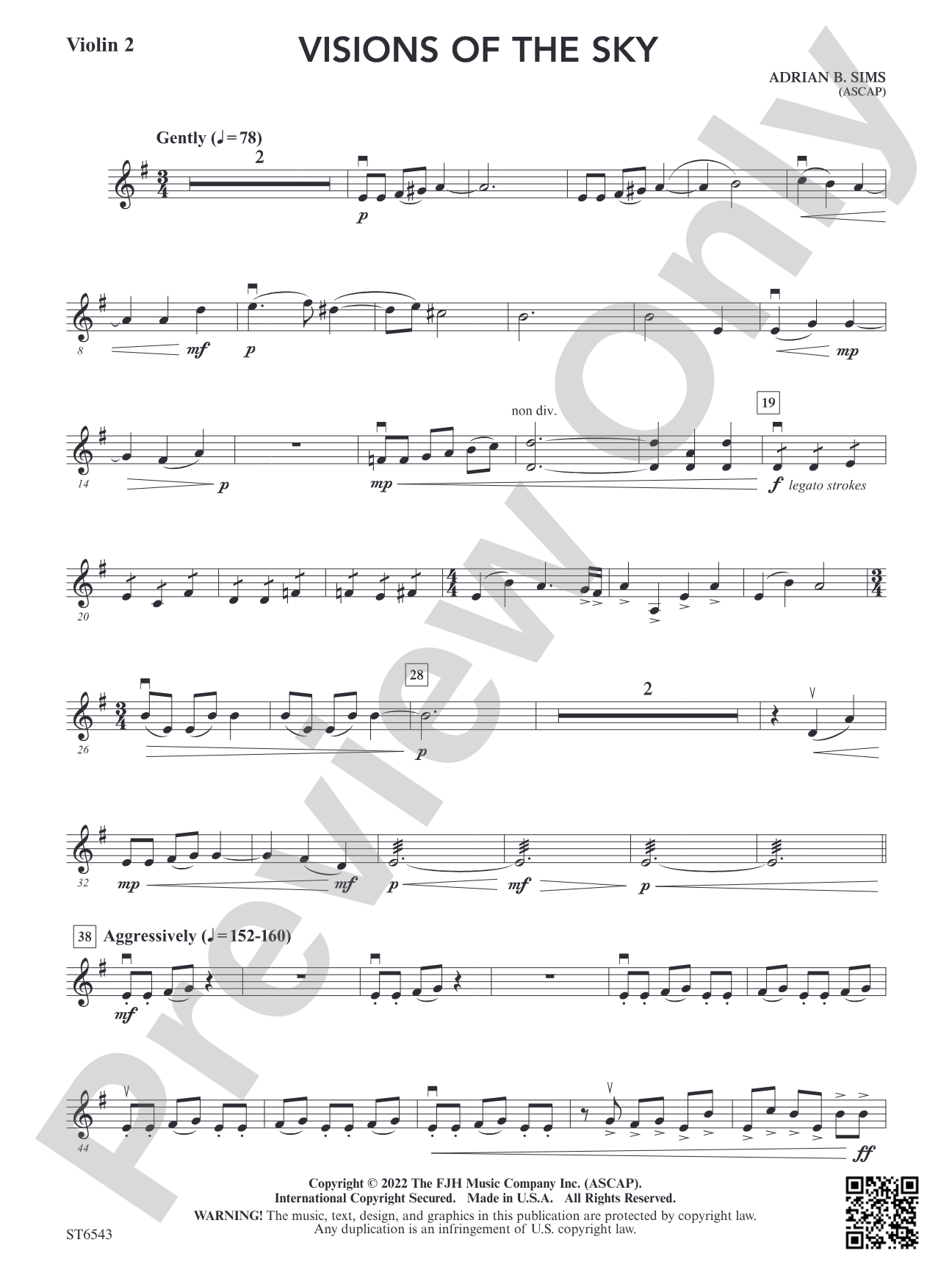

Visions of the Sky: Violin 2
By Adrian B. Sims
Grade: 4
Item: 98-PC-DST6543_VN2
$7.00
Pickup currently not available
Description
Inspired by the composer's frequent visits to Montana, this musical tribute honors the grand landscapes of the state, including stunning mountain views and clear blue skies. Portraying everything from the breathtaking scenery to massive thunderstorms, this piece is an ideal way to explore the beauty and fury of Earth's towering skies. An optional timpani part adds a great deal to the work. (3:45)


Don't just read it, hear it, play along with it, and watch your students grow with it. In MakeMusic Cloud, Visions of the Sky: Violin 2 comes alive with professional accompaniment, adjustable tempo, and built-in practice tools that turn solo practice into real progress.
Open in the Player
Jump straight in and assign it today.
Start Your Free Trial
Open this title and explore the full library in minutes.
Sample Audio
1
Audio File
--:--
0:00
0:00
Sample Video
Additional Details
Series:
FJH String Orchestra
Publisher:
The FJH Music Company, Inc.
SKU:
98-PC-DST6543_VN2
More about this title
About the Composer: Adrian B. Sims

Adrian B. Sims is a composer, conductor, educator, and trombonist born in Seattle in 2000. He earned his degrees in Music Education and Composition from the University of Maryland, where he studied composition with Dr. Robert Gibson and has performed in the university's top ensembles. His works have been recognized at The Midwest Band and Orchestra Clinic, selected for the Bandworld Top 100 List, and have won multiple composition competitions including the Maryland Music Educators Association Young Composers Project and the Make Music Young Composers Contest.
As a performer, Sims has extensive experience across orchestral and band settings, from pit orchestras to the Baltimore Symphony Orchestra. He credits composers Brian Balmages and his mentors Christopher Gnagey and Cindy Stevenson for shaping his development as a musician and composer. Sims continues to rehearse and conduct his own works in schools throughout Maryland, bringing his music directly to young musicians.
Why we love this
This piece taps into something inherent to Grade 4 orchestras: the ability to paint a complete landscape through orchestral color. Sims captures the Montana wilderness with genuine musical architecture, building from serene mountain passages into genuine dramatic tension during the storm sections. The optional timpani part gives you flexibility for ensembles at different developmental stages while preserving the work's full impact.
What to expect
Sweeping and cinematic, with quiet moments of wonder giving way to dramatic turbulence. The piece evokes the scale of natural landscape, from crystalline clarity to raw atmospheric power, inviting listeners into a world where strings alone convey both serenity and fury.
Who it's for
String orchestras at Grade 4 working toward festival and contest performance. This piece rewards ensembles with solid intonation and the ability to sustain tone through longer phrases, while remaining accessible enough that it doesn't demand virtuosity. Conductors seeking programmatic works that engage young musicians in storytelling through music will find this particularly valuable.
How to get the most out of it
- Balance the opening to establish the expansive quality of sky and landscape; allow the violins space to breathe rather than filling every moment with sound.
- Shape the storm section with deliberate dynamic layering. Each instrumental family should enter with purpose, building texture rather than simply playing louder.
- If including timpani, rehearse those parts separately with your rhythm section first. The timpani carries much of the dramatic weight during the climax and needs independence from the strings.
- Use the three-minute-forty-five-second arc to your advantage: plan where ensemble energy peaks and where it should recede, ensuring the ending lands with clarity rather than exhaustion.
How to use it
Pair this with other nature-inspired works to build a concert themed around landscape and environment, or use it as your festival entry where programmatic appeal combined with solid Grade 4 technique creates a memorable impression. The runtime makes it ideal for mixed concert programming without dominating a concert structure.
Skills your students will build
- Sustaining focused tone quality across extended melodic phrases
- Dynamic shaping and contrast in programmatic contexts
- Ensemble balance when multiple string voices carry equal musical weight
- Responding to conducted gesture through landscape changes rather than metric pattern alone
- Coordination with optional percussion parts and selective instrumentation