
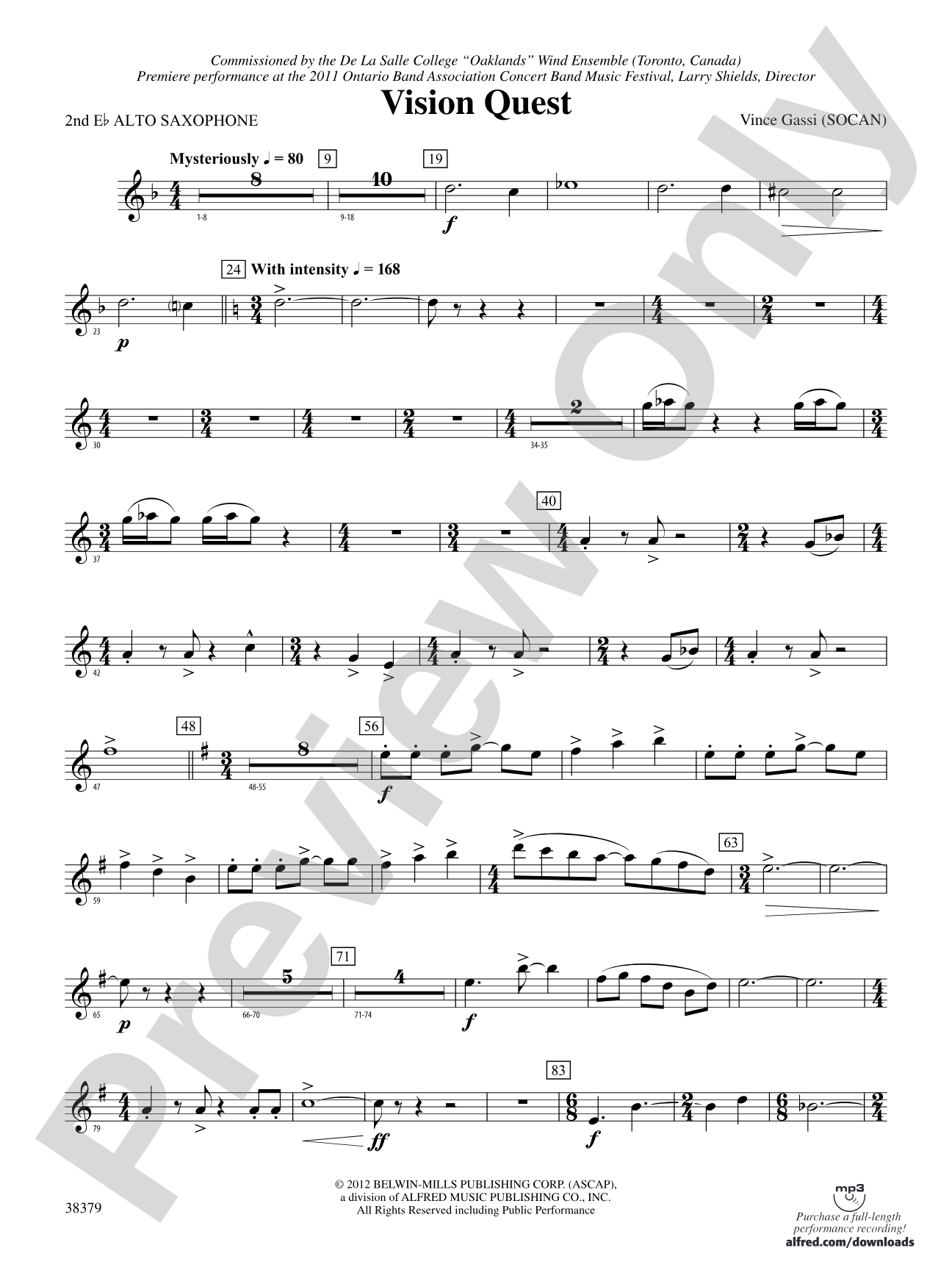

Vision Quest: 2nd E-flat Alto Saxophone
By Vince Gassi
Grade: 4 (Medium)
Item: 00-PC-0015456_AX2
$5.99
Pickup currently not available
Description
A vision quest is defined as a journey taken alone in the wilderness to find one's spiritual and life direction. Take your audiences on a mystic journey with this exciting new work by Vince Gassi. Bold themes and angular rhythms are contrasted with a poignant lyrical section. Frequent meter changes and interesting harmonies will provide ample opportunity for your young musicians to grow musically. (6:00) This title is available in MakeMusic Cloud.


Don't just read it, hear it, play along with it, and watch your students grow with it. In MakeMusic Cloud, Vision Quest: 2nd E-flat Alto Saxophone comes alive with professional accompaniment, adjustable tempo, and built-in practice tools that turn solo practice into real progress.
Open in the Player
Jump straight in and assign it today.
Start Your Free Trial
Open this title and explore the full library in minutes.
Sample Audio
1
Audio File
--:--
0:00
0:00
Sample Video
No sample videos found.
Additional Details
Series:
Belwin Symphonic Band
Publisher:
Alfred Music
Page Count:
248
SKU:
00-PC-0015456_AX2
More about this title
About the Composer: Vince Gassi
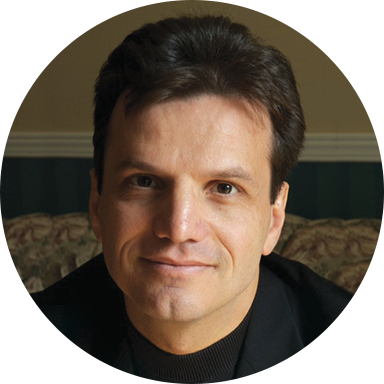
Vince Gassi has been composing and arranging for concert and educational bands since earning his Bachelor of Music from the University of Western Ontario. His studies at the Dick Grove School of Music in Los Angeles and his Ph.D. from York University in Toronto shaped a compositional voice that balances accessibility with genuine musical substance. Over more than two decades teaching instrumental music at the elementary and secondary levels, he has developed an intuitive understanding of what engages young musicians.
With over 100 published titles in circulation, Gassi has established himself as a clinician and guest conductor throughout North America, leading workshops on student creativity and digital tools for music directors. His pieces appear regularly on contest and concert programs internationally, and his work has been performed across North America, Europe, and Japan. He continues to accept commissions and is a frequent presence at major conferences, including the Midwest Clinic in Chicago.
Why we love this
Gassi constructs a genuine arc here: the opening bold material and angular rhythms grab attention immediately, then the shift to lyrical writing gives your ensemble room to breathe and shape something expressive. The frequent meter changes aren't obstacles; they're embedded naturally enough that Grade 4 students can master them without feeling they're solving a puzzle, and your stronger players will appreciate the harmonic language supporting the narrative.
What to expect
The piece evokes the spiritual and introspective quality of a vision quest: bold, searching material contrasts sharply with moments of quiet reflection and discovery. Angular rhythms create forward momentum and angular character, then recede to reveal a poignant lyrical voice that feels earned rather than sentimental.
Who it's for
Grade 4 concert bands seeking a piece with genuine programmatic content and enough musical substance to sustain interest for full six minutes. Directors looking for contest or concert repertoire that challenges young musicians without overwhelming them will find a work that rewards careful rehearsal and yields strong results in both settings.
How to get the most out of it
- Shape the bold opening themes with clear articulation and dynamic contrast; let the angular rhythms breathe rather than rush them, allowing the syncopation to land deliberately.
- Balance ensemble blend during the lyrical section by adjusting dynamics across sections so the melody sings without overpowering the harmonic support.
- Mark the meter changes in parts before rehearsal so musicians can anticipate the shifts; vertical alignment matters more than speed when navigating multiple time signatures.
- Use the key harmonic moments to build interpretive choices: ask your band what story the melody is telling and let that guide articulation, phrasing, and dynamic shaping throughout.
How to use it
Program this as a centerpiece for a concert theme about journeys or self-discovery; its six-minute length and dramatic arc make it strong enough to stand alone without needing a companion piece. In a contest setting, the combination of technical interest and musical expressiveness provides judges multiple dimensions to appreciate.
Skills your students will build
- Reading and performing frequent meter changes within a coherent musical context
- Balancing rhythmic precision with expressive phrasing across contrasting thematic material
- Listening for harmonic progression and using it as a guide for intonation and balance
- Interpreting programmatic content and making interpretive choices based on musical narrative