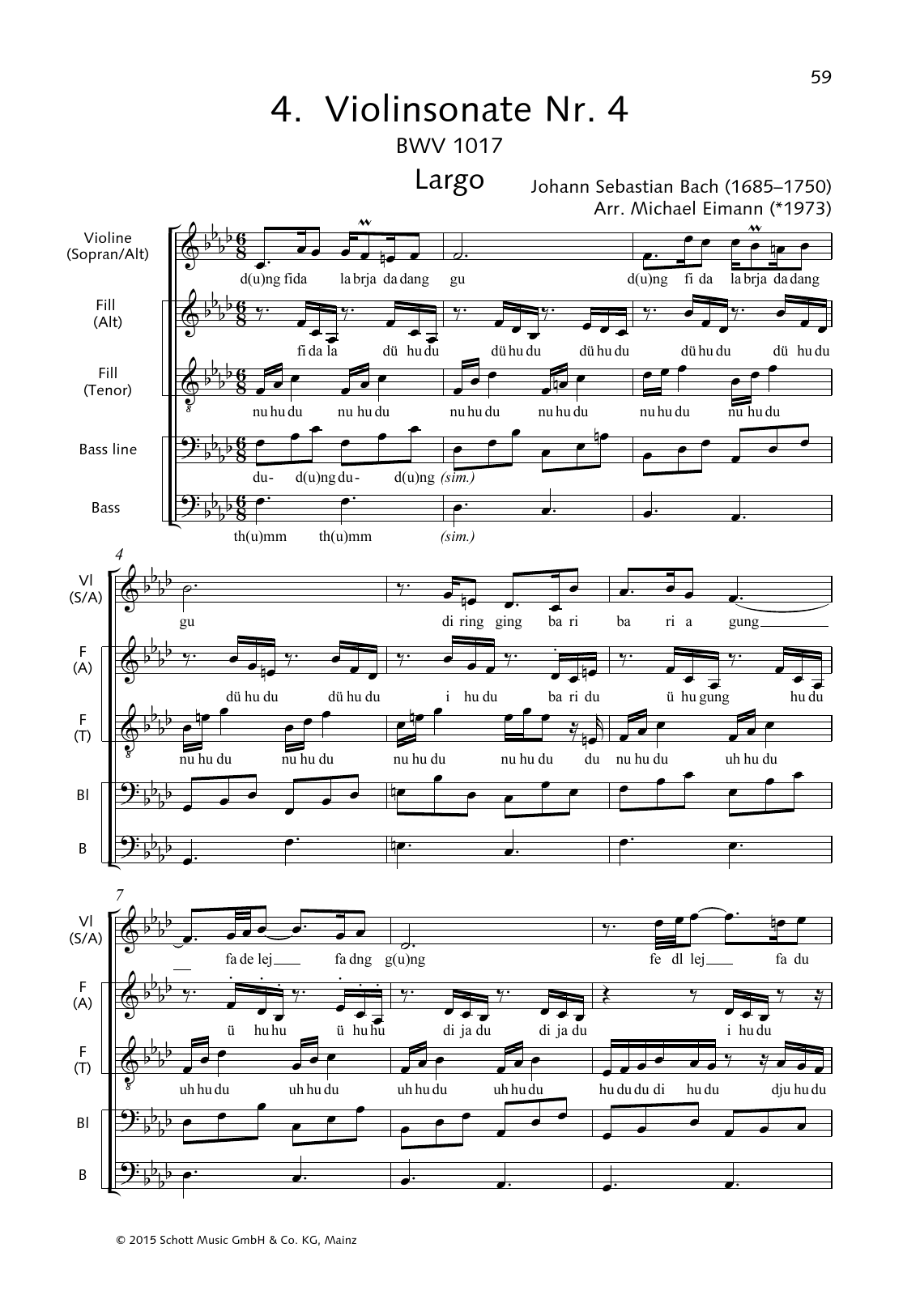
Johann Sebastian Bach (1685–1750) shaped Western music so profoundly that centuries of composers measured themselves against his work. A master of counterpoint and harmonic innovation, Bach synthesized German, Italian, and French musical traditions into a language of extraordinary depth. His output spans nearly every genre of his era, yet his sacred and instrumental works remain foundational to music education because they demand and develop complete musicianship.
Bach's pedagogical legacy runs deeper than his compositions alone. He wrote explicitly to teach; his chorale harmonizations, inventions, and keyboard works were designed to train musicians in voice leading, harmonic thinking, and the discipline of structured composition. For choral directors, Bach's music offers an unmatched laboratory for understanding how independent lines create unified expression.