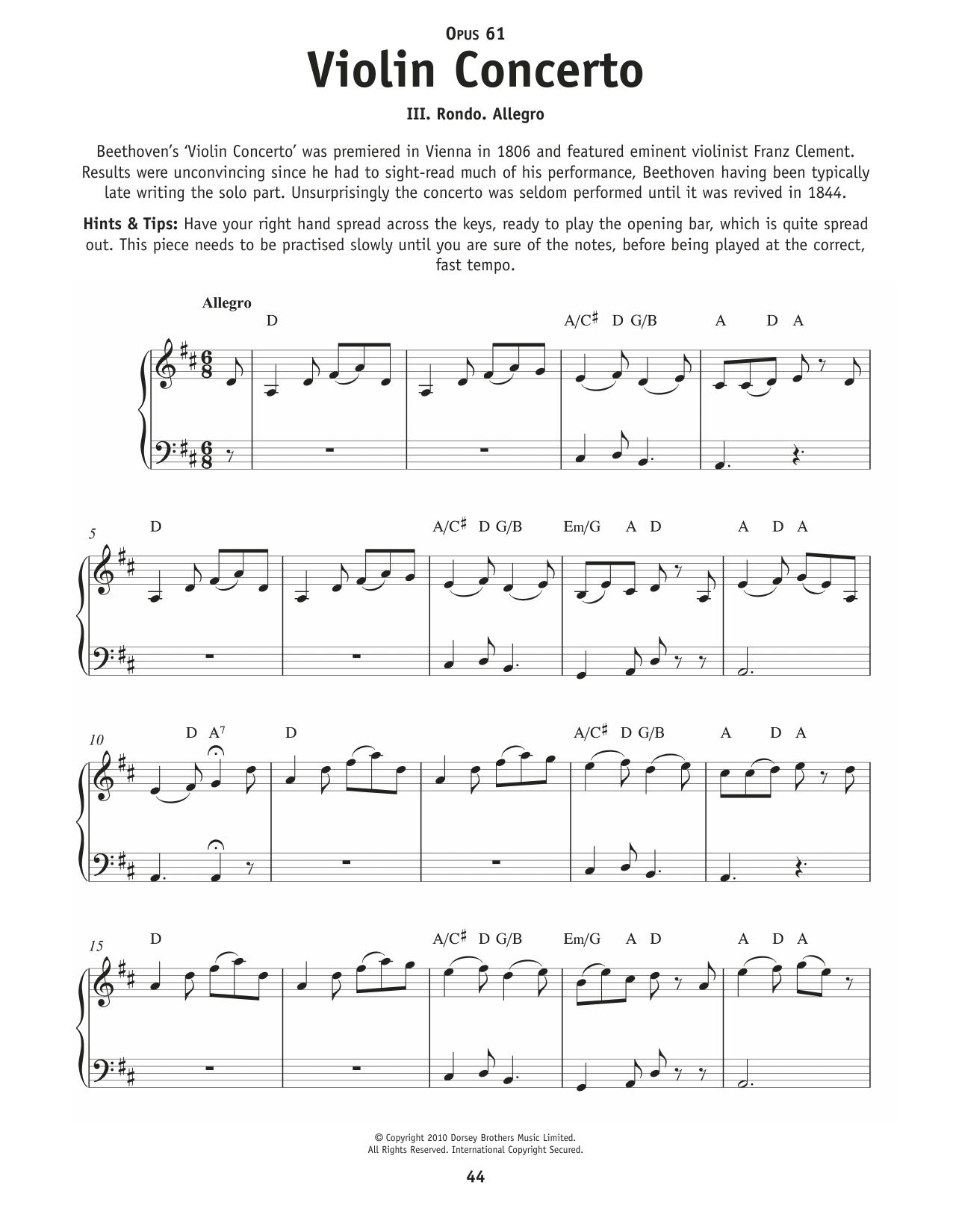
Beethoven composed his Violin Concerto in D Major during 1806, a period of extraordinary productivity that also yielded the Pastoral Symphony and the Razumovsky Quartets. The work emerged from his established relationship with the virtuoso violinist Franz Clement, for whom it was written and who premiered it that same year. This concerto stands as Beethoven's only essay in the form and represents his answer to the Romantic demands of the instrument while maintaining Classical structural integrity.
As a composer, Beethoven fundamentally expanded what the violin could express in the concerto genre. He moved beyond the purely virtuosic displays favored by his predecessors, instead weaving the soloist into an architectural framework that demands both technical brilliance and profound musical intelligence. For students and teachers, this work serves as a bridge between the Classical clarity of Mozart and the Romantic expansion that would define the nineteenth century.