Vilia (from The Merry Widow) Sheet Music Preview

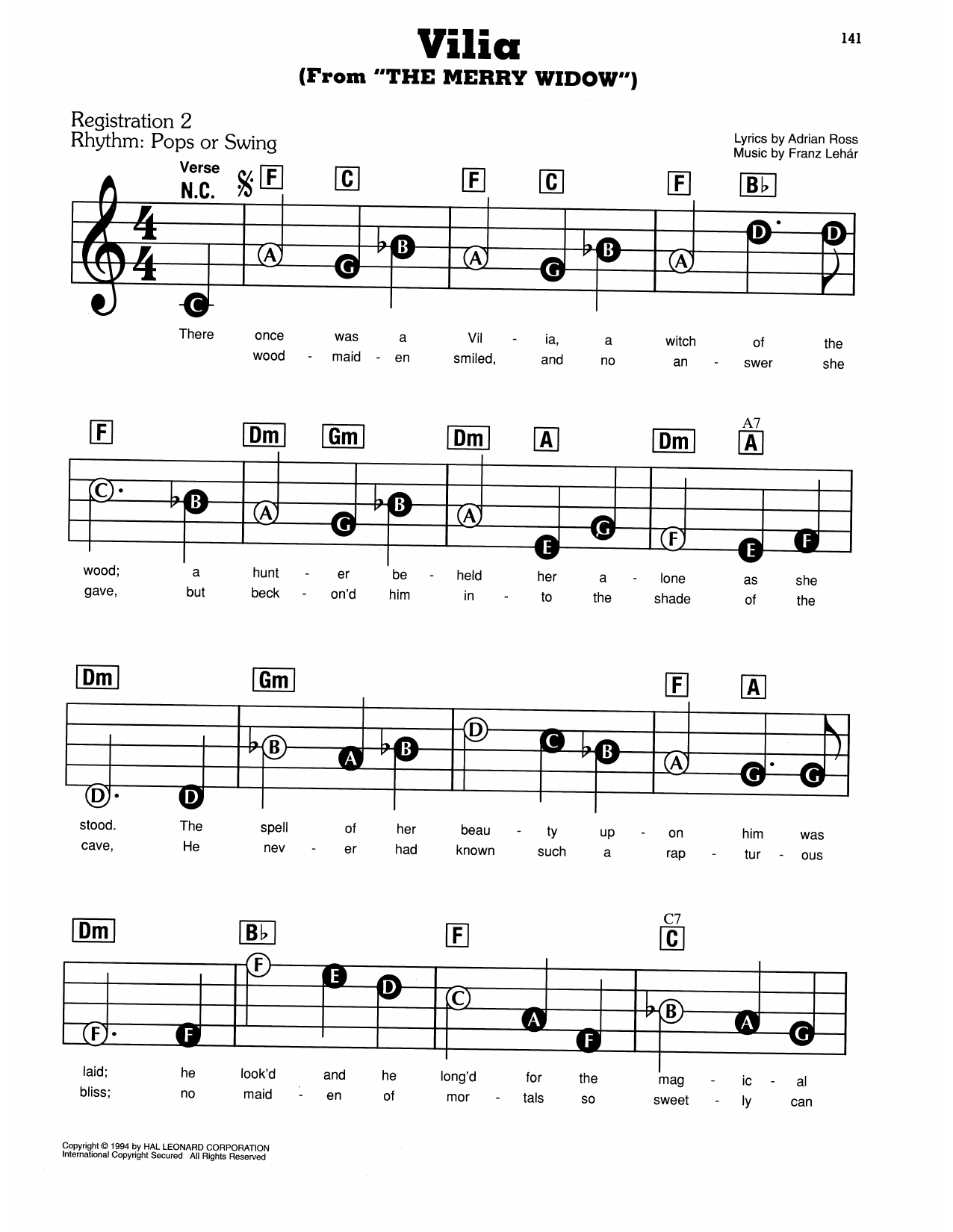
Vilia (from The Merry Widow): E-Z Play Today

As performed by Adrian Ross

Item: 35-DS01867016

Digital Download
$4.99
Description

Vilia (from The Merry Widow): E-Z Play Today isn't in MakeMusic Cloud just yet...but it could be. Let us know you'd like to see it, and you'll help shape what comes next. In the meantime, start a free trial and dive into thousands of interactive titles your students can play along with today.

Sample Audio
No sample audio found.
Sample Video
Additional Details
Publisher: Hal Leonard
Page Count: 3
SKU: 35-DS01867016

More about this title

About the Artist: Adrian Ross

Adrian Ross was a British lyricist and librettist who shaped operetta and musical theatre in the early 20th century. His collaboration with composer Franz Lehár on The Merry Widow produced some of the era's most enduring melodies, and Ross's gift for singable, emotionally direct English lyrics made European operetta accessible to English-speaking audiences.

Why we love this

This arrangement captures the lilting, romantic character of one of operetta's signature numbers without requiring classical voice training to sound beautiful. Students respond to the melody immediately, and the E-Z Play format keeps the focus on phrasing and rubato rather than technical barriers.

What to expect

Waltzing through a European salon in a moment of tender reflection. The melody unfolds with unhurried grace, supported by harmonies that feel both familiar and gently elegant.

Who it's for

Pianists building a recital repertoire or supplementing classical study with accessible art song arrangements. Vocal students need a reliable accompaniment source that doesn't demand professional-level technique from the pianist.

How to get the most out of it

  • Shape the melody with gentle swells; this waltz lives in its lyrical contours, not aggressive dynamics.
  • Let the accompaniment breathe. Resist the urge to keep everything metronomic; Lehár's melodies invite subtle tempo flexibility.
  • Color the repeats differently. The second statement of the main theme gives you space to add ornamentation or adjust the voicing.

How to use it

Slot this into a light classics or Broadway pops concert where operetta holds its own beside contemporary musical theatre. It also works as a solo piano interlude or a vocalist's encore piece.

Skills your students will build

  • Phrasing extended melodies across phrase boundaries
  • Rubato and tempo flexibility in a classical context
  • Playing singing accompaniments that support rather than dominate
  • Recognizing and executing stylistic ornaments in early 20th century music

You May Also Like