Vikings Victorious Concert March: B-flat Clarinet 2 Sheet Music Preview

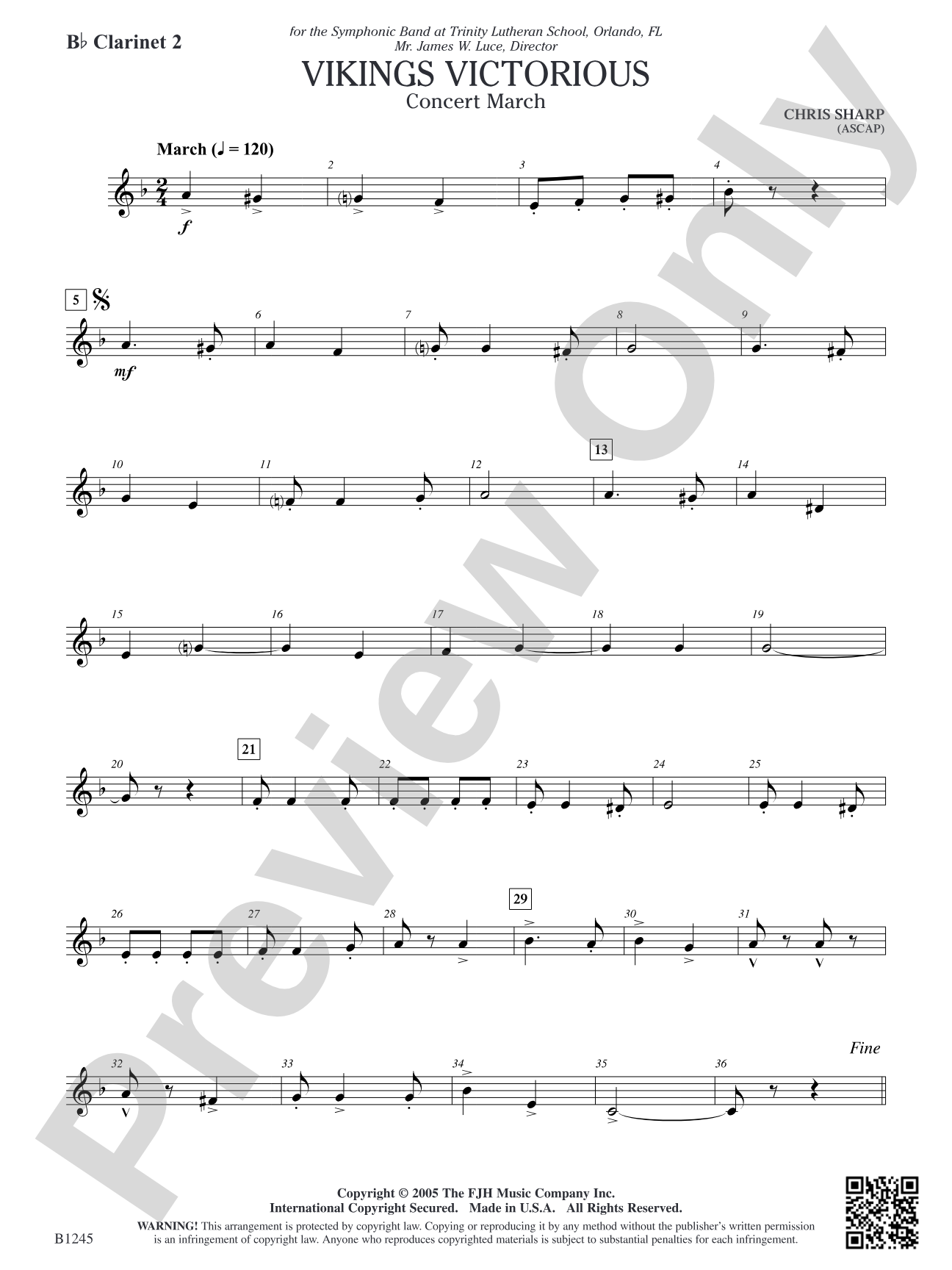
Vikings Victorious Concert March: B-flat Clarinet 2

By Chris Sharp

Grade: 1.5

Item: 98-PC-DB1245_C2

Digital Download
$7.00
Description
A concert march in the classic tradition, this piece is ideal for your festival program. Written in the key of Eb, the difficult key change at the trio is avoided by a modulation to Bb, instead of the traditional Ab. The D.S. al fine helps this piece come together with minimum rehearsal time and maximum result. Consider even using the opening section as a school fight song!

Vikings Victorious Concert March: B-flat Clarinet 2 isn't in MakeMusic Cloud just yet...but it could be. Let us know you'd like to see it, and you'll help shape what comes next. In the meantime, start a free trial and dive into thousands of interactive titles your students can play along with today.

Sample Audio
0:00
0:00
Sample Video
Additional Details
Series: FJH Developing Band
Publisher: The FJH Music Company, Inc.
SKU: 98-PC-DB1245_C2

More about this title

About the Composer: Chris Sharp

Chris Sharp

Chris Sharp holds a Ph.D. and brings three decades of professional music-making to his compositions and arrangements. His career spans performance (eleven years as a trombonist and band leader at Walt Disney World), orchestration for Disney parks worldwide, and commissions from major entertainment and performance organizations including Universal Studios, the Boston Pops, and the USAF Airmen of Note.

Sharp's work as a music educator runs equally deep. He has taught at middle school, high school, and college levels, and currently directs bands at Polk State College while teaching music theory, technology, and arranging. His guest conducting, adjudication work with Bands of America and Drum Corps International, and multiple ASCAP Plus awards reflect his standing in the concert and jazz band world.

Why we love this

Sharp understands what a developing band needs to succeed: music that sounds substantial without demanding impossible technical passages. The harmonic twist in the trio (Bb instead of the expected Ab) keeps the modulation within reach while maintaining the march's forward momentum, and the D.S. al fine structure means your students grasp the form quickly. You can even repurpose the opening as a school fight song, giving the piece double duty in your program.

What to expect

Crisp, bright, and forward-moving. The E-flat setting gives the piece a natural brilliance, while the march's classic structure and straightforward harmonic language create immediate familiarity. The trio modulation lands like a friendly surprise rather than a roadblock, adding shape and interest without sacrificing accessibility.

Who it's for

Developing concert bands ready to tackle a full march form with confidence. The grade 1.5 difficulty sits perfectly for groups building their repertoire after fundamentals, offering real musical satisfaction without overwhelming young players or requiring weeks of sectional rehearsal.

How to get the most out of it

  • Balance the melody between your cornets and clarinets during the opening strain; the march's classic character depends on a clear, singing line that sits on top of the harmonic foundation.
  • Shape the dynamic arch of the trio carefully. The modulation to Bb already signals a shift in color, so resist the urge to drop the volume; instead, let the new key do the work of creating contrast.
  • Lock the dotted rhythms in the bass line with your snare drum and bass drum. Precision here lifts the entire march and makes the form audible to your ensemble.

How to use it

Program this in the first half of a festival or concert where you want to establish confidence and energy early. Its approachable difficulty and memorable character make it an excellent choice for honor bands or clinic reading sessions. The dual personality (processional march and potential fight song) also makes it valuable during pep band or athletic events.

Skills your students will build

  • Executing the E-flat to B-flat modulation in the trio with secure intonation
  • Balancing melody and accompaniment across multiple sections
  • Articulating dotted rhythms with rhythmic clarity
  • Reading and understanding D.S. al fine form
  • Responding to dynamic contrast while maintaining ensemble unity

You May Also Like