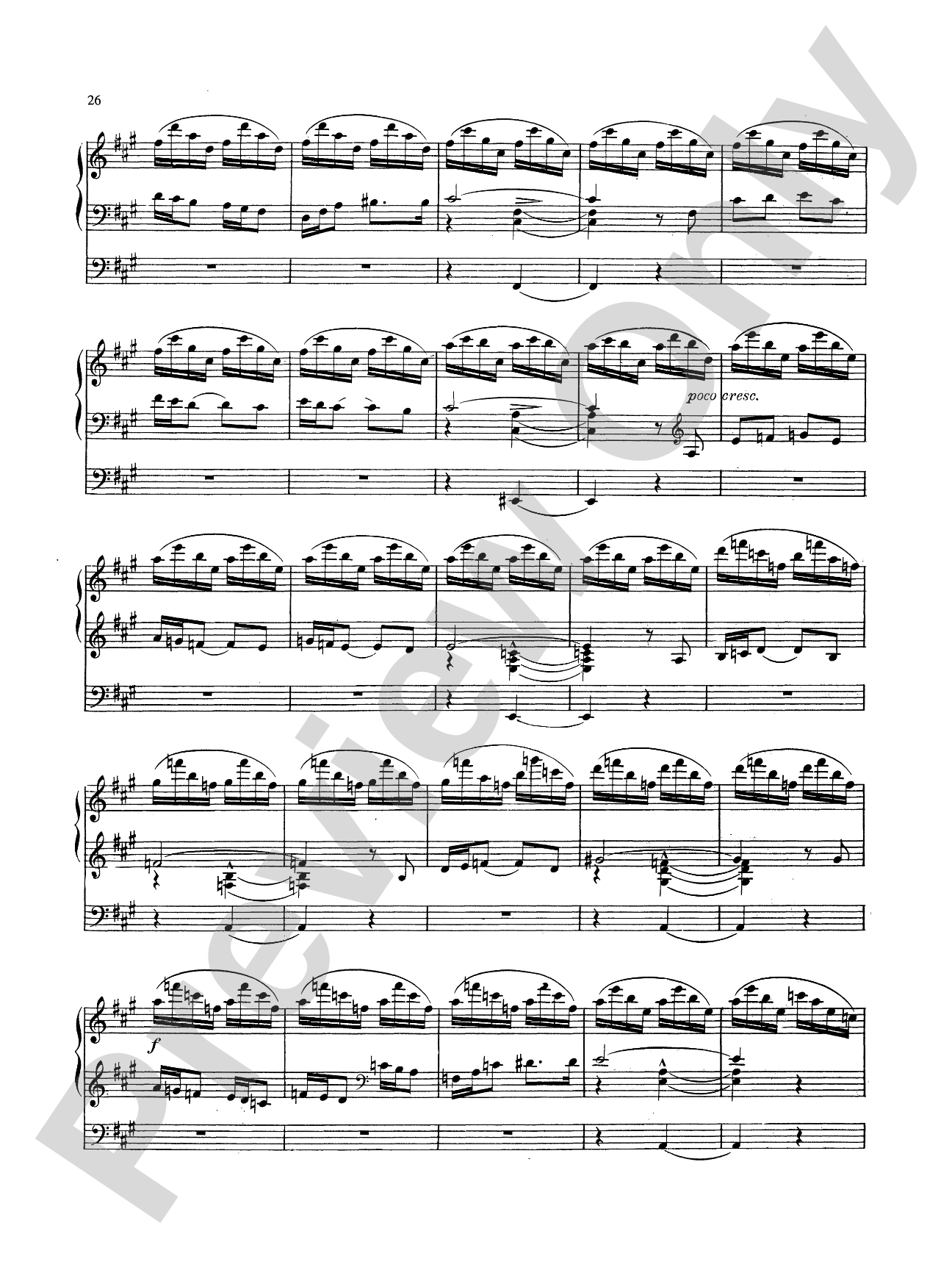
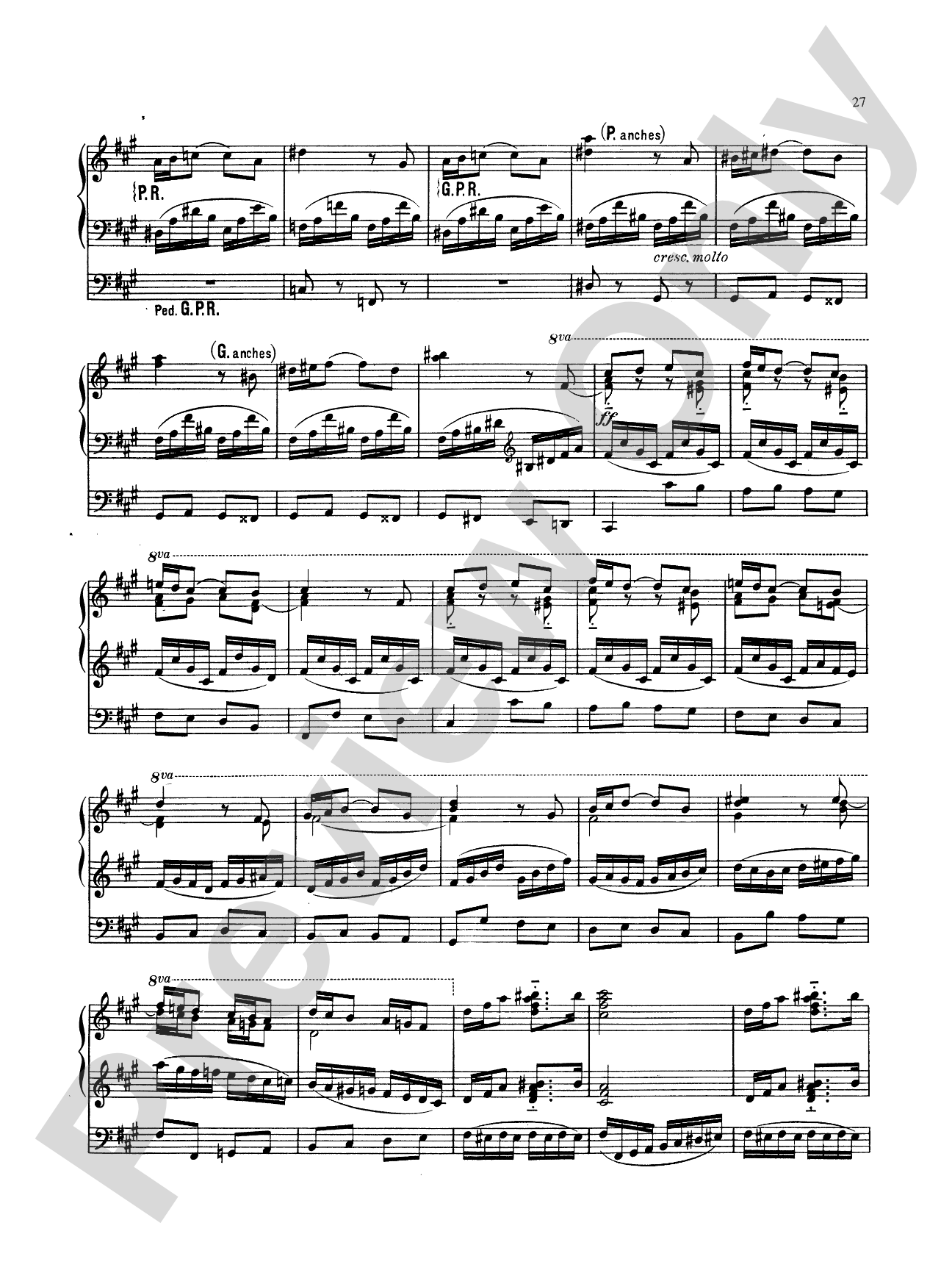
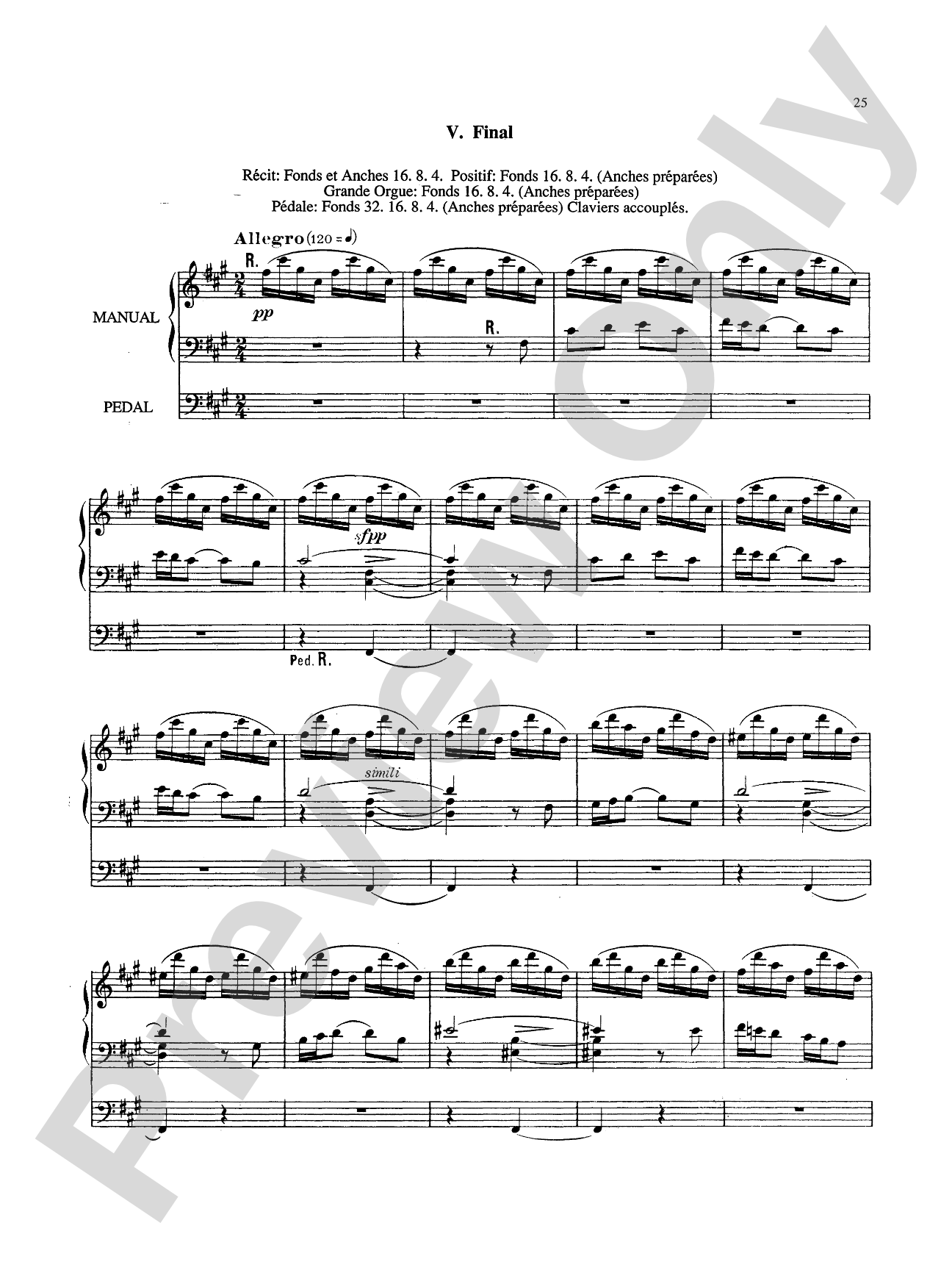
Vierne: Symphony No. 3, Op. 28 Sheet Music Preview

Vierne: Symphony No. 3, Op. 28

By Louis Vierne

Item: 00-PC-0014201

Digital Download
$0.99
Description
An Organ solo by Louis Vierne.

Don't just read it, hear it, play along with it, and watch your students grow with it. In MakeMusic Cloud, Vierne: Symphony No. 3, Op. 28 comes alive with professional accompaniment, adjustable tempo, and built-in practice tools that turn solo practice into real progress.

Sample Audio
No sample audio found.
Sample Video
Additional Details
Series: Kalmus Edition
Publisher: Alfred Music
Page Count: 36
SKU: 00-PC-0014201

More about this title

About the Composer: Louis Vierne

Louis Vierne (1870-1937) was a French organist and composer whose symphonies rank among the most significant works written for the instrument. Blind from birth, Vierne studied under César Franck and became the legendary titulaire of Notre-Dame de Chartres, where he refined an orchestral approach to organ writing that transformed the symphonic organ repertoire. His six organ symphonies showcase advanced harmonic language, bold registration demands, and architectural mastery that established him as a modernist voice within the Romantic tradition.

Why we love this

The Third Symphony demonstrates Vierne at his most inventive, balancing lush Romantic gesture with early 20th-century harmonic sophistication. This is substantial repertoire that rewards deep engagement from organists seeking to expand beyond the familiar French canon and explore works that genuinely challenge both technique and musical interpretation. The scope and musical ambition make it a centerpiece for advanced recital programming.

What to expect

The Third Symphony sweeps across grand harmonic terrain with both Romantic lyricism and modernist restlessness. Moments of serene introspection dissolve into brilliant passagework and bold registration shifts, creating a sense of emotional journey that feels urgent and deeply personal.

Who it's for

Advanced organists preparing concert recitals and those working toward mastery of the French symphonic repertoire will find this essential. Graduate-level organ students and professional church musicians seeking ambitious solo repertoire can use this to deepen their interpretive range and technical facility.

How to get the most out of it

  • Study the registration carefully and plan draws in advance; Vierne's orchestral thinking demands clarity across the manuals, and many passages require sensitive balance between independent voices
  • Approach the harmonic progressions with attention to voice leading rather than chord color alone; this music rewards linear listening and will reveal its architecture more clearly
  • Work through the pedal parts methodically, as they are consistently active and often carry thematic material, not merely harmonic support
  • Honor the dynamic and tempo markings as structural markers; Vierne uses them to articulate formal sections, and respecting these indications shapes the architecture of longer movements

How to use it

Program this as the centerpiece of a recital focused on French organ symphonies, or pair it with works by Widor and Franck to chart the evolution of the genre. At 36 pages, it provides substantial material for a major concert and works well as the climactic solo work in a program that might otherwise feature shorter character pieces or transcriptions.

Skills your students will build

  • Advanced pedal technique and independence
  • Reading and executing complex registration changes
  • Harmonic analysis of early 20th-century French organ writing
  • Balancing multiple melodic lines across manual divisions
  • Long-form structural thinking across multi-movement works
  • Interpretation of Romantic-era performance practice on the organ

You May Also Like