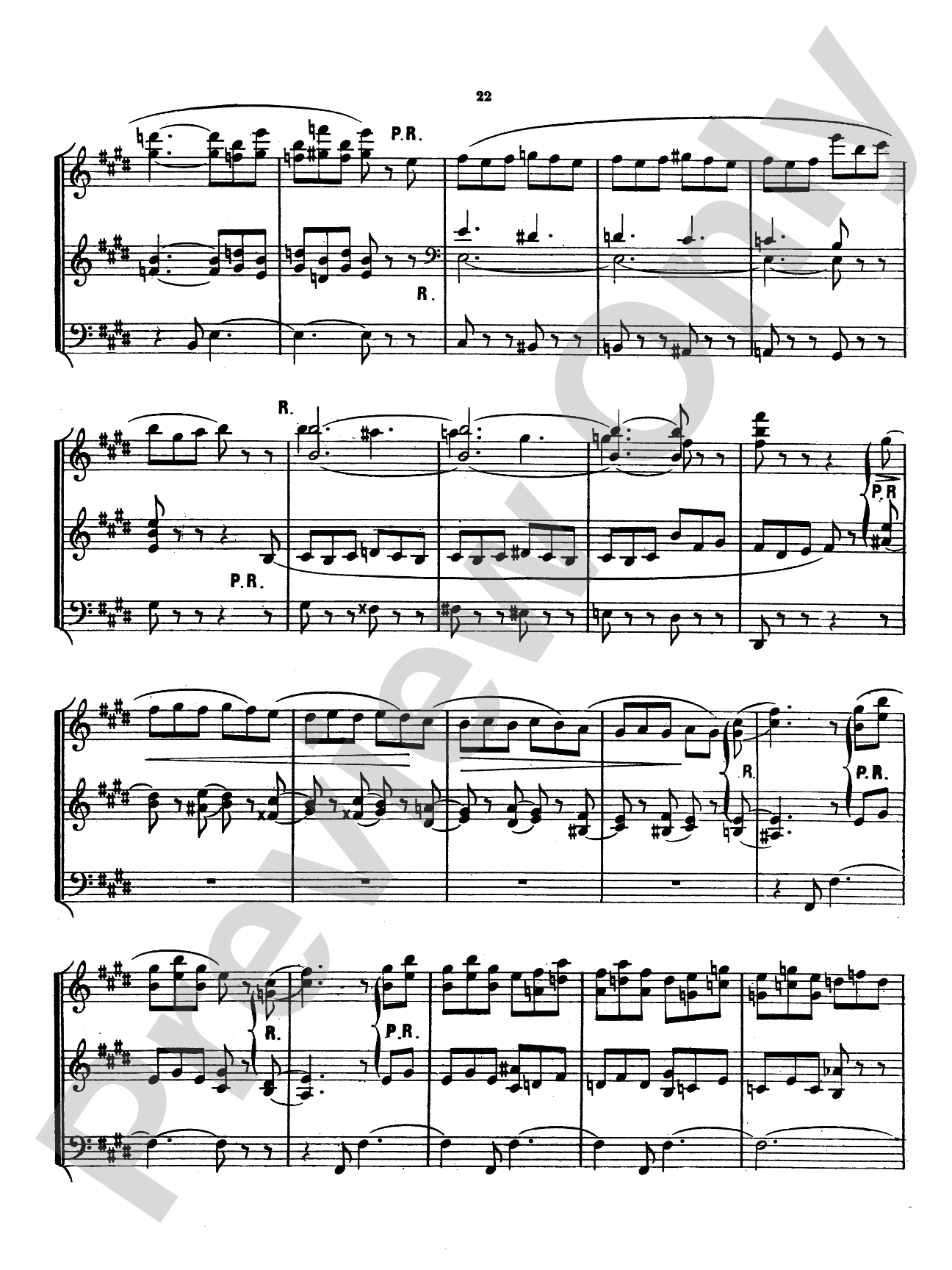
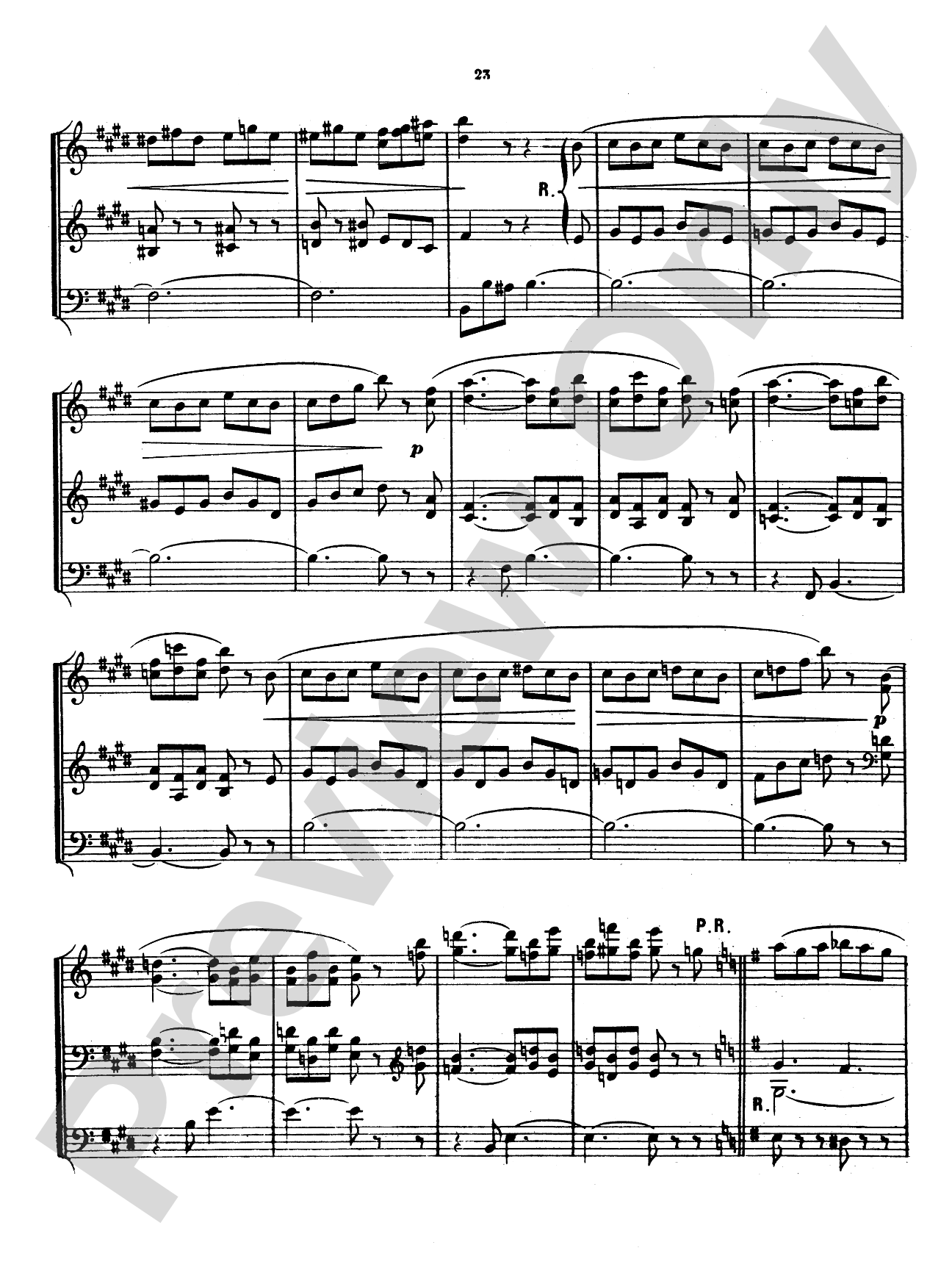
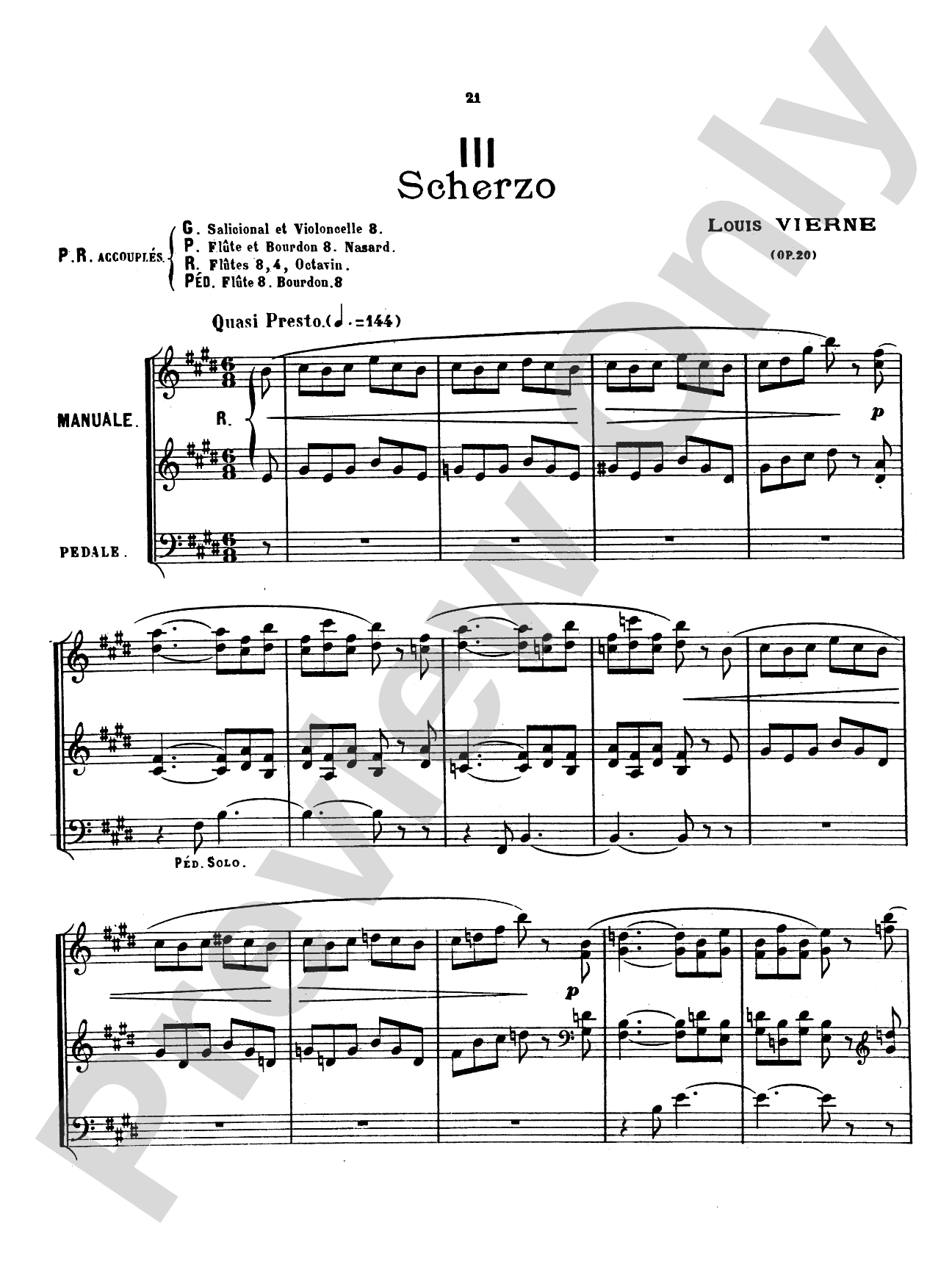
Vierne: Symphony No. 2, Op. 20 Sheet Music Preview

Vierne: Symphony No. 2, Op. 20

By Louis Vierne

Item: 00-PC-0009572

Digital Download
$1.99
Description
An Organ solo composed by Louis Vierne.

Don't just read it, hear it, play along with it, and watch your students grow with it. In MakeMusic Cloud, Vierne: Symphony No. 2, Op. 20 comes alive with professional accompaniment, adjustable tempo, and built-in practice tools that turn solo practice into real progress.

Sample Audio
No sample audio found.
Sample Video
Additional Details
Series: Kalmus Edition
Publisher: Alfred Music
Page Count: 56
SKU: 00-PC-0009572

More about this title

About the Composer: Louis Vierne

Louis Vierne (1870-1937) was a French organist and composer who spent most of his career at Notre-Dame de Chartres, where he served as titular organist for over four decades. A student of Widor and Franck, Vierne synthesized the French symphonic organ tradition with his own lyrical sensibility, creating works that remain central to the concert organ repertoire. His six organ symphonies stand as monuments of early 20th-century organ literature, combining structural sophistication with genuine emotional depth.

Vierne's technical innovations and harmonic language pushed the instrument forward while honoring its liturgical heritage. His music demands both virtuosity and interpretive maturity, making his symphonies essential studies for advanced organists seeking to understand the full expressive range of the instrument.

Why we love this

This symphony showcases the organ's capacity for symphonic scope and emotional breadth in a single unified work. The architecture and orchestration are sophisticated enough to sustain serious study and performance, yet Vierne's melodic gift keeps the music accessible and moving rather than academic.

What to expect

Vierne's Second Symphony unfolds with the grand gesture of a concert work while maintaining the introspective lyricism characteristic of French organ music. The piece balances virtuosic display with moments of intimate reverie, moving between heroic statements and delicate tonal painting across its five movements.

Who it's for

Organists working toward recital-level repertoire and those preparing for competitions or degree examinations will find this symphony an essential text. Educators seeking substantial, musically rewarding works for advanced students will appreciate both its technical demands and its genuine artistic substance.

How to get the most out of it

  • Map the registration carefully across movements and sections, noting that Vierne often shifts tonal colors within a single movement to articulate form and deepen emotional contrasts.
  • Pay particular attention to pedal passages; Vierne's writing for the feet is idiomatic and requires both precision and endurance.
  • Approach the romantic harmonic language with attention to voice leading rather than treating suspensions and chromaticism as surface effects.
  • Use the recorded performance tradition (if available) as a reference for tempo relationships between movements rather than a prescription; your instrument's acoustics may suggest different timing choices.

How to use it

Program this as a standalone recital feature to anchor a concert of French organ music, or pair it with sacred works that share Vierne's harmonic language. Its five-movement structure makes it suitable for both full recitals and shorter programs where you want to represent serious symphonic organ repertoire.

Skills your students will build

  • Reading complex organ notation across two manuals and pedal staff simultaneously
  • Voicing romantic harmonies with sensitivity to period harmonic practice
  • Executing rapid pedal passages with clarity and independence from manual lines
  • Managing registration choices to articulate large-scale musical form
  • Sustaining architectural coherence across extended movements

You May Also Like