
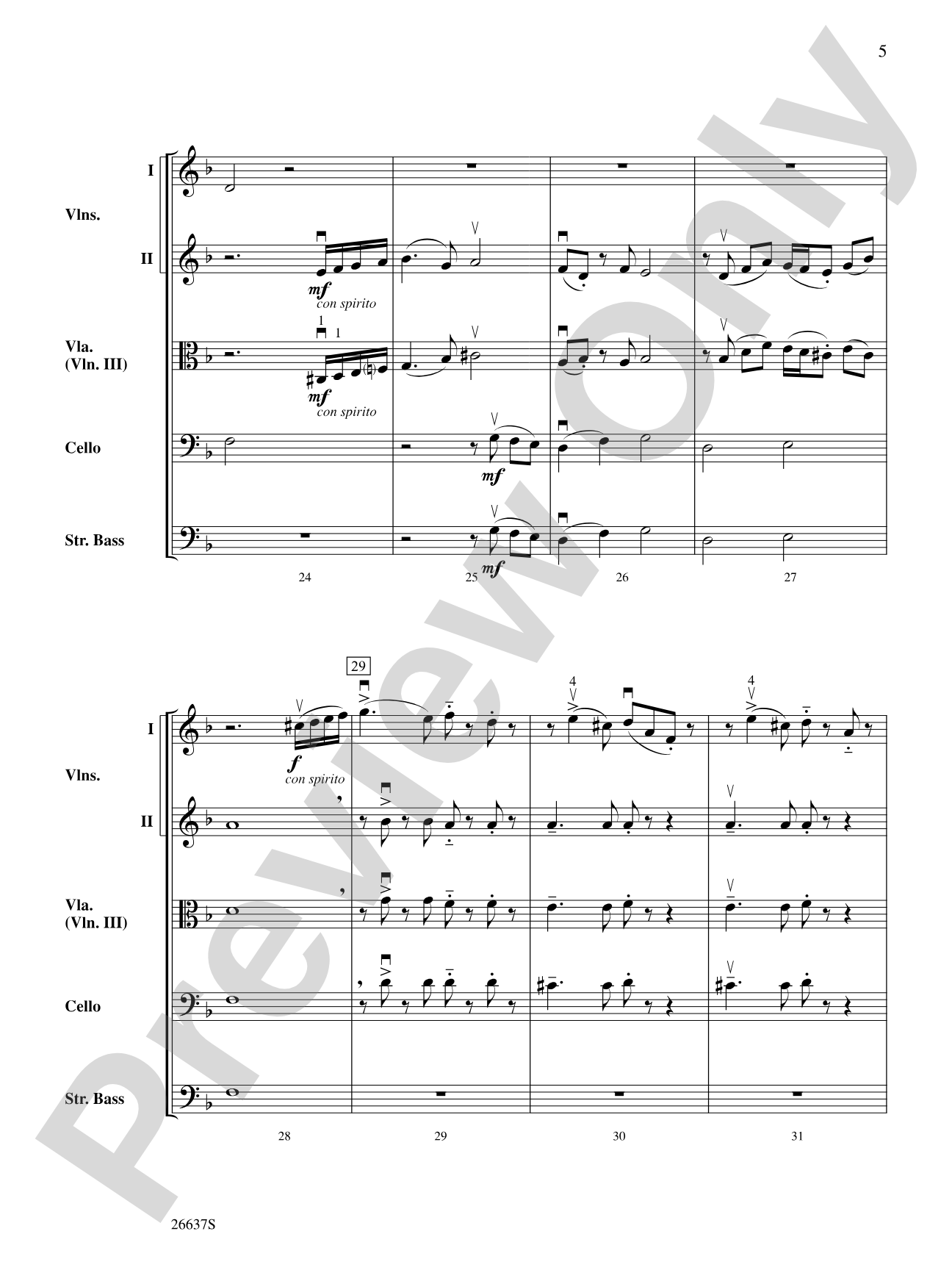
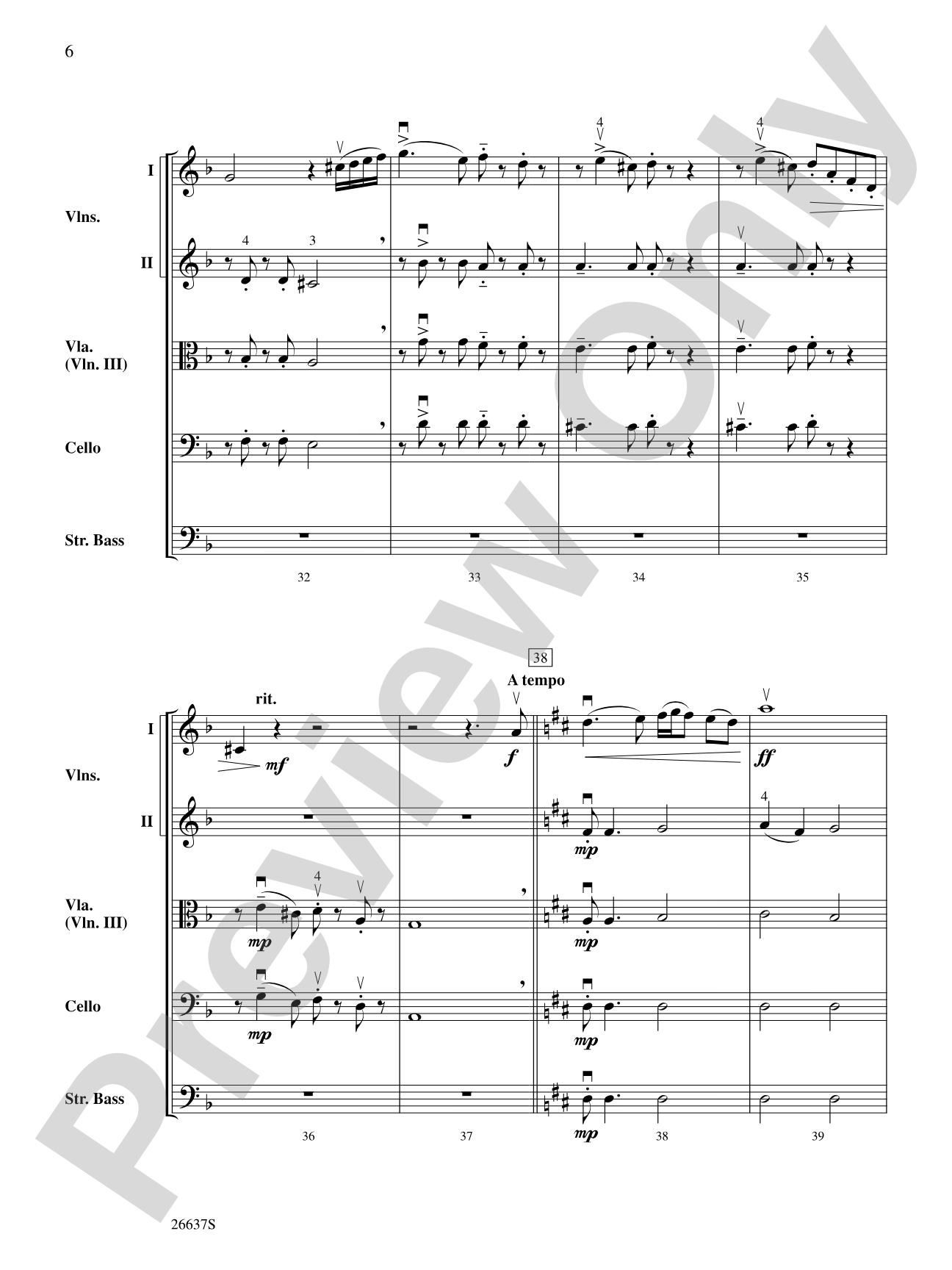
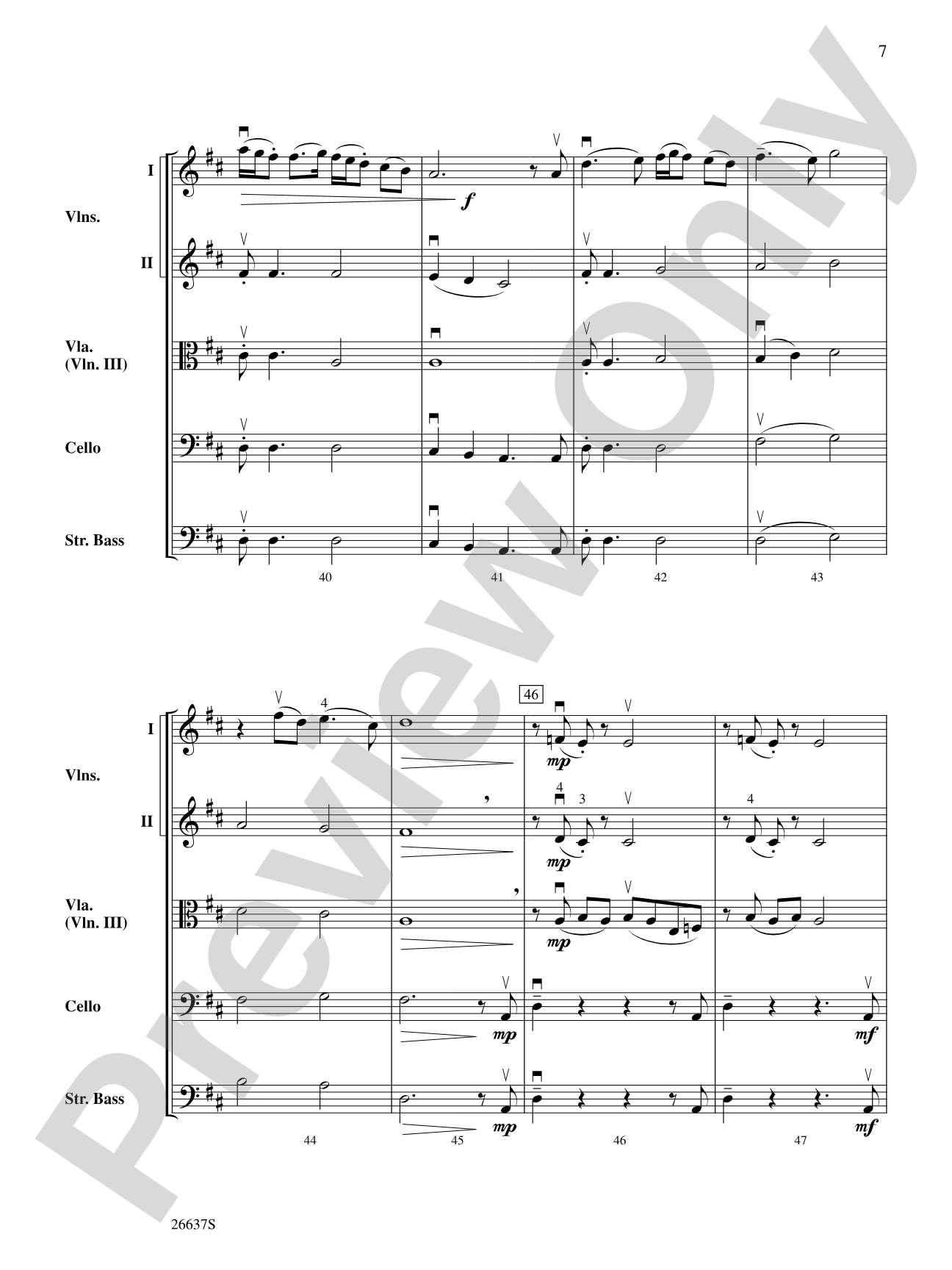
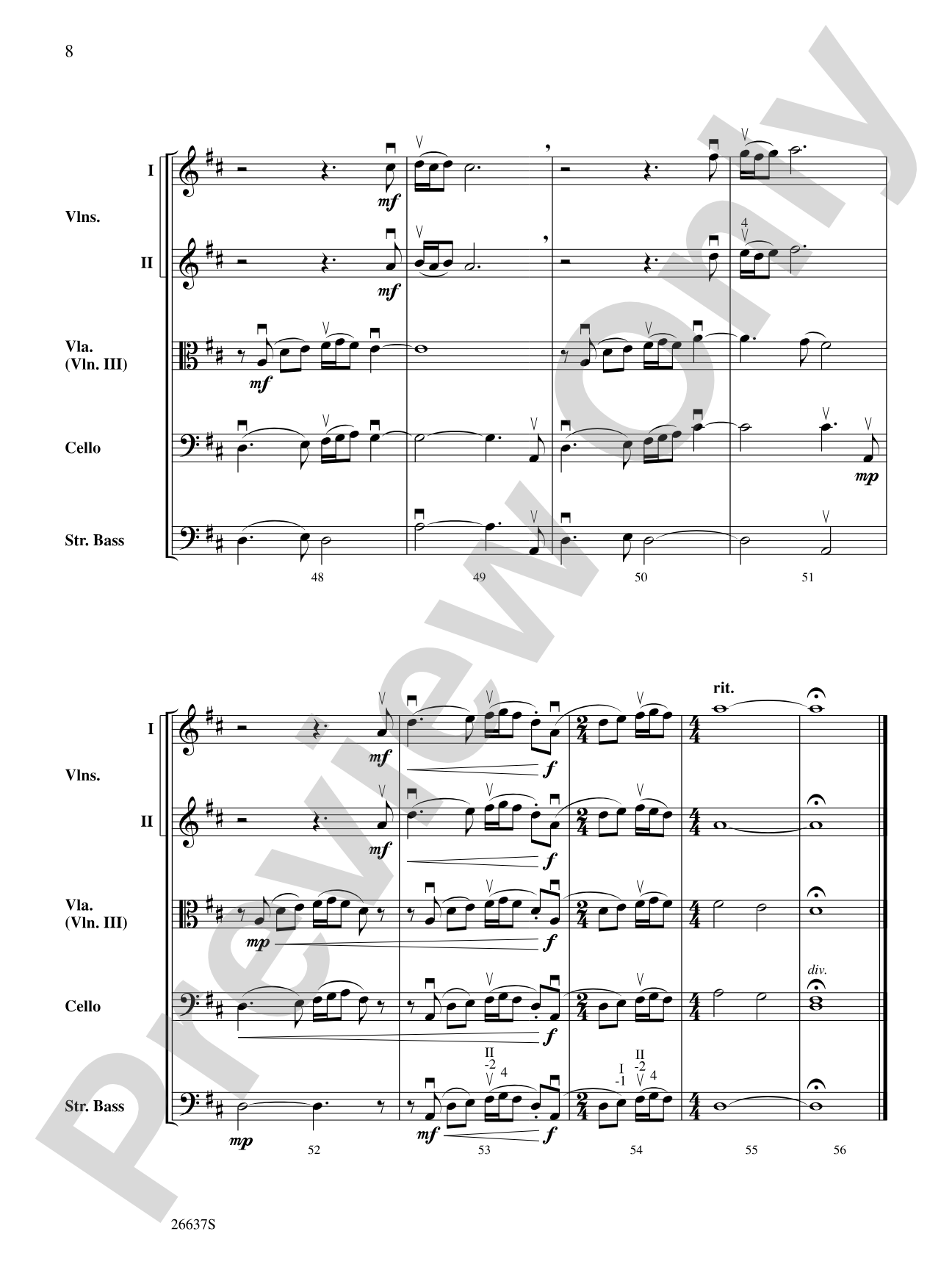

Victorious Knight: String Orchestra Conductor Score & Parts
By Derek Richard
Grade: 2.5
Item: 00-PK-0001148

$45.00
Pickup currently not available
Buy Extra Parts (Digital PDF Download)
| Product | Price | Quantity |
|---|---|---|
| Victorious Knight: Score | $7.00 | |
| Victorious Knight: 1st Violin | $5.99 | |
| Victorious Knight: 2nd Violin | $5.99 | |
| Victorious Knight: 3rd Violin (Viola [TC]) | $5.99 | |
| Victorious Knight: Viola | $5.99 | |
| Victorious Knight: Cello | $5.99 | |
| Victorious Knight: String Bass | $5.99 |
Parts Added to Cart!
Description
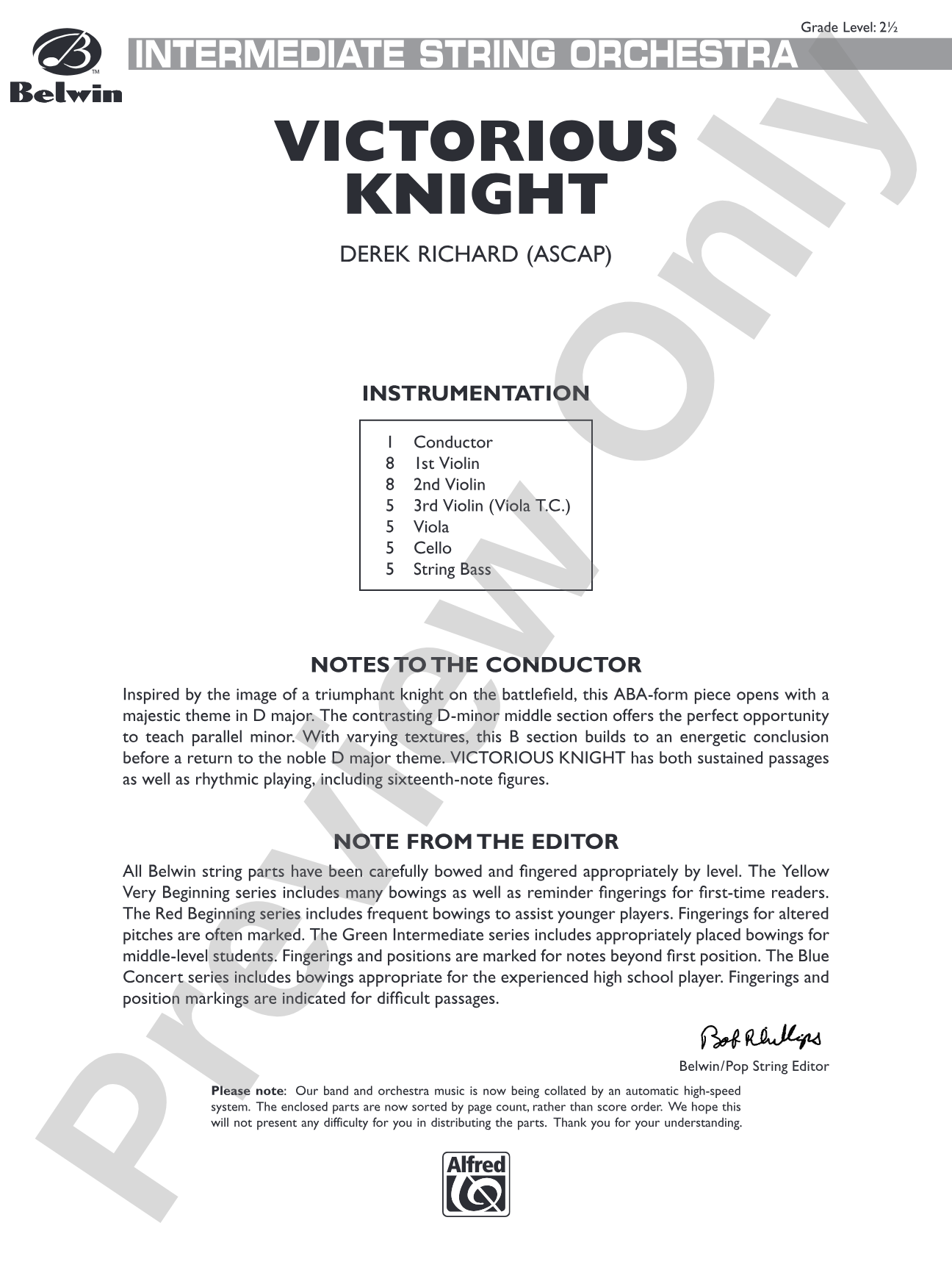
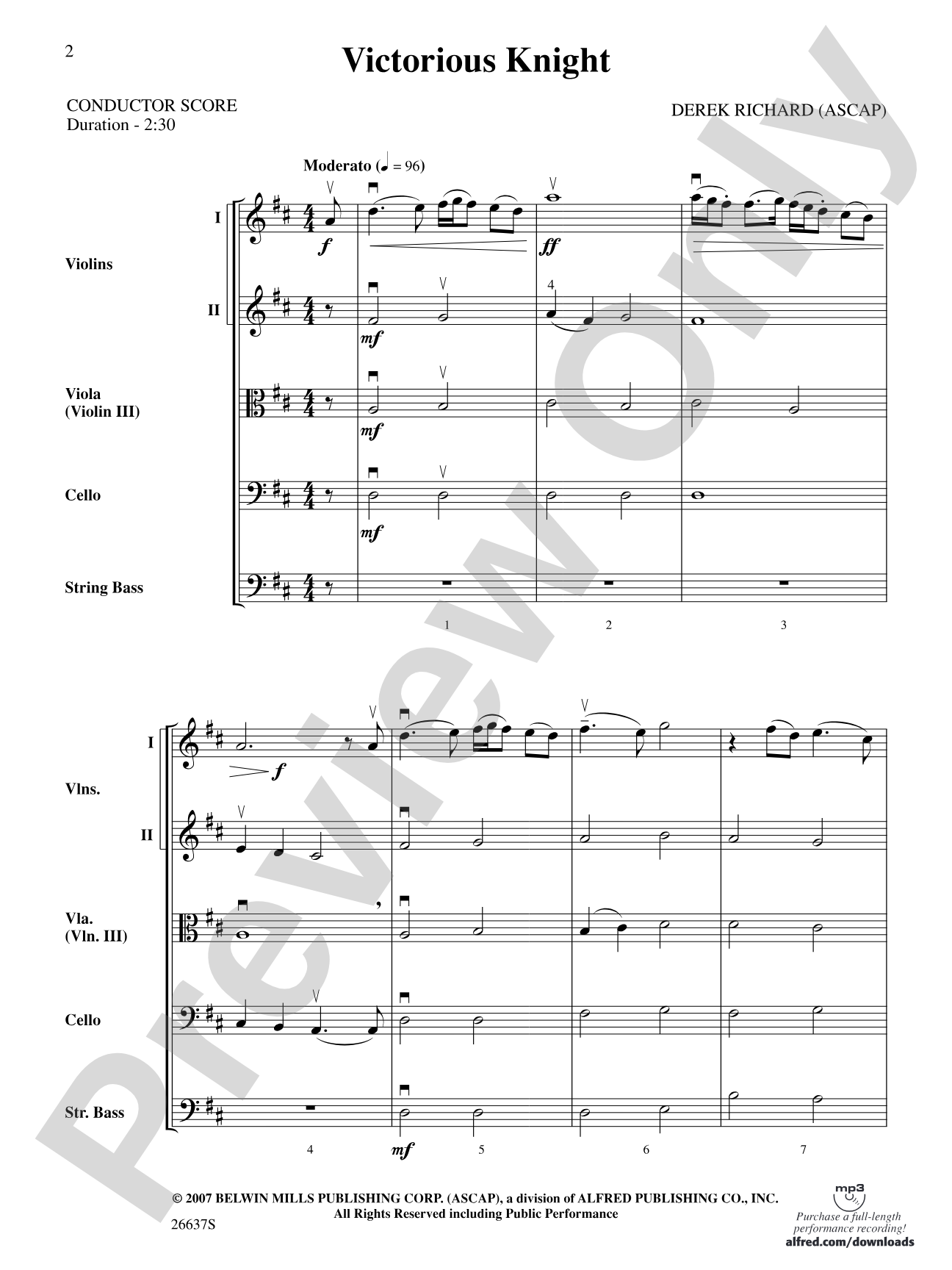
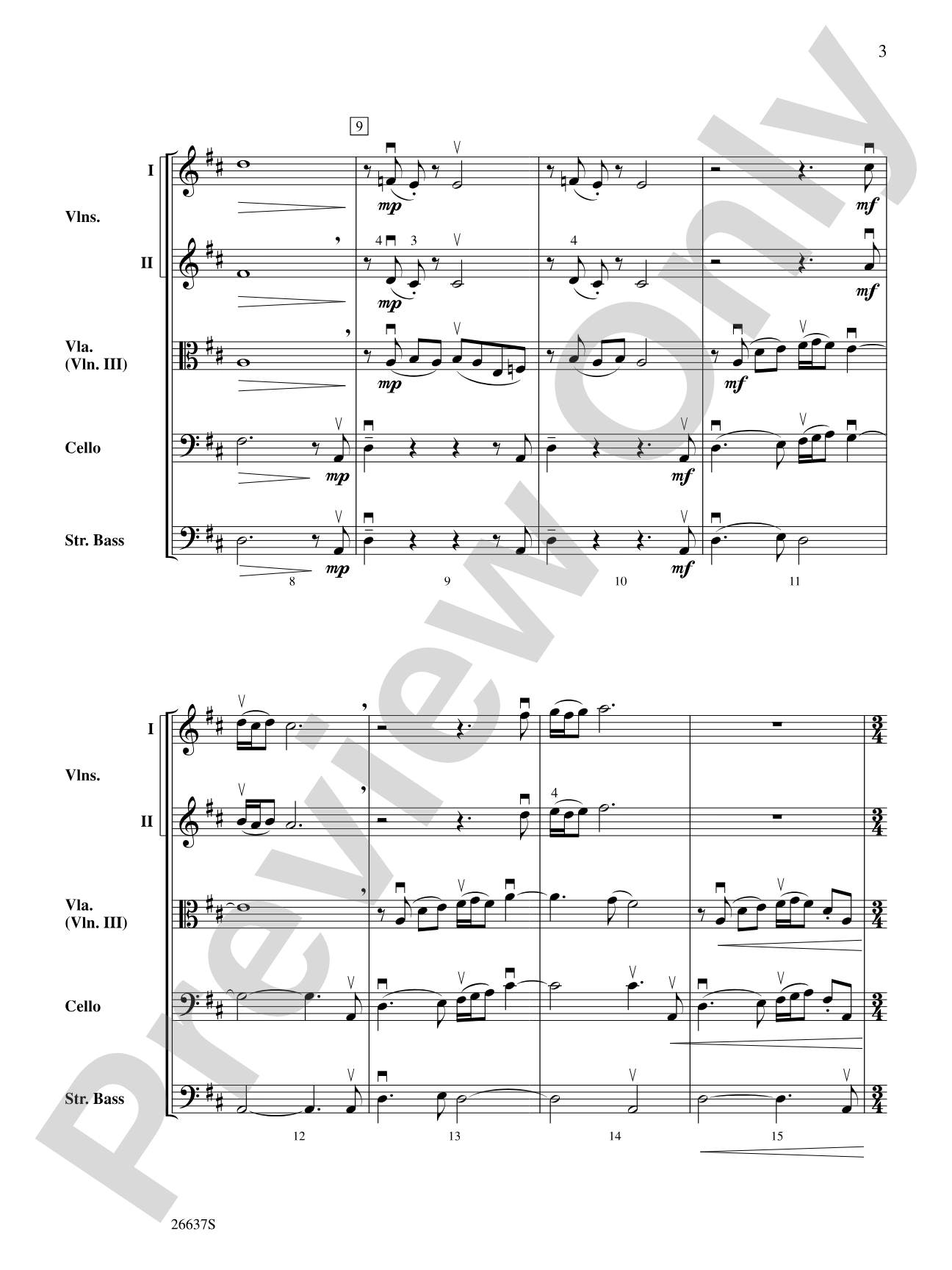
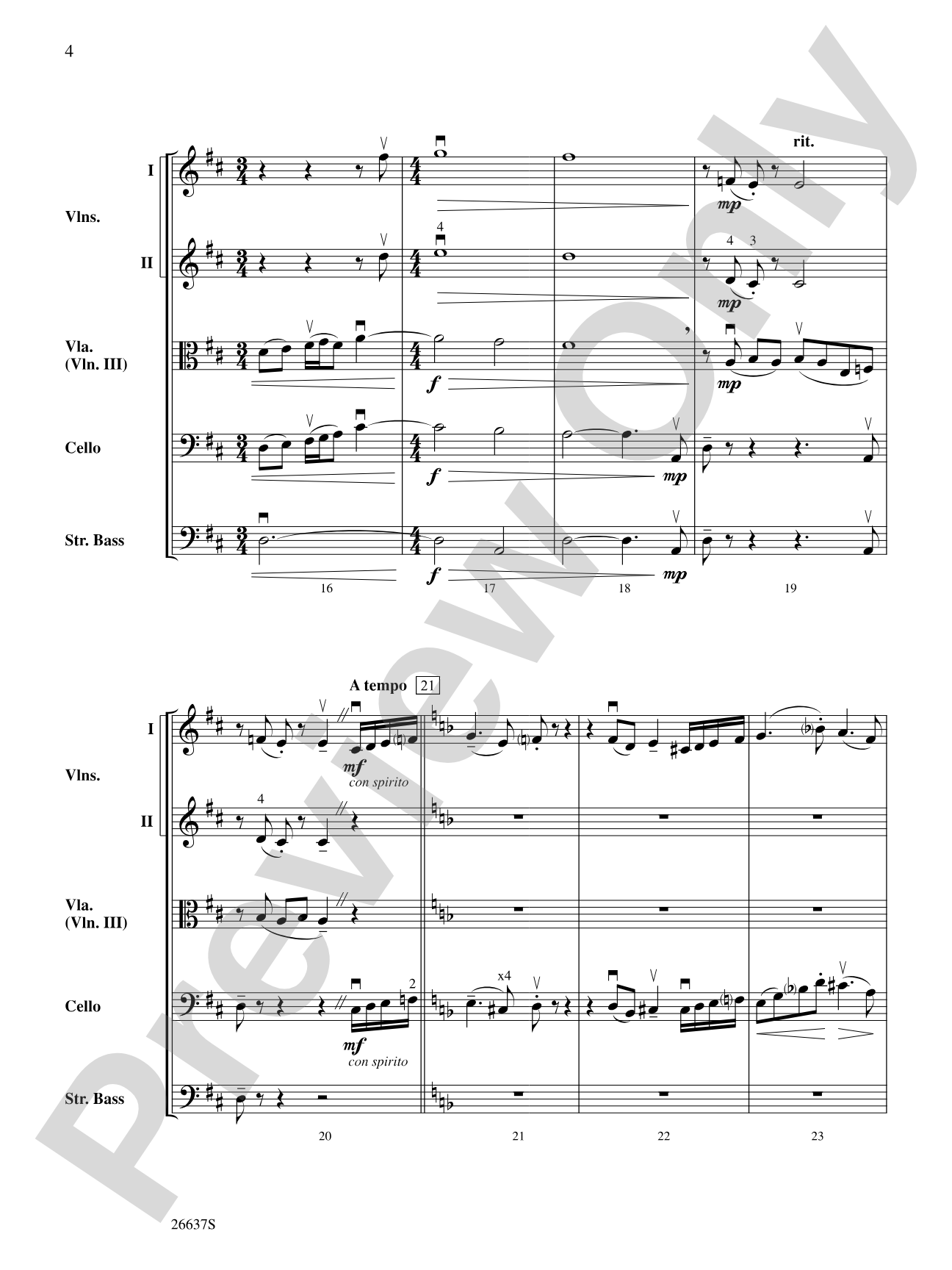
Inspired by the image of a triumphant knight on the battlefield, this piece in A-B-A form opens with a majestic theme in D-major. The contrasting middle section in D minor offers the perfect opportunity to teach parallel minor. With varying textures, the B section builds to an energetic conclusion before a return to the noble D major theme. This title is available in MakeMusic Cloud.


Don't just read it, hear it, play along with it, and watch your students grow with it. In MakeMusic Cloud, Victorious Knight: String Orchestra Conductor Score & Parts comes alive with professional accompaniment, adjustable tempo, and built-in practice tools that turn solo practice into real progress.
Open in the Player
Jump straight in and assign it today.
Start Your Free Trial
Open this title and explore the full library in minutes.
Sample Audio
1
Audio File
--:--
0:00
0:00
Sample Video
No sample videos found.
Additional Details
Series:
Belwin Intermediate String Orchestra
Publisher:
Alfred Music
Page Count:
66
SKU:
00-PK-0001148
More about this title
Why we love this
The A-B-A structure gives you a clean framework for teaching form without sacrificing musical substance. Derek Richard writes idiomatically for strings at this level, balancing accessibility with genuine compositional craft. The parallel major-minor relationship between sections creates a teaching moment that lands naturally in performance, not as an exercise.
What to expect
Noble and clear-eyed. The opening D major theme has pageantry without bombast, and the parallel minor section introduces shadow and reflection without losing forward momentum. The architecture of the piece unfolds as inevitably as a knight's journey from preparation through trial to victory.
Who it's for
String orchestras at the intermediate level who are ready to explore form and tonal relationships through music that actually sounds like something, not a textbook exercise. This works for conductors who want their students to experience how composers use key relationships as a compositional tool.
How to get the most out of it
- Shape the D major theme with a clear apex in the first phrase; let the strings find their aristocratic tone before the dynamic contrasts of the B section.
- Use the middle section's D minor as a chance to explore tonal color with your ensemble. The shift from major to parallel minor should feel like a shadow passing over the same landscape.
- Balance the energy building toward the B section's conclusion so the return to D major feels earned and genuinely triumphant, not abrupt.
How to use it
Program this as a strong opener for a concert that needs clarity and confidence. It also works well in contest settings where form and technical accuracy matter; the straightforward structure lets your ensemble demonstrate control and musicality without navigating complex harmonic language.
Skills your students will build
- Recognizing and performing A-B-A form
- Playing in parallel minor (D major to D minor relationship)
- Balancing ensemble texture across contrasting sections
- Shaping a lyrical melodic theme with phrasing and dynamics
- Building and releasing harmonic tension through key relationships