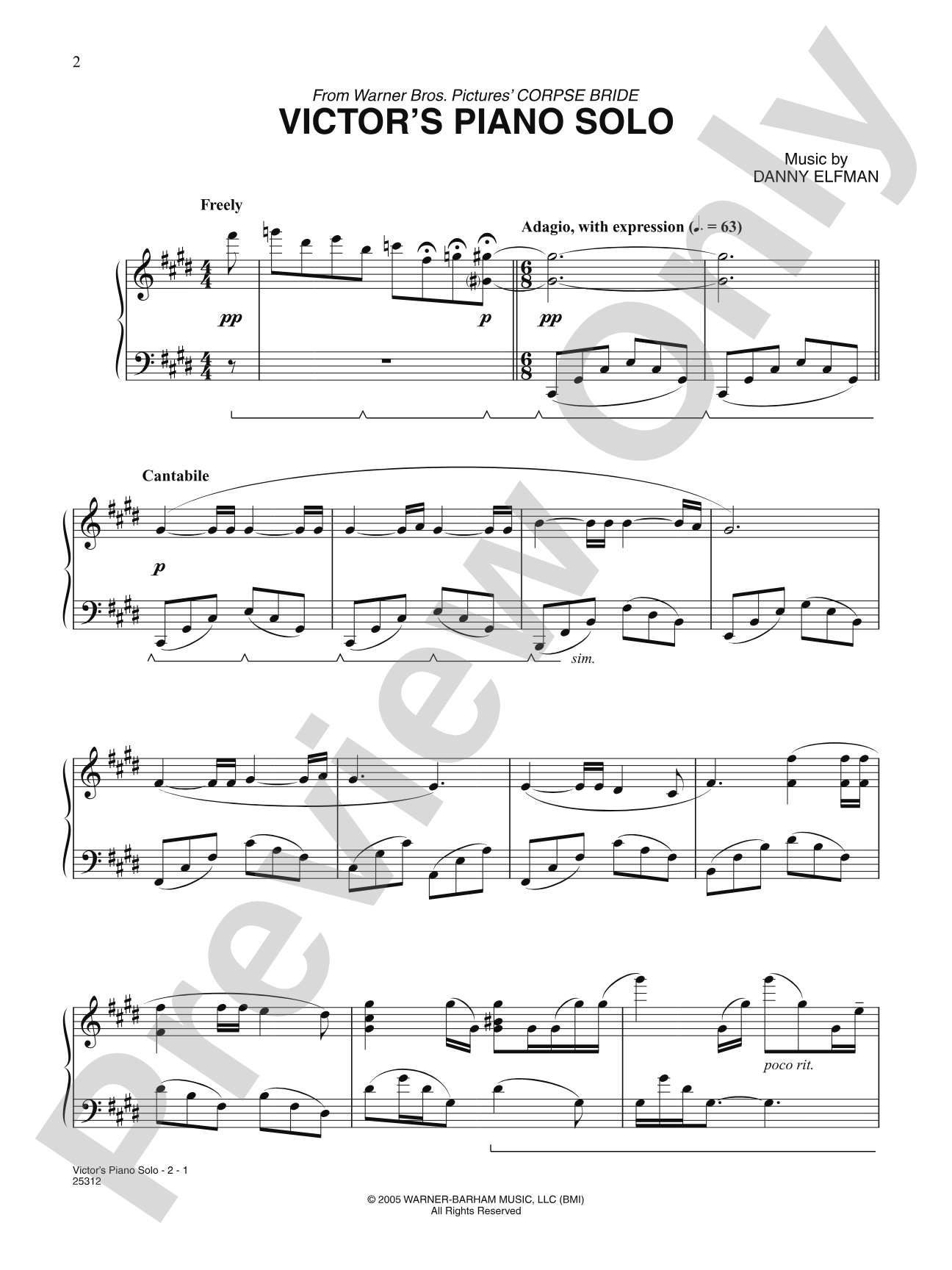
Victor's Piano Solo (from Corpse Bride) Sheet Music Preview

Victor's Piano Solo (from Corpse Bride): Piano/Vocal/Chords

Music by Danny Elfman

Item: 00-PIP-000427

Digital Download
$3.99
Description
Alfred is pleased to present the sheet music for "Victor's Piano Solo" from the Corpse Bride motion-picture soundtrack by Danny Elfman. This sheet music provides the song's lyrics with piano and chord arrangements.

Victor's Piano Solo (from Corpse Bride): Piano/Vocal/Chords isn't in MakeMusic Cloud just yet...but it could be. Let us know you'd like to see it, and you'll help shape what comes next. In the meantime, start a free trial and dive into thousands of interactive titles your students can play along with today.

Sample Audio
No sample audio found.
Sample Video
Additional Details
Publisher: Alfred Music
Page Count: 4
SKU: 00-PIP-000427

More about this title

About the Composer: Danny Elfman

Danny Elfman stands among the most prolific film composers of the past four decades, with a gift for crafting melodies that become inseparable from their visual moments. His work spans comedy, horror, fantasy, and drama; he has scored over 100 films and created themes for multiple television series, often collaborating with director Tim Burton to define a distinctly whimsical and darkly emotional aesthetic.

Elfman's training in orchestration and classical music theory underlies his ability to blend accessible, hummable lines with sophisticated harmonic language. His compositions have earned Grammy and Oscar nominations and remain teaching staples in film music courses and contemporary music classes, offering students direct entry into how functional harmony and memorable melody serve storytelling.

Why we love this

This piece captures the wistful tenderness at the heart of Corpse Bride, giving singers and pianists a chance to collaborate on a film score moment that stands beautifully on its own. The piano writing is inventive without overwhelming younger players, and the chord symbols make it accessible for jazz and contemporary music study while maintaining the emotional nuance that makes Elfman's work so rewarding to perform.

What to expect

The piece inhabits a tender, melancholic space. The piano establishes an intimate atmosphere while the vocal line carries yearning and vulnerability, drawing the listener into a quiet moment of longing and acceptance. Harmonically, it moves through gentle chromatic shifts that suggest sadness without descending into darkness.

Who it's for

This arrangement serves singers in contemporary musical theater or cabaret settings, as well as pianists performing it as a solo with sung accompaniment. It works equally well for intermediate to advanced high school and college musicians, and for adults exploring film music in private lessons or ensemble contexts.

How to get the most out of it

  • Honor the rubato implied in the piano part; this is a reflective solo, not a march. Let the accompaniment breathe with the vocal line rather than locking to a strict tempo.
  • Balance the voice so the piano's countermelodies remain audible. Elfman layers his accompaniments deliberately, and the instrumental voice is part of the storytelling.
  • Pay attention to dynamic markings and use them to shape phrase arcs. This piece relies on subtle color shifts rather than broad dynamic swings.
  • Familiarize yourself with the film version if you haven't heard it. Understanding the scene context will inform your phrasing and emotional choices.

How to use it

Program this alongside other film music selections to build a themed concert, or use it as a bridge piece in a recital that moves between classical and contemporary repertoire. It also serves as an excellent audition or examination piece for students exploring song interpretation and film music in higher education settings.

Skills your students will build

  • Interpreting chord symbols in a theatrical context
  • Balancing vocal melody with pianist-driven accompaniment
  • Shaping lyrical lines through rubato and dynamic inflection
  • Sight-reading intermediate piano reduction scores
  • Connecting harmonic analysis to emotional expression

You May Also Like