

Veni Jesu: SSA, a cappella Choral Octavo
Music by Luigi Cherubini / arr. Russell Robinson
Item: 00-PO-0006039
$2.05
Minimum order quantity: 20 copies
Pickup currently not available
Description
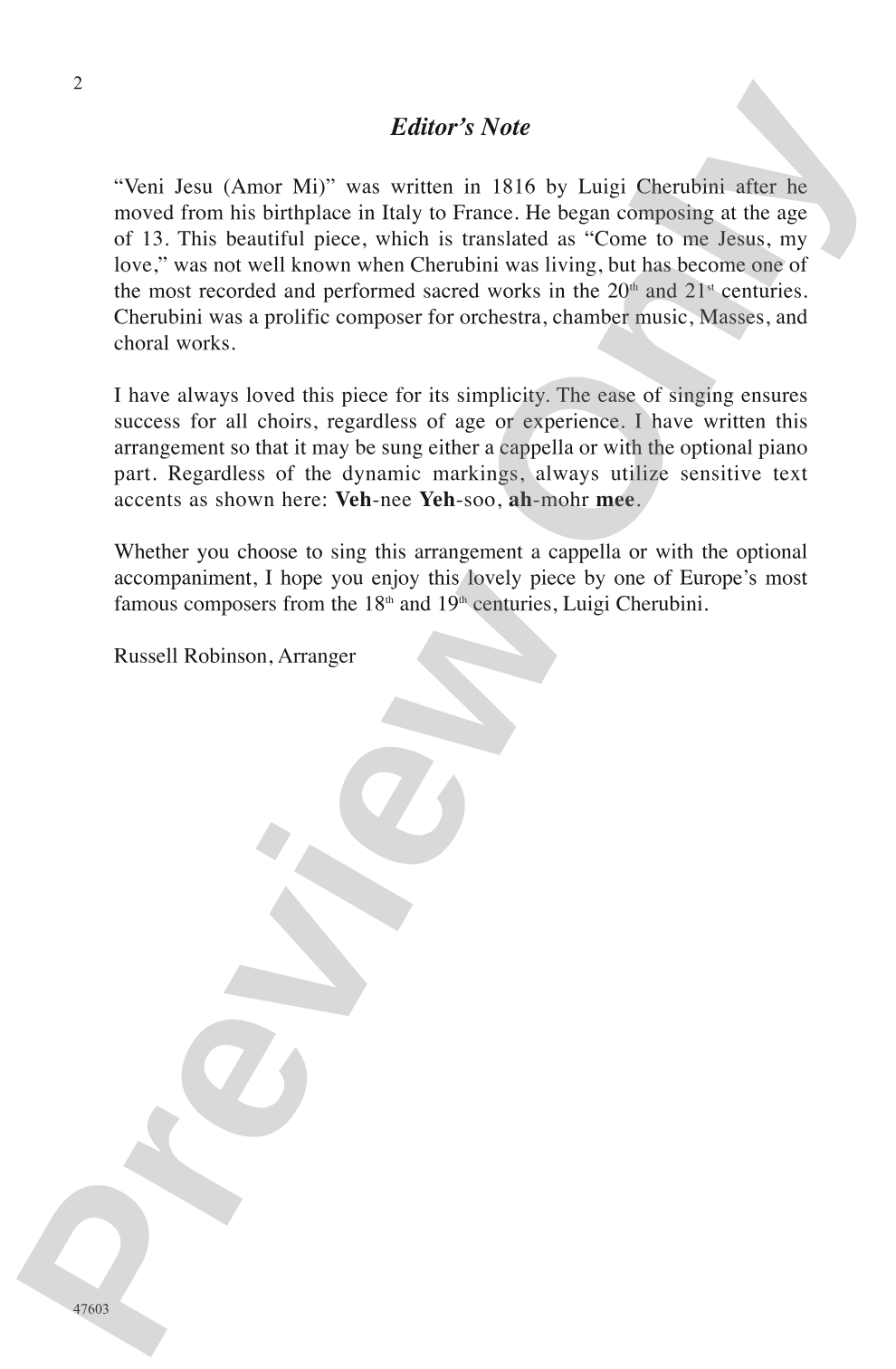
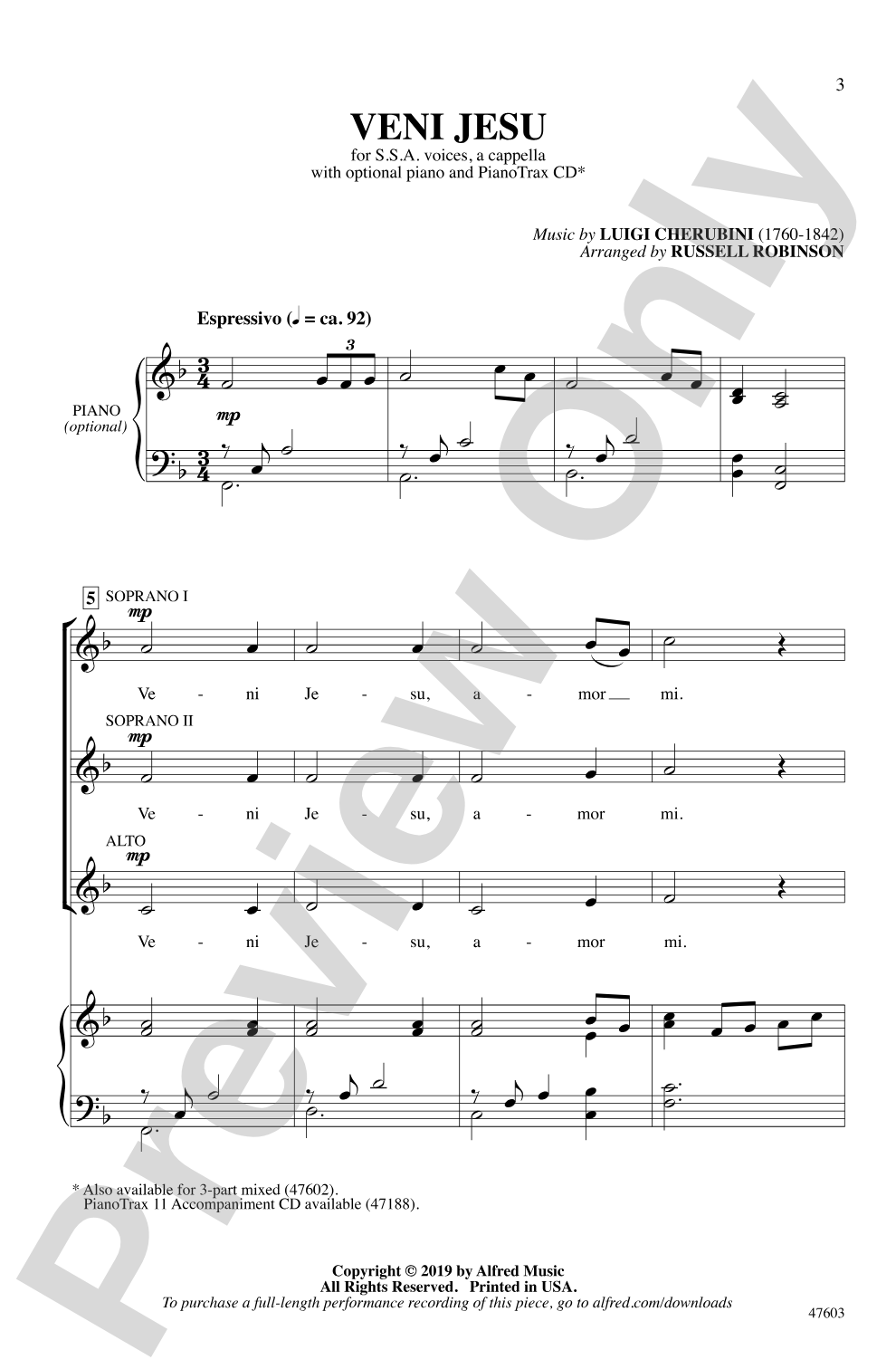
Cherubini's 18th-century composition has become one of the most recorded and performed masterworks of our time. Dr. Robinson's well-conceived arrangement can be performed either a cappella or with the supportive piano accompaniment, providing flexibility for concert or contest programming. An accessible Latin text (with just four words in total) and sensible voice leading make this an ideal choice for developing choirs.


Veni Jesu: SSA, a cappella Choral Octavo isn't in MakeMusic Cloud just yet...but it could be. Let us know you'd like to see it, and you'll help shape what comes next. In the meantime, start a free trial and dive into thousands of interactive titles your students can play along with today.
Request This Title
Tell us you want it.
Start Your Free Trial
Explore everything that's ready to play right now.
Sample Audio
1
Audio File
--:--
0:00
0:00
Sample Video
No sample videos found.
Additional Details
Series:
Alfred Choral Designs
Publisher:
Alfred Music
Page Count:
8
SKU:
00-PO-0006039
More about this title
About the Composer: Luigi Cherubini
Luigi Cherubini (1760-1842) was an Italian composer whose sacred music defined the classical choral tradition. Born in Florence and trained in counterpoint, he spent much of his career in Paris, where he became music director of the royal chapel and later the Paris Conservatoire. His liturgical works, including motets and masses, exemplify rigorous harmonic writing and clear textural clarity, qualities that have kept his music central to choral repertoires for nearly two centuries.
Cherubini's sacred output earned him the respect of Beethoven and later generations of composers. His pieces remain staples of collegiate and community choirs precisely because they balance technical sophistication with genuine musicality. Teachers value his music for its clean voice leading and emotional restraint, making it accessible without sacrificing artistic integrity.
Why we love this
Cherubini's original composition carries real gravitas, yet Russell Robinson's SSA arrangement makes it genuinely approachable for developing choirs without diluting the music's dignity. The Latin text contains only four words, removing linguistic barriers while the logical voice leading lets singers focus on intonation and blend rather than wrestling with complexity. Programming this builds your ensemble's credibility while serving a genuine learning purpose.
What to expect
The piece radiates a quiet confidence, with its spare Latin text and clear harmonic movement creating moments of genuine tenderness. The writing sits comfortably in the upper voices while maintaining the architectural clarity Cherubini favored, giving singers the satisfying feeling of singing something both beautiful and substantial.
Who it's for
This arrangement works for developing SSA choirs, particularly those preparing for festival or concert performance. Singers gain exposure to a work by a significant historical composer while building skills in Renaissance-influenced counterpoint and Latin diction without overwhelming difficulty.
How to get the most out of it
- Shape each phrase with the text's weight in mind. Even with minimal Latin, the words carry liturgical significance; resist the urge to rush through sections, allowing silence and space to create reverence.
- Balance the voice parts by remembering that SSA writing often places harmonic weight in the alto line. Encourage altos to sing with vocal presence so they anchor the chord without overwhelming the sopranos.
- Consider the dynamic arc across the entire piece. Small dynamic shifts between phrases create musical momentum without requiring dramatic changes; this approach suits the piece's contemplative character.
- If performing a cappella, establish a strong unison entrance to lock intonation from the start. A moment of silence before the opening statement helps singers find their pitch and centers the ensemble's focus.
How to use it
Place this on a concert devoted to sacred music or as a centerpiece for a festival program where it can stand alongside newer sacred works. The brevity of the text and the piece's eight-page length make it a natural fit for a program that explores different eras of choral writing, giving audiences a direct line to the classical choral tradition.
Skills your students will build
- Reading and performing Renaissance-influenced counterpoint with clear voice independence
- Singing Latin text with appropriate phrasing and diction
- Building intonation awareness through harmonic clarity and sustained vowels
- Balancing ensemble blend across three voice parts in close harmony
- Understanding historical choral writing and its influence on contemporary sacred music