
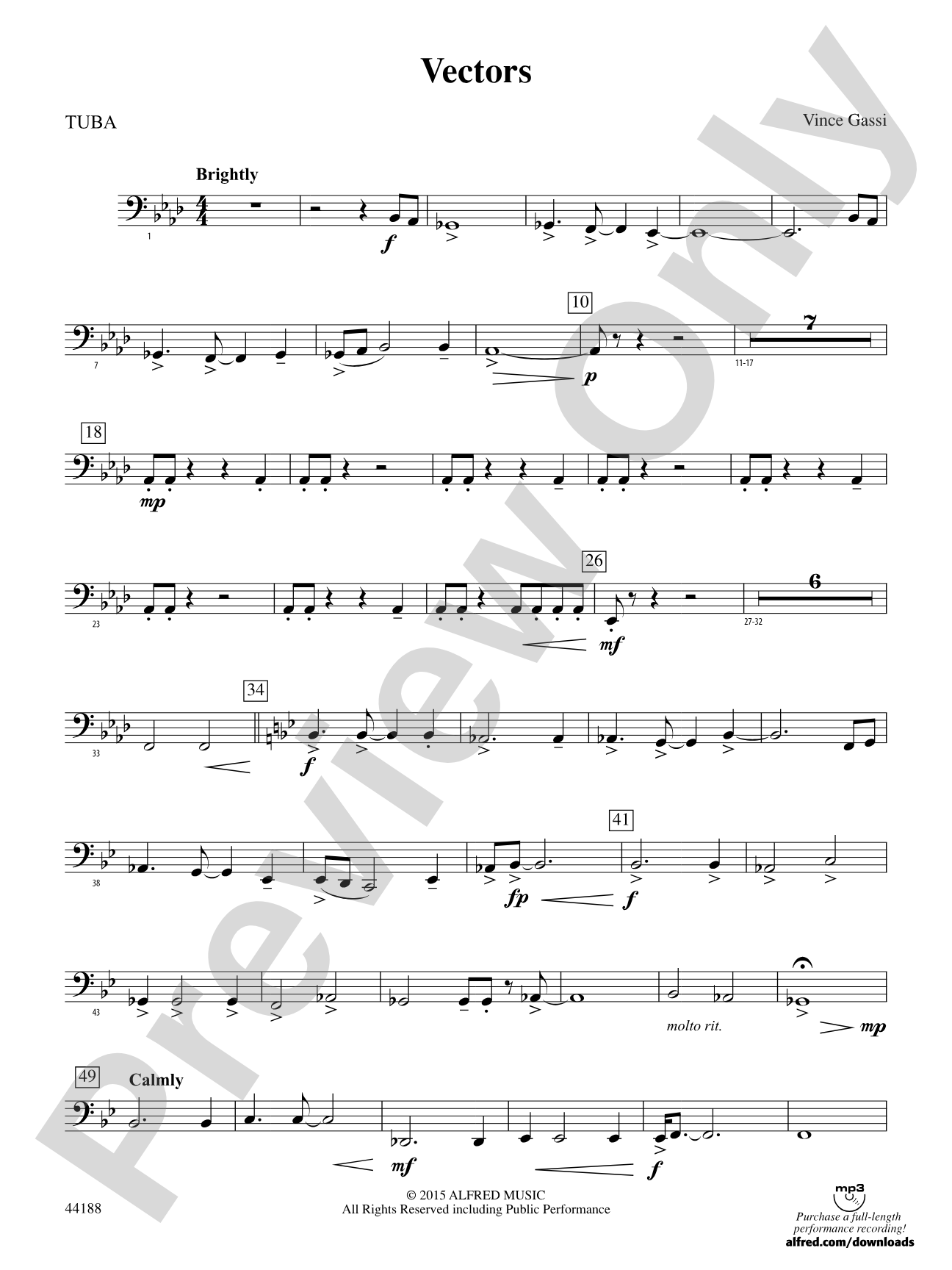

Vectors: Tuba
By Vince Gassi
Grade: 3 (Medium)
Item: 00-PC-0017038_TB1
$5.99
Pickup currently not available
Description
Melodies are like vectors. They have direction and magnitude that play with, and against, each other. This new work begins with vector 1 (woodwinds) followed by vector 2 (brass) fluidly issuing forth in contrary motion. Against a static vector (horn and percussion), euphonium and bassoon execute the prime vector. Other vectors interact throughout; slow vectors, fast vectors, and eventually, terminating vectors. Let the energy and drive in this dynamic work inspire your band to scale new heights. (3:30)


Don't just read it, hear it, play along with it, and watch your students grow with it. In MakeMusic Cloud, Vectors: Tuba comes alive with professional accompaniment, adjustable tempo, and built-in practice tools that turn solo practice into real progress.
Open in the Player
Jump straight in and assign it today.
Start Your Free Trial
Open this title and explore the full library in minutes.
Sample Audio
1
Audio File
--:--
0:00
0:00
Sample Video
No sample videos found.
Additional Details
Series:
Young Symphonic
Publisher:
Alfred Music
Page Count:
256
SKU:
00-PC-0017038_TB1
More about this title
About the Composer: Vince Gassi
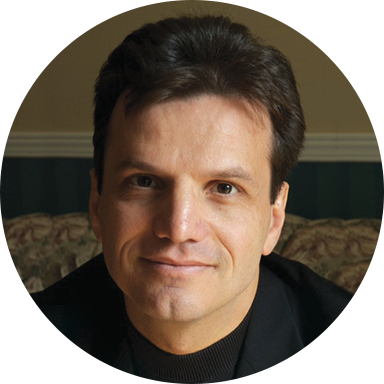
Vince Gassi has shaped instrumental music education for over two decades as a teacher, conductor, and prolific composer. His catalog exceeds 100 published works, all distinguished by creative orchestration and genuine musical substance. He holds a Bachelor of Music from the University of Western Ontario and studied composition and arranging at the Dick Grove School of Music in Los Angeles before completing his Ph.D. at York University in Toronto.
A frequent guest conductor, adjudicator, and clinician across North America and Canada, Gassi remains in constant demand for his expertise. His seminar work focuses on creative engagement and practical workflow solutions for music directors. His compositions regularly appear on international concert and contest programs and have been performed throughout North America, Europe, and Japan, with frequent appearances at the Midwest Clinic in Chicago.
Why we love this
Gassi's use of the vector metaphor transforms a potentially abstract concept into concrete, audible musical gestures. Woodwinds and brass enter in deliberate contrary motion while static harmonic anchors shift beneath them, creating layers of momentum that build genuine excitement without sacrificing musical coherence. The piece rewards engaged listening and demonstrates sophisticated orchestration at a grade that feels accessible rather than simplistic.
What to expect
Dynamic energy propels this piece forward from the first moments, with woodwind and brass entries creating clear momentum and dialogue. The interplay of fast and slow lines, moving and stationary harmonic pillars, generates a sense of purposeful architecture that keeps listeners engaged throughout its three-and-a-half-minute arc.
Who it's for
Concert bands at the intermediate level (grades 7-9 and strong middle school ensembles) will find this work both musically substantive and technically within reach. Directors programming contests, festivals, or concert series will appreciate a piece that challenges young musicians through compositional sophistication rather than extreme technical demands.
How to get the most out of it
- Establish the directional quality of each melodic line before ensemble rehearsal; mark the vector concept (direction, speed, energy level) directly into your parts to anchor student understanding of their role within the larger musical architecture.
- Conduct the slower vectors with a lighter touch than the fast ones to let contrast emerge naturally; avoid the temptation to level dynamics across all lines.
- Pay particular attention to the euphonium and bassoon as the prime vector. These voices carry essential momentum, and clarity here prevents the work from feeling muddled when multiple lines interact.
- Build the final terminating vectors deliberately. The piece's energy arc depends on clear deceleration as certain vectors resolve and others fade.
How to use it
This work fits naturally into a concert built around contemporary band literature or serves as a dynamic centerpiece in a mixed program. Its distinctive conceptual frame (vector theory made audible) also works effectively for educational concerts where you want to highlight modern compositional thinking to audiences.
Skills your students will build
- Hearing and performing independent melodic lines in contrary motion
- Maintaining steady pulse while adjacent sections accelerate or decelerate
- Balance and blend when multiple vectors (instrumental choirs) interact simultaneously
- Listening to harmonic anchors (static vectors) while executing rhythmic and melodic movement above them
- Phrasing with direction and purpose rather than phrase-end drops