
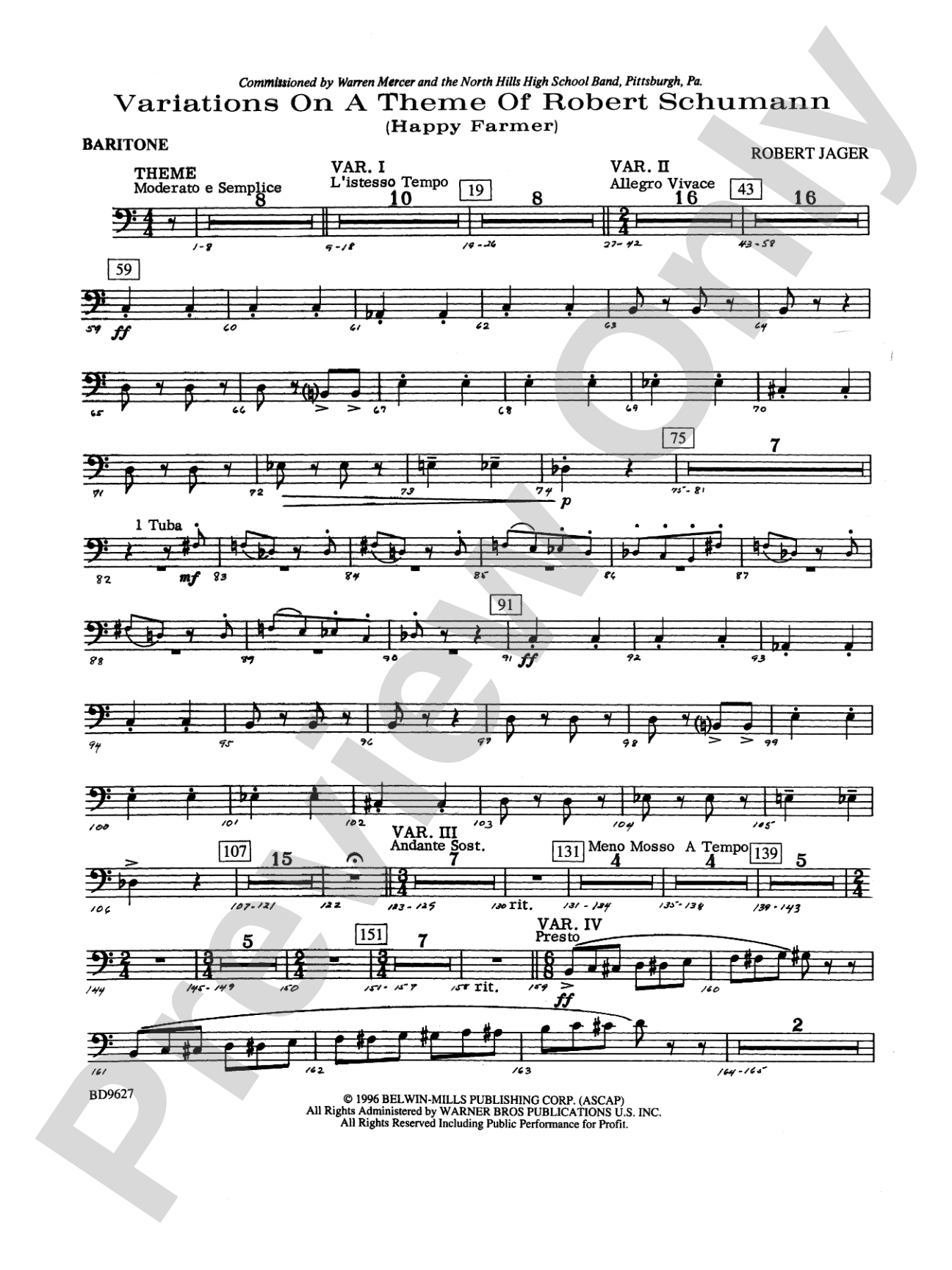

Variations on a Theme of Robert Schumann: Baritone B.C.
[Robert Schumann] By Robert Jager
Grade: 4.5 (Medium to Medium Advanced)
Item: 00-PC-0002028_BBC1
$3.00
Pickup currently not available
Description
In the conductor's notes by the composer, Robert Jager says, "The theme is 'The Happy Farmer,' and the variations evolve one from the other throughout the work using rhythmic, melodic and intervallic relationships for their basis of variance." This major work, long unavailable, once again brightens the concert band programming of professional, service, collegiate, and quality high school organizations everywhere. (9:23) This title is available in MakeMusic Cloud.


Don't just read it, hear it, play along with it, and watch your students grow with it. In MakeMusic Cloud, Variations on a Theme of Robert Schumann: Baritone B.C. comes alive with professional accompaniment, adjustable tempo, and built-in practice tools that turn solo practice into real progress.
Open in the Player
Jump straight in and assign it today.
Start Your Free Trial
Open this title and explore the full library in minutes.
Sample Audio
1
Audio File
--:--
0:00
0:00
Sample Video
Additional Details
Series:
Belwin Classic Band
Publisher:
Alfred Music
Page Count:
316
SKU:
00-PC-0002028_BBC1
More about this title
About the Composer: Robert Jager
Robert Jager stands among the most prolific and respected composers for concert band, with a catalog spanning decades of original works and arrangements. His compositions are performed regularly by professional ensembles, university bands, and high school programs, reflecting a deep understanding of band sonority and the pedagogical needs of developing musicians.
Why we love this
Jager's variations unfold with compositional sophistication that keeps ensembles engaged across nine minutes of continuous musical development. The work moves beyond surface-level ornamentation; each variation genuinely transforms the material through rhythm, melody, and harmony rather than simply dressing up the same theme, making it a study in formal mastery that audiences hear as fresh musical invention.
What to expect
Schumann's "The Happy Farmer" emerges transformed across each variation, sometimes energized and rhythmically propulsive, sometimes introspective and reimagined through different harmonic lenses. The work balances the warmth of Romantic melody with the structural clarity of theme-and-variations form, creating a satisfying arc that feels both intimate and grand.
Who it's for
Professional bands, service bands, college ensembles, and high school programs with solid technical command will find a substantial concert work that rewards both polish and interpretive depth. This is repertoire for groups ready to tackle a full-length masterwork that demands precision and musicianship without requiring virtuosic soloists.
How to get the most out of it
- Balance the accompaniment carefully during each variation so thematic material always cuts through; Jager's orchestration can obscure the transformations if inner voices overwhelm.
- Mark the key moments where rhythmic or intervallic relationships shift; these pivot points require slightly different character work from section to section even when players might assume they're repeating familiar material.
- Use the conductor score's detailed notes as rehearsal guides; Jager's own commentary reveals exactly which elements define each variation and where to focus sectional preparation.
- Shape transitions between variations as deliberate musical moments rather than stopping points; the theme evolves continuously, so momentum carries the listener through the full arc.
How to use it
Program this as a substantial centerpiece on a concert with shorter works on either side, allowing the variations to anchor a program without competing with other major pieces. It serves equally well as a festival or contest selection, offering judging panels a clear window into ensemble musicianship and interpretive control across extended formal development.
Skills your students will build
- Sustaining intonation and blend across extended melodic lines
- Tracking and executing rhythmic transformations of a unified theme
- Balance and transparency in complex multi-voice orchestrations
- Phrase shaping through variations with different harmonic and melodic contexts
- Reading and interpreting a major concert work over 9+ minutes