Variations on a Theme of Haydn: E-flat Alto Saxophone Sheet Music Preview

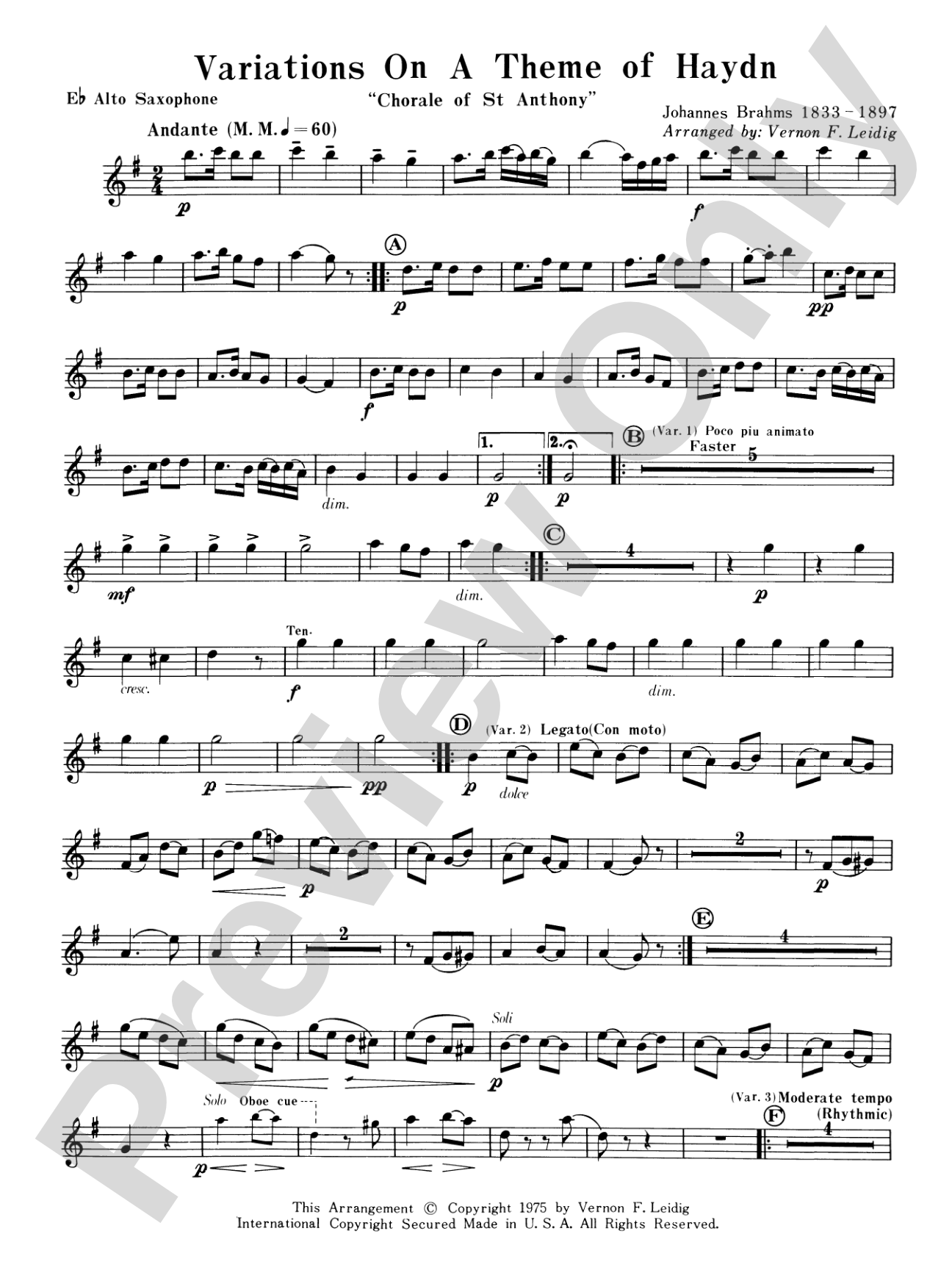
Variations on a Theme of Haydn: E-flat Alto Saxophone

By Johannes Brahms / arr. Vernon Leidig

Grade: 3

Item: 00-PC-0014778_AX1

Digital Download
$3.00
Description

Don't just read it, hear it, play along with it, and watch your students grow with it. In MakeMusic Cloud, Variations on a Theme of Haydn: E-flat Alto Saxophone comes alive with professional accompaniment, adjustable tempo, and built-in practice tools that turn solo practice into real progress.

Sample Audio
No sample audio found.
Sample Video
Additional Details
Series: Highland/Etling Full Orchestra
Publisher: Alfred Music
Page Count: 208
SKU: 00-PC-0014778_AX1

More about this title

About the Composer: Johannes Brahms

Johannes Brahms (1833-1897) stands as one of the Romantic era's most consequential composers, bridging the musical language of Beethoven with the expressive possibilities of his own time. His mastery of large forms—symphonies, concertos, chamber works—established him as a titan of orchestral writing, and his influence on instrumental music remains unmatched among his contemporaries.

Why we love this

Vernon Leidig's arrangement makes this Brahms masterwork accessible to intermediate orchestras without sacrificing the work's architectural integrity or harmonic sophistication. The Grade 3 setting opens the door for ensembles that might not have the technical firepower for the original full score, yet the variations framework keeps the musical architecture intact and the thematic content compelling.

What to expect

Elegant and architecturally assured. The work unfolds as a series of musical ideas, each variation illuminating different facets of Brahms's theme through orchestral color, rhythmic transformation, and harmonic reharmonization. There's a sense of inevitability to how each variation emerges from the last, creating a journey that feels both inevitable and full of discovery.

Who it's for

Conductors leading intermediate to upper-intermediate full orchestras who want to program substantial, intellectually rewarding repertoire without requiring advanced soloistic technique from every chair. This arrangement invites students to engage with genuine symphonic thinking at a level that matches their ensemble's capabilities.

How to get the most out of it

  • Balance the dialogue between sections carefully; the variations distribute thematic material across different instrumental choirs, and clarity of color matters as much as dynamic precision.
  • Attend to the phrasing across variations. Even when material passes between orchestral families, maintain a single musical line through each variation so the form reads clearly for the audience.
  • Use careful control of tempo relationships between variations. Brahms's variations shift character significantly, and subtle tempo adjustments can heighten the contrast without losing structural unity.
  • Shape the accompaniment figures with as much care as the primary themes. Many variations feature rich harmonic textures in supporting voices that give the work its depth.

How to use it

Program this as a concert centerpiece for a concert built around Romantic orchestration or as evidence of compositional craft for a concert exploring theme and variation. It pairs well with smaller Brahms orchestral works or with contemporaries like Dvořák, anchoring the program with a substantial, rewarding musical statement.

Skills your students will build

  • Recognizing and tracking thematic transformation across variations
  • Balancing sustained thematic material with accompaniment figures across multiple orchestral families
  • Executing color changes and timbral shifts that distinguish one variation from the next
  • Maintaining structural clarity in a multi-section form
  • Reading and executing Romantic-era harmonic language with confidence

You May Also Like