Variations on a Theme by Haydn: B-flat Bass Clarinet Sheet Music Preview

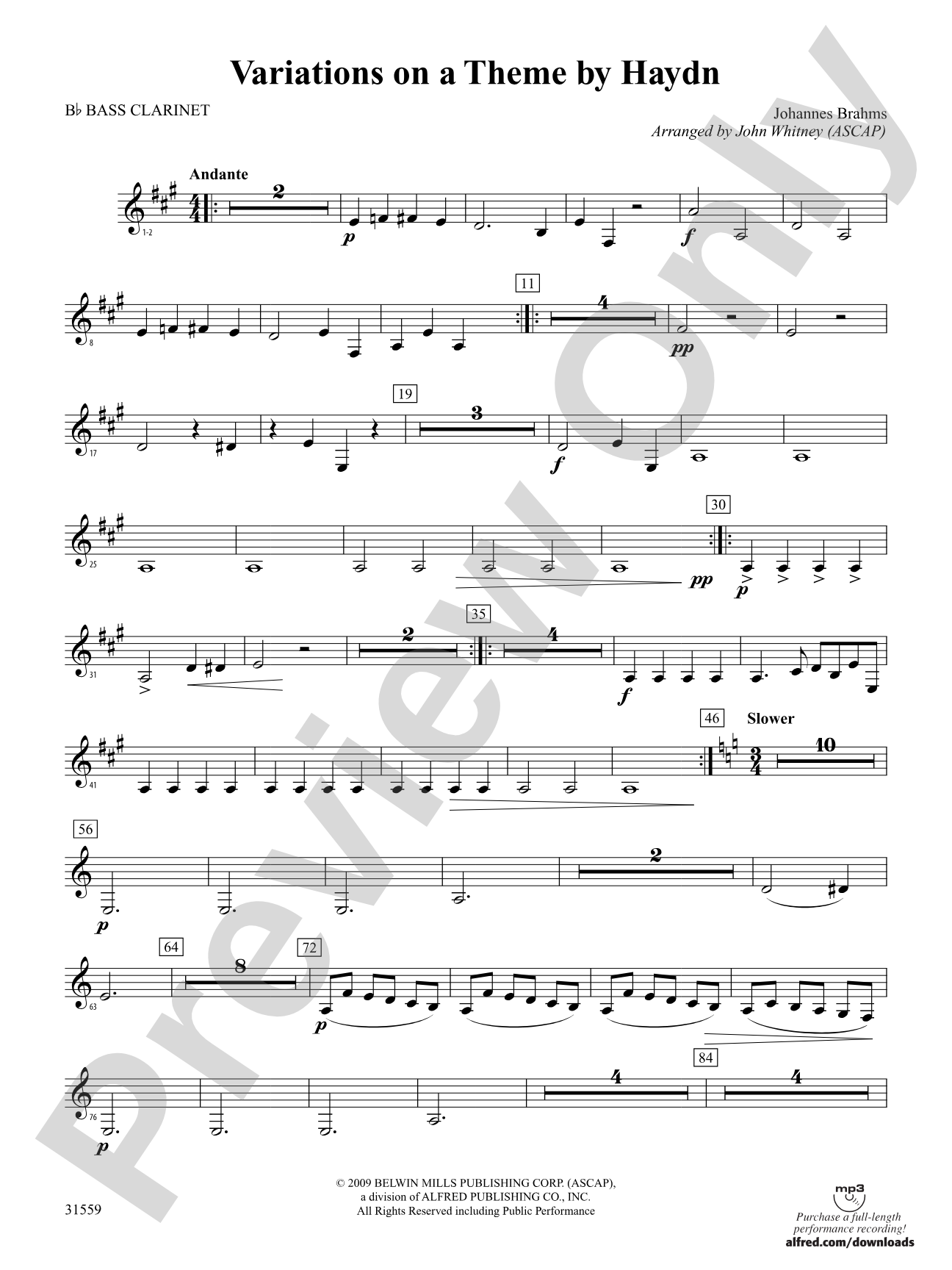
Variations on a Theme by Haydn: B-flat Bass Clarinet

By Johannes Brahms / arr. John Whitney

Grade: 4

Item: 00-PC-0001740_BC

Digital Download
$3.00
Description
A fantastic reduction of this masterpiece! Perfect for offering a sophisticated aesthetic experience to your students. Beautiful counterpoint leads to a grand ending.

Don't just read it, hear it, play along with it, and watch your students grow with it. In MakeMusic Cloud, Variations on a Theme by Haydn: B-flat Bass Clarinet comes alive with professional accompaniment, adjustable tempo, and built-in practice tools that turn solo practice into real progress.

Sample Audio
0:00
0:00
Sample Video
Additional Details
Series: Belwin Concert Full Orchestra
Publisher: Alfred Music
Page Count: 200
SKU: 00-PC-0001740_BC

More about this title

About the Composer: Johannes Brahms

Johannes Brahms (1833-1897) stands as one of the nineteenth century's most consequential symphonists, bridging Romantic expression with Classical structure. His mastery of counterpoint and orchestration established him as a composer who demanded serious musicianship from performers and listeners alike, influencing generations of composers who followed.

Why we love this

This arrangement opens access to a Brahms masterwork without requiring the full orchestral resources or rehearsal demands of the original. Grade 4 orchestras gain genuine sophistication through its contrapuntal writing and harmonic richness, delivering real musical substance rather than a simplified imitation of a classic.

What to expect

This score unfolds with intellectual elegance, each variation reframing a lyrical theme through different orchestral colors and harmonic treatments. The journey builds toward a satisfying grandeur that feels earned rather than imposed, leaving both players and audience with a sense of having encountered something substantial.

Who it's for

Conductors leading Grade 4 full orchestras who want to program music of genuine artistic merit without scaling down to juvenilia. Students benefit from encountering Brahms' sophisticated voice at a level that remains achievable, building their ears for authentic orchestral writing.

How to get the most out of it

  • Balance the contrapuntal lines by identifying which section carries the theme in each variation; adjust dynamic layers so listeners hear the structural architecture Brahms built.
  • Treat tempo relationships between variations as deliberate compositional choices; resist the urge to coast through transitions and instead mark clear sectional boundaries for your ensemble.
  • Invest rehearsal time in the final section's momentum; the grand ending rewards disciplined ensemble playing and will feel genuinely impressive when your orchestra executes it cleanly.

How to use it

Pair this with other Romantic-era orchestral works to build a concert around theme-and-variation form, or program it as a centerpiece that demonstrates your orchestra's maturity to adjudicators and audiences. The contest/festival designation makes it ideal for spring competitions when your group has developed solid fundamentals.

Skills your students will build

  • Following and executing subtle dynamic shadings within contrapuntal texture
  • Understanding theme-and-variation form through performance and structural listening
  • Balancing multiple melodic lines without losing harmonic direction
  • Sustaining ensemble precision through extended musical development

You May Also Like