
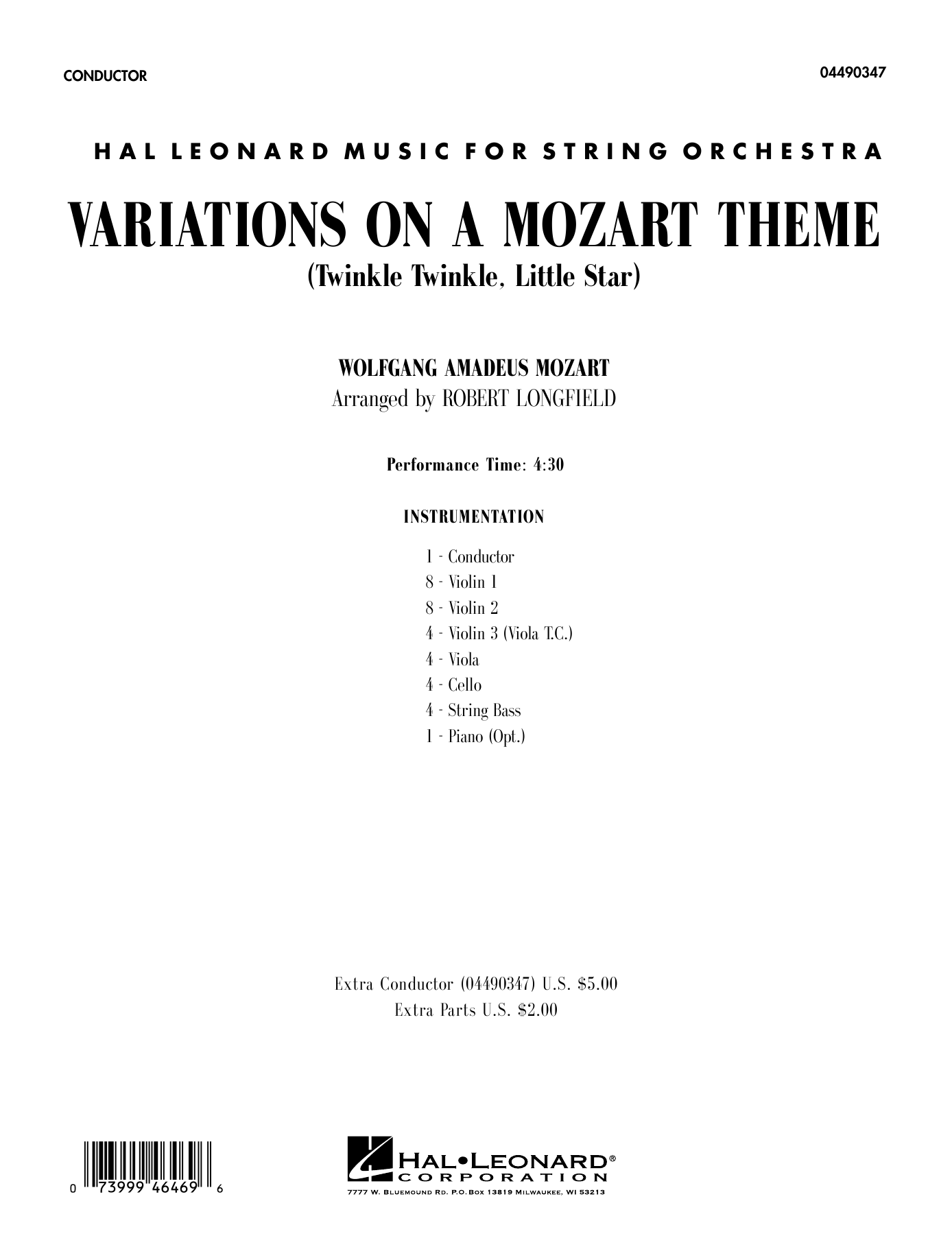

Variations on a Mozart Theme (Twinkle, Twinkle, Little Star): String Orchestra Conductor Score & Parts
By Wolfgang Amadeus Mozart / Arranged by Robert Longfield
Grade: 3
Item: 35-PK01412734
$40.00
Pickup currently not available
Buy Extra Parts (Digital PDF Download)
Parts Added to Cart!
Description
The memorable tune that started so many young string players' playing experience is transformed into a set of variations ala Mozart himself. Your players will be charmed by the inventive treatments of this simple, diatonic song with Robert's impressive movement for string orchestra.


Variations on a Mozart Theme (Twinkle, Twinkle, Little Star): String Orchestra Conductor Score & Parts isn't in MakeMusic Cloud just yet...but it could be. Let us know you'd like to see it, and you'll help shape what comes next. In the meantime, start a free trial and dive into thousands of interactive titles your students can play along with today.
Request This Title
Tell us you want it.
Start Your Free Trial
Explore everything that's ready to play right now.
Sample Audio
No sample audio found.
Sample Video
No sample videos found.
Additional Details
Publisher:
Hal Leonard
SKU:
35-PK01412734
More about this title
About the Composer: Wolfgang Amadeus Mozart
Mozart's prolific output across every genre shaped the entire classical tradition that followed. His genius for melody and structural clarity made him one of history's most influential composers, and his works remain cornerstones of music education because they balance technical demands with immediate musical gratification.
Why we love this
Longfield's arrangement captures what makes variation form so satisfying to perform: each iteration of the tune feels genuinely fresh while remaining accessible to intermediate players. Your orchestra gets to experience sophisticated compositional thinking applied to material they already know, building confidence and musical maturity without overwhelming the ensemble.
What to expect
Charming and inventive, with a sense of discovery. The piece honors the simplicity of the original tune while surrounding it with clever orchestral colors and harmonic treatments that reveal new dimensions in music young players have known since they began.
Who it's for
String orchestras at the intermediate level who want to explore variation form without tackling overly complex material. Directors preparing ensembles for concert programming that balances familiar repertoire with thoughtful arrangement.
How to get the most out of it
- Pay attention to the character shift in each variation. The opening statement is straightforward; when the tune returns transformed, let the different orchestration and harmonic treatment guide your tempo and tone choices.
- Balance the inner voices carefully during the variation sections. This isn't just about highlighting the melody; the supporting material often carries harmonic interest that brings depth to the familiar tune.
- Maintain clarity in the transitions between variations. Clean cutoffs and precise ensemble attacks make the formal structure audible to listeners and keep the performance from blurring together.
How to use it
This works beautifully as a centerpiece on a family concert or young people's concert, where the audience recognizes the theme instantly and appreciates how the arrangement unfolds it. Pair it alongside other classical variations or a Mozart concerto excerpt to create a cohesive thematic program.
Skills your students will build
- Recognizing and performing variation form (melodic, harmonic, rhythmic variations)
- Tracking a familiar melody through different orchestrations and transpositions
- Maintaining ensemble balance when the melody moves between sections
- Adjusting articulation and tone quality to match changing character within a single piece
- Understanding how arrangement can transform a simple diatonic melody into more sophisticated harmony