
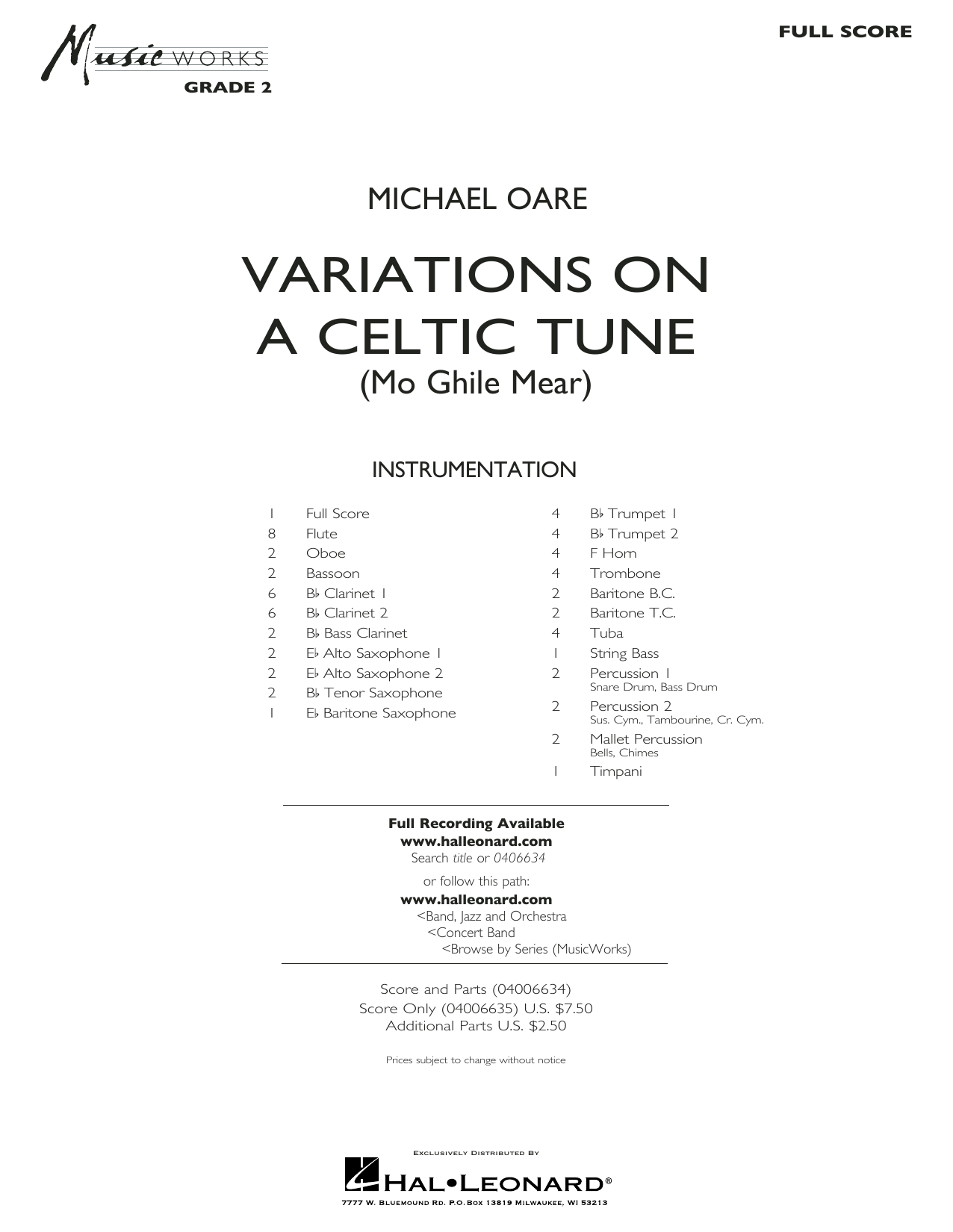

Variations on a Celtic Tune (Mo Ghile Mear): Concert Band Conductor Score & Parts
By Michael Oare
Grade: 2
Item: 35-PK00465121
$60.00
Pickup currently not available
Buy Extra Parts (Digital PDF Download)
Parts Added to Cart!
Description
The poignant lament "Mo Chile Mear" (My Gallant Hero) was authored after the defeat of the Scots and their Celtic allies at the Battle of Culloden in 1746, ending dreams of independence from English rule. Michael's emotional setting opens with a flute solo then builds gradually as layers of instrumental groups are added. The piece shifts to a lilting 6/8 style, propelled by the percussion section, and culminates in a majestic statement by the entire ensemble.


Variations on a Celtic Tune (Mo Ghile Mear): Concert Band Conductor Score & Parts isn't in MakeMusic Cloud just yet...but it could be. Let us know you'd like to see it, and you'll help shape what comes next. In the meantime, start a free trial and dive into thousands of interactive titles your students can play along with today.
Request This Title
Tell us you want it.
Start Your Free Trial
Explore everything that's ready to play right now.
Sample Audio
No sample audio found.
Sample Video
No sample videos found.
Additional Details
Publisher:
Hal Leonard
SKU:
35-PK00465121
More about this title
About the Composer: Michael Oare

Michael Oare brings three decades of direct experience with young musicians to his compositional voice. A graduate of Old Dominion University with degrees in both composition and music education, Oare spent 33 years as director of bands at Great Bridge Middle School in Chesapeake, Virginia, where his ensembles achieved an extraordinary record of superior ratings on state assessments. His work has earned recognition through the National Band Association's Citation of Excellence (twice) and inclusion in GIA Publications' prestigious Teaching Music Through Performance series.
Beyond the classroom, Oare remains active as a conductor, adjudicator, performer, and ASCAP member. He currently conducts the Bay Youth Orchestras of Virginia Concert Band and performs with the Virginia Wind Symphony, maintaining deep connections to the music education community through state and national professional organizations. His compositions for young bands reflect his understanding of what student musicians can achieve when given thoughtfully written repertoire.
Why we love this
Oare captures something essential about programming Grade 2 repertoire: the piece needs to challenge students musically without overwhelming them technically. The gradual layering of instrumental groups teaches orchestration fundamentals while the shift into 6/8 time introduces rhythmic variety within a manageable framework. A director can build genuine interpretive understanding around historical context rather than simply drilling notes.
What to expect
The piece opens with intimate vulnerability, a single voice lamenting loss, then gradually gathers strength through collective voices. When the 6/8 section arrives, the character shifts from sorrow to movement, and the momentum carries forward until the full ensemble delivers a moment of collective dignity and resolution.
Who it's for
Grade 2 concert bands preparing for festivals and contests will find a piece that balances accessibility with genuine artistic substance. Directors seeking repertoire that connects students to cultural history while building orchestration awareness and rhythmic flexibility will appreciate Oare's craftsmanship.
How to get the most out of it
- Balance the opening flute solo so it carries emotional weight without overwhelming the accompaniment; this moment establishes the entire mood of the piece.
- Shape the gradual entrance of new instrumental groups as a deliberate architectural choice, not just a mechanical addition of parts. Each layer should feel purposeful.
- Establish a secure 6/8 pulse early when the lilting section begins; the percussion section drives forward momentum here, so ensure those players understand their role as the rhythmic anchor.
- Build toward the final ensemble statement with dynamic precision across all sections, treating the climax as a earned moment rather than simply playing louder.
How to use it
This works beautifully in a concert exploring historical narratives through music, particularly when paired with other folk song arrangements or pieces rooted in cultural tradition. Its moderate length and emotional arc make it effective as a program opener that captures immediate attention, or as a contrasting movement within a longer concert sequence.
Skills your students will build
- Layered orchestration: understanding how independent parts combine to create fuller textures
- Reading and performing in 6/8 time with confident rhythmic feel
- Dynamic shaping and musical phrasing across sustained passages
- Balance and blend when multiple instrumental families sound simultaneously
- Connecting historical context to interpretive musical choices