Variations for Two Pianos - Piano Duo (2 Pianos, 4 Hands) Sheet Music Preview

Variations for Two Pianos - Piano Duo (2 Pianos, 4 Hands): Piano Duets & Four Hands

By Howard Pancoast

Level: Early Advanced

Item: 00-PB-0000730

Digital Download
$9.95
Description
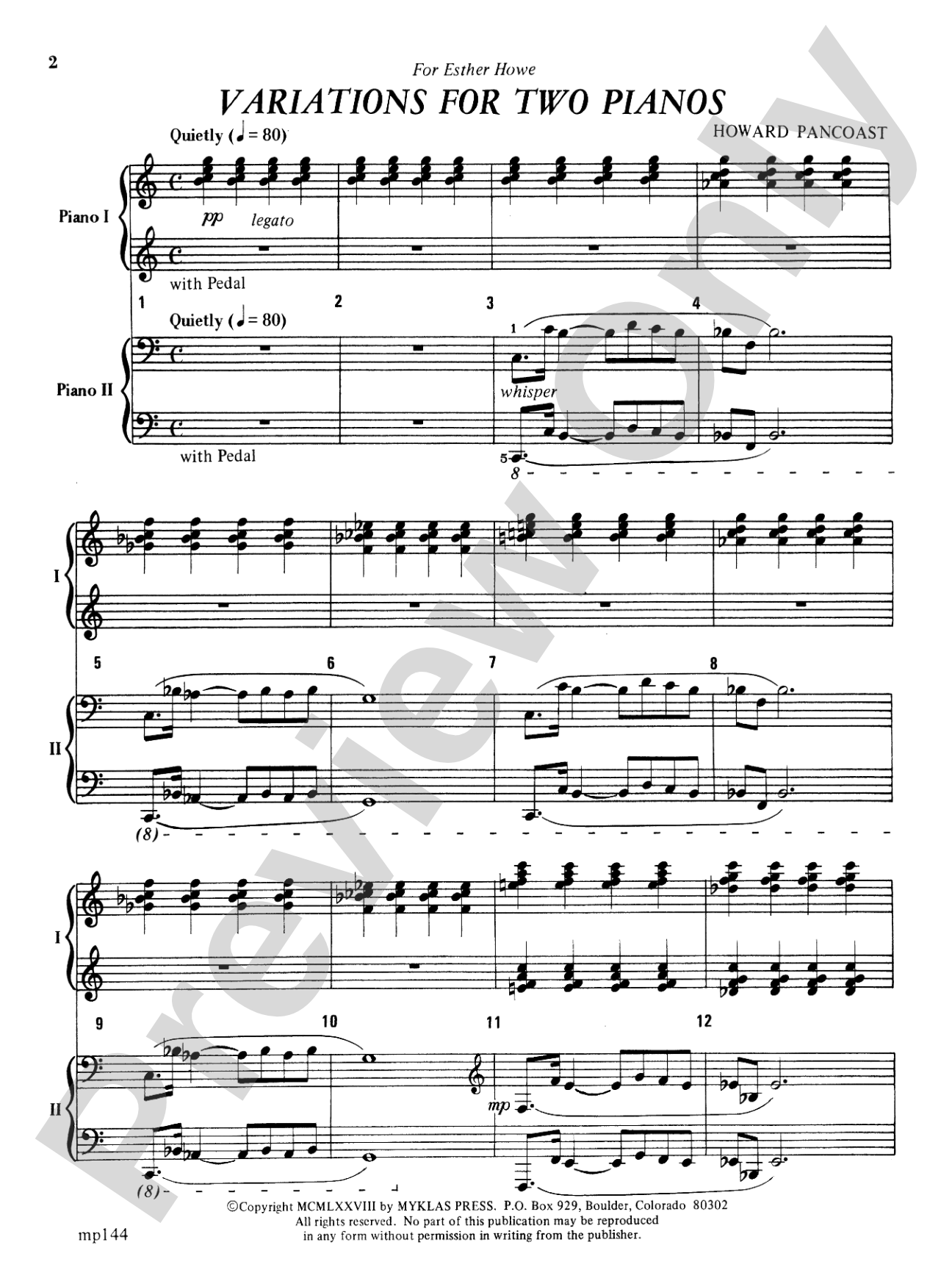
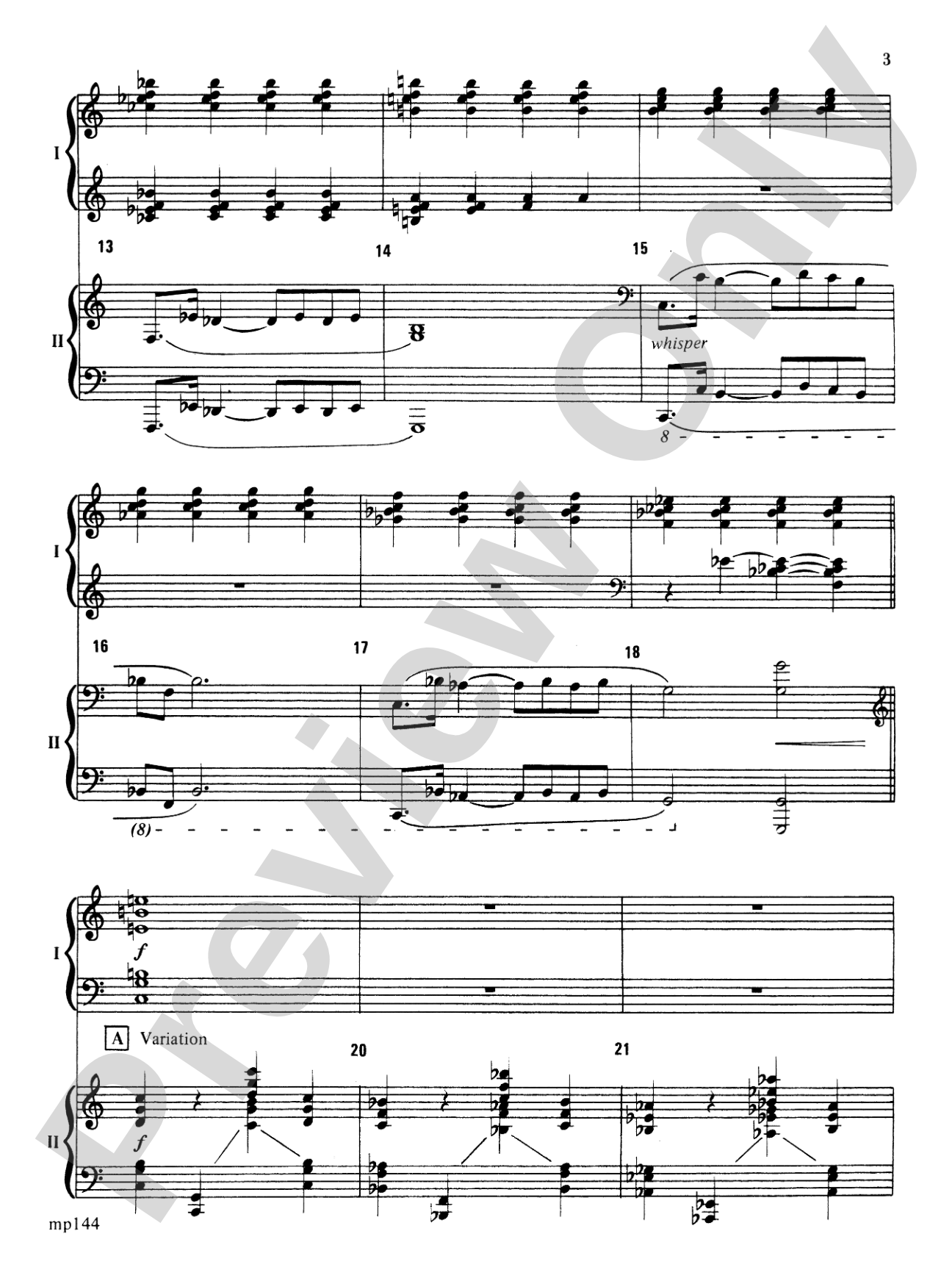
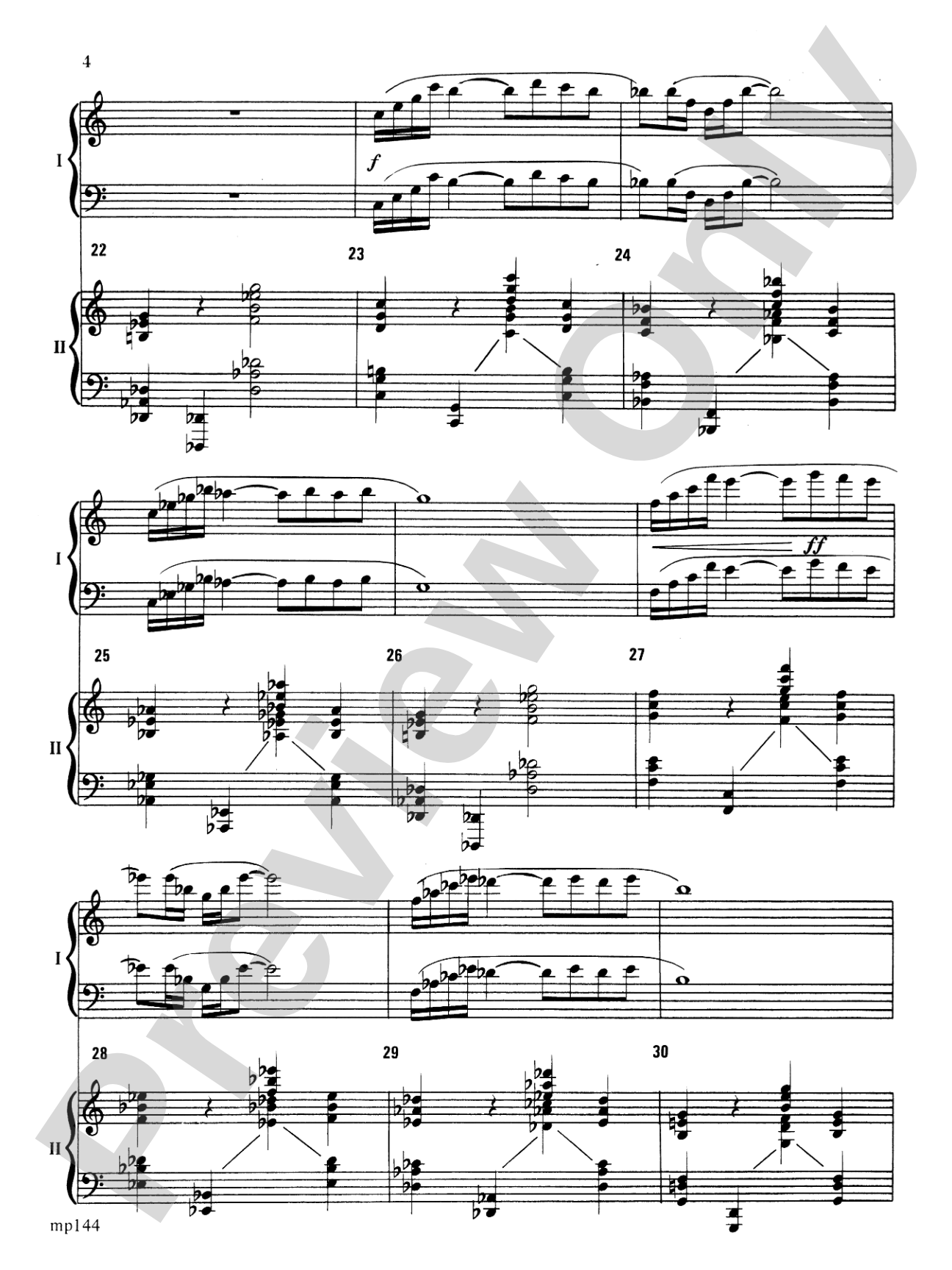
This early advanced piano duet for two pianos, four hands is in theme and variation form. The theme is stated quietly by Piano II with legato chord accompaniment in Part I. Each variation presents a different technical challenge, from very rhythmic and fast to more relaxed and flowing. Two copies are included. A Federation Festivals 2024-2028 selection.

Variations for Two Pianos - Piano Duo (2 Pianos, 4 Hands): Piano Duets & Four Hands isn't in MakeMusic Cloud just yet...but it could be. Let us know you'd like to see it, and you'll help shape what comes next. In the meantime, start a free trial and dive into thousands of interactive titles your students can play along with today.

Sample Audio
No sample audio found.
Sample Video
Additional Details
Publisher: Alfred Music
Page Count: 40
SKU: 00-PB-0000730

More about this title

About the Composer: Howard Pancoast

Howard Pancoast has built a distinguished career as a composer and educator with deep roots in American piano pedagogy. His compositional voice balances technical rigor with musical accessibility, making his works particularly valuable for students navigating the transition from intermediate to advanced repertoire.

Why we love this

Pancoast built this duet around the theme and variation form, which means your pianists get to hear and play the same musical idea in completely different lights. That structural clarity serves pedagogy beautifully: it gives both players a touchstone while demanding they master contrasting technical landscapes in a single piece. The Federation Festivals selection means it's already vetted for early advanced players looking for substantial repertoire with real competitive appeal.

What to expect

Opening with hushed, legato chords supporting a gentle theme, the piece unfolds like a demonstration of musical possibility. What begins as intimate and reflective transforms through rhythmic drive, technical velocity, and flowing lyricism, always returning to the kernel of the original idea. It's rewarding to play and generous to listen to.

Who it's for

Early advanced pianists who are ready to collaborate at a sophisticated level and want substantial duet repertoire that challenges both players equally. This works well for studio teachers preparing students for duo recitals or ensemble festivals, and for pianists who thrive on the variety that theme and variation form provides.

How to get the most out of it

  • Establish the theme's quiet, legato character in Piano II before tackling the variations. That opening statement sets the whole piece's anchor point, so time spent here pays dividends when players move through the faster, rhythmic variations.
  • Map out tempo relationships between variations. Pancoast's contrasts range from very rhythmic and fast to more relaxed and flowing, so discussing with both pianists how each tempo shift connects (rather than treating each variation as isolated) creates coherence across the 40-page span.
  • Balance the two pianos by rehearsing the legato chord accompaniment in Piano I separately. It's easy for accompaniment to disappear under technical demands, but it anchors the theme in every iteration.

How to use it

The Federation Festivals selection status makes this an excellent choice for competitive festival seasons. You might also program it alongside other early advanced duet repertoire on a recital devoted to collaborative piano literature, where its theme and variation structure contrasts nicely with pieces built on narrative or textural development.

Skills your students will build

  • Thematic recognition and restatement across varied technical contexts
  • Coordinating independent rhythmic and textural material between two pianos
  • Executing fast, rhythmically complex passages with precision
  • Maintaining legato chord accompaniment under varying musical textures
  • Responding to tempo and character shifts while preserving structural unity

You May Also Like