
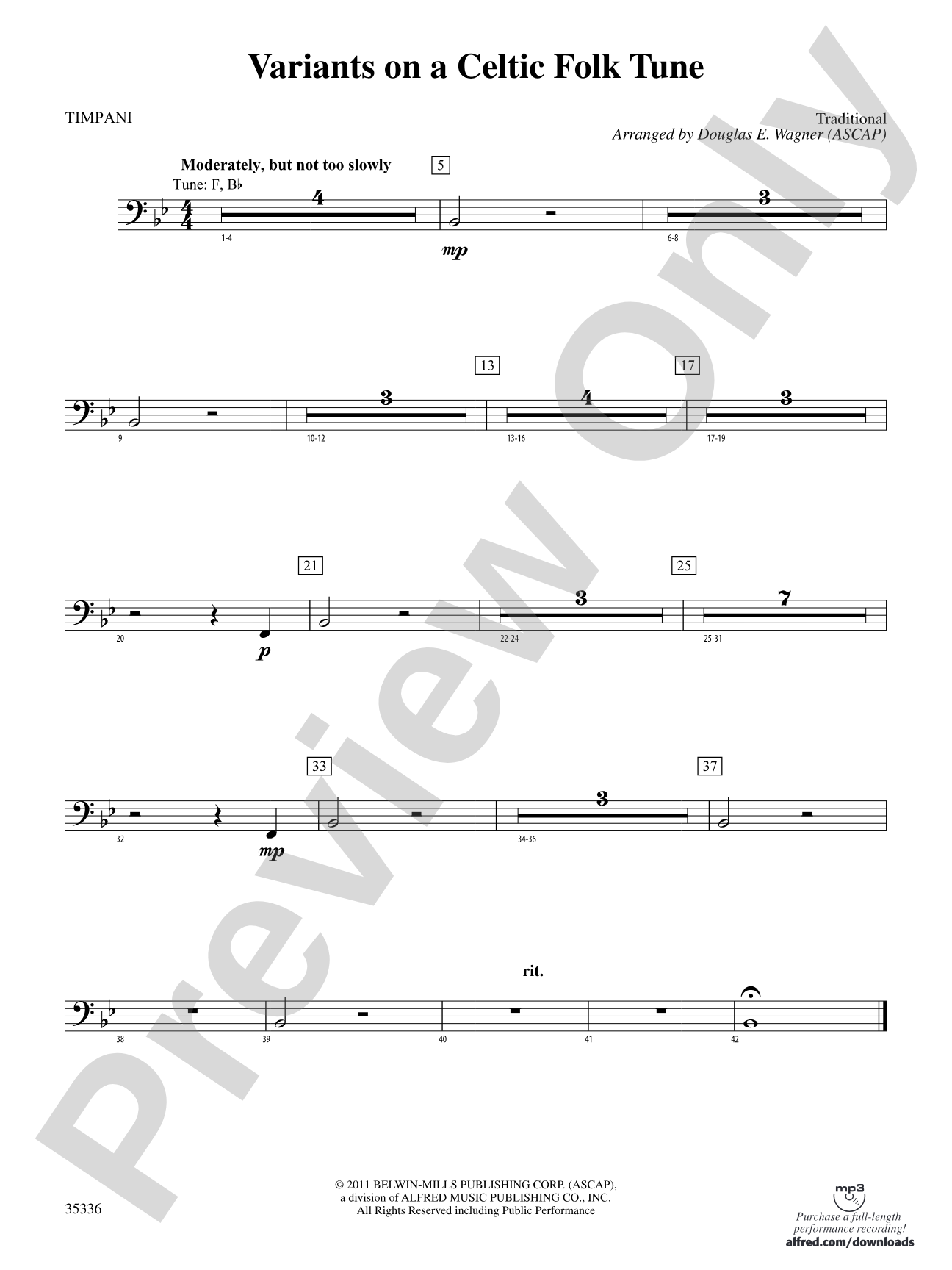

Variants on a Celtic Folk Tune: Timpani
Traditional / arr. Douglas E. Wagner
Grade: 0.5 (Very Easy)
Item: 00-PC-0014891_TMP
$3.00
Pickup currently not available
Description
With frequent use of repeated figures and ostinato with every instrument using only four or five, Variants on a Celtic Folk Tune should fit quite comfortably under the fingers. The gentle traditional ballad uses only quarter and half notes. Just the ticket for your beginners performance early in their first year of instruction. This title is available in MakeMusic Cloud.


Don't just read it, hear it, play along with it, and watch your students grow with it. In MakeMusic Cloud, Variants on a Celtic Folk Tune: Timpani comes alive with professional accompaniment, adjustable tempo, and built-in practice tools that turn solo practice into real progress.
Open in the Player
Jump straight in and assign it today.
Start Your Free Trial
Open this title and explore the full library in minutes.
Sample Audio
1
Audio File
--:--
0:00
0:00
Sample Video
No sample videos found.
Additional Details
Series:
Belwin Very Beginning Band
Publisher:
Alfred Music
Page Count:
132
SKU:
00-PC-0014891_TMP
More about this title
About the Arranger: Douglas E. Wagner

Douglas E. Wagner studied music at Butler University, earning both undergraduate and graduate degrees before spending three decades as a high school music director and administrator in the Midwest. Since 1973, he has published over 3,500 compositions and arrangements across nearly every ensemble type: concert band, orchestra, choir, handbell ensemble, organ, and piano. His prolific catalog has sold well over seventeen million copies worldwide and regularly appears in concert halls, broadcasts, and festivals across the United States and internationally.
Wagner's gift for writing music that meets students where they are has made him a cornerstone of music education publishing. He understands the pedagogical arc of young musicians and writes with both their technical limitations and their aspirations in mind. He currently resides in Indianapolis, Indiana.
Why we love this
Wagner has crafted an arrangement that respects the foundation-building work of first-year students while giving them genuinely musical material to perform. The restraint here is intentional: limited ranges, simple rhythms (quarter and half notes only), and repeated figures that let new musicians succeed without feeling patronized. Your students will hear a real ballad, not a drill, and that matters for engagement and confidence at this crucial early stage.
What to expect
A gentle, unhurried journey through a traditional melody that feels timeless. The familiar contours of a Celtic tune, supported by warm harmonic support and steady rhythmic figures, create an ensemble sound that's both accessible and authentically musical. Students experience the satisfaction of creating something lyrical together, not just executing notes.
Who it's for
Beginning concert band students in their first year of instruction, typically grades 4-6, who are ready for a full-band performance experience. Directors looking for early-season or early-contest material that builds confidence without overwhelming newer musicians will find this essential repertoire.
How to get the most out of it
- Shape the ballad's natural phrasing even though the rhythms are simple. Encourage students to listen for where the tune breathes, not just where the measures end.
- Balance the ostinato figures across the band so the traditional melody stands out clearly. This teaches section independence early.
- Take time in rehearsal to let students identify which instruments carry the main tune and which provide harmonic or rhythmic support. Understanding texture builds listening skills.
- Keep the tempo lyrical and connected. A Celtic ballad should flow, not march.
How to use it
Program this for your first concert of the fall season to showcase the musicianship emerging in your youngest players, or use it early in a contest rotation where judges appreciate pedagogically sound programming. It pairs well alongside slightly more challenging pieces in the same concert, providing a contrast that highlights the band's range and growth.
Skills your students will build
- Reading melodies with consistent rhythmic patterns (quarter and half notes)
- Playing sustained lines with attention to phrase shape
- Balancing melody and accompaniment in an ensemble texture
- Maintaining steady pulse in repeated ostinato figures
- Identifying and executing simple harmonic progressions