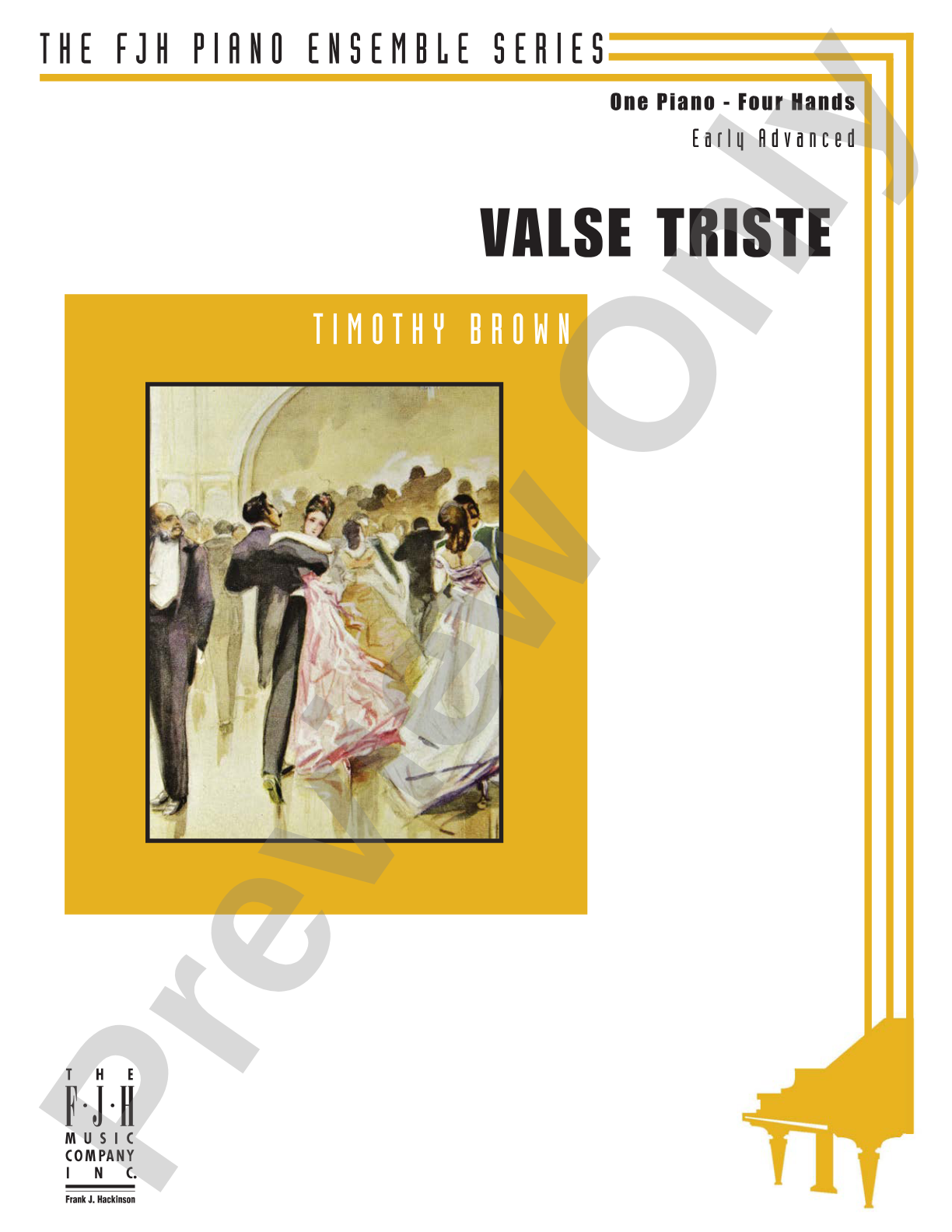
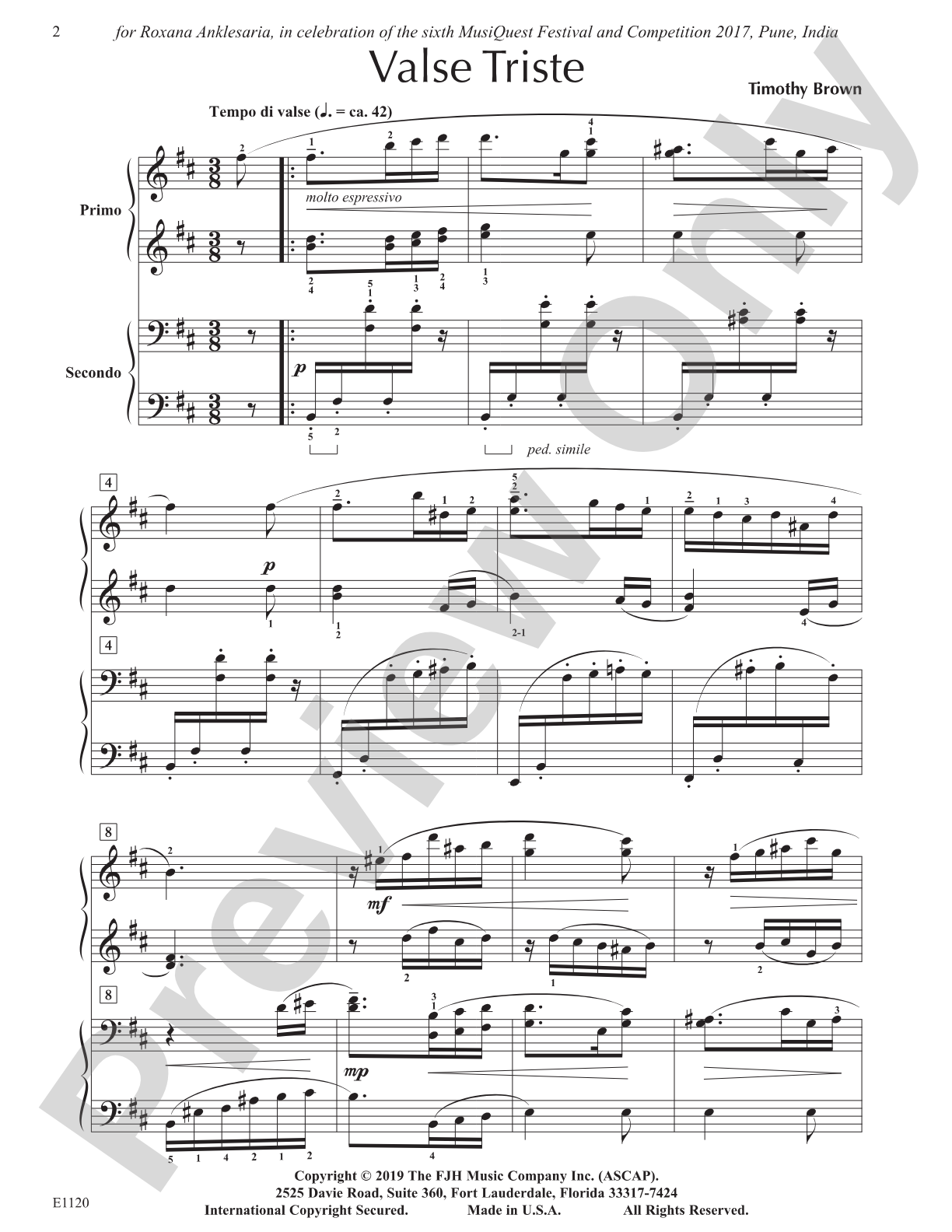
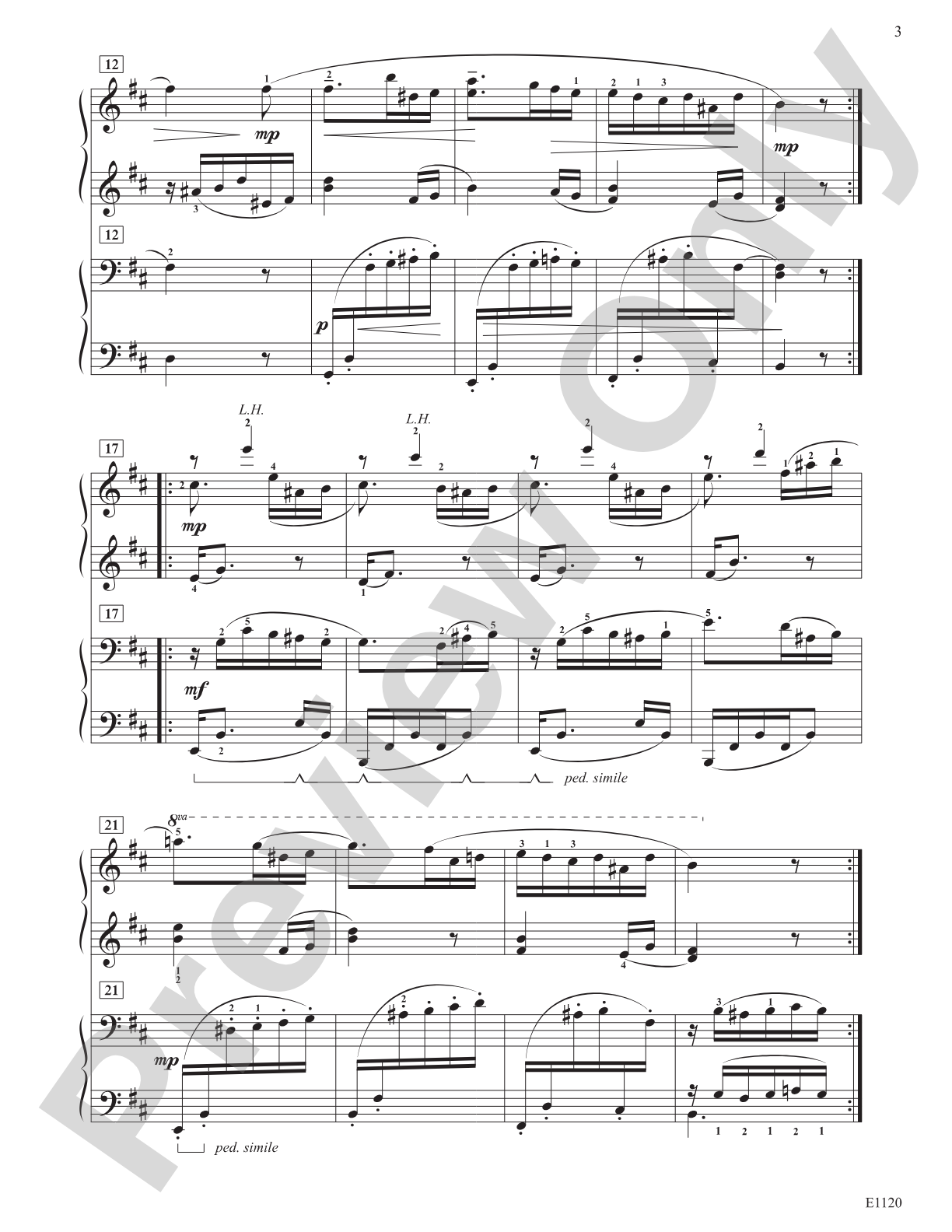
This delicate and lilting one piano, four hand duet by Timothy Brown is an excellent piece for students to continue practice with precise articulation and collaborative playing. An engaging melody is played by both performers in the familiar waltz meter. This is a great piece to coordinate in a small studio.
Discover MakeMusic Cloud: thousands of interactive titles your students can play along with today.
Brown writes duets that sound far more sophisticated than their technical demands suggest. The shared melodic writing here gives both pianists equally rewarding material, which means neither player gets bored on accompaniment patterns. It's the kind of piece that makes ensemble playing feel like a genuine conversation rather than a hierarchy.
What to expect
Graceful and intimate. The waltz meter creates a gentle forward motion while the shared melody allows both pianists to breathe together. There's an elegant restraint here that prizes clarity and refinement over virtuosity.
Who it's for
Two pianists at the advanced or early advanced level who want a piece that rewards careful listening and collaborative musicianship. Ideal for studio recitals, community events, or students preparing for duet competitions.
How to get the most out of it
Balance the melody line carefully between the two pianists; since both carry the tune at different moments, establish which voice leads in each phrase during your initial rehearsals.
Nail the articulation together before worrying about tempo. The delicate character lives in precise tonguing and release, not in rushing the pulse.
Record yourselves regularly. Duet playing depends on hearing how your part sits against your partner's, and playback reveals rhythmic slippages that feel invisible in the moment.
How to use it
Pair this with other duet repertoire in a studio recital to showcase ensemble work, or feature it as a refreshing contrast to more dramatic four-hand pieces. The accessible charm makes it a natural fit for a spring concert program.
Skills your students will build
Ensemble balance and listening between two equal voices
Precise articulation control in the context of duet playing
Phrase coordination with a partner across waltz meter
Pedal management in a collaborative setting
You May Also Like
Scan to Complete Your Purchase
Use your phone's camera to scan the code below
You'll log in on your phone and the order will be added to your account