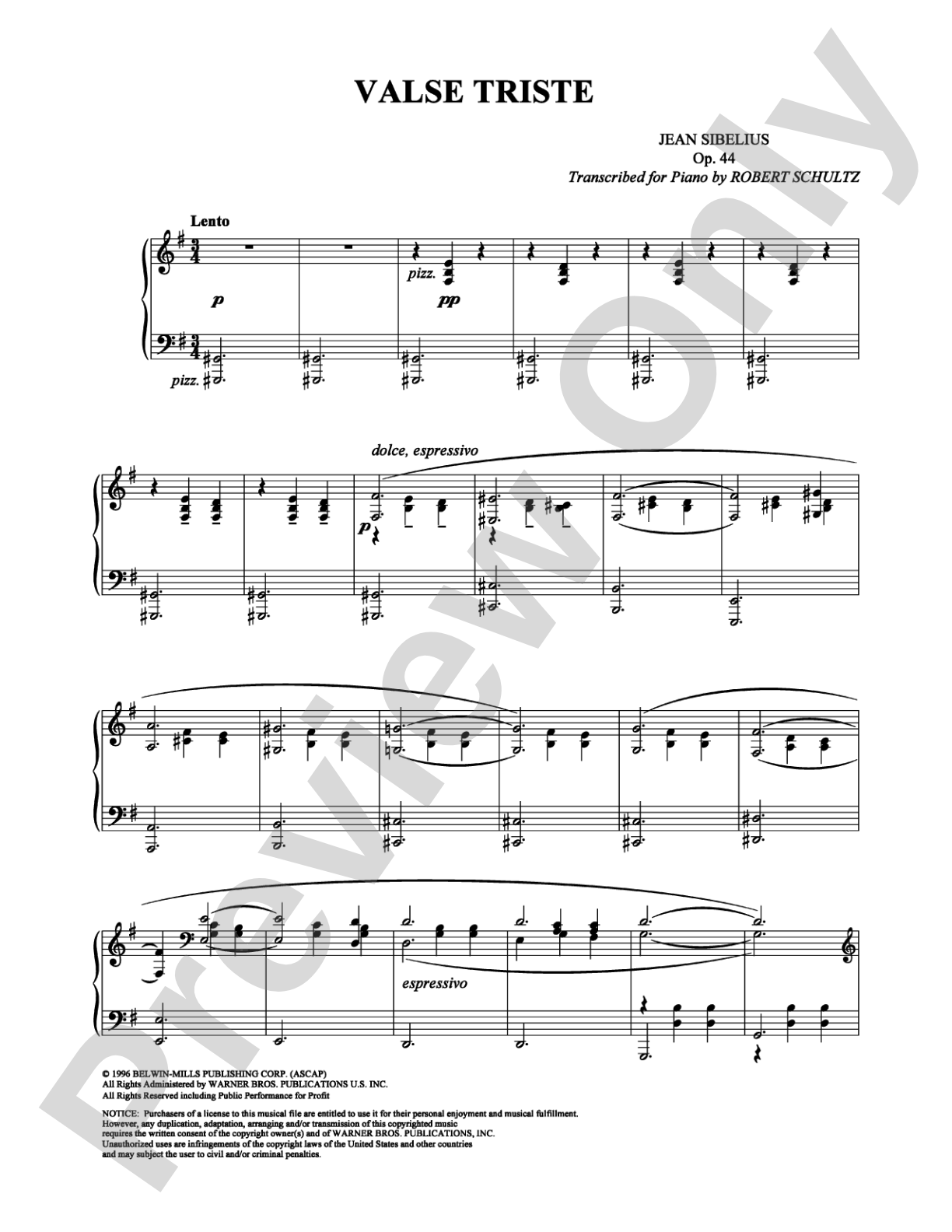
Valse Triste: Piano Digital Sheet Music

Valse Triste: Piano Digital Sheet Music

Jean Sibelius

Item: 00-PS-0001729

Digital Download
$3.99
Description

Valse Triste: Piano Digital Sheet Music isn't in MakeMusic Cloud just yet...but it could be. Let us know you'd like to see it, and you'll help shape what comes next. In the meantime, start a free trial and dive into thousands of interactive titles your students can play along with today.

Sample Audio
No sample audio found.
Sample Video
Additional Details
SKU: 00-PS-0001729

More about this title

About the Creator: Jean Sibelius

Jean Sibelius (1865, 1957) stands as Finland's greatest composer and a towering figure in late Romantic music. His gift for melody and orchestration shaped an entire nation's musical identity, yet his piano works deserve equal attention for their intimacy and structural sophistication. Valse Triste emerged from incidental music written for a play, yet it transcended its theatrical origins to become one of the most performed salon pieces in the pianist's repertoire.

Why we love this

Valse Triste occupies a unique space in the pianist's repertoire: lyrical and introspective without demanding virtuosic fireworks. The piece rewards careful voicing and pedal control, making it an excellent study in coloring and atmosphere rather than speed.

What to expect

A gentle melancholy pervades this waltz, as if remembering something beautiful that has passed. The piece sways between moments of tender reflection and subtle rhythmic motion, creating an atmosphere of bittersweet grace.

Who it's for

This piece suits intermediate to advanced pianists seeking repertoire that develops interpretive maturity. It's ideal for recitalists who want material that connects with audiences through emotional directness rather than technical display.

How to get the most out of it

  • Shape the melodic line with subtle dynamic shaping rather than sudden swells; the piece unfolds through refined phrasing, not dramatic gestures.
  • Experiment with pedal changes to clarify harmonic movement and prevent muddiness, particularly in the slower sections.
  • Allow rubato in the opening and closing passages to heighten the elegiac quality without sacrificing rhythmic coherence in the waltz sections.

How to use it

Use this as an encore or as a bridge between more dramatic works in a recital. Its meditative quality makes it particularly effective following a technically demanding piece, offering audiences a moment of repose.

Skills your students will build

  • Pedal technique and harmonic clarity
  • Lyrical phrasing and melodic shaping
  • Rubato and interpretive flexibility
  • Left-hand voicing in waltz accompaniment patterns
  • Sustaining attention through sparse textures

You May Also Like