

Valse Sentimentale à Deux - Piano Duet (1 Piano, 4 Hands): Piano Duets & Four Hands
By Catherine Rollin
Level: Intermediate
Item: 00-PB-0000673

$5.50
Pickup currently not available
Related Items
Valse Sentimentale à Deux: Piano Duet (1 Piano, 4 Hands) Sheet |
$5.50
|
View |
Description
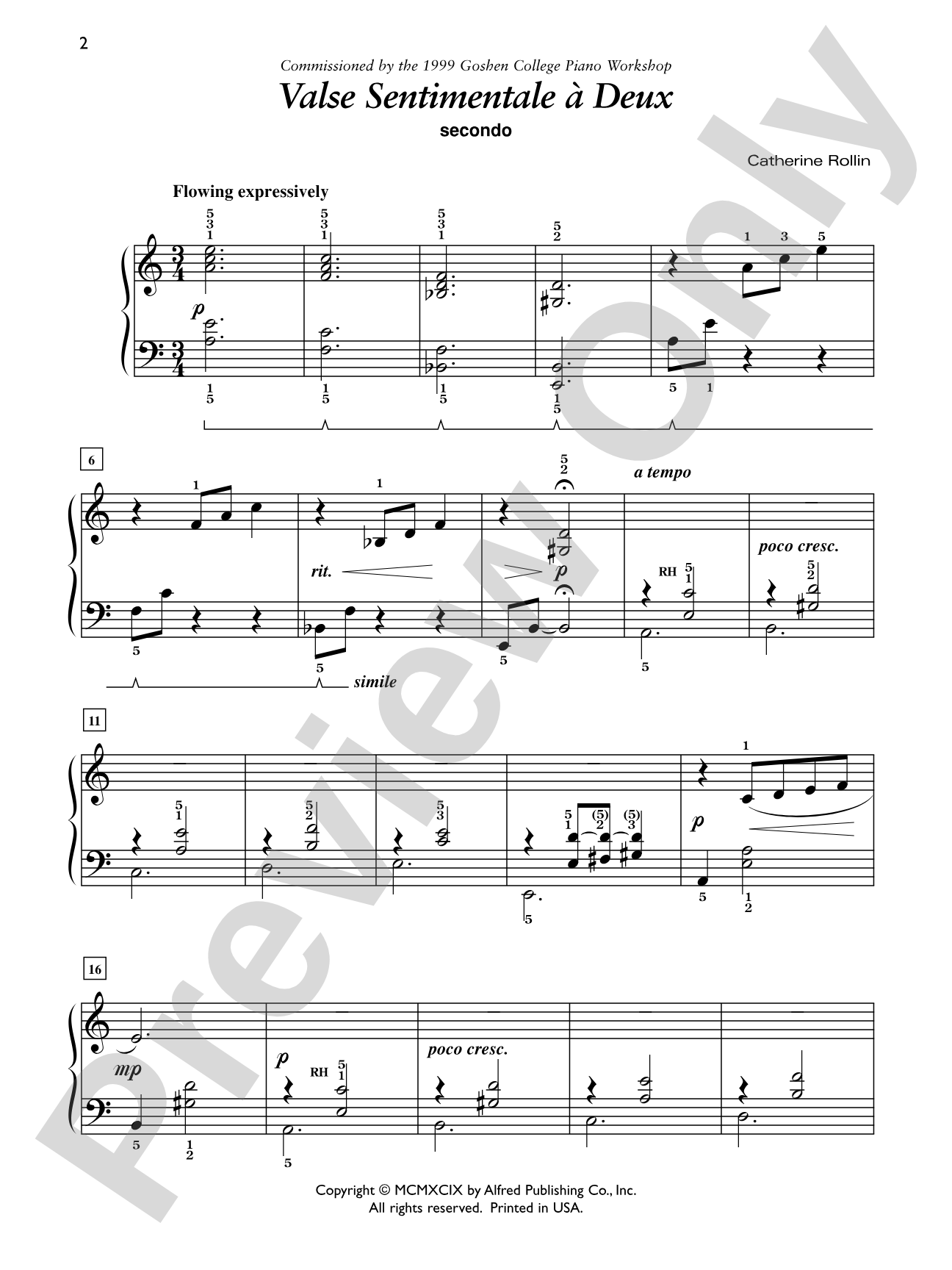
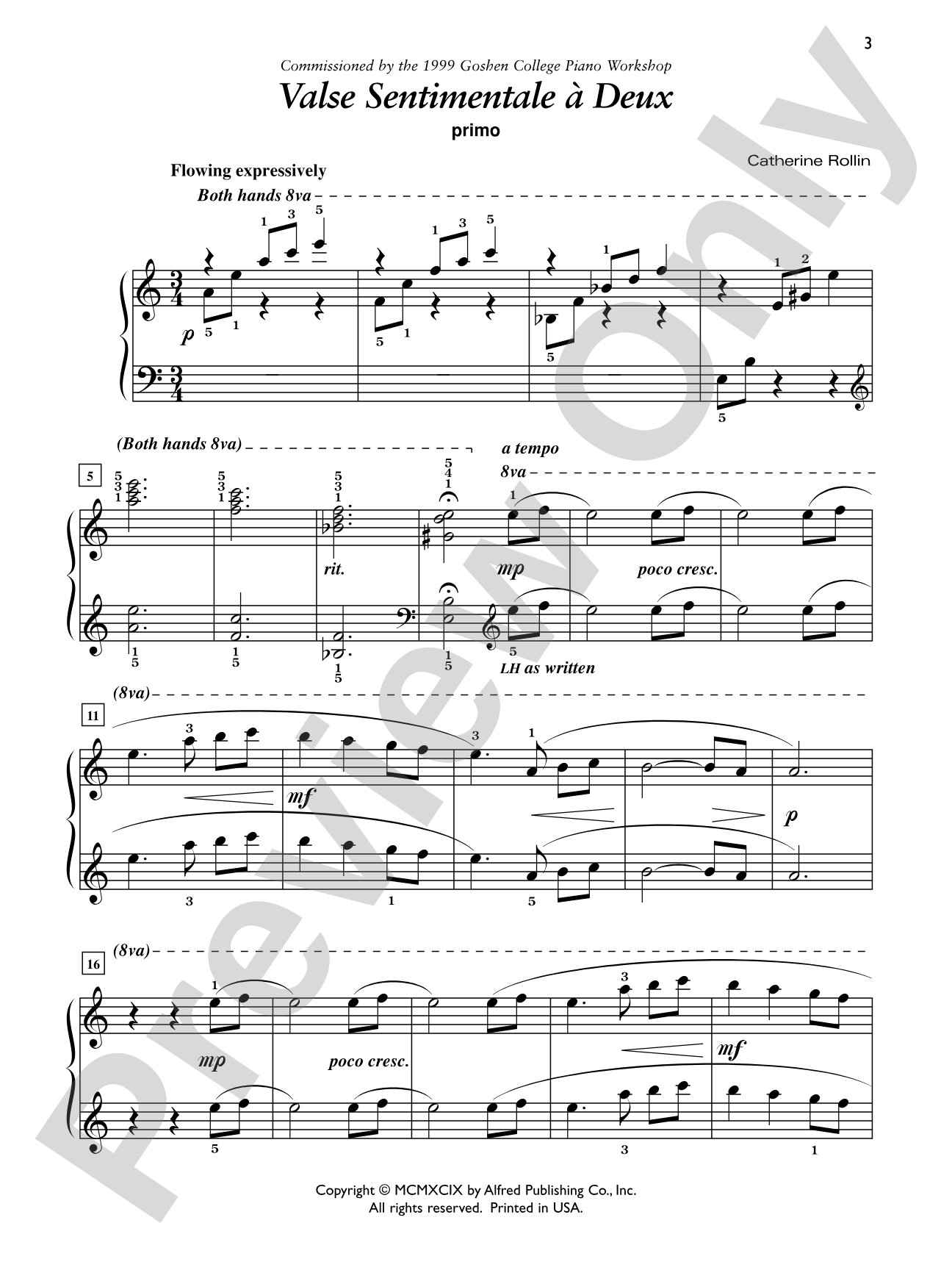
Here is a luscious and haunting, romantic-styled original waltz which will make a lovely recital piece for two intermediate-level pianists. Written in the key of A minor, the texture and rhythms are nicely varied, but not excessively complex, and the pages are nicely laid out in large, easy-to-read notation. Ms. Rollin makes good use of the arpeggio and chromaticism, and both performers are given opportunities to play the melody line and contribute other important contrasting musical elements to the performance. A Federation Festivals 2024-2028 selection.


Don't just read it, hear it, play along with it, and watch your students grow with it. In MakeMusic Cloud, Valse Sentimentale à Deux - Piano Duet (1 Piano, 4 Hands): Piano Duets & Four Hands comes alive with professional accompaniment, adjustable tempo, and built-in practice tools that turn solo practice into real progress.
Open in the Player
Jump straight in and assign it today.
Start Your Free Trial
Open this title and explore the full library in minutes.
Sample Audio
No sample audio found.
Sample Video
No sample videos found.
Additional Details
Series:
The Alfred Duet Series
Publisher:
Alfred Music
Page Count:
12
SKU:
00-PB-0000673
More about this title
About the Composer: Catherine Rollin

Catherine Rollin balances an active composing career with mentoring accomplished students and performing internationally. She holds a Bachelor of Musical Arts with distinction from the University of Michigan and a Master of Music from Oakland University School of Performing Arts, and has led workshops and masterclasses across more than 200 cities in North America and Asia.
Rollin's compositions have earned multiple commissions from prestigious organizations including the Music Teachers National Association, the Michigan Music Teachers Association, and Clavier Companion magazine. Her work appears regularly on the National Federation of Music Clubs Festivals Bulletin, and she has judged at the national level for both the MTNA Student Composition Competition and the Lynn Freeman Olson Composition Contest. In 2018, she premiered Suite Detroit (a trio for flute, alto saxophone, and piano) as part of the MTNA's From the Pen to the Premiere commissioning series, and was featured by the Steinway Society in concert showcasing both her compositions and her ASCAP award-winning Museum Masterpieces series.
Why we love this
Rollin's hand at orchestration for four hands shines here. The melody passes between primo and secondo in natural, musically satisfying ways, so neither player feels relegated to accompaniment duty. The 2024-2028 Federation selection makes this an immediate candidate for students preparing for festivals.
What to expect
A waltz steeped in quiet emotion, with the minor key lending introspection rather than melancholy. Arpeggios bloom beneath tender melodic lines, and chromatic passages add sophistication without veering into overcomplication. The piece breathes with romantic restraint.
Who it's for
Two intermediate pianists preparing a lyrical recital or festival piece, or piano teachers seeking accessible duet literature that gives both players meaningful musical contributions. This works well for students ready to experience ensemble playing without requiring advanced technical facility.
How to get the most out of it
- Balance the arpeggios in the accompaniment part; they should shimmer without overwhelming the melody line, especially where chromaticism adds harmonic color.
- Shape each phrase with the same care you would give a solo piece. The duet format is no excuse for one player to coast while the other carries the music.
- Coordinate pedal changes between both players before rehearsals begin so neither person has to guess when to lift or depress.
How to use it
Slot this into a chamber or recital program as a charming interlude between weightier solo works. It also works as a bridge between intermediate and early-advanced duet repertoire for students building their ensemble experience. Its Federation selection makes it a natural anchor for a studio recital or festival-focused lesson block.
Skills your students will build
- Reading and balancing two independent parts simultaneously
- Shaping arpeggios for harmonic support rather than rhythmic percussion
- Managing chromatic movement both melodically and within accompaniment figures
- Sharing leadership of phrasing with another performer
- Coordinating pedaling decisions across two players