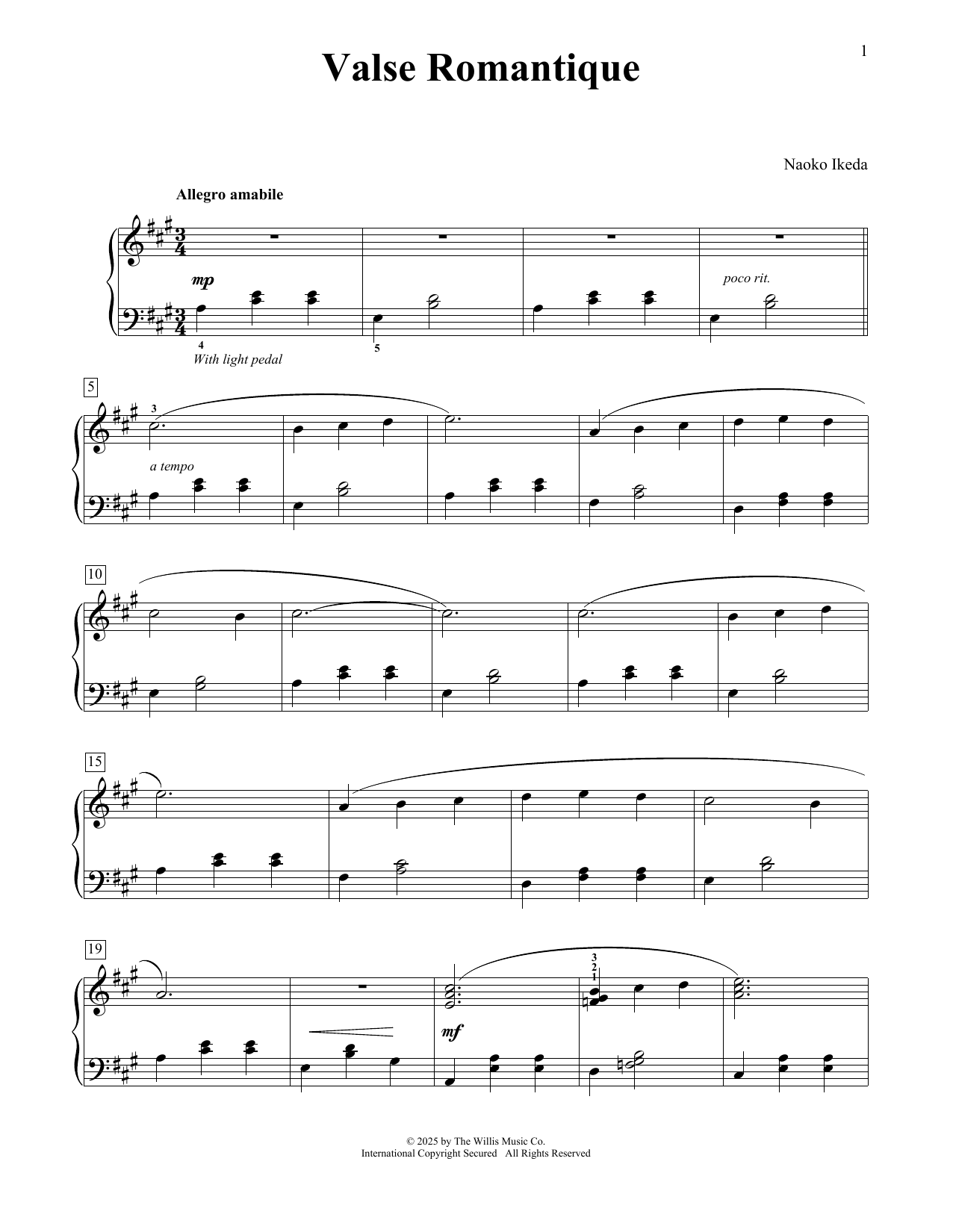
Naoko Ikeda is a Japanese composer and pianist whose educational works balance artistic integrity with pedagogical clarity. Her compositions for piano students consistently prioritize musical storytelling and technical development in equal measure, making her a trusted voice among teachers seeking repertoire that neither talks down to young performers nor overwhelms them.
Why we love this
Ikeda writes waltzes that actually feel like waltzes, not just exercises in three-quarter time. The melodic contour here breathes naturally, the harmonic movement supports rather than complicates the form, and the result is something students genuinely want to perform rather than endure.
What to expect
Intimate and wistful, with the kind of gentle melancholy that defines the romantic sensibility. The music unfolds like a memory being recalled, each phrase tender but never sentimental.
Who it's for
Intermediate piano students ready to navigate three pages of genuine musicality without excessive technical fireworks. Teachers looking for romantic era repertoire that sits in the sweet spot between pedagogical simplicity and artistic purpose will find this invaluable.
How to get the most out of it
Shape the main melody with subtle dynamic swells that follow the phrase architecture rather than accent every beat. Let the waltz dance.
Keep the accompanying figures in the left hand light and bouncy. This isn't a funeral march; the pulse should feel almost playful.
Notice where the harmony shifts slightly in the B section. Bring those color changes out through touch without disrupting the overall flow.
Record yourself and listen back. Students often play this too rigidly and need to hear how rubato and natural phrasing transform the character.
How to use it
This fits beautifully in a student recital where you're balancing technical showcase pieces with more reflective moments. It also works as a transition piece between stiffer baroque or classical repertoire and more modern material, helping students feel the shift in expressive language.
Skills your students will build
Phrasing and shaping within waltz form
Balancing melody and accompaniment textures
Interpreting romantic harmonic language
Pedal technique and harmonic resonance
Sustaining musical line across a three-page structure
You May Also Like
Scan to Complete Your Purchase
Use your phone's camera to scan the code below
You'll log in on your phone and the order will be added to your account