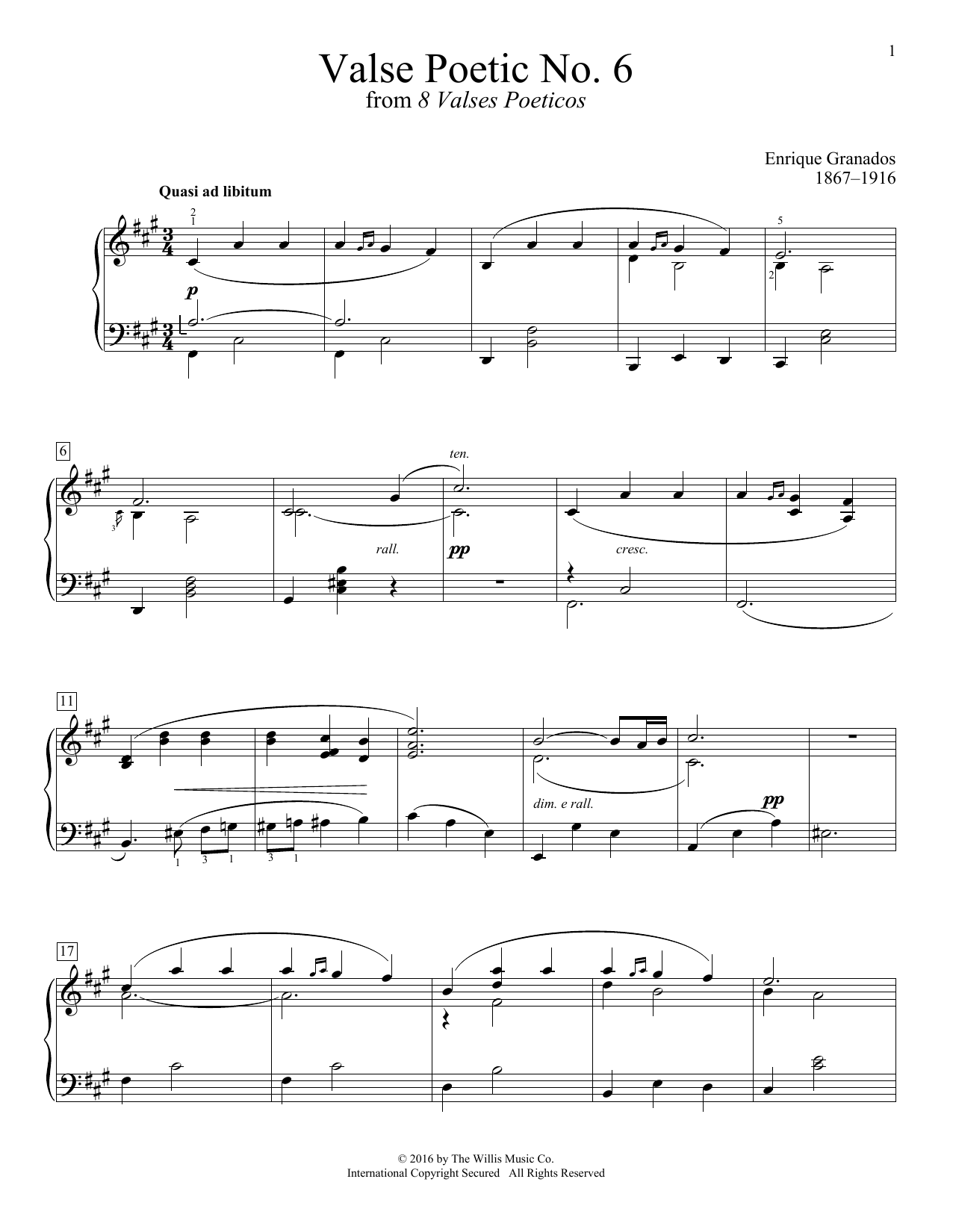
Enrique Granados (1867–1916) was a Spanish pianist and composer whose keyboard writing combined the virtuosity of the Romantic era with distinctly Iberian musical language. His works, particularly the Goyescas suite, established him as a master of the character piece, blending technical ambition with intimate lyricism. Granados understood the piano as a poet's instrument and wrote extensively for students and advanced amateurs, making his output especially valuable for pianists developing interpretive maturity.
Why we love this
Granados excels at creating pieces that feel musically substantial without requiring superhuman technique. This valse invites students into genuine Romantic expression, where gesture and phrasing matter more than flash, and the reward for thoughtful playing is immediate and musical.
What to expect
A intimate, reflective dance that moves through warm harmonic shifts and gentle melodic curves. The piece carries the elegance of a ballroom waltz filtered through a composer's private meditation, elegant without pretense.
Who it's for
Intermediate to early advanced pianists ready to engage with Romantic-era character pieces that demand interpretive thought. This work suits students exploring 19th-century salon repertoire or preparing for competitions emphasizing musicality over pyrotechnics.
How to get the most out of it
Shape the melodic line with gentle weight rather than mechanical evenness. Granados expects singers, not automatons, at the keyboard.
Balance the waltz rhythm by letting the downbeat breathe; resist the temptation to rush the accompaniment figures.
Explore dynamic shading within each phrase to highlight the emotional arc Granados builds across the form.
Listen carefully to any recorded reference performance to absorb the Spanish inflections that color the harmony and phrasing.
How to use it
Pair this with other salon works or Romantic miniatures to create a recital segment focused on character and intimacy. It also works well as a standalone encore or as part of a thematic program exploring dance forms in the Classical and Romantic periods.
Skills your students will build
Balancing accompaniment patterns in triple meter
Shaping long melodic lines through dynamic and tonal variety
Recognizing and executing Romantic-era phrasing and rubato
Interpreting harmonic color and gesture within a compact form
You May Also Like
Scan to Complete Your Purchase
Use your phone's camera to scan the code below
You'll log in on your phone and the order will be added to your account