Valse Nostalgique Sheet Music Preview

Valse Nostalgique: Educational Piano

By Naoko Ikeda

Item: 35-DS01860274

Digital Download
$4.99
One moment…
Description

Discover MakeMusic Cloud: thousands of interactive titles your students can play along with today.

Sample Audio
No sample audio found.
Sample Video
Additional Details
Publisher: Hal Leonard
Page Count: 3
SKU: 35-DS01860274

More about this title

About the Composer: Naoko Ikeda

Naoko Ikeda is a contemporary composer whose work spans solo instrumental writing, chamber music, and educational repertoire. Her compositions are known for lyrical melodic lines and accessible harmonic language that engage students without compromising musical substance.

Ikeda's educational works appear frequently in piano curricula because they balance technical clarity with genuine expressive opportunity. Her understanding of how students learn is evident in her structural choices and her ability to create pieces that feel complete and satisfying at modest technical levels.

Why we love this

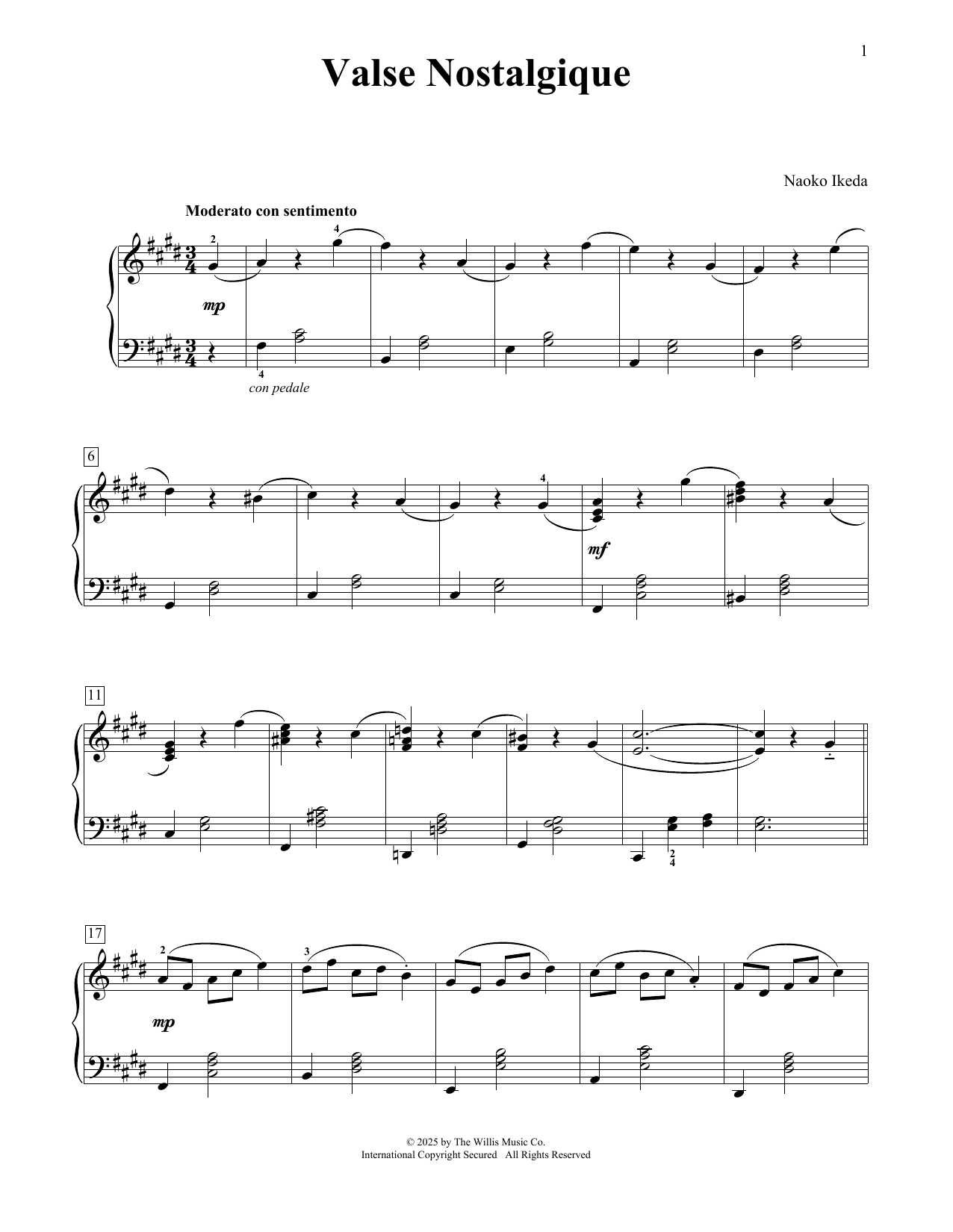
This piece captures the bittersweet character of a waltz without relying on complex harmonic language or extended technical demands. Students experience the full emotional arc of a classical form in just three pages, which means they can focus on interpretation and phrase shaping rather than wrestling with the score itself.

What to expect

A moment of reflection dressed in waltz time. The melody drifts with a quality of memory or longing, the kind of nostalgia that arrives not as sadness but as a gentle awareness of time passing. There is grace in the movement, and quiet beauty in restraint.

Who it's for

Students working at early intermediate levels who are ready to explore classical forms with expressive maturity. This piece suits pianists preparing for recitals, festivals, or repertoire exams where they need a piece that demonstrates both technical control and musical sensitivity.

How to get the most out of it

  • Shape the melodic line as you would a vocal phrase; resist the impulse to emphasize downbeats at the expense of lyrical continuity across the bar line.
  • Find the natural rubato points within the waltz rhythm. Light flexibility at phrase endings honors the nostalgic character without disrupting the pulse.
  • Balance the left hand accompaniment so it supports rather than overshadows the melody. The waltz pattern should be felt, not heard.

How to use it

Pair this with other twentieth and twenty-first century character pieces to show students how contemporary composers approach inherited classical forms. It also works well on recital programs as a contrasting piece between more dramatic or technically demanding works, offering listeners a moment of lyrical respite.

Skills your students will build

  • Shaping long melodic phrases within dance rhythm
  • Rubato and expressive timing in a structured harmonic context
  • Distinguishing between melodic voice and accompaniment through voicing choices
  • Sustaining legato touch across hand positions
  • Interpreting character and mood without performance markings

You May Also Like