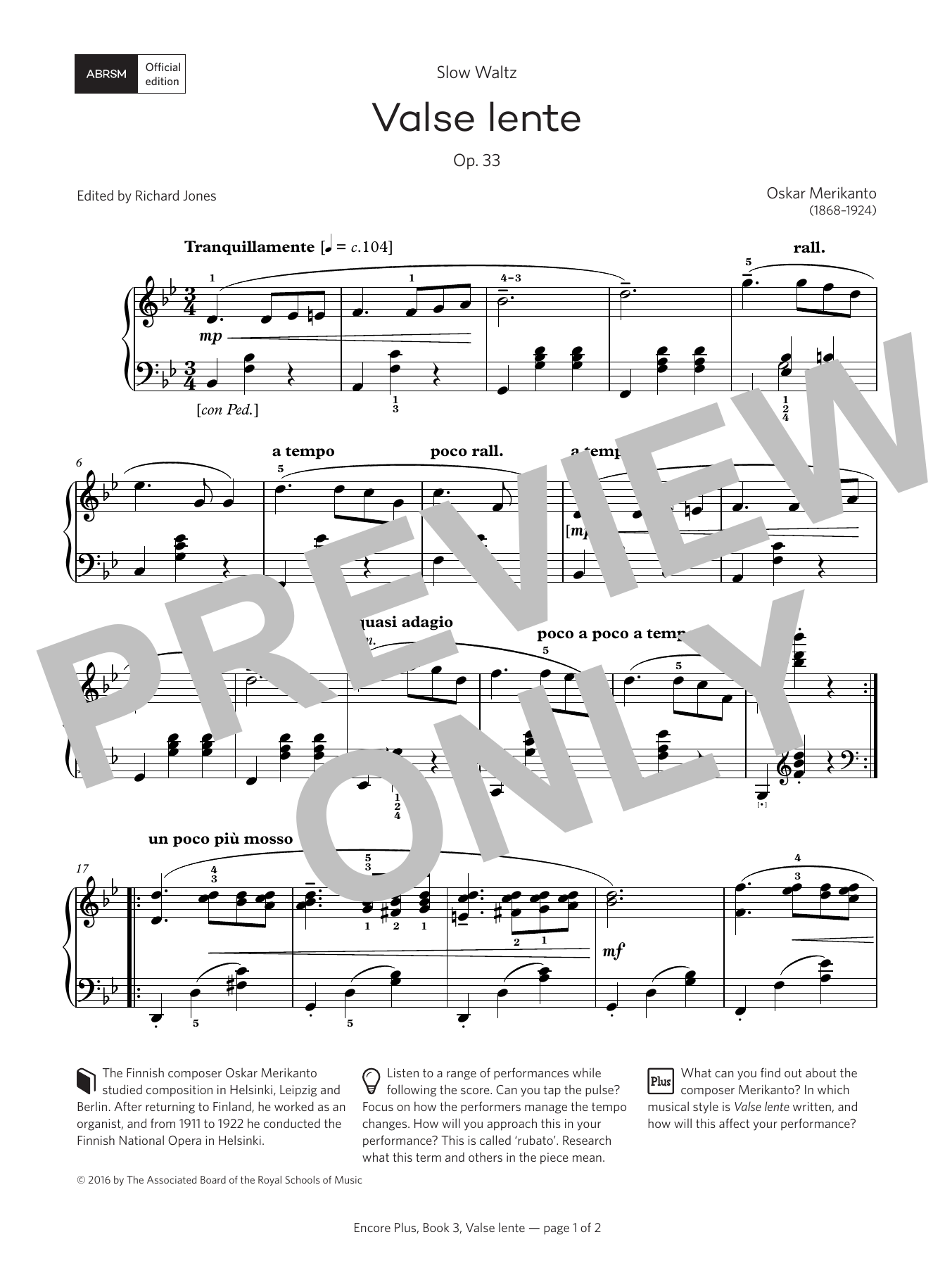
Oskar Merikanto (1868-1924) was a Finnish composer who bridged Romantic and early modern sensibilities, building on the nationalist impulses of his contemporaries while crafting music of genuine lyrical warmth. His piano works reveal an intimate understanding of the instrument's expressive range, combining Scandinavian restraint with moments of genuine melodic richness.
Why we love this
This waltz sits at the sweet spot between accessibility and genuine artistry. Merikanto's harmonic language is sophisticated enough to reward close listening without becoming cerebral, and the two-page scope makes it achievable for intermediate pianists without feeling oversimplified.
What to expect
The waltz unfolds with unhurried elegance, its character somewhere between a drawing-room dance and a moment of quiet reflection. Merikanto's harmonic shifts create gentle surprises without jarring the listener; the piece feels both familiar and just slightly exotic.
Who it's for
Grade 6 pianists ready to explore music beyond the standard pedagogical canon, particularly those developing interpretive control and comfort with Romantic era harmonic language. This works well for students preparing for competitions or recitals where a shorter classical piece complements a larger multi-movement work.
How to get the most out of it
Shape the main waltz melody with a singing legato line; think of it as vocal phrasing rather than pure finger technique, especially through longer phrases where breath naturally occurs.
Balance the left-hand accompaniment so it supports rather than overshadows the melody. The waltz rhythm needs to breathe, not plod.
Observe tempo fluctuations suggested by the 'lente' marking. Slight elasticity in the first statement versus a slightly firmer second time through can enhance the arc without sacrificing the waltz character.
Pay attention to dynamic shaping within measures, not just across sections. Many intermediate pianists play all quarter notes at the same volume; let the harmonic movement guide your release.
How to use it
Pair this with a Baroque work and a 20th-century piece for a balanced student recital, or use it as a bridge piece between a large sonata and a more virtuosic contemporary selection. Its two-page length makes it ideal when you need something substantive but time-conscious for a full concert.
Skills your students will build
Sustaining legato phrasing across 4-8 bar phrases without loss of finger clarity
Shaping waltz rhythm with interpretive flexibility while maintaining metric security
Voicing inner harmonies in accompaniment patterns so they remain audible but subordinate
Reading and responding to romantic era harmonic movement and voice leading
You May Also Like
Scan to Complete Your Purchase
Use your phone's camera to scan the code below
You'll log in on your phone and the order will be added to your account