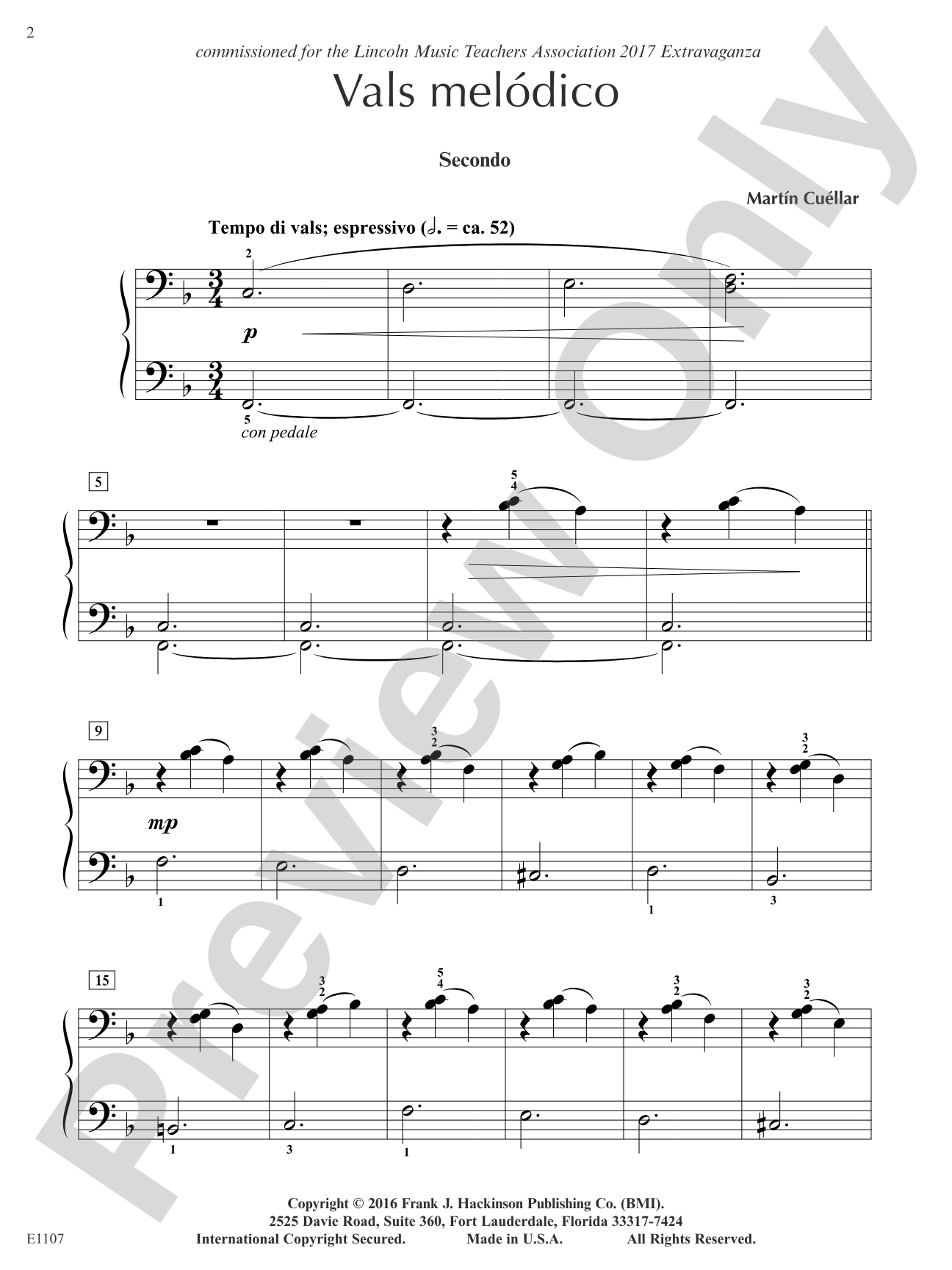
Vals melodico Sheet Music Preview

Vals melodico: Piano

By Martín Cuéllar

Item: 98-DE1107

Digital Download
$5.50
Description
Commissioned by the Lincoln, Nebraska MTA, this expressive waltz in F major features a beautiful melody with easy ensemble for late elementary students. The lush harmony requires pedal throughout.

Vals melodico: Piano isn't in MakeMusic Cloud just yet...but it could be. Let us know you'd like to see it, and you'll help shape what comes next. In the meantime, start a free trial and dive into thousands of interactive titles your students can play along with today.

Sample Audio
No sample audio found.
Sample Video
Additional Details
Series: The FJH Piano Ensemble Series
Publisher: The FJH Music Company, Inc.
SKU: 98-DE1107

More about this title

Why we love this

Cuéllar writes with genuine musicality for young pianists without resorting to simplification. The harmonic palette here is sophisticated enough to sound genuinely expressive, yet the ensemble parts stay accessible, which means your students will feel like they're playing real music from day one.

What to expect

The piece unfolds like a graceful conversation between two pianists. The melody sings with warmth over a lush harmonic foundation, and the F major tonality gives it an accessible brightness that invites listeners in immediately.

Who it's for

This duet is ideal for late elementary pianists who can read confidently in treble clef and are ready to explore pedal technique in a musical context. It works equally well for a private lesson recital or as a school ensemble offering where two students of similar ability can perform together.

How to get the most out of it

  • Establish a steady, gentle waltz pulse (3/4) before adding the melody; let the accompaniment player anchor the tempo with confident bass notes
  • Use the pedal expressively rather than continuously; change it at harmonic shifts to keep the sound clear even as the harmony deepens
  • Shape the melody with subtle dynamic shaping that follows the phrasing rather than playing it metronomically; rubato will emerge naturally once both parts lock in

How to use it

Pair this with other early ensemble experiences to build collaboration skills; it's lightweight enough to fit between flashier show pieces yet substantial enough to stand on its own. The waltz form and accessible key make it perfect for family recitals or school concerts where you want to showcase young pianists growing into expressive playing.

Skills your students will build

  • pedal technique and coordination
  • ensemble listening and rhythmic synchronization
  • phrasing and musical shape in accompanied melody
  • reading and balancing two-part texture

You May Also Like