Valley Vista March: 2nd B-flat Clarinet Sheet Music Preview

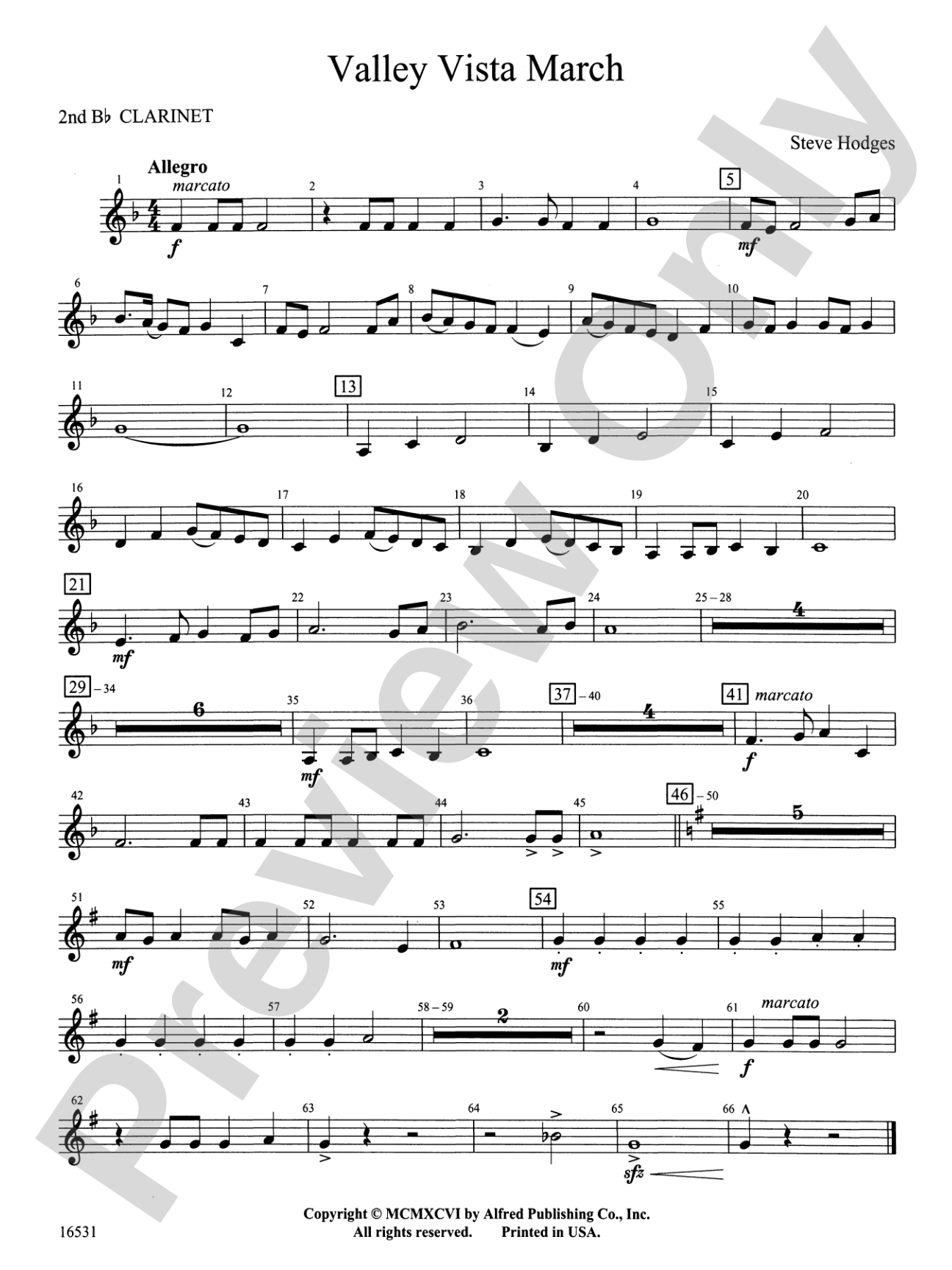
Valley Vista March: 2nd B-flat Clarinet

By Steve Hodges

Grade: 1.5 (Easy)

Item: 00-PC-0000179_C2

Digital Download
$3.00
Description
This sparkling march from the pen of Steve Hodges is a great way to start or end your next concert. Everyone gets to play the melody at some point, and the accompaniment patterns provide solid support throughout. Your percussion section will love the effectively-written parts that give them some nice sixteenth-note patterns to play.

Don't just read it, hear it, play along with it, and watch your students grow with it. In MakeMusic Cloud, Valley Vista March: 2nd B-flat Clarinet comes alive with professional accompaniment, adjustable tempo, and built-in practice tools that turn solo practice into real progress.

Sample Audio
0:00
0:00
Sample Video
Additional Details
Series: Challenger Band Series
Publisher: Alfred Music
Page Count: 120
SKU: 00-PC-0000179_C2

More about this title

About the Composer: Steve Hodges

Steve Hodges

Steve Hodges holds degrees in music education from Western Oregon University (Bachelor of Science) and Central Washington University (Master of Music Education). He spent four decades in public school music direction, leading bands, choirs, and chamber ensembles at every level before retiring from classroom teaching.

Since 1986, Hodges has composed and published over 120 concert band works through Alfred Music, along with choral arrangements for Staff Music and Shawnee Press. His compositions have appeared at festivals and state conventions internationally and have been commissioned by honor bands and schools across the United States and Canada. His work has also been featured on TBS and ESPN broadcasts. Hodges is an ASCAP member and currently resides in The Dalles, Oregon, where he remains active in community music and watches his five children and ten grandchildren perform his pieces in their school bands.

Why we love this

Valley Vista March succeeds because every section gets a moment with the melody, keeping engagement high across your entire band. The accompaniment writing is genuinely musical rather than perfunctory, and the percussion parts feature rhythmic patterns that challenge without overwhelming students at this level. This is the kind of march that works equally well as an opener or closer and travels well to festivals.

What to expect

Valley Vista March has the bright, optimistic character of a traditional march with a contemporary sensibility. Melodies soar across the band while rhythmic accompaniment patterns create momentum and warmth, resulting in a piece that feels both festive and musically complete.

Who it's for

This Grade 1.5 march suits beginning bands that have mastered basic technique and are ready for concert repertoire with real musical substance. Conductors looking for accessible yet rewarding material for contest or festival programs will find Valley Vista March delivers polish without requiring extended rehearsal time.

How to get the most out of it

  • Balance the melody distribution across sections carefully during rehearsal. Since multiple voices carry the tune at different points, mark who plays lead in each passage and ensure that player or section projects the line clearly while others support.
  • Give your percussion section focused rehearsal time on the sixteenth-note patterns. These figures drive the forward momentum of the march, so clarity and precision in the percussion section will lift the entire band's energy.
  • Maintain a crisp, articulate style throughout. March writing depends on clean attacks and consistent tonguing; a unified approach to note separation will make the piece sparkle.

How to use it

Open your next concert with this march to establish energy immediately, or save it as your finale to send the audience home smiling. Its accessibility and musical appeal make it an excellent choice for festival programming where you want to showcase ensemble musicality without relying on extended technical demands.

Skills your students will build

  • Balanced ensemble playing with melody shared across multiple sections
  • Rhythmic precision in sixteenth-note patterns
  • Clear articulation and phrasing in march style
  • Supporting roles and accompaniment texture awareness

You May Also Like