
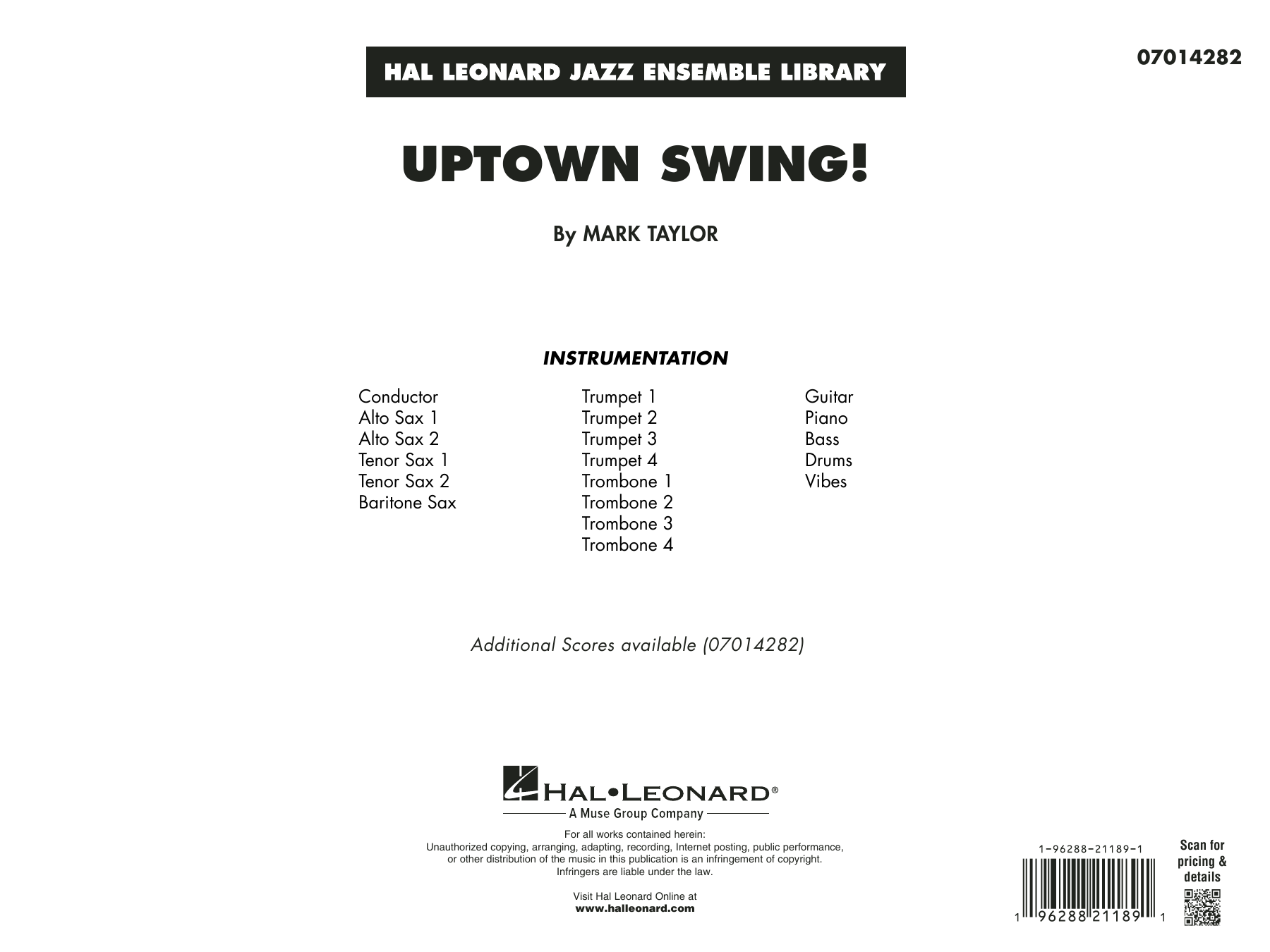

Uptown Swing!: Jazz Ensemble Conductor Score & Parts
By Mark Taylor
Grade: 4
Item: 35-PK01487399
$55.00
Pickup currently not available
Buy Extra Parts (Digital PDF Download)
| Product | Price | Quantity |
|---|---|---|
| Uptown Swing! - Conductor Score (Full Score) | $7.50 | |
| Uptown Swing! - Alto Sax 1 | $6.00 | |
| Uptown Swing! - Alto Sax 2 | $6.00 | |
| Uptown Swing! - Tenor Sax 1 | $6.00 | |
| Uptown Swing! - Tenor Sax 2 | $6.00 | |
| Uptown Swing! - Baritone Sax | $6.00 | |
| Uptown Swing! - Trumpet 1 | $6.00 | |
| Uptown Swing! - Trumpet 2 | $6.00 | |
| Uptown Swing! - Trumpet 3 | $6.00 | |
| Uptown Swing! - Trumpet 4 | $6.00 | |
| Uptown Swing! - Trombone 1 | $6.00 | |
| Uptown Swing! - Trombone 2 | $6.00 | |
| Uptown Swing! - Trombone 3 | $6.00 | |
| Uptown Swing! - Trombone 4 | $6.00 | |
| Uptown Swing! - Guitar | $6.00 | |
| Uptown Swing! - Piano | $6.00 | |
| Uptown Swing! - Bass | $6.00 | |
| Uptown Swing! - Drums | $6.00 | |
| Uptown Swing! - Vibes | $6.00 |
Parts Added to Cart!
Description
Designed as a flashy showpiece that features every section of the band, this uptempo burner is the perfect opener! After the attention-grabbing intro, the rhythm section starts things off then passes the baton to the trombone section. (A short interlude separates each feature spot, so plug in an announcer if you like!) The section shows its stuff followed by the trumpets. A short drum solo leads to the final full band chorus where everything comes together. This gets any concert off to an exciting start!


Discover MakeMusic Cloud: thousands of interactive titles your students can play along with today.
Sample Audio
No sample audio found.
Sample Video
Additional Details
Publisher:
Hal Leonard
SKU:
35-PK01487399
More about this title
About the Composer: Mark Taylor
Mark Taylor has built a reputation as one of the most prolific and trusted composers writing for school jazz ensembles. His arranging style balances accessibility with genuine musicality, creating pieces that sound professional while remaining achievable for developing musicians. Taylor understands what directors need: music that engages students, impresses audiences, and doesn't require a virtuoso section to sound like a victory.
Taylor's catalog spans contest repertoire, concert openers, and pedagogical tools that have become staples in jazz programs across North America. His work consistently demonstrates how smart voicing and clear writing can make Grade 4 material feel polished and confident.
Why we love this
This piece solves a real programming challenge: finding an opener energetic enough to grab attention while giving every section meaningful solo space without dragging the pacing. Taylor's interlude structure (separating each feature with breathing room) lets you turn those moments into band introduction opportunities, doubling the engagement factor for your audience.
What to expect
Propulsive and celebratory. The groove kicks in fast and stays grounded in that rhythm section pocket, creating the feeling of a band that knows exactly what it's doing. Each section's moment lands with authority, and when the full ensemble comes together at the end, the collective energy feels earned rather than just loud.
Who it's for
Directors running jazz concerts and festivals who need openers that ignite the room while rotating attention across the ensemble fairly. It works equally well for Grade 4 groups with strong fundamentals and as a confidence builder for newer programs since the sectional writing is clean and idiomatic without requiring extended technique.
How to get the most out of it
- Shape the intro with precision and snap. That opening moment sets the energy level for the entire chart, so drill the rhythmic accuracy and articulation until it feels inevitable rather than busy.
- Treat each sectional feature as its own small performance. The rhythm section, trombones, saxes, and trumpets each need rehearsal time in isolation so they can nail their moment without thinking about ensemble balance.
- Keep the drum solo conversation between the soloist and the rhythm section locked and breathing together. This is where the groove either lands or falls apart, so make sure your drummer and bass player have rehearsed this section thoroughly.
- Balance volume across the final chorus so the individual lines stay audible even as textures layer. This is when the piece gets its full impact, but thickness isn't the same as power.
How to use it
Anchor this as your opening number on any concert where you want immediate momentum and audience attention. It also works well early in a festival set since it establishes your ensemble's confidence and musicality in the opening seconds. The built-in structure makes it flexible enough to extend with an MC between sections or keep it streamlined for a tighter program.
Skills your students will build
- Trading solos within a section while maintaining rhythmic cohesion
- Comping and accompaniment patterns specific to jazz ensemble conventions
- Reading and executing articulation gestures that define a jazz groove
- Listening to and locking into a rhythm section pocket
- Balancing individual voice independence with ensemble blend in a full voicing
- Interpreting section dynamics and phrasing in real time