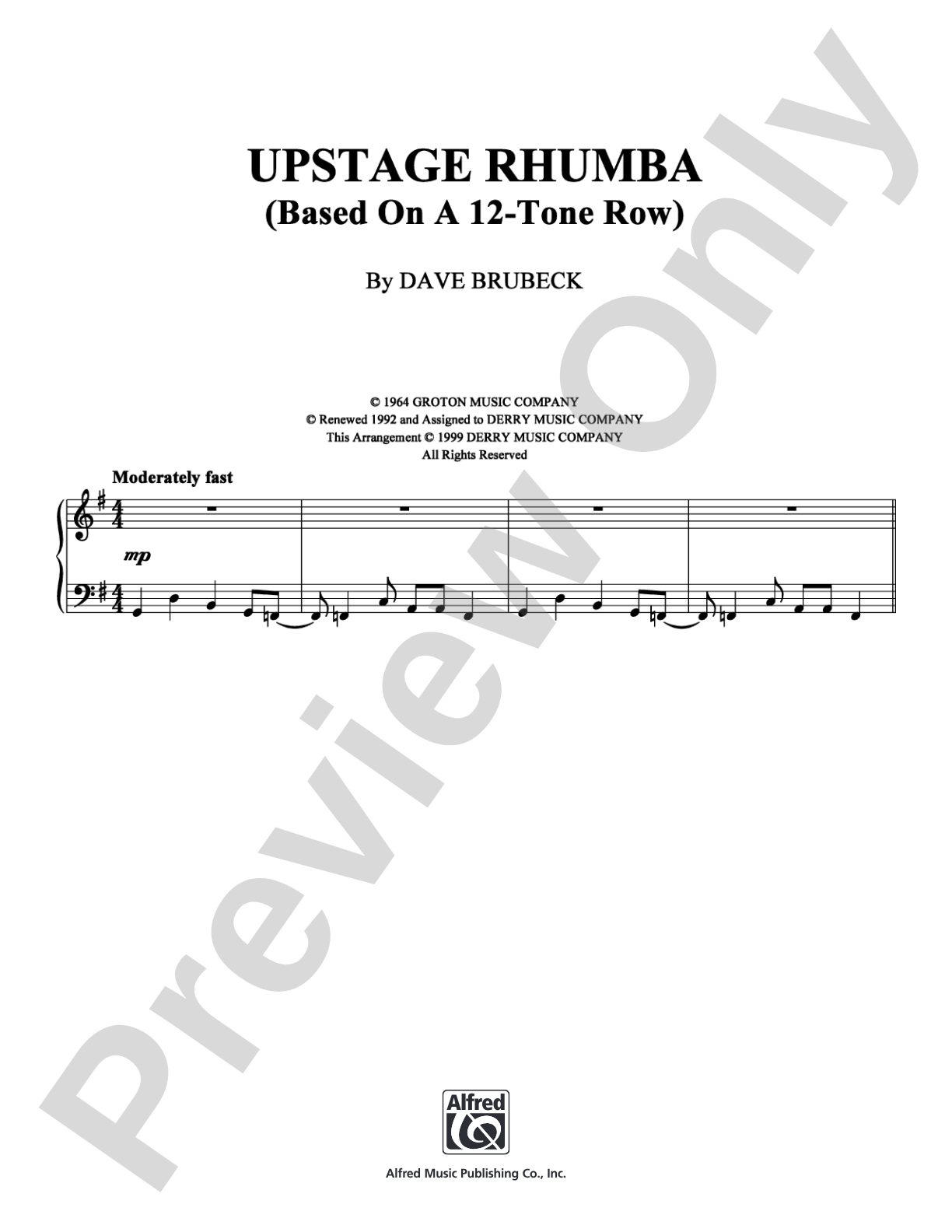
Upstage Rhumba: Piano Digital Sheet Music

Upstage Rhumba: Piano Digital Sheet Music

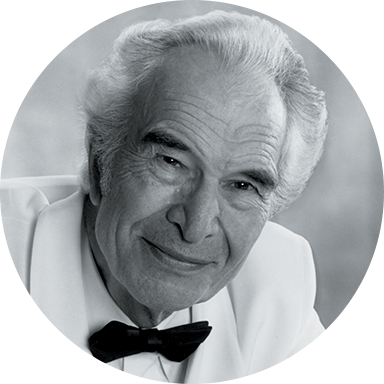
Dave Brubeck

Item: 00-PS-0008013

Digital Download
$3.99
Description

Upstage Rhumba: Piano Digital Sheet Music isn't in MakeMusic Cloud just yet...but it could be. Let us know you'd like to see it, and you'll help shape what comes next. In the meantime, start a free trial and dive into thousands of interactive titles your students can play along with today.

Sample Audio
No sample audio found.
Sample Video
Additional Details
SKU: 00-PS-0008013

More about this title

About the Artist: Dave Brubeck

Dave Brubeck

Dave Brubeck built his reputation as a jazz pianist through exceptional improvisational ability, but his compositional output was equally substantial and diverse. Beyond his iconic recordings, he wrote choral works, hymns, orchestral pieces, chamber music, ballet suites, and large-scale works for chorus and orchestra. His mass To Hope! has been performed across Germany, Austria, Russia, and the English-speaking world, while works like Pange Lingua Variations and the oratorios The Voice of the Holy Spirit and Beloved Son have been recorded by the London Symphony Orchestra and London Voices.

After earning his bachelor of music degree from the College of the Pacific in 1942, Brubeck studied with French composer Darius Milhaud at Mills College following his World War II service. Milhaud's influence encouraged him to synthesize jazz vocabulary with classical forms, an approach that defined his entire career. His achievements earned him a Grammy Lifetime Achievement Award, the Presidential Medal of the Arts from President Clinton, a lifetime achievement award from the London Symphony Orchestra in 2007, and induction into the American Classical Music Hall of Fame in 2003.

Why we love this

Brubeck's jazz compositions for solo piano offer pianists access to authentic jazz writing that balances improvisational freedom with clear structural intent. This piece combines his gift for melody with the rhythmic vitality of the rhumba, creating material that rewards both careful study and spontaneous interpretation. For solo recitals or jazz-focused concerts, Upstage Rhumba brings the sophistication and pianistic color that only a master of both jazz and classical form can deliver.

What to expect

The rhumba rhythm lends an unhurried, almost reflective quality to the piece, allowing Brubeck's harmonic language to breathe. There's a sophisticated ease to it, the kind of composition that sounds effortless but reveals new details with each listening.

Who it's for

This is ideal for jazz pianists and advanced classical pianists exploring the jazz repertoire, particularly those who want to develop fluency in Afro-Cuban rhythms and jazz harmony. It works equally well as a solo recital piece or as part of a jazz program, and serves pianists studying Brubeck's compositional voice beyond his most famous works.

How to get the most out of it

  • Approach the rhumba rhythm with precision during the written sections, then allow space for your own phrasing to breathe in passages marked for interpretation.
  • Listen carefully to the harmonic movement; Brubeck's changes often suggest the contours of the melodic line rather than stating them literally.
  • Balance left-hand groove against right-hand figures so the rhythm section impulse stays clear without overwhelming the melody.
  • Experiment with voicing choices in sections where chord symbols or slash notation appears, letting your musical instincts guide reharmonization while respecting the form.

How to use it

This piece fits naturally into a jazz or contemporary recital, where it can anchor a set of American jazz repertoire or transition between classical and jazz segments of a program. It also works as a standalone feature in concert settings focused on Latin-inflected jazz or mid-century American composition.

Skills your students will build

  • Rhumba rhythm and Afro-Cuban percussion patterns in left-hand accompaniment
  • Jazz harmony reading and reharmonization
  • Balance between scripted melody and improvisational interpretation
  • Touch and tone production to highlight rhumba groove while maintaining pianistic clarity

You May Also Like