
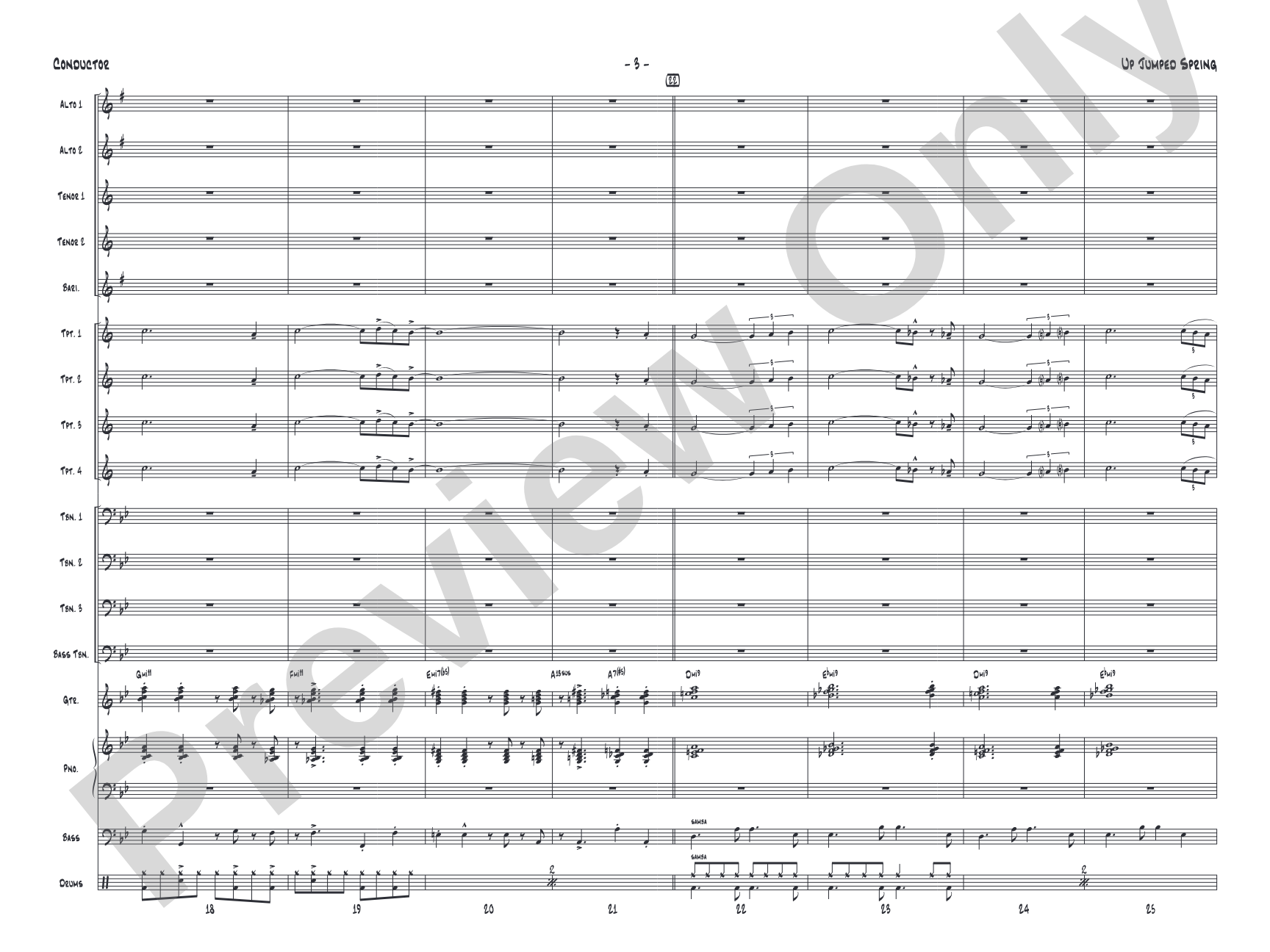
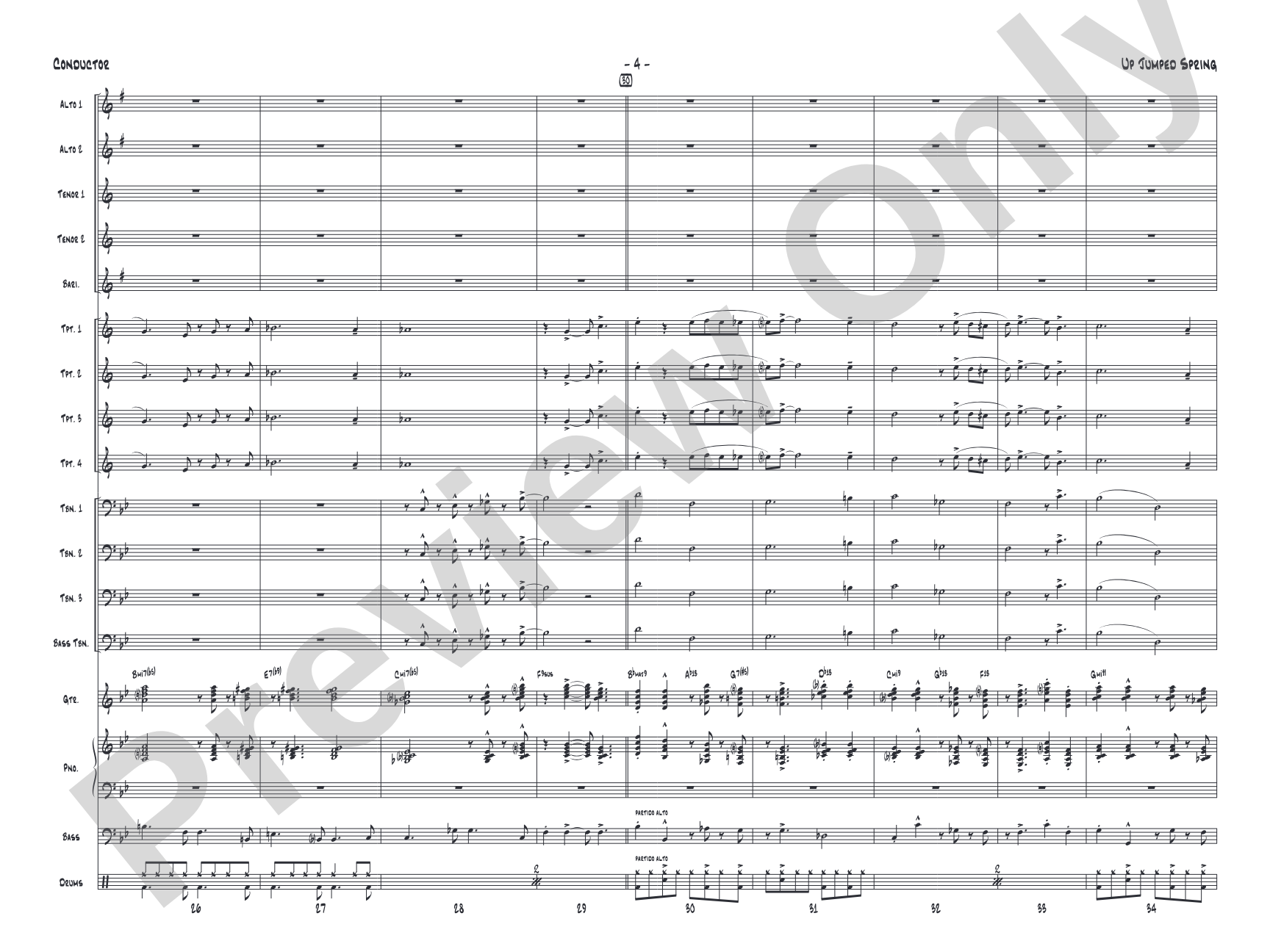
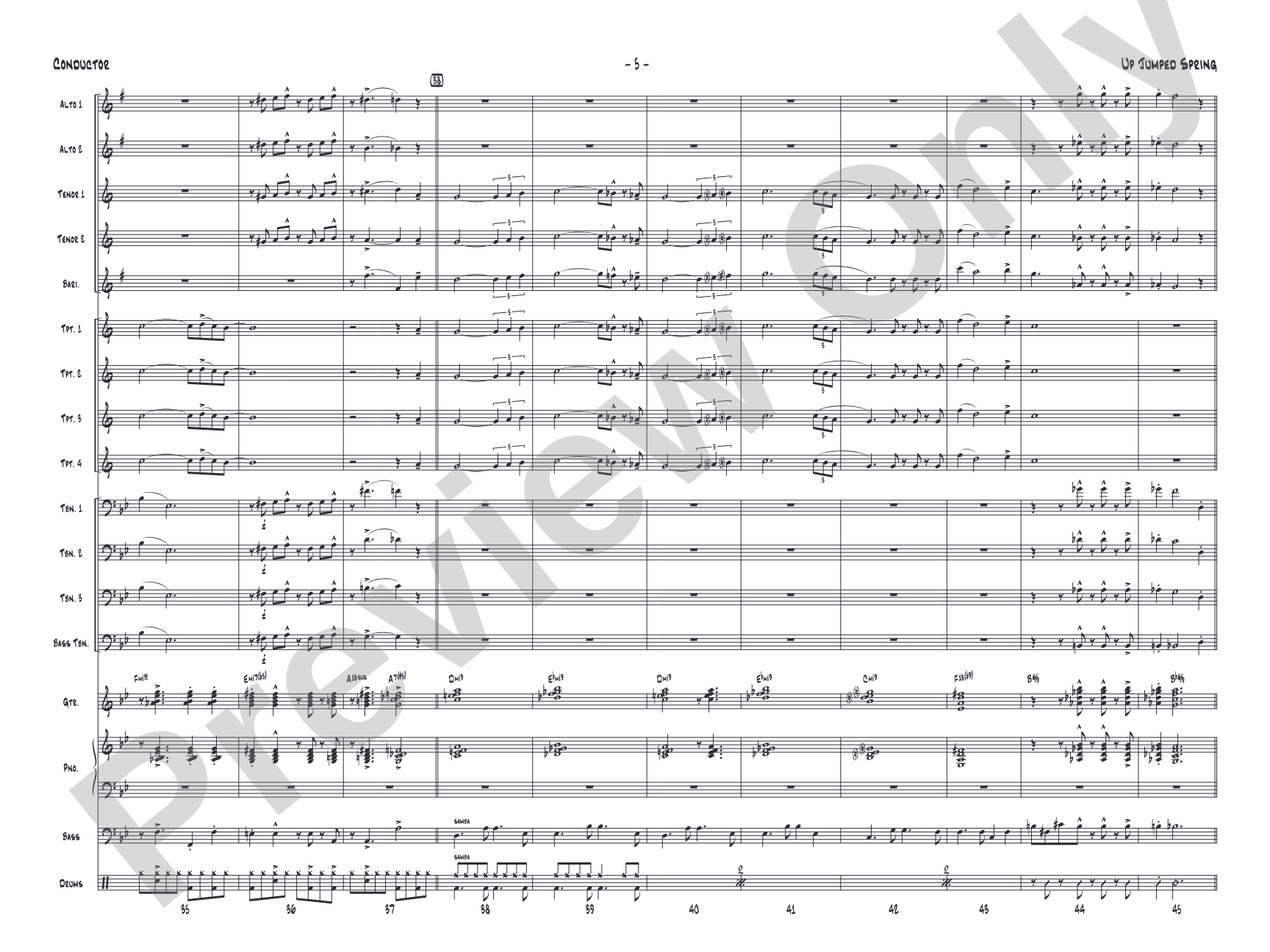
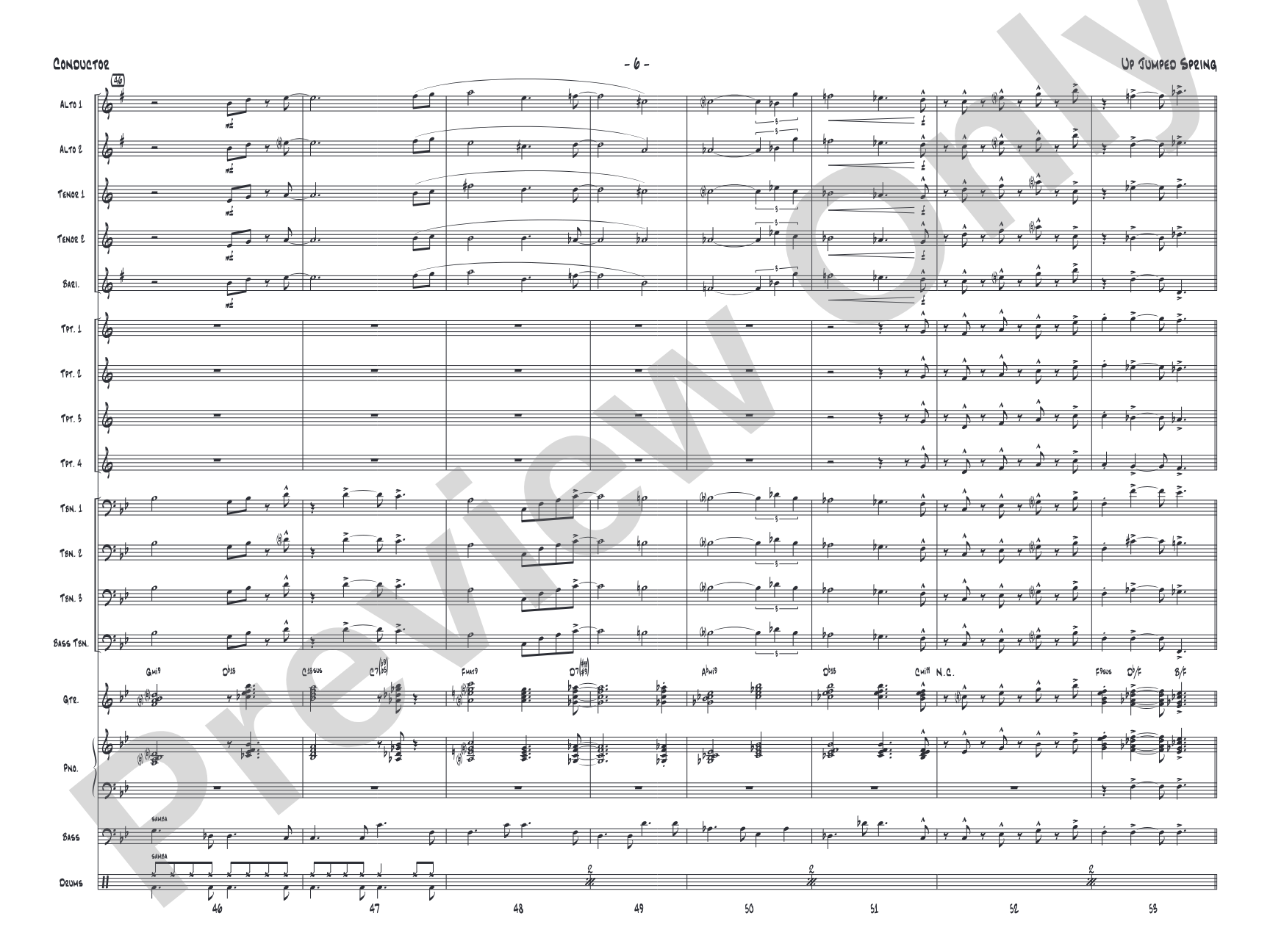
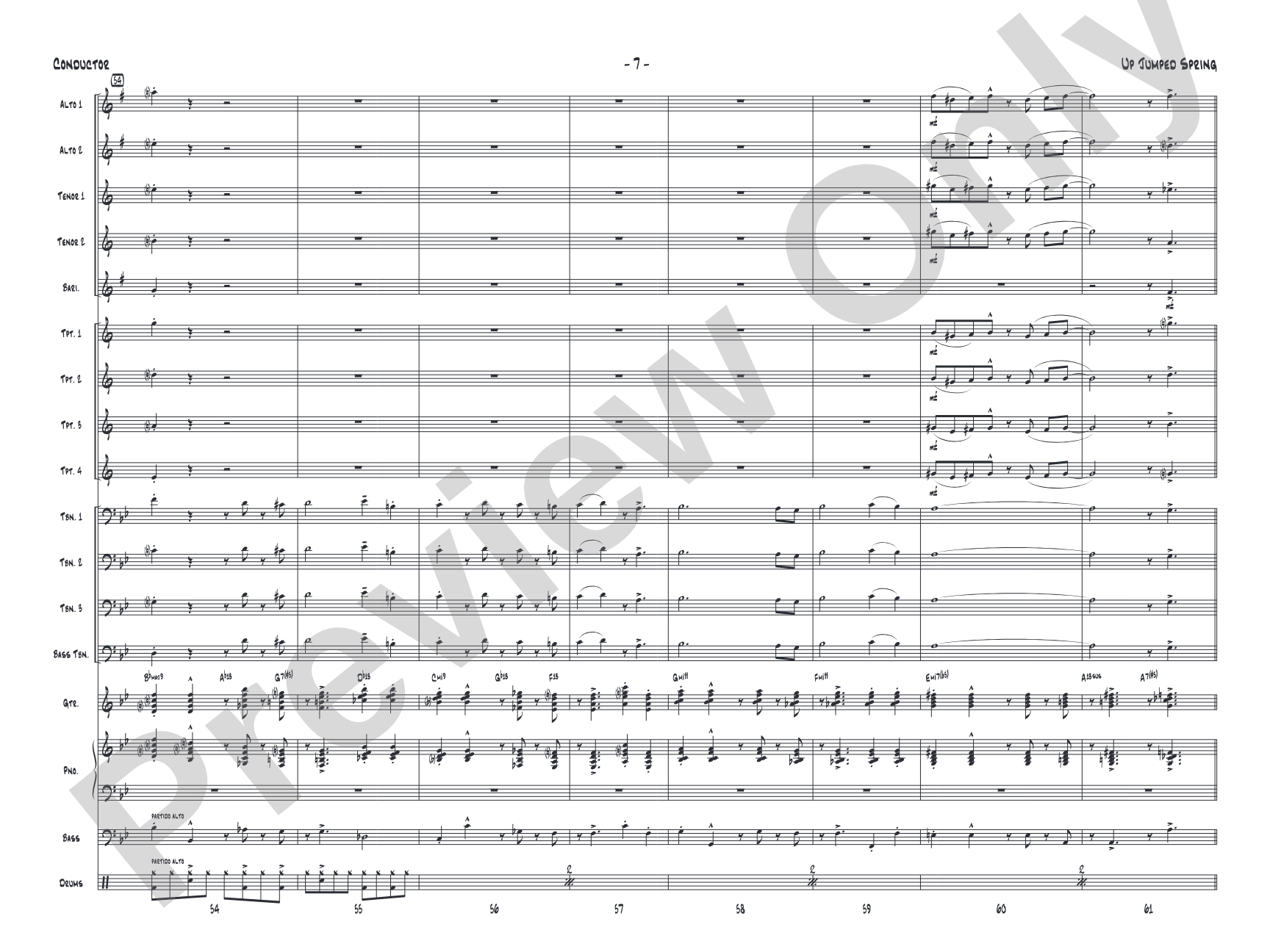
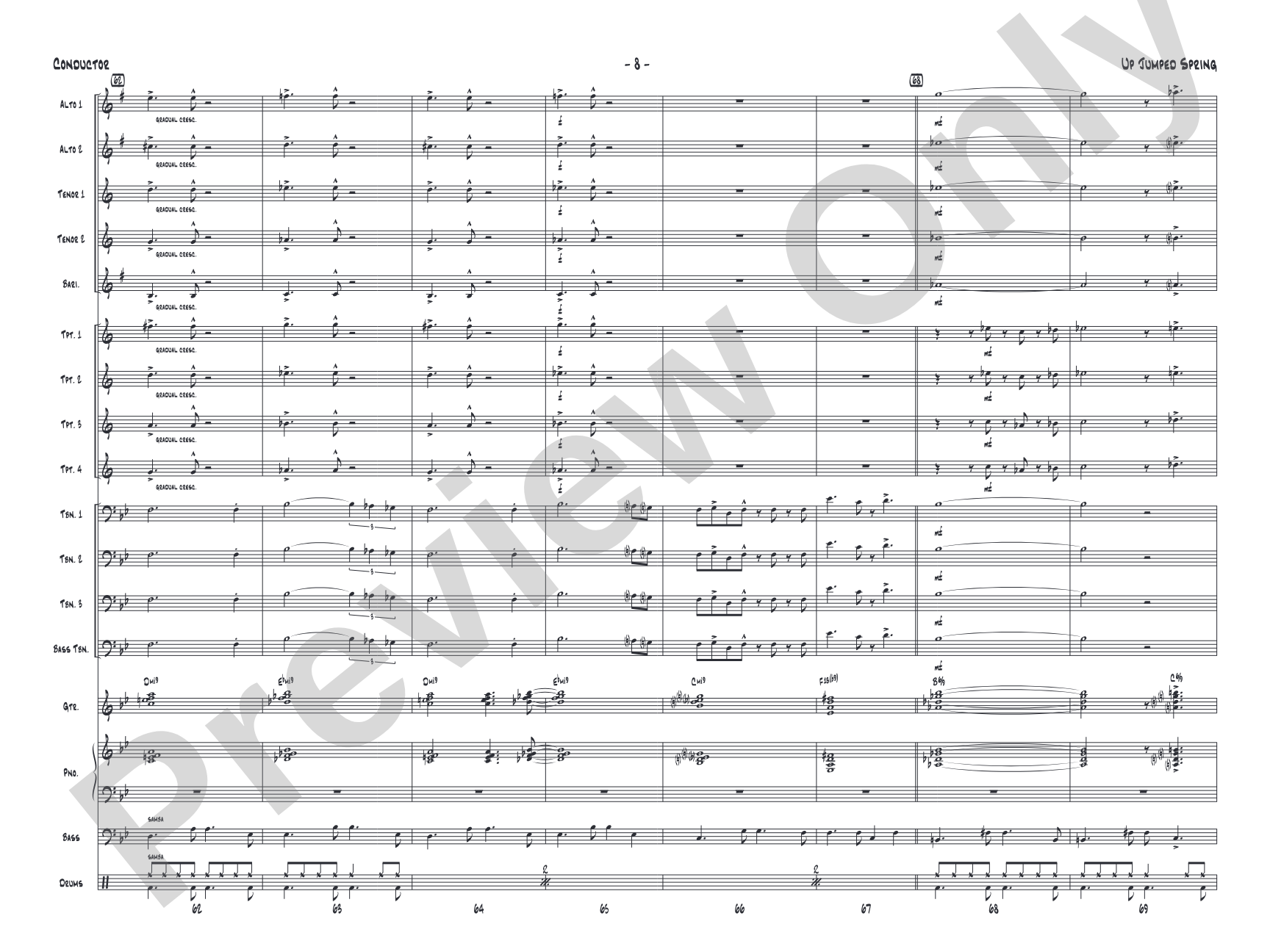
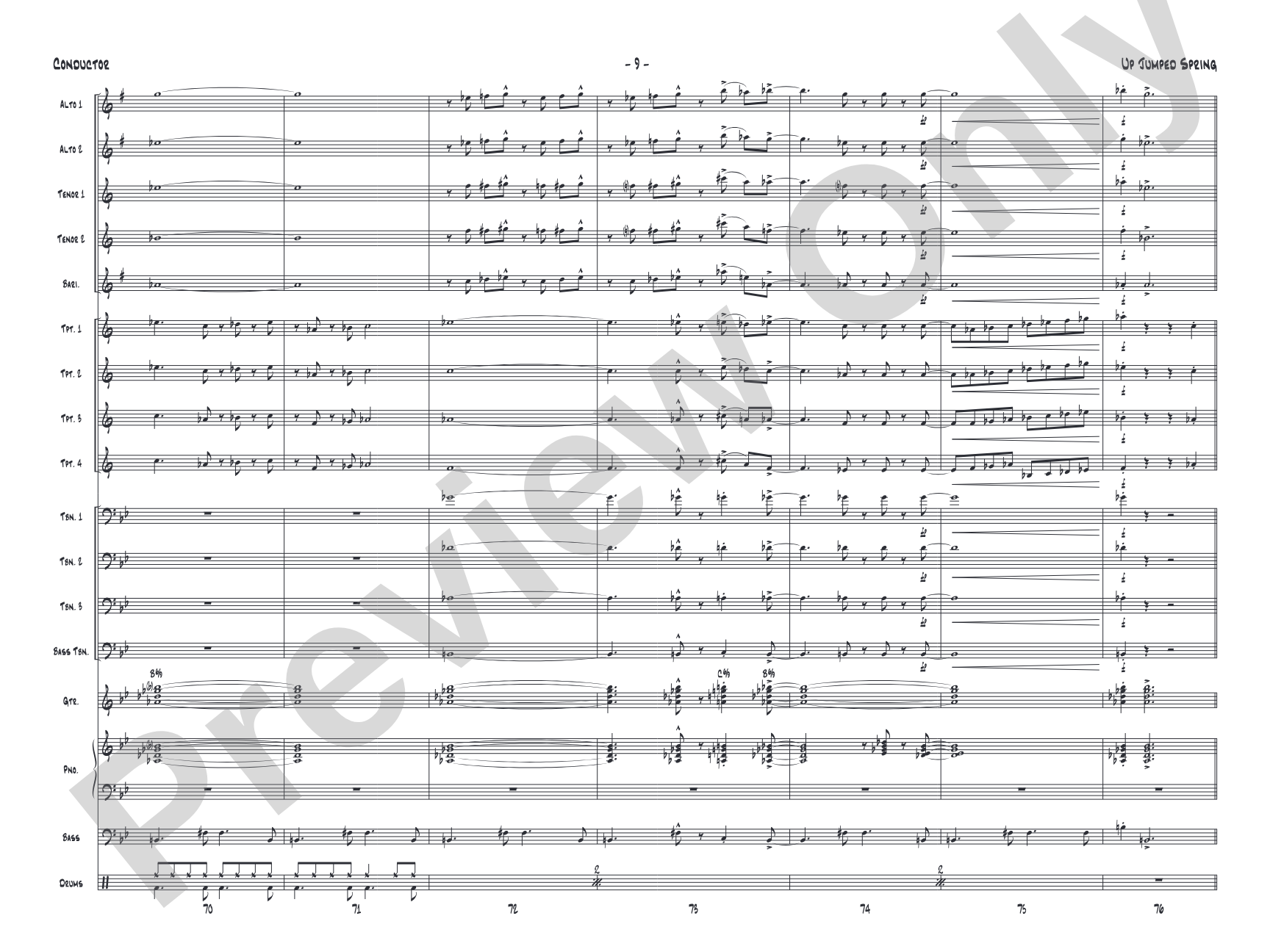
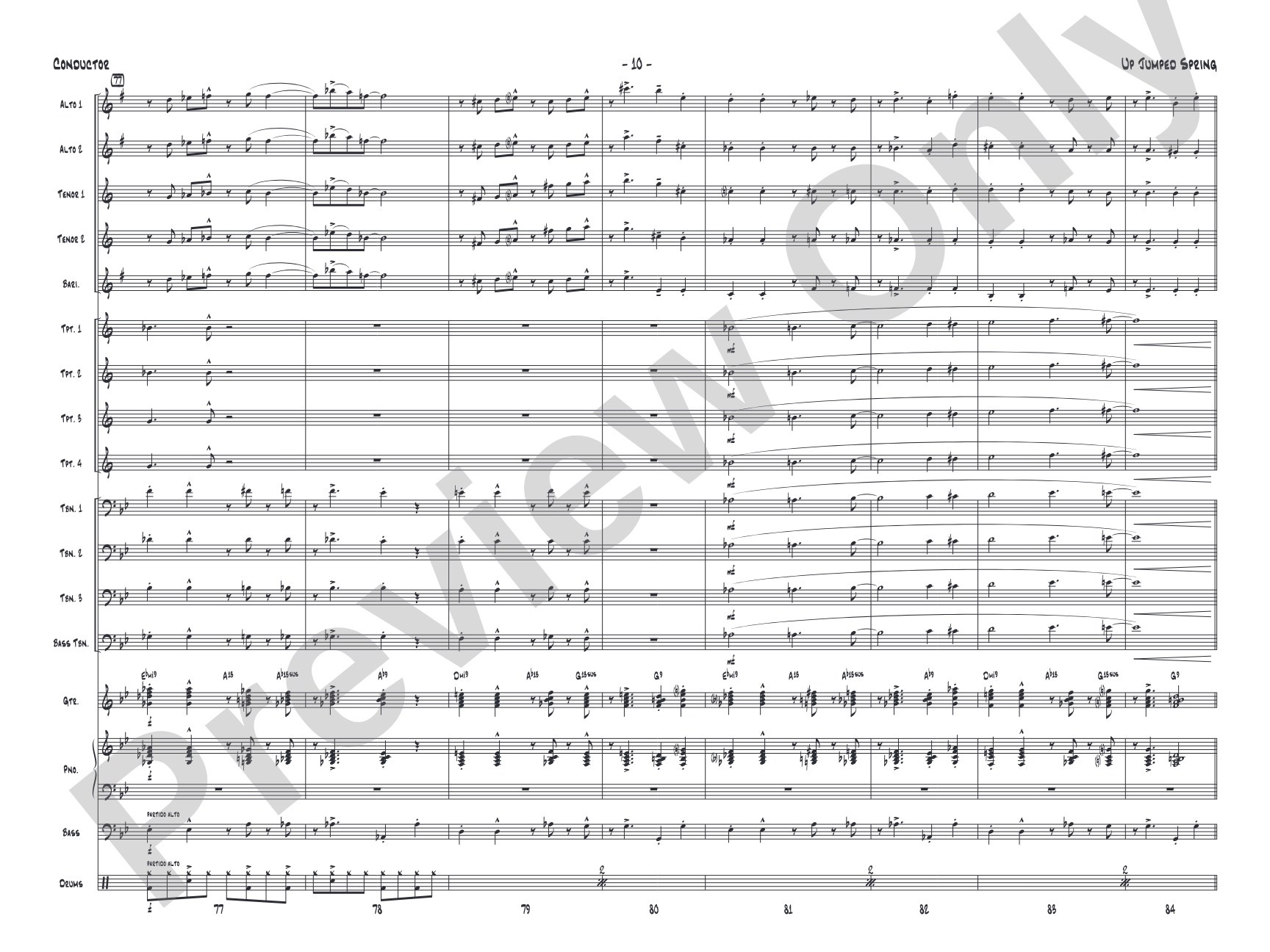
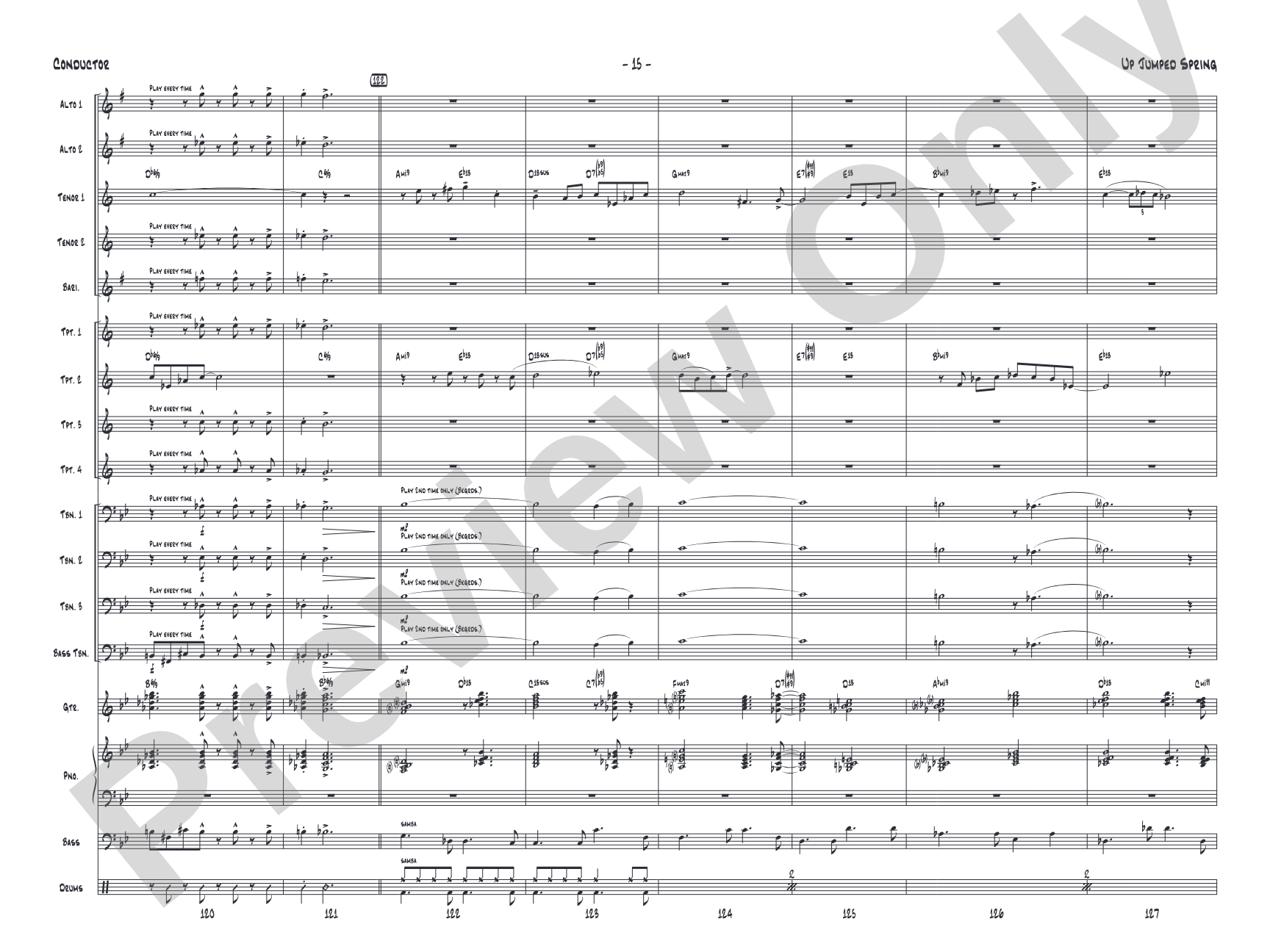
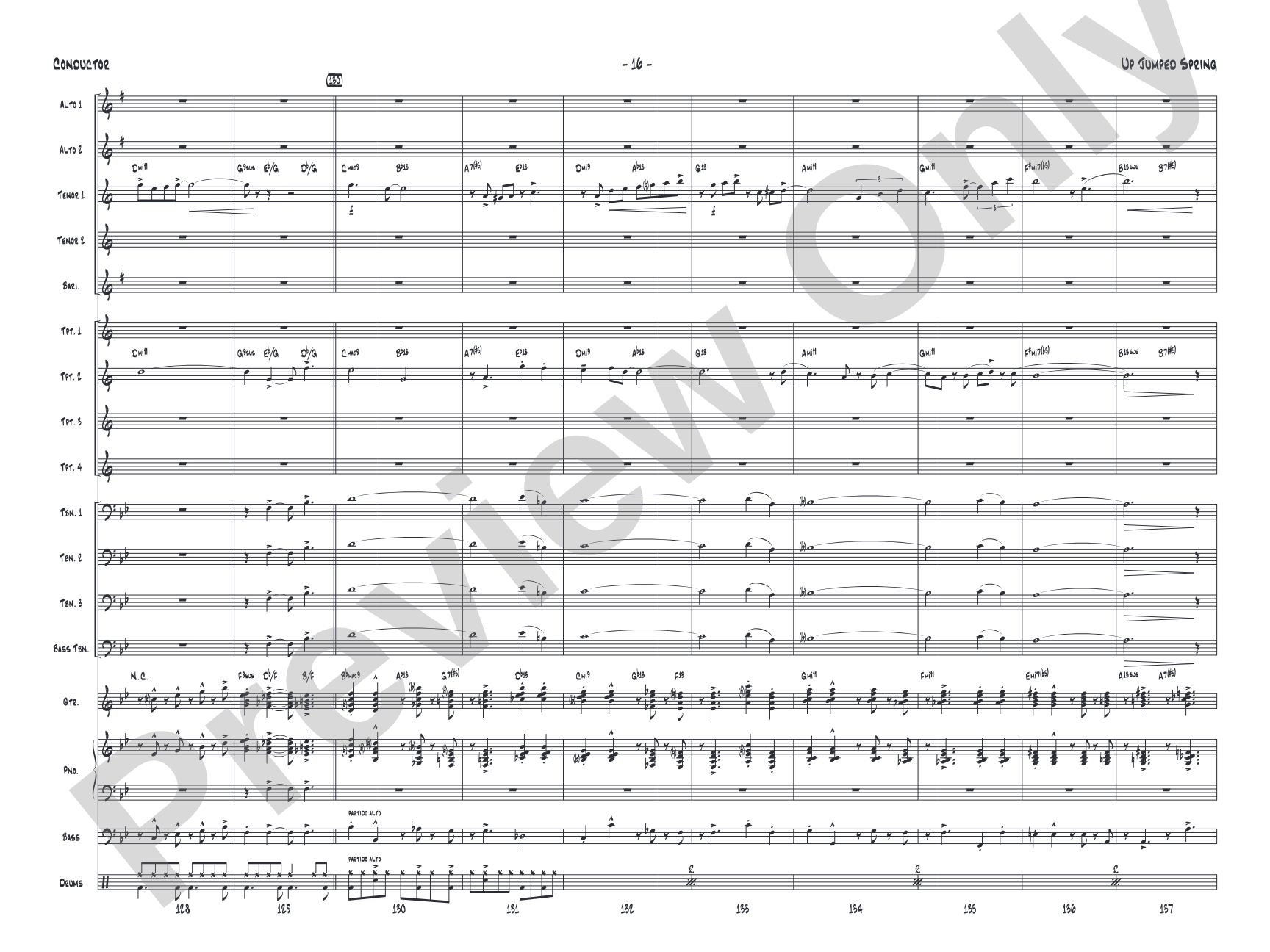
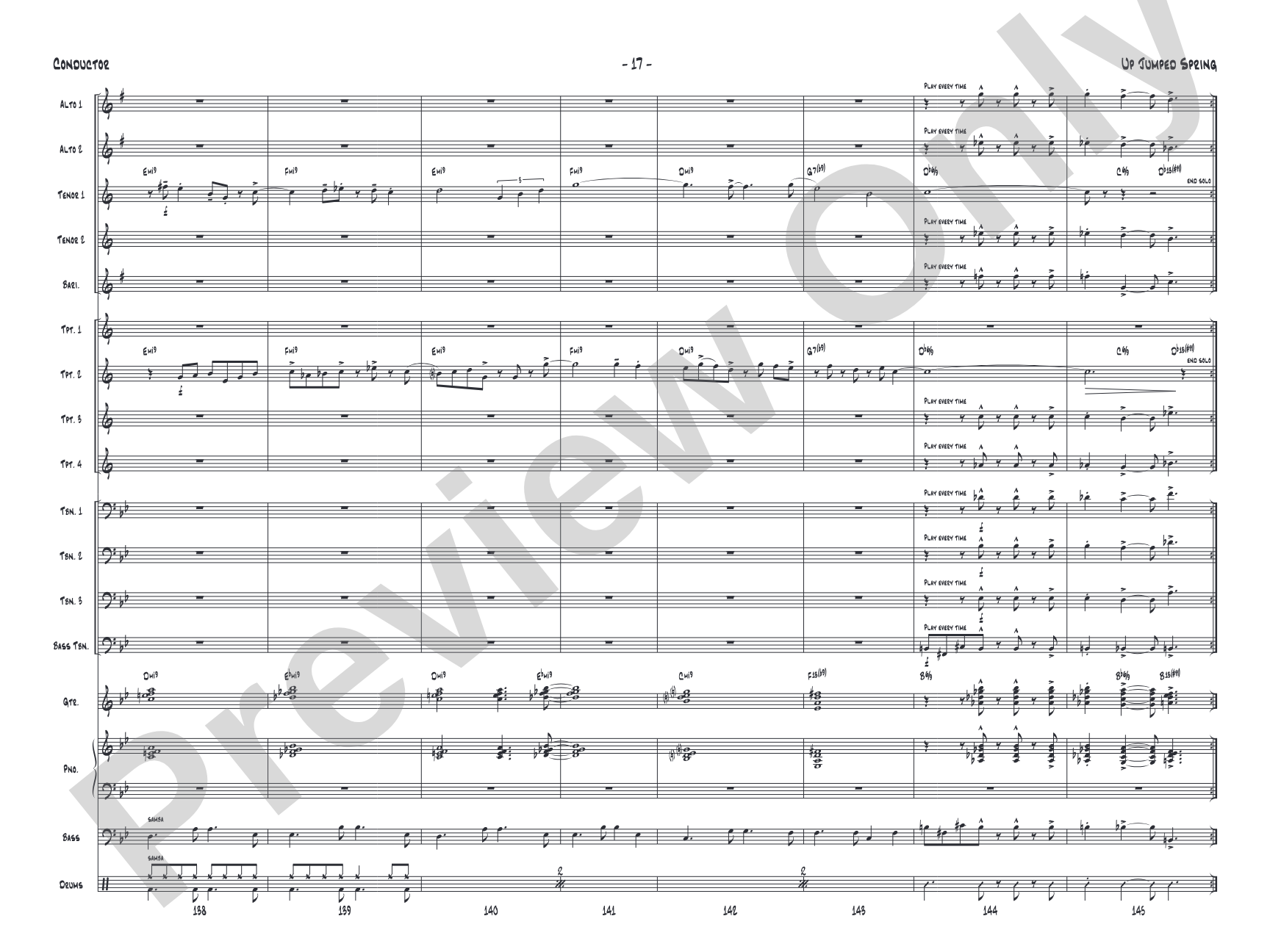
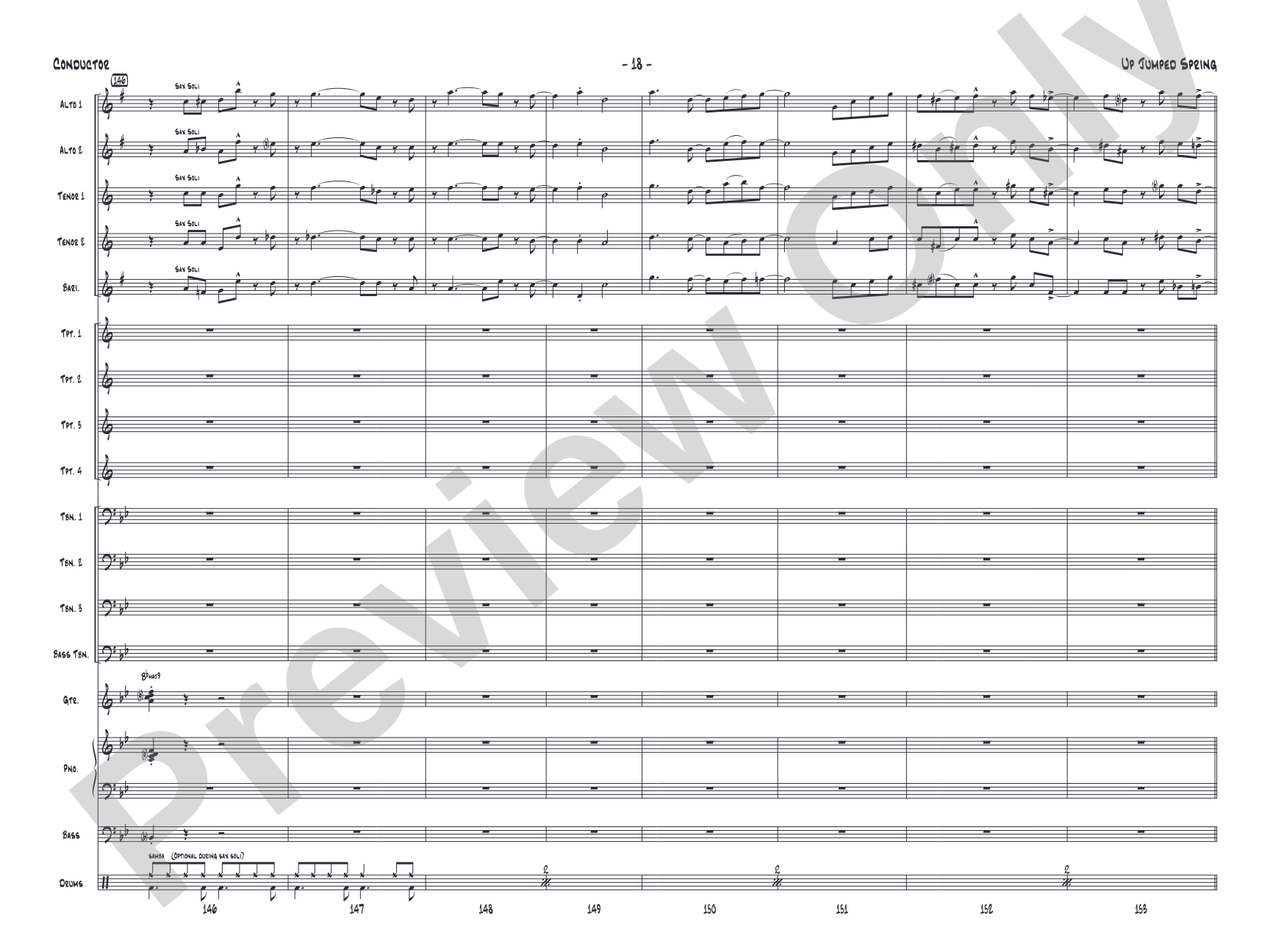
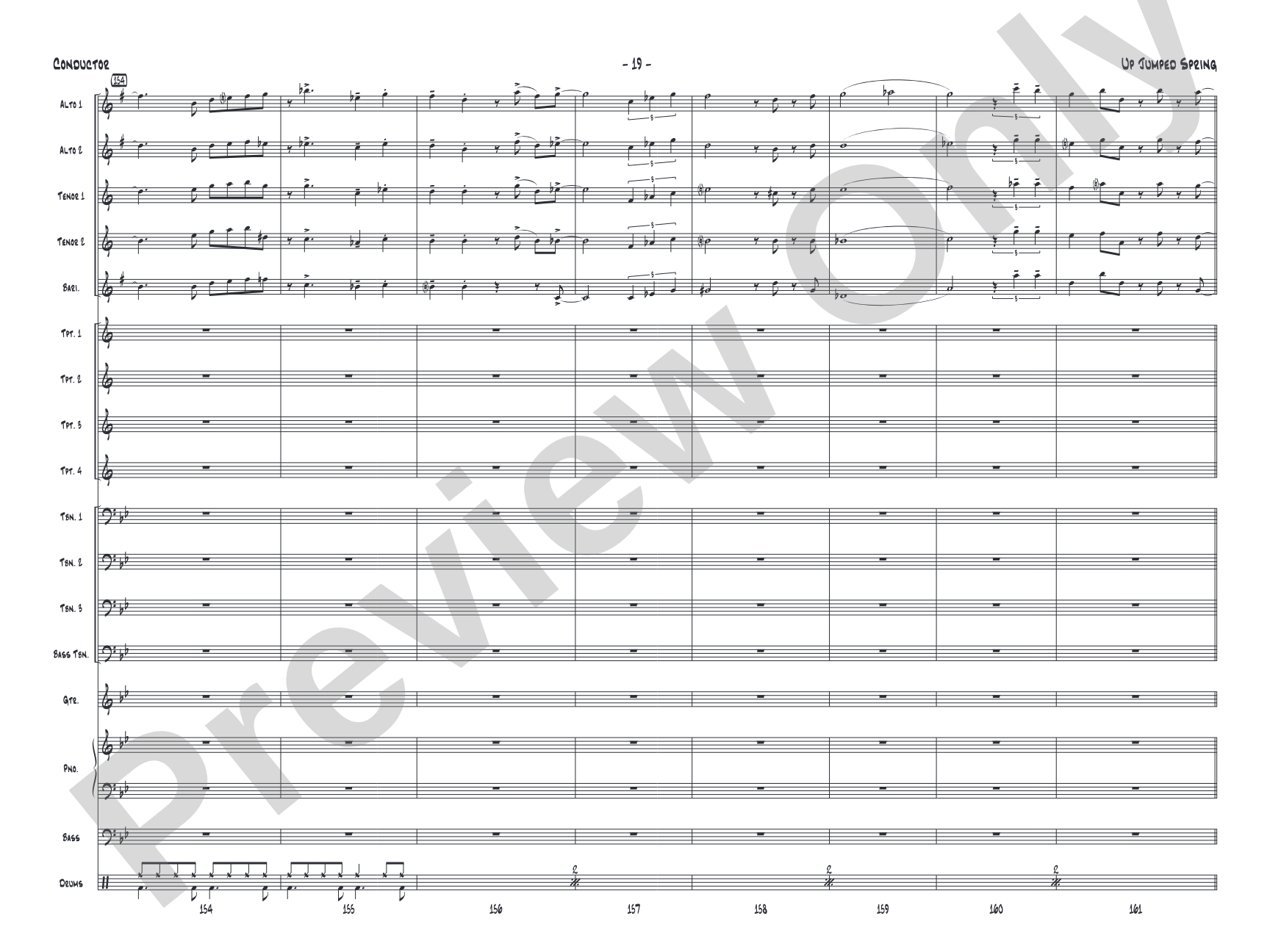
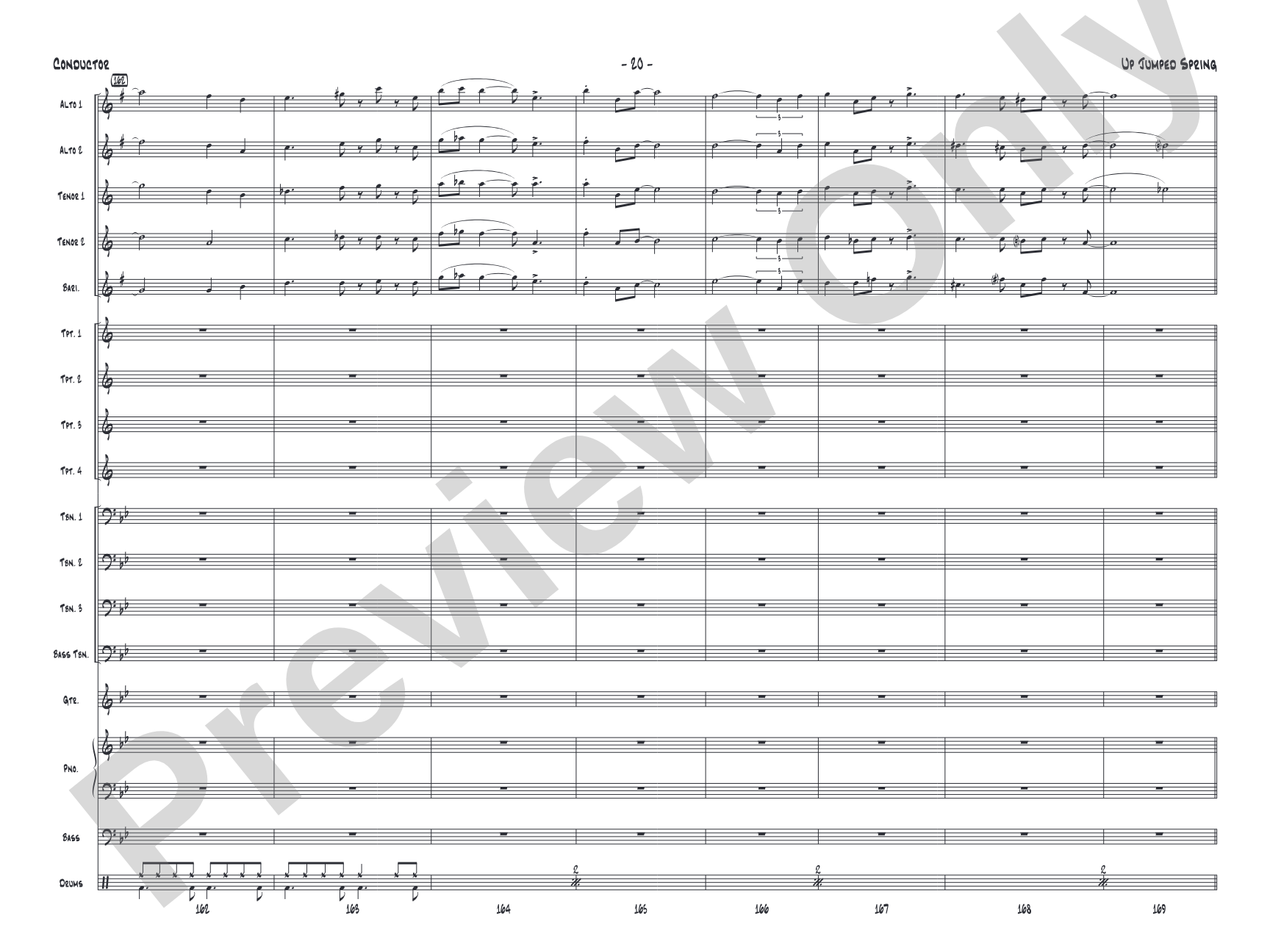
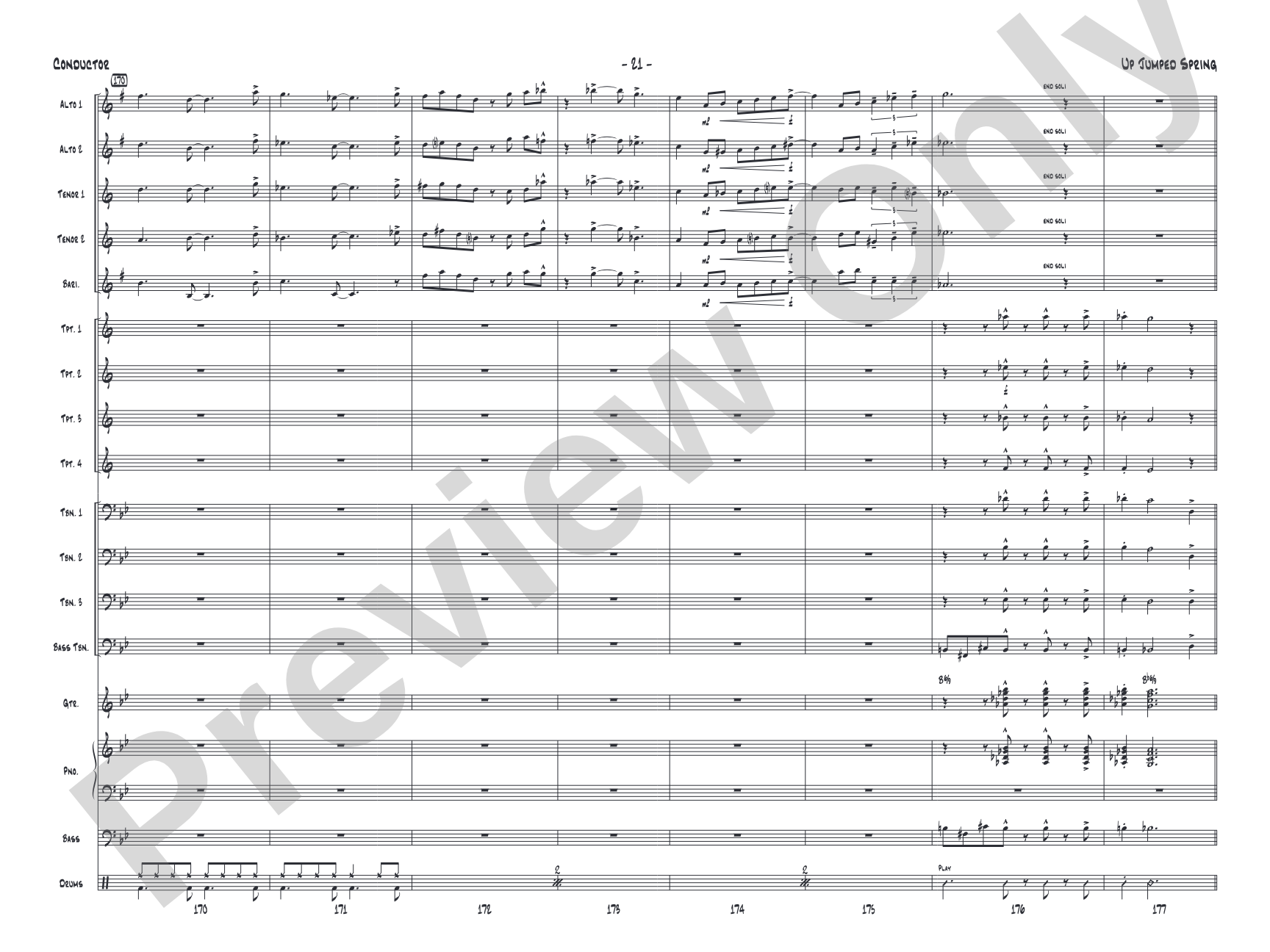
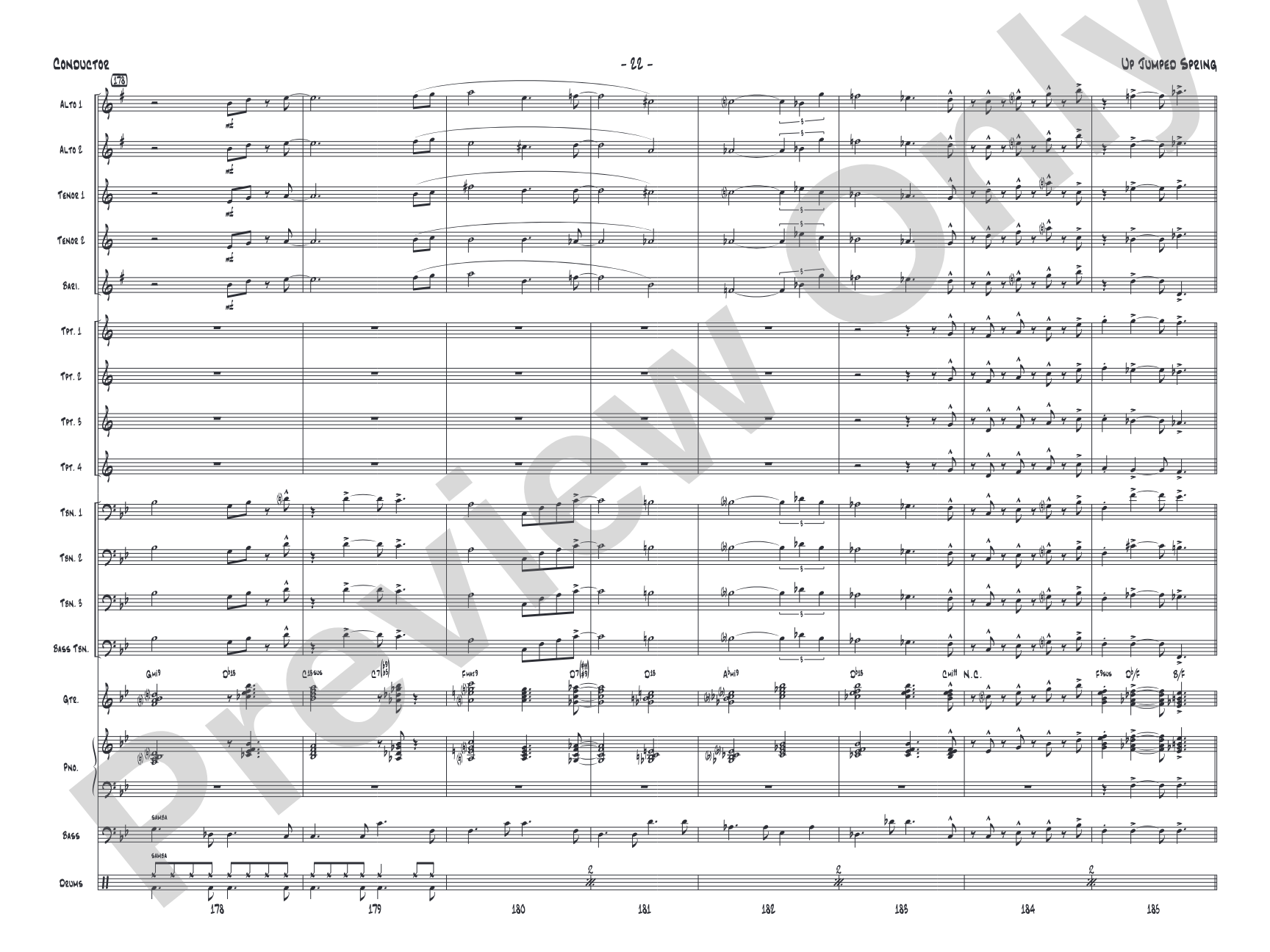
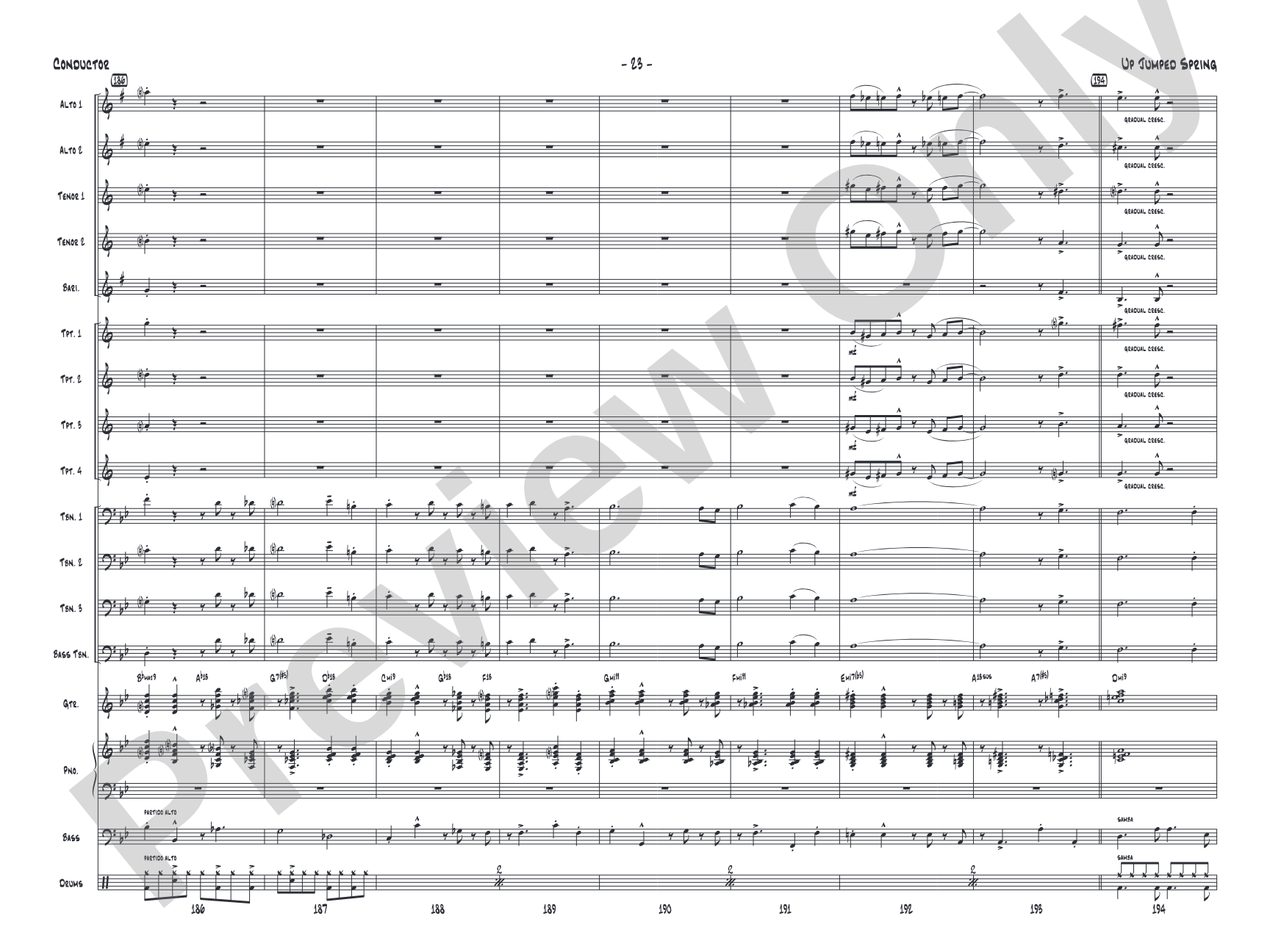
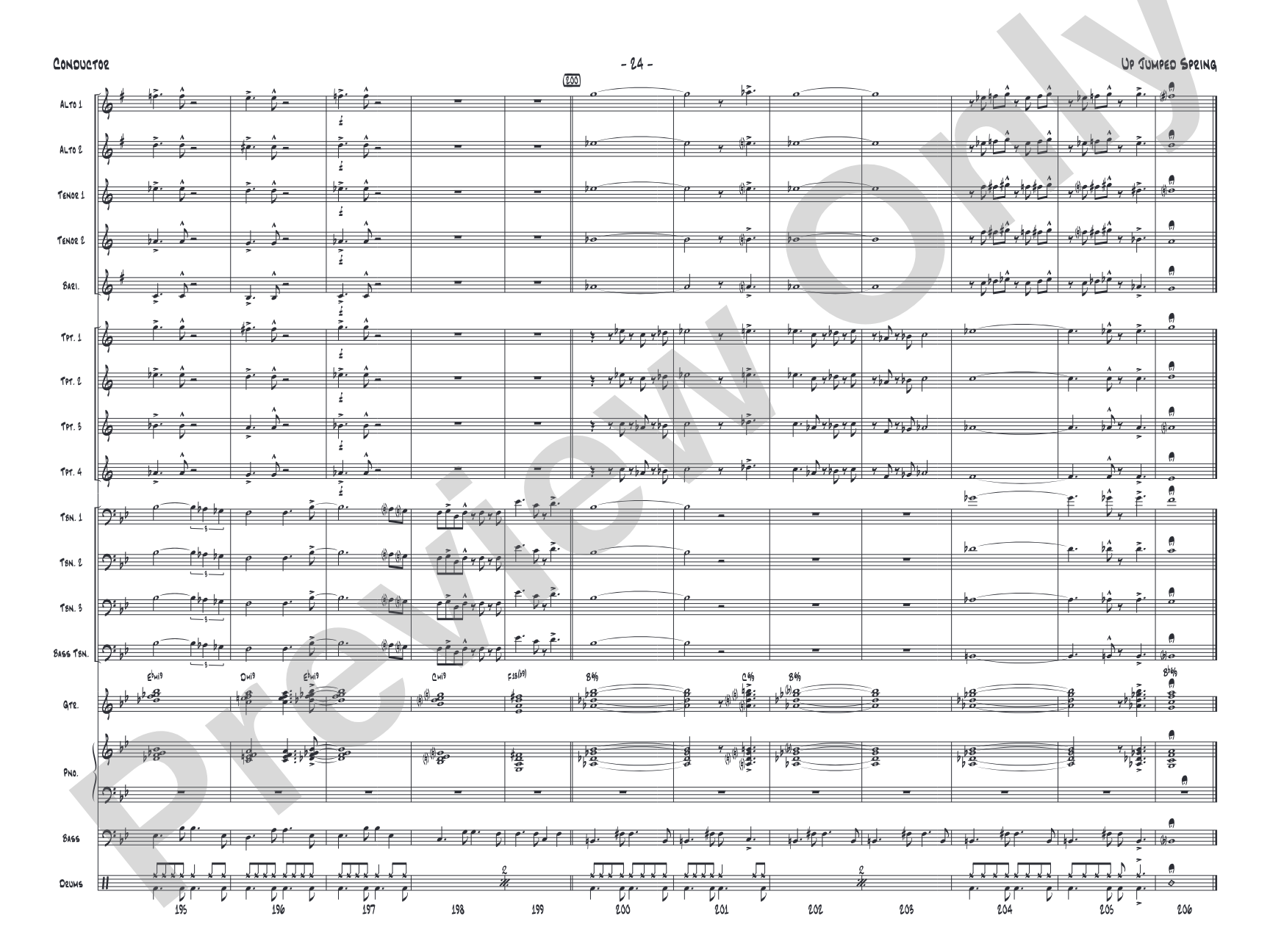

Up Jumped Spring: Score
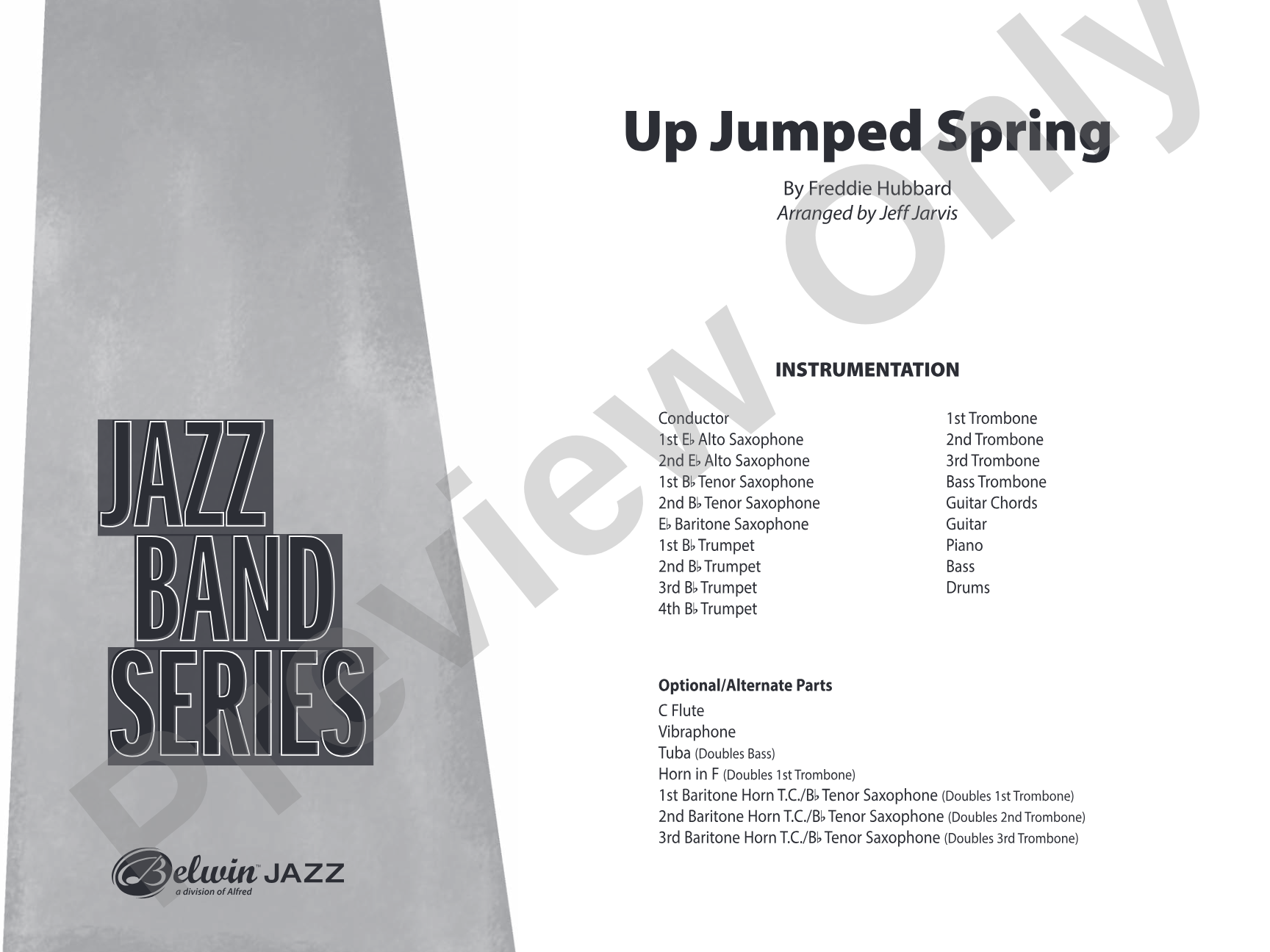
By Freddie Hubbard / arr. Jeff Jarvis
Grade: 3.5 (Medium)
Item: 00-PR-0007407
$12.00
Pickup currently not available
Description
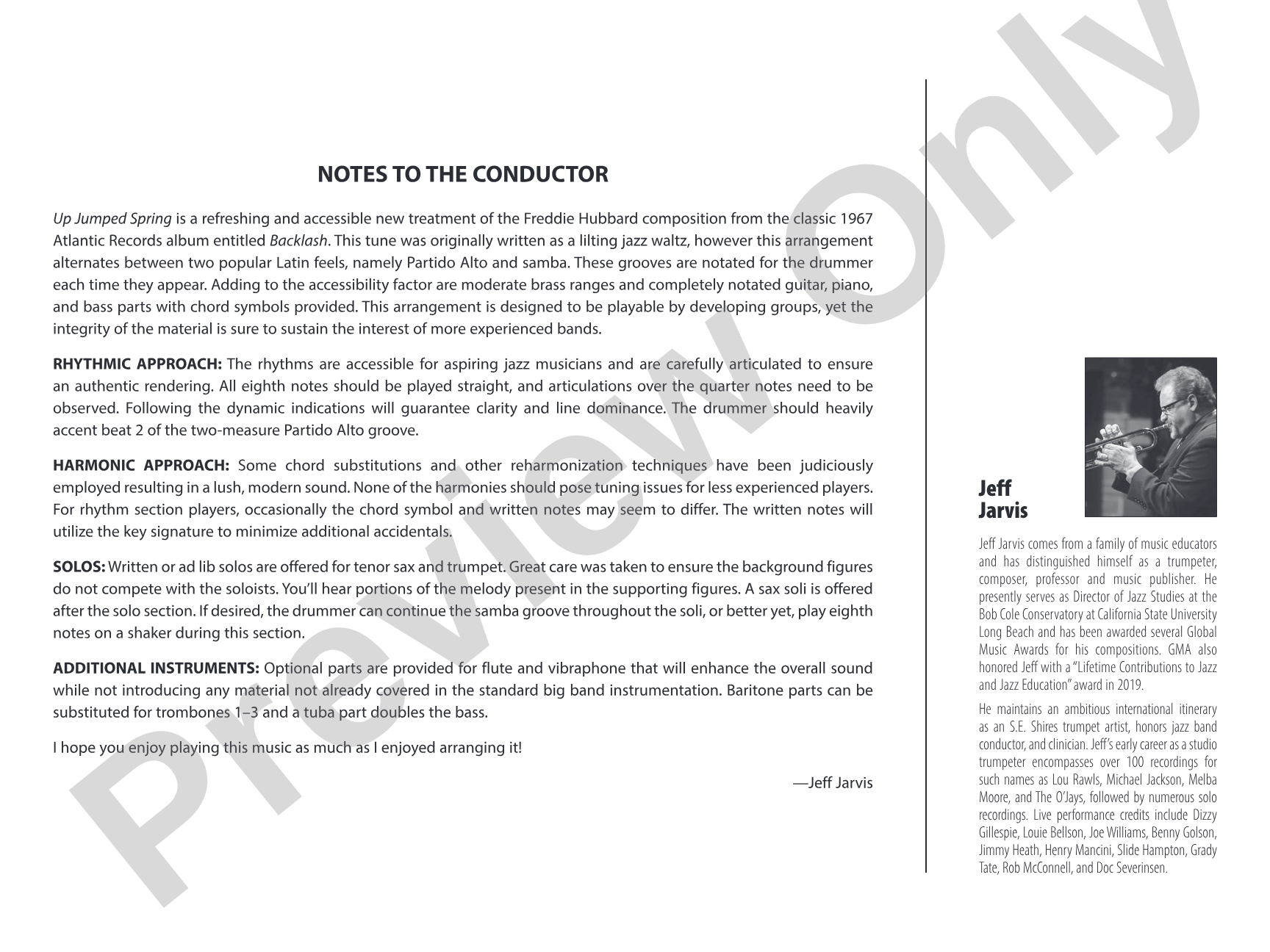
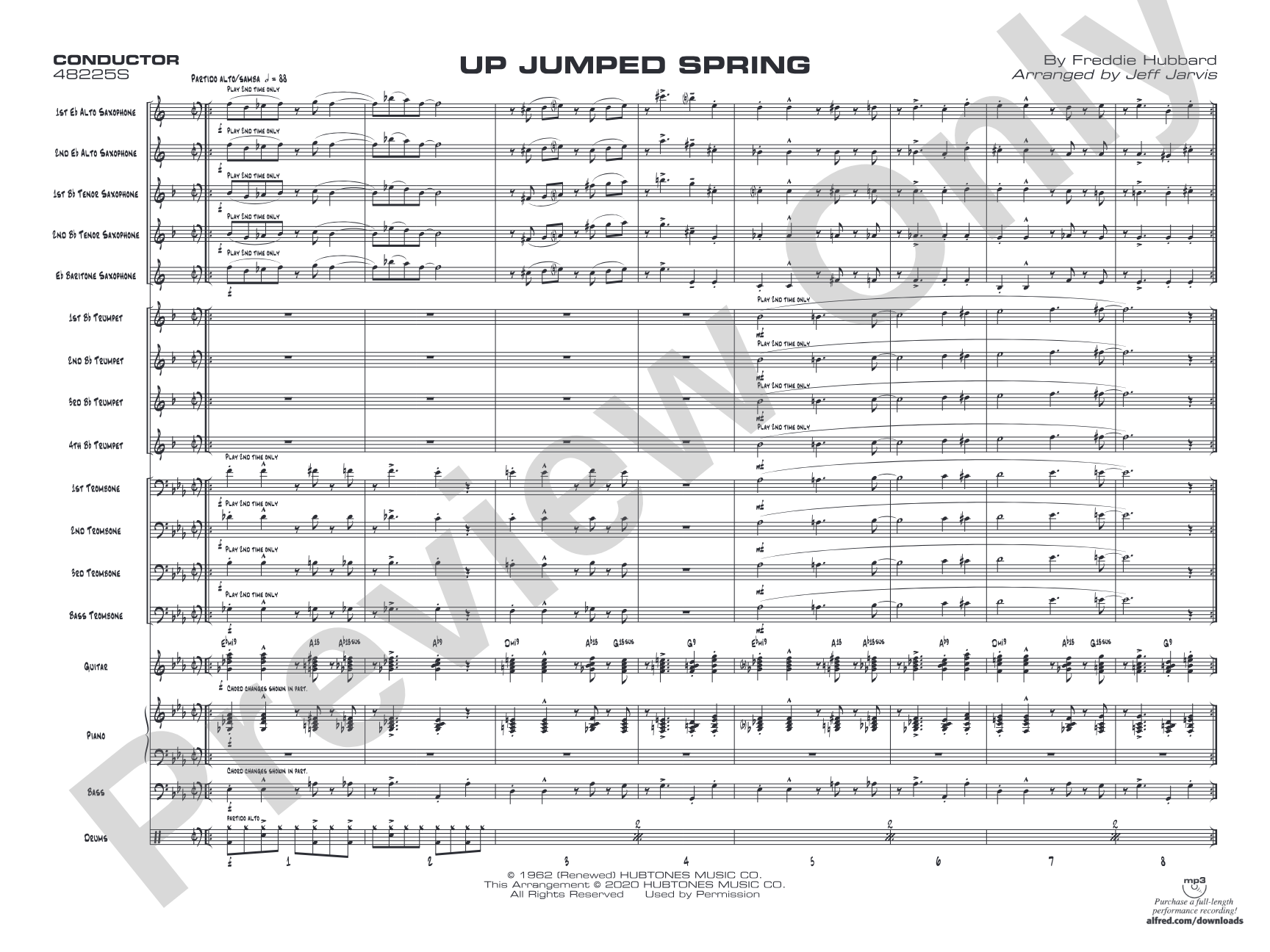
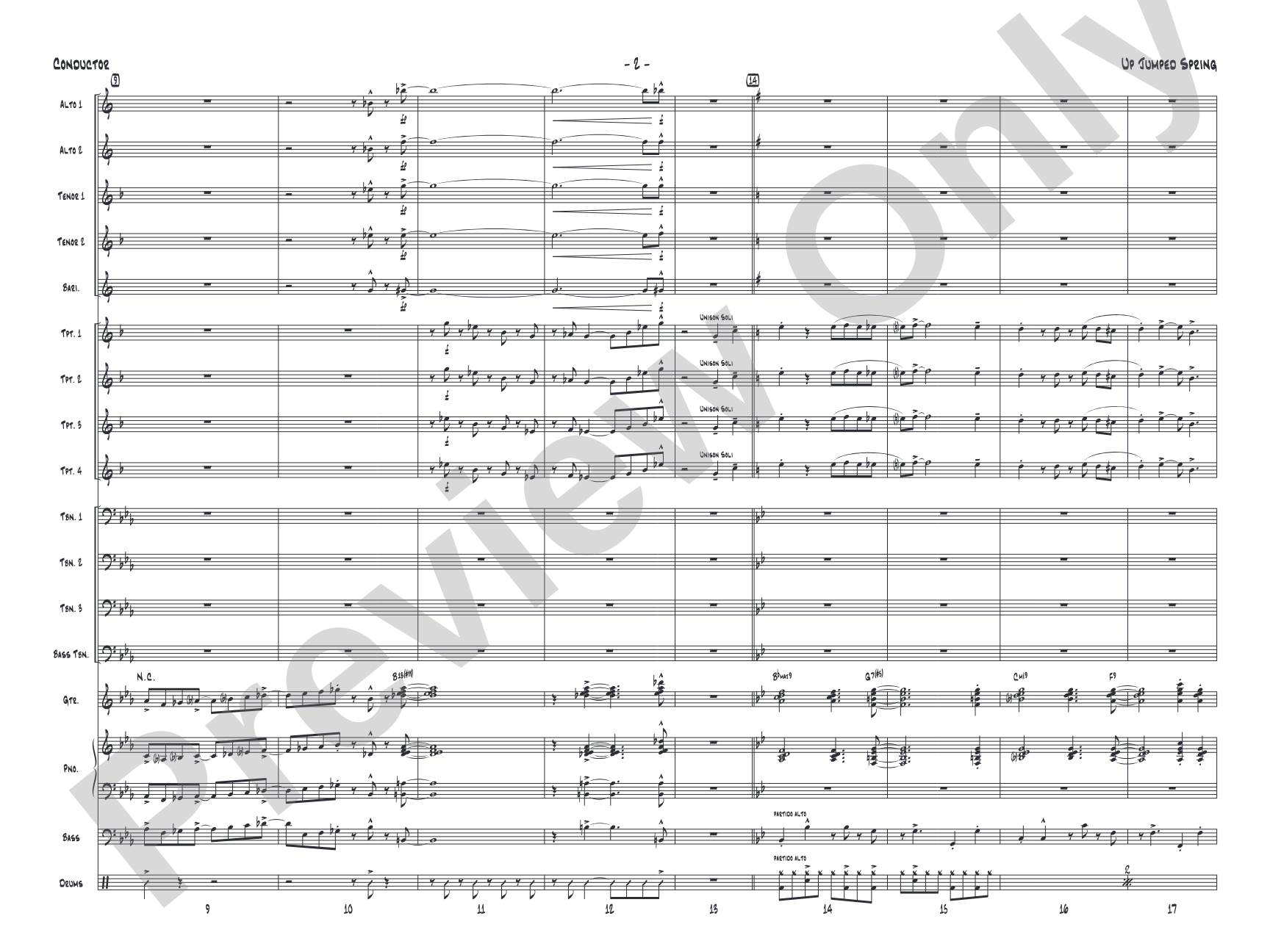
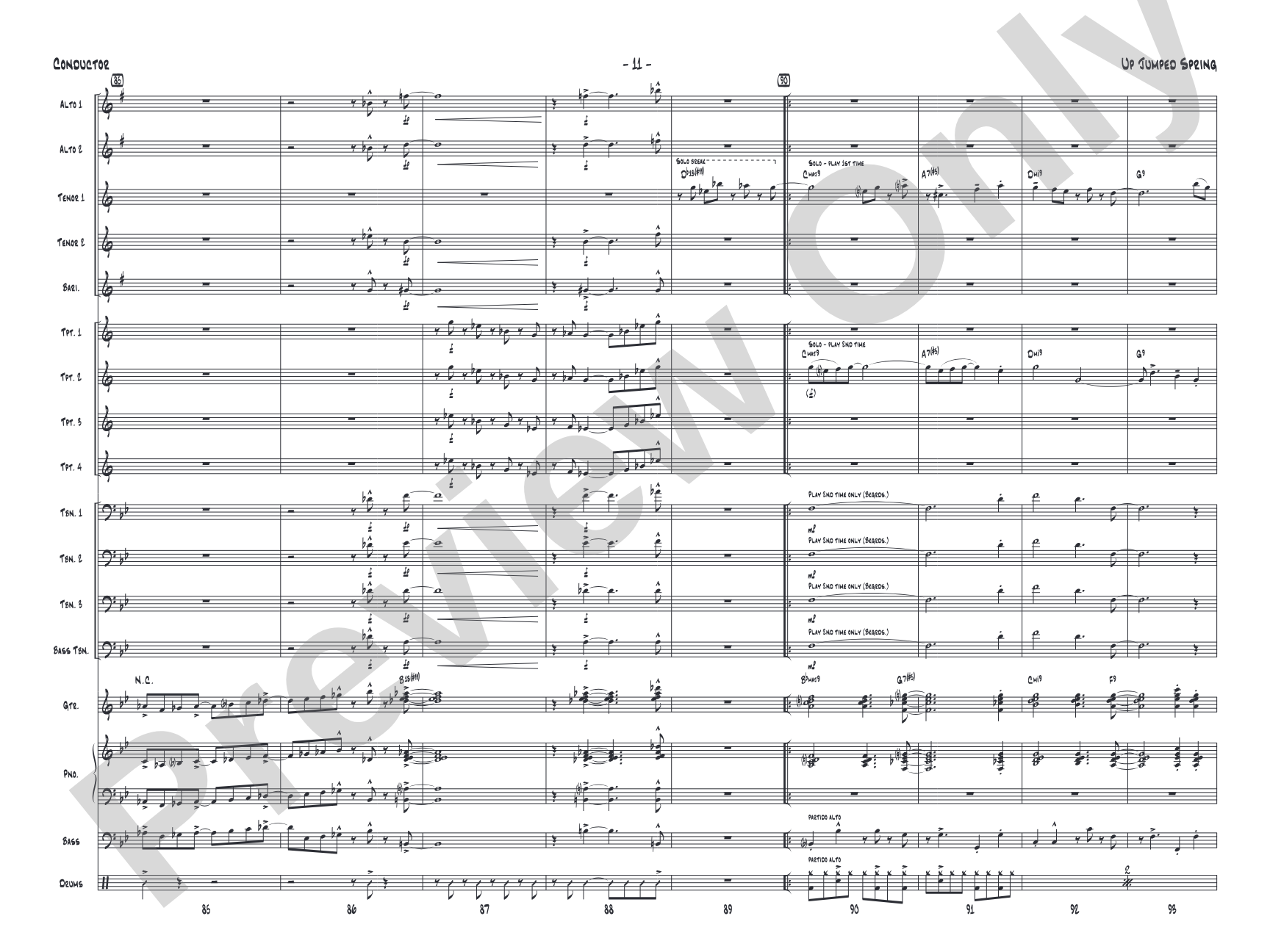
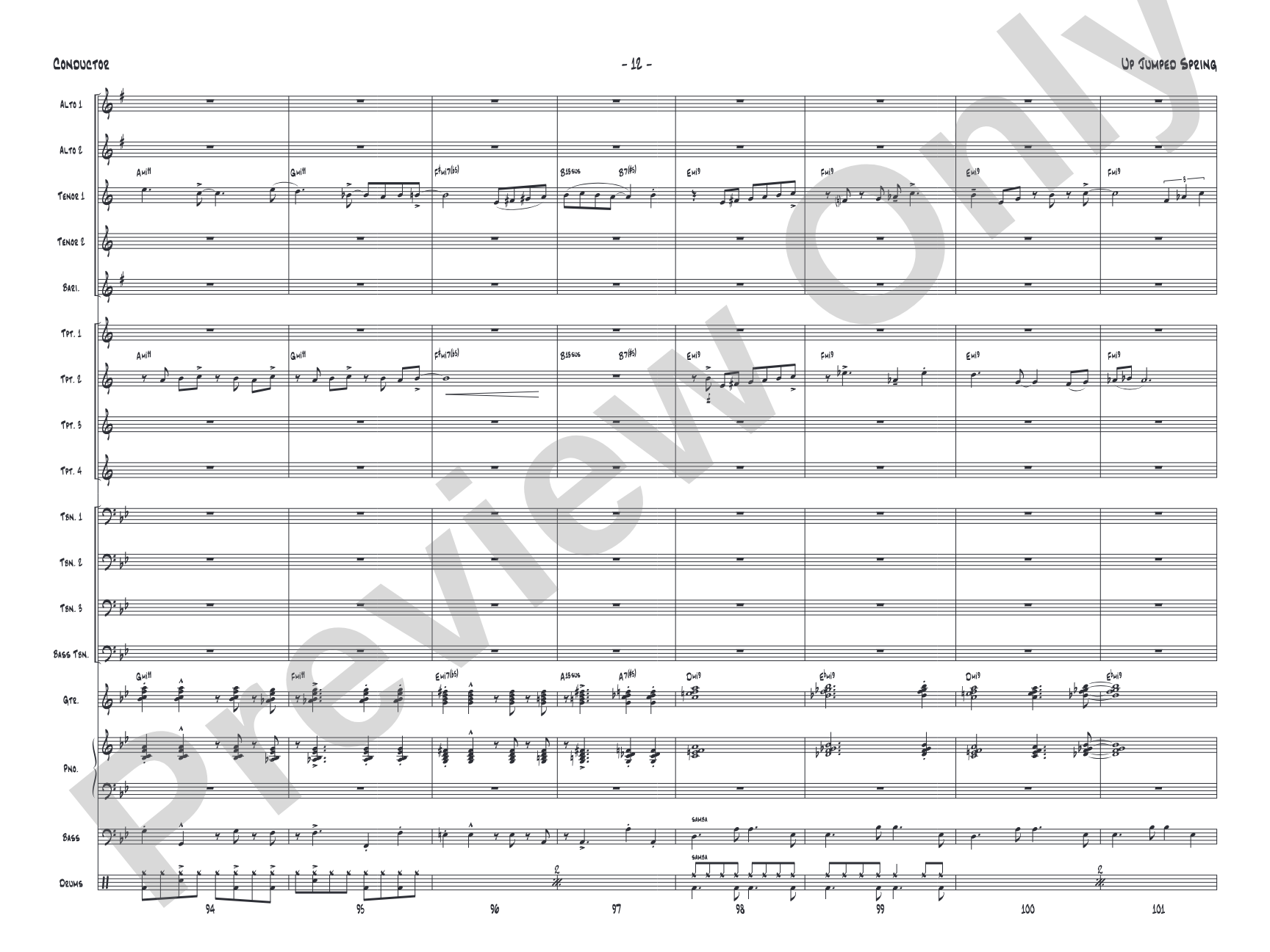
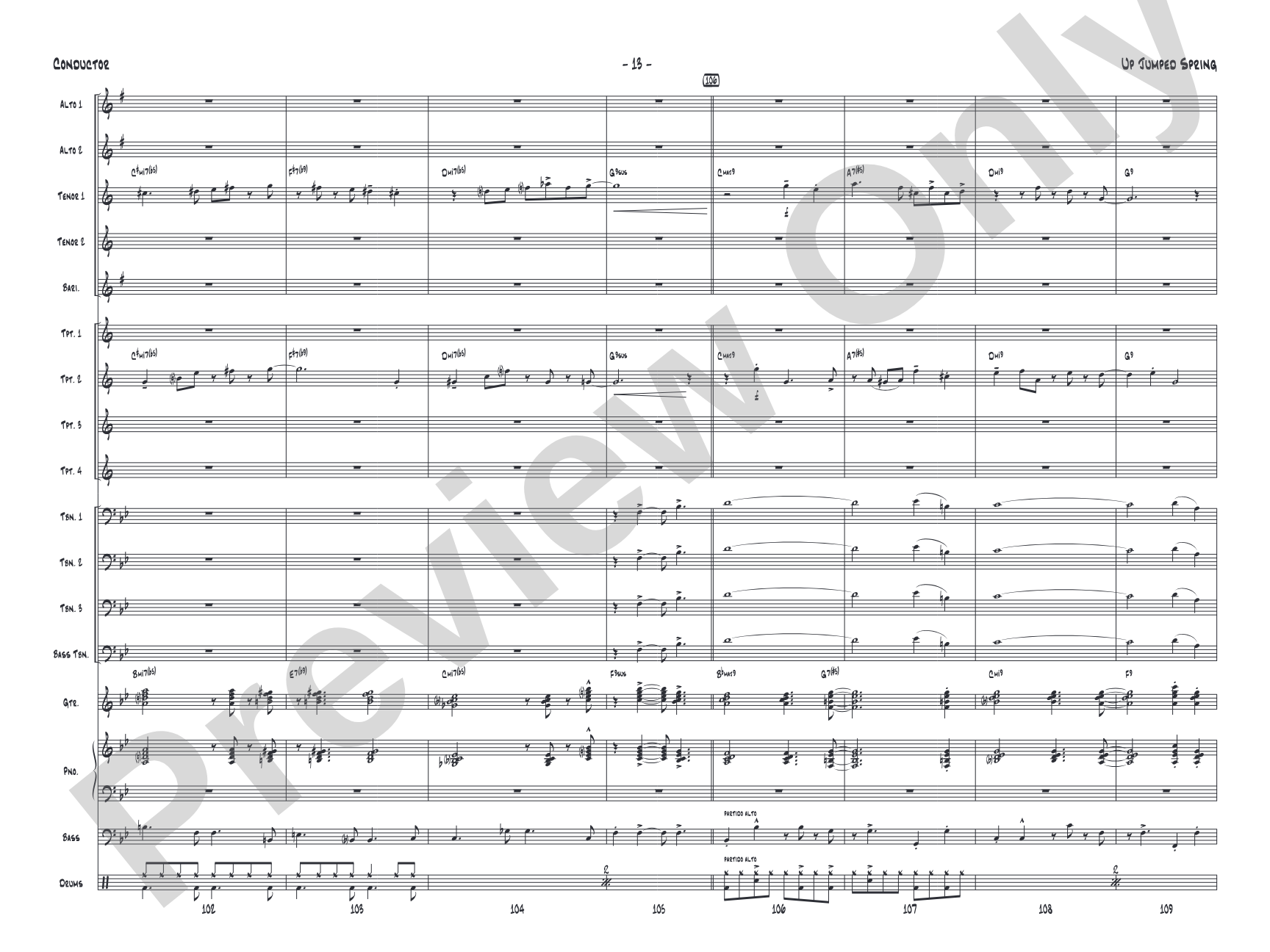
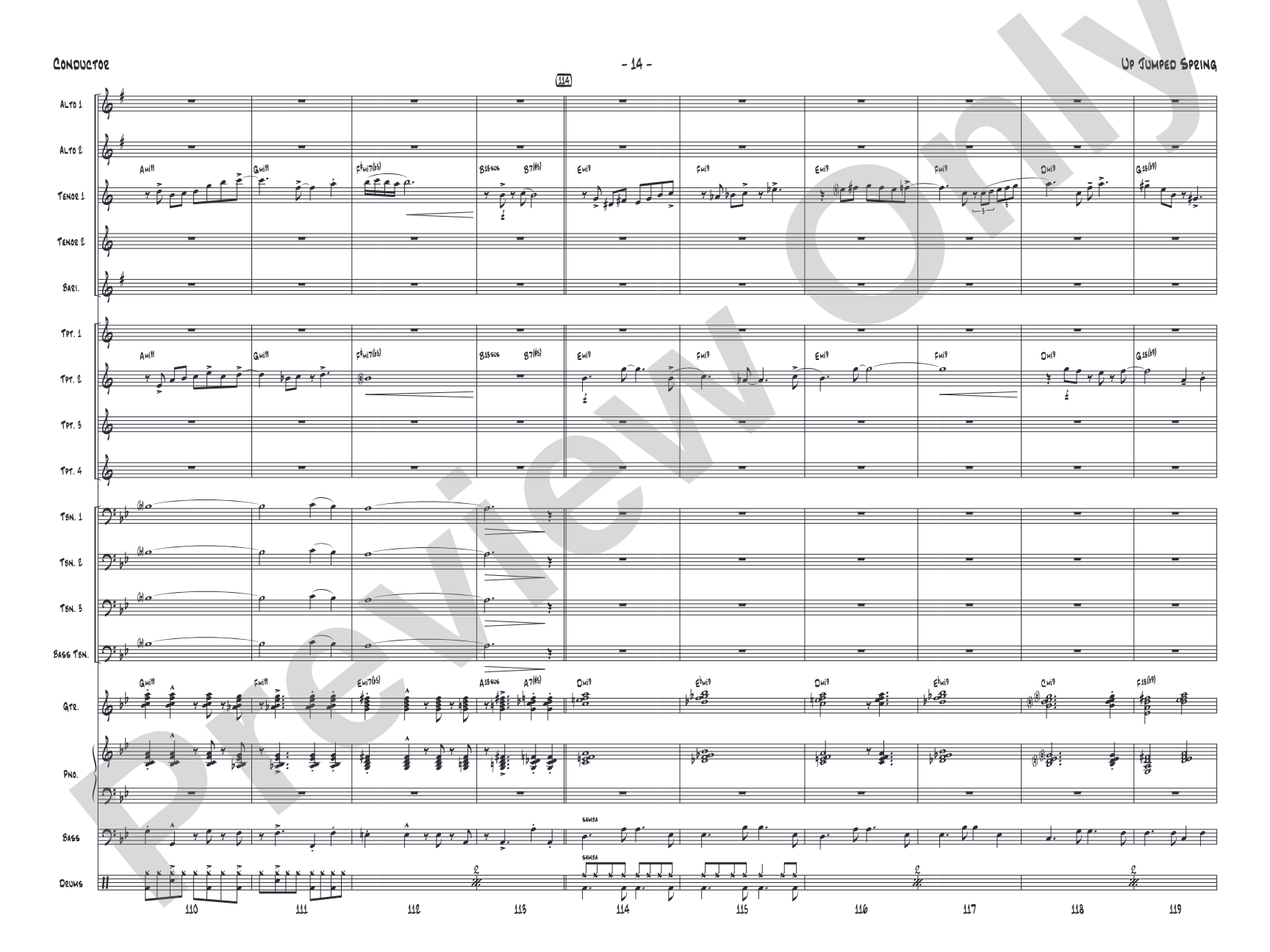
This jazz standard is typically a jazz waltz, but this superb chart has a very hip Latin-pardido feel in 4/4. Tempo is half note around 77 BPM, with solo opportunities, tenor 1 and trumpet 2 with suggested written solo provided. Lead trumpet range goes to written A-flat, a great sax soli along with optional flute and vibe parts. Up Jumped Spring arranged by Jeff Jarvis is an excellent choice! (5:41)


Up Jumped Spring: Score isn't in MakeMusic Cloud just yet...but it could be. Let us know you'd like to see it, and you'll help shape what comes next. In the meantime, start a free trial and dive into thousands of interactive titles your students can play along with today.
Request This Title
Tell us you want it.
Start Your Free Trial
Explore everything that's ready to play right now.
Sample Audio
1
Audio File
--:--
0:00
0:00
Sample Video
Additional Details
Series:
Jazz Band Series
Publisher:
Alfred Music
Page Count:
102
SKU:
00-PR-0007407
More about this title
About the Composer: Freddie Hubbard
Freddie Hubbard stands among the most influential trumpet voices in jazz history. His facility across bebop, hard bop, funk, and fusion contexts, combined with a warm yet cutting tone, made him a first-call sideman and bandleader from the 1960s onward.
Hubbard's compositional voice matched his instrumental prowess. His originals balance accessibility with harmonic sophistication, making them staples in jazz curricula and ensemble repertoire. Up Jumped Spring exemplifies his gift for writing melody that swings naturally while offering room for interpretation.
Why we love this
Jeff Jarvis's arrangement transforms a classic into something fresh by reframing the jazz waltz in a grooving 4/4 Latin-pardido setting. The chart sits at Grade 3.5 with genuine solo opportunities for your lead players and a sax soli that gives voice to your section, making it rewarding to conduct without sacrificing playability.
What to expect
Warm and sophisticated, with a groove that sits deeper than a traditional jazz waltz. The Latin-pardido feel gives the piece a relaxed urgency, while the sax soli and optional vibe create moments of lush texture that reward careful listening.
Who it's for
Jazz ensembles in the intermediate-advanced range that can handle the Latin groove and solo responsibilities. Your lead trumpet, tenor 1, and trumpet 2 need confidence and voice; your rhythm section needs to lock onto the half-note pulse without rushing.
How to get the most out of it
- Establish the Latin clave feel early in rehearsal. The shift from traditional jazz waltz character to 4/4 groove is the chart's signature move, so lock the rhythm section on the half-note pulse at 77 BPM before layering in horn lines.
- Give your tenor 1 and trumpet 2 soloist space to develop their written solos during individual practice. These aren't vamp-over moments; the provided melodies give shape to the improvisation and reduce anxiety for less experienced soloists.
- Balance the sax soli with optional flute and vibe parts. Experiment with different doublings in rehearsal to find what sits best in your ensemble and allows each section to cut through the texture.
- Watch the lead trumpet's range climbing to written A-flat. Confirm your first trumpet has the security and endurance for sustained passages at this altitude, especially over the Latin feel where stamina matters as much as pitch accuracy.
How to use it
Program this as a centerpiece in a mid-season jazz concert, where your ensemble has built the cohesion to handle both the groove and the solo spotlights. At just over five and a half minutes, it pairs well with a faster bebop chart and a ballad to create program balance.
Skills your students will build
- Comping and time-keeping in a Latin-based feel at a moderate tempo
- Solo performance with written melodic guidance as a scaffold
- Section blend in a sax soli with optional doublings
- Lead playing and range extension into the upper register
- Jazz ensemble ensemble cohesion across a moderate-length form