Up and Away: 2nd Trombone Sheet Music Preview

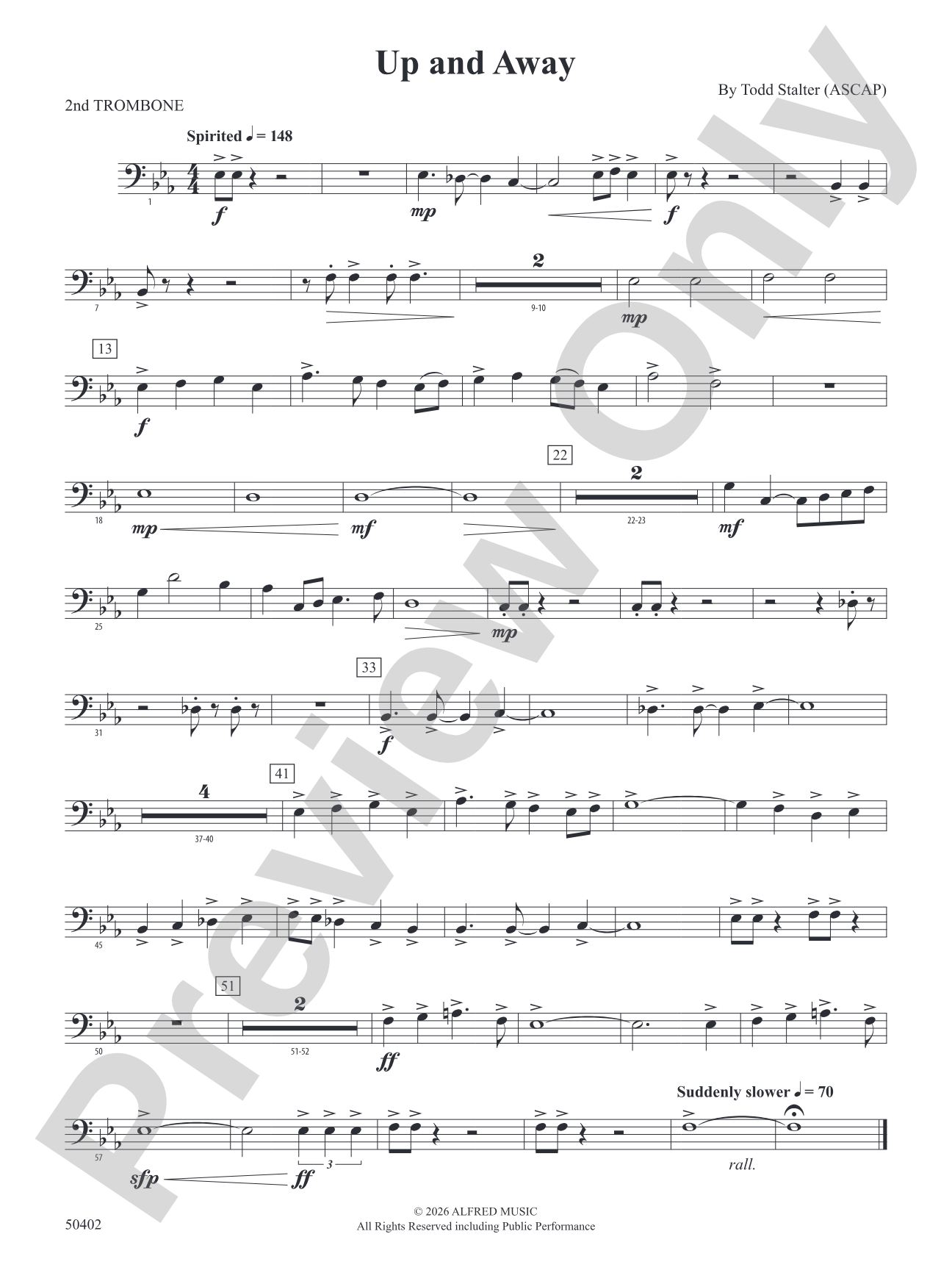
Up and Away: 2nd Trombone

By Todd Stalter

Grade: 2.5

Item: 00-PC-0019756_TN2

Digital Download
$3.00
Description
Up and Away, by Todd Stalter, is an energetic, fanfare-type piece, ideal for opening or closing a concert. The melodic ideas rise, fall, and undulate in imitation of flight and convey the thrill and excitement of taking off, majestically cruising high above the earth, and looking down at the amazing views below.

Don't just read it, hear it, play along with it, and watch your students grow with it. In MakeMusic Cloud, Up and Away: 2nd Trombone comes alive with professional accompaniment, adjustable tempo, and built-in practice tools that turn solo practice into real progress.

Sample Audio
0:00
0:00
Sample Video
Additional Details
Series: Young Symphonic Series
Publisher: Alfred Music
SKU: 00-PC-0019756_TN2

More about this title

About the Composer: Todd Stalter

Todd Stalter

Todd Stalter built a legendary band program at Eureka High School in Illinois, where he directed students for 34 years. His Concert Band earned consistent Superior ratings at state contests, his Marching Band won 16 Class 1A state championships, and his ensembles performed at Orchestra Hall in Chicago and Walt Disney World. He was inducted into the Illinois State Marching Band Championships Hall of Fame.

Beyond the high school podium, Stalter has conducted All-State bands in Georgia and Delaware, adjudicated extensively across the country, and presented clinics on composition and music education at major state conferences. His compositions for band and string orchestra are performed nationwide and appear on contest lists in multiple states. He holds degrees in music education and trumpet performance from Illinois State University, where he studied conducting with Stephen K. Steele.

Why we love this

This piece captures the arc of flight with genuine musical storytelling that engages young musicians without talking down to them. The fanfare framework and imitative melodic writing give bands at this level meaningful material to shape, and the Contest/Festival designation signals that it can anchor a concert or compete at festivals with equal success.

What to expect

Exhilaration and majesty. The piece sweeps upward with fanfare brilliance, glides at altitude, and captures the wonder of seeing the world from above. There's genuine drama here, built on momentum and rising melodic gestures, without requiring advanced technical demands from the ensemble.

Who it's for

Grade 2.5 concert bands ready to tackle material with some sophistication in scoring and phrasing. This works well for programs with students who can balance ensemble sound, track multiple melodic lines, and respond to a conductor's shaping rather than simply executing notes.

How to get the most out of it

  • Shape the rising and falling melodic contours deliberately. Stalter's flight imagery depends on players understanding where phrases peak and descend, not just playing the notes.
  • Balance the imitative voices so that each entrance of the melodic idea projects clearly. Young bands often bury inner lines; bring them forward without overpowering the primary melody.
  • Let the energy build naturally through the fanfare sections. Resist the urge to force excitement; the piece's structure creates propulsion if you respect the phrasing and architectural shape.

How to use it

Open a concert with this fanfare-type piece to establish energy and set a celebratory tone immediately. It also serves as a strong closer, particularly at festivals or contests where you want to end on a high, unified moment. The duration and grade level make it flexible enough to pair comfortably with longer works or to anchor a younger band's entire concert program.

Skills your students will build

  • Shaping rising and falling melodic contours
  • Executing imitative writing in mixed voice textures
  • Balancing inner voices with primary melody lines
  • Sustaining ensemble sound through moderate dynamic and tempo changes
  • Responding to conductor shaping and phrasing direction

You May Also Like