
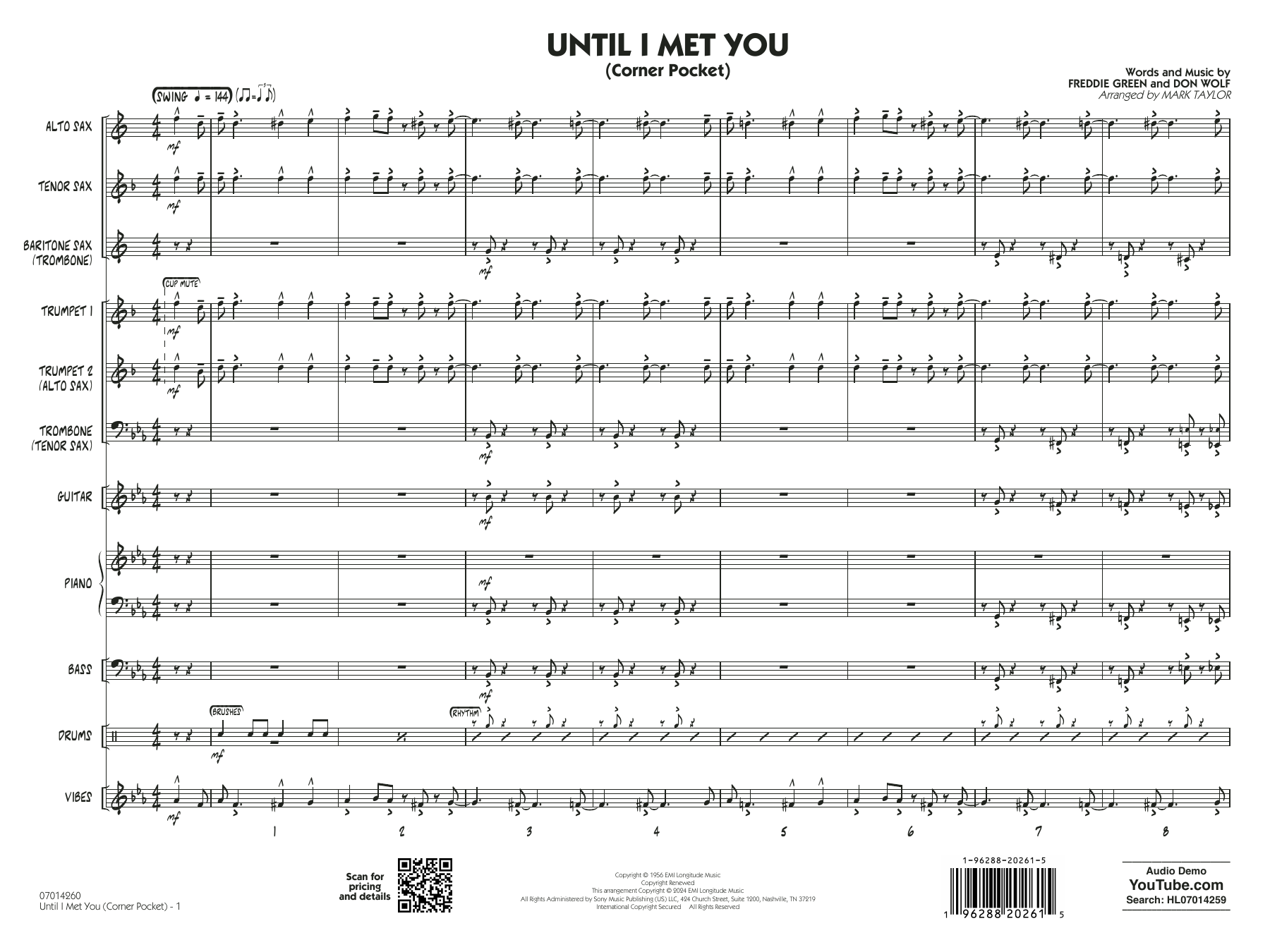

Until I Met You (Corner Pocket) (arr. Mark Taylor): Jazz Ensemble Conductor Score & Parts
As performed by Count Basie Orchestra / Arranged by Mark Taylor
Grade: 4
Item: 35-PK01515788
$50.00
Pickup currently not available
Buy Extra Parts (Digital PDF Download)
Parts Added to Cart!
Description
One of the all-time classics recorded by the Count Basie Orchestra, here's a great-sounding chart scored in the 6-horn format. Staying true to the sound of the original, Mark's arrangemenet is easy to learn and swings like crazy.


Until I Met You (Corner Pocket) (arr. Mark Taylor): Jazz Ensemble Conductor Score & Parts isn't in MakeMusic Cloud just yet...but it could be. Let us know you'd like to see it, and you'll help shape what comes next. In the meantime, start a free trial and dive into thousands of interactive titles your students can play along with today.
Request This Title
Tell us you want it.
Start Your Free Trial
Explore everything that's ready to play right now.
Sample Audio
No sample audio found.
Sample Video
No sample videos found.
Additional Details
Publisher:
Hal Leonard
SKU:
35-PK01515788
More about this title
About the Artist: Count Basie Orchestra
Count Basie led one of the most influential big bands in jazz history, establishing a sound defined by powerful swing, blues-grounded arrangements, and an unmistakable rhythmic drive. From the 1930s through his death in 1984, Basie's orchestra became the gold standard for ensemble jazz, influencing generations of arrangers and bandleaders while maintaining a level of musicianship that made every performance feel both effortless and irresistible.
The Basie band's approach to swing emphasized groove over complexity; the rhythm section locked with precision while the horn sections punched out lines with clarity and punch. For student ensembles, the Basie sound remains a masterclass in how arrangement clarity, ensemble discipline, and rhythmic confidence create music that swings with authentic power.
Why we love this
Mark Taylor's arrangement captures the essence of a Basie classic while pitching the complexity and instrumentation right for student musicians. The six-horn format keeps the orchestration lean without sacrificing the power and swagger of the original, making this an ideal entry point into authentic big band swing that doesn't require doubling or unusual instrumentation.
What to expect
Propulsive, joyful, and built on the kind of blues sensibility that makes people move. The chart swings with uncluttered momentum, letting each section breathe while maintaining that forward-rolling Basie feel that made the original a standard.
Who it's for
Jazz ensembles at grades 4 and up looking for standard big band repertoire that teaches swing fundamentals without requiring advanced range or technical facility. Trumpet players still developing upper register control and rhythm sections building confidence in ensemble lock will all benefit from the straightforward arrangement and timeless groove.
How to get the most out of it
- Build the groove from the rhythm section first. The drums and bass need to lock the pocket before the horns enter, so rehearse the rhythm team independently until their pulse feels automatic.
- Shape each horn section line with the exact same phrasing and articulation across all players in that section. Basie charts live or die on unanimity; individual interpretation muddies the sound.
- Encourage the soloists to play behind the beat rather than chasing it. That slight lay-back is where the swing lives in this style.
- Let the recorded accompaniment guide your tempo first, but trust your rhythm section's instincts once they're comfortable. The best performances feel like a band making decisions together, not following a click track.
How to use it
Open a jazz concert with this title to establish energy immediately, or program it as the anchor of a Basie-focused set that explores how his arrangements influenced later big band writing. It also works beautifully as a standalone performance at a pops concert or school assembly where you want to introduce non-musicians to genuine swing.
Skills your students will build
- Swing articulation and rhythmic placement (behind the beat)
- Section blend and homogeneous phrasing within trumpet, trombone, and saxophone sections
- Ensemble listening and rhythmic lock between rhythm section and horn sections
- Blues-based harmonic language and improvisation opportunities for soloists
- Authentic interpretation of a classic jazz standard