Unsquare Dance: Piano Digital Sheet Music

Unsquare Dance: Piano Digital Sheet Music

Dave Brubeck

Item: 00-PS-0000887

Digital Download
$3.99
Description

Unsquare Dance: Piano Digital Sheet Music isn't in MakeMusic Cloud just yet...but it could be. Let us know you'd like to see it, and you'll help shape what comes next. In the meantime, start a free trial and dive into thousands of interactive titles your students can play along with today.

Sample Audio
No sample audio found.
Sample Video
Additional Details
SKU: 00-PS-0000887

More about this title

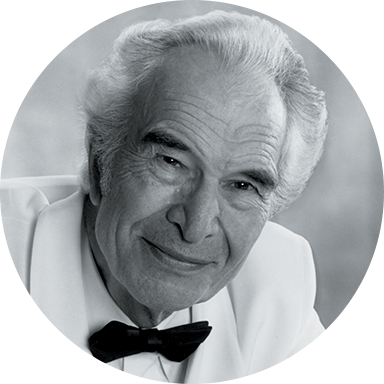
About the Artist: Dave Brubeck

Dave Brubeck

Dave Brubeck was a pianist and composer who bridged jazz improvisation and formal composition throughout his career. Beyond his iconic role in jazz, he created an expansive catalog spanning choral works, orchestral pieces, chamber music, and solo compositions for multiple instruments. His studies with Darius Milhaud at Mills College shaped his approach to blending jazz language with classical structure, a philosophy that defined his artistic identity.

Breaking racial barriers in mid-twentieth-century America, Brubeck achieved commercial success that few jazz artists had reached before, with his album "Time Out" becoming the first jazz recording to sell over a million copies. His sacred works, including the mass "To Hope!" and various oratorios, have been performed internationally by major orchestras and choral ensembles. Brubeck received the Presidential Medal of the Arts from President Clinton, a Grammy Lifetime Achievement Award, and was elected to the American Classical Music Hall of Fame in 2003.

Why we love this

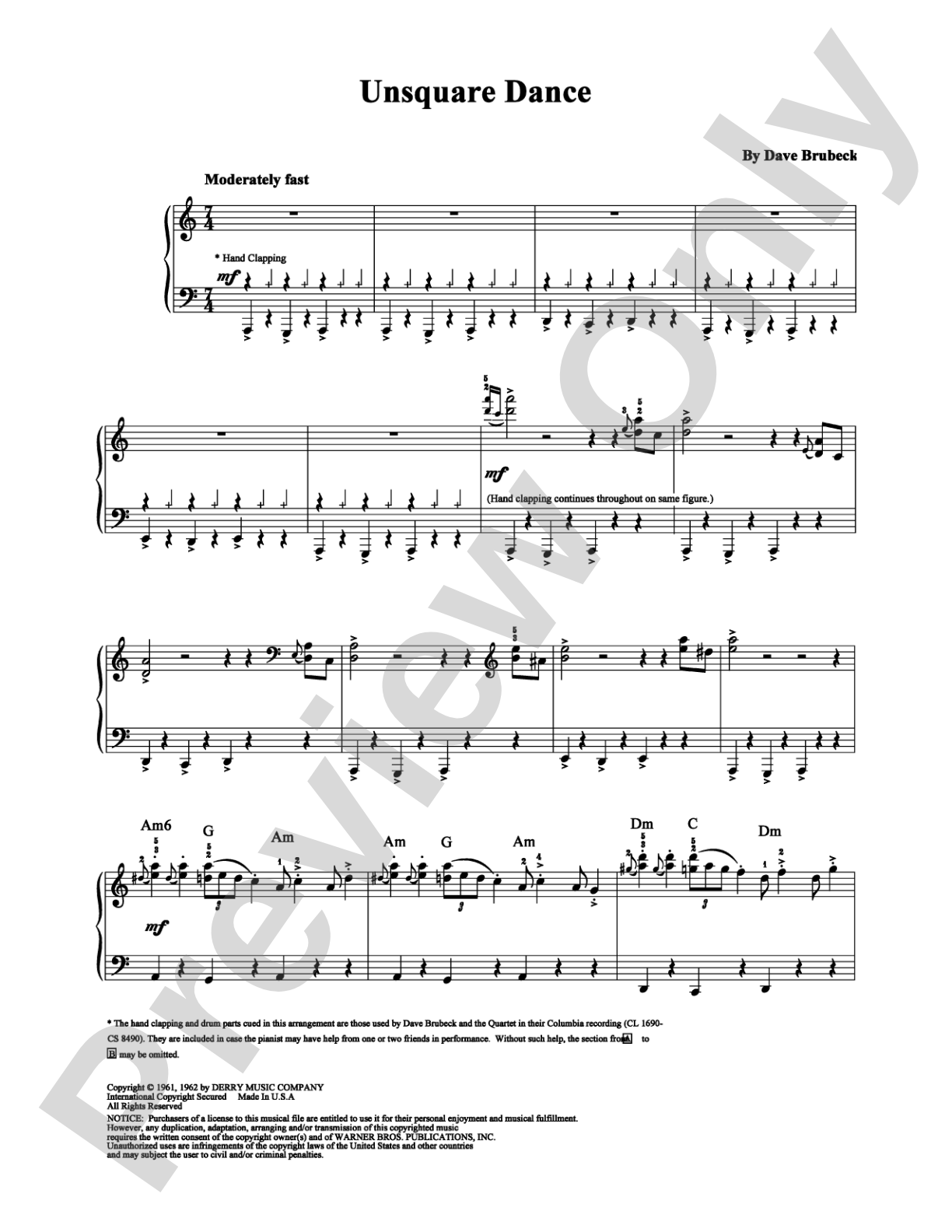
Brubeck's "Unsquare Dance" showcases exactly what made him distinctive: the ability to write jazz-informed music that feels both intellectually engaging and immediately playable. Pianists at intermediate levels find genuine satisfaction in navigating the syncopated rhythms and harmonic language here, since the piece demands real rhythmic precision without requiring advanced technique. Programming this offers a refreshing alternative to standard classical repertoire while introducing students to how jazz compositional thinking translates onto the page.

What to expect

Playful yet sophisticated, with the rhythmic momentum of a dance that doesn't follow predictable patterns. The piece has a conversational quality, as if ideas are being introduced and answered in real time, making it feel spontaneous despite being fully composed. There's joy in the asymmetry and swing, creating an engaging listening experience that rewards rhythmic precision.

Who it's for

Intermediate pianists and jazz students seeking notated music that bridges classical and jazz traditions. This piece works for recitals, studio performances, or as part of a jazz repertoire survey. It's equally valuable for piano teachers introducing students to composed jazz or for performers exploring Brubeck's non-improvisation work.

How to get the most out of it

  • Lock into the rhythmic feel first by counting through the syncopated passages slowly, then gradually increase tempo to find where the beat sits naturally within the unusual phrasing.
  • Pay attention to Brubeck's harmonic movement; the chord changes often suggest where to shape phrases dynamically rather than relying on traditional melodic contours.
  • Approach the piece with a light touch in the right hand to match the dance-like quality of the title, avoiding heaviness even in thicker passages.
  • Use the recorded performance as a reference for swing feel and rhythmic flexibility, but develop your own interpretation once the notation is secure.

How to use it

Include this on a recital alongside classical or contemporary pieces to show how jazz composition works at the notated level. It pairs well with other twentieth-century classical works that incorporate vernacular idioms. This piece also serves as an excellent bridge in a concert exploring American composers or in a program dedicated to jazz standards and composed works.

Skills your students will build

  • Reading and performing syncopated rhythms within a jazz context
  • Understanding jazz harmony and chord-tone relationships in notated form
  • Executing swing feel and rhythmic flexibility while maintaining written precision
  • Interpreting composed jazz without relying on improvisation
  • Balancing technical accuracy with stylistic authenticity

You May Also Like