
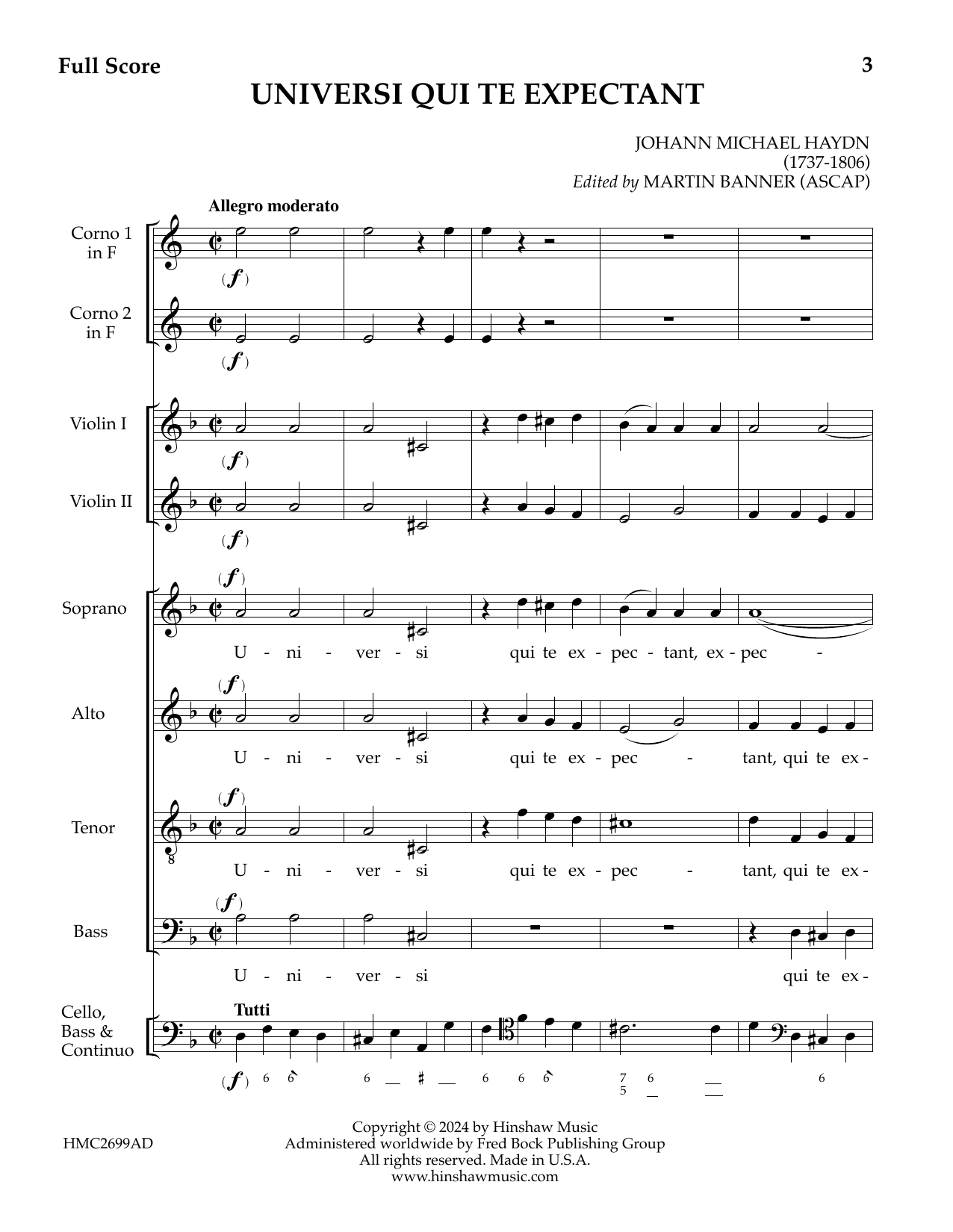

Universi Qui Te Expectant: Choral Instrumental Pak
By Johann Michael Hayden / Edited by Martin Banner
Item: 35-PK01306190
$75.00
Pickup currently not available
Buy Extra Parts (Digital PDF Download)
Parts Added to Cart!
Description
Instrumental parts for Universi Qui Te Expectant


Universi Qui Te Expectant: Choral Instrumental Pak isn't in MakeMusic Cloud just yet...but it could be. Let us know you'd like to see it, and you'll help shape what comes next. In the meantime, start a free trial and dive into thousands of interactive titles your students can play along with today.
Request This Title
Tell us you want it.
Start Your Free Trial
Explore everything that's ready to play right now.
Sample Audio
No sample audio found.
Sample Video
No sample videos found.
Additional Details
Publisher:
Hal Leonard
SKU:
35-PK01306190
More about this title
About the Composer: Johann Michael Hayden
Johann Michael Haydn (1737-1806) was the younger brother of Franz Joseph Haydn, though he carved out his own significant career in sacred music. While often overshadowed by his famous sibling, Michael developed a distinctive compositional voice, particularly in his church music, and served as Kapellmeister at the Salzburg Cathedral for much of his career. His sacred works demonstrate the same craftsmanship and structural clarity that defined the Classical era, with an emphasis on clarity of text and vocal writing that makes his music both singable and spiritually direct.
Why we love this
This work sits in that sweet spot where classical restraint meets genuine devotional warmth. The instrumental parts are idiomatic without demanding virtuosos, and the Latin text gives your singers material with real weight behind it.
What to expect
Haydn's setting unfolds with transparent textures and gentle inevitability. The music conveys reverence through clarity rather than grandeur, allowing the Latin words to resonate within a framework of Classical proportion and harmonic warmth.
Who it's for
This is ideal for choirs with modest instrumental forces looking for authentic Classical repertoire that doesn't require a full orchestra. It works equally well for upper-level high school ensembles and collegiate choirs seeking material with liturgical credibility.
How to get the most out of it
- Balance the choir against the instruments by having singers focus on the legit line rather than fighting for projection; the Classical orchestration breathes when voices are shaped rather than pushed.
- Mark the text underlay carefully in rehearsal so your singers own the phrase shapes independent of the instrumental figures.
- Observe rests as actively as notes; the spaces between phrases in Classical sacred music carry as much meaning as the sound itself.
How to use it
Consider pairing this with other shorter Classical motets in a concert celebrating eighteenth-century sacred music, or slot it into a liturgical context where you need something brief but substantive. It also serves well as a concert opener that establishes a contemplative mood before larger works.
Skills your students will build
- Singing with clarity in exposed Classical textures
- Rhythmic precision within longer phrase shapes
- Latin diction and text projection
- Balance and blend with small instrumental ensembles
- Recognition of harmonic function in Classical settings