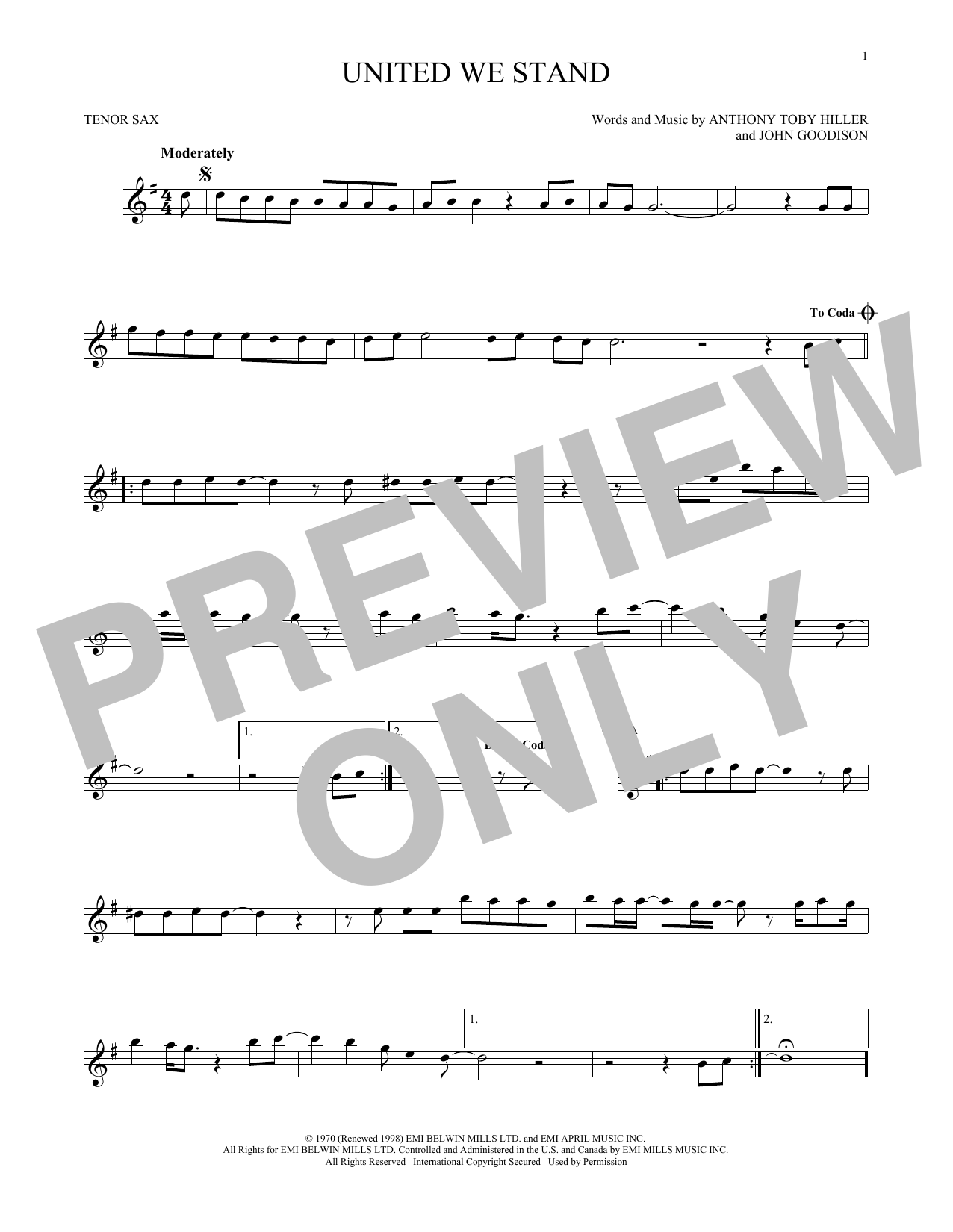
United We Stand Sheet Music Preview

United We Stand: Tenor Sax Solo

As performed by Brotherhood Of Man

Item: 35-DS00329241

Digital Download
$4.99
Description

Discover MakeMusic Cloud: thousands of interactive titles your students can play along with today.

Sample Audio
No sample audio found.
Sample Video
Additional Details
Publisher: Hal Leonard
Page Count: 1
SKU: 35-DS00329241

More about this title

About the Artist: Brotherhood Of Man

Brotherhood of Man rose to prominence in the 1970s as a British pop vocal group, becoming one of the decade's most recognizable acts. Their polished harmonies, accessible melodies, and feel-good sensibility made them fixtures on variety shows and radio stations across Europe and beyond.

For music educators, the group's catalog offers straightforward, singable arrangements with clean vocal lines that work well in educational settings. Their commercial success demonstrates how effective melody and harmony can be when executed with clarity and confidence.

Why we love this

This anthem sits at the sweet spot between genuine musical substance and immediate accessibility. The song's celebratory message and straightforward harmonic structure give singers something meaningful to communicate without requiring advanced technique, making it ideal for building ensemble confidence and joy.

What to expect

Warm, optimistic, and built on the kind of solid four-part harmony that feels satisfying to sing. There's an earnestness to the arrangement that avoids syrup, letting the melody do most of the emotional lifting.

Who it's for

Singers at the middle school level and above will connect with this pop standard. It works equally well for show choirs, general music ensembles, or groups looking to add a proven crowd-pleaser to their spring or end-of-year concert.

How to get the most out of it

  • Lock the vowels across all voice parts, especially on the hook. The unison moments will land with far more impact if every singer shapes the same sound.
  • Balance the upper voices carefully against any instrumental foundation. The melody should float clearly, but harmony parts need definition too.
  • Lean into the rhythmic precision of the accompaniment. This style thrives on tight rhythmic control, not rubato.

How to use it

Consider pairing this with other songs from the 1970s that celebrate unity or resilience for a thematic concert segment. It also pairs naturally with upbeat pop arrangements, or it can stand alone as a finale that leaves audiences in good spirits.

Skills your students will build

  • Balancing melodic and harmonic priorities within a four-part texture
  • Sustaining vowel consistency across ensemble voice parts
  • Singing with confidence and conviction in a contemporary pop idiom
  • Responding to rhythmic groove and accompaniment cues

You May Also Like