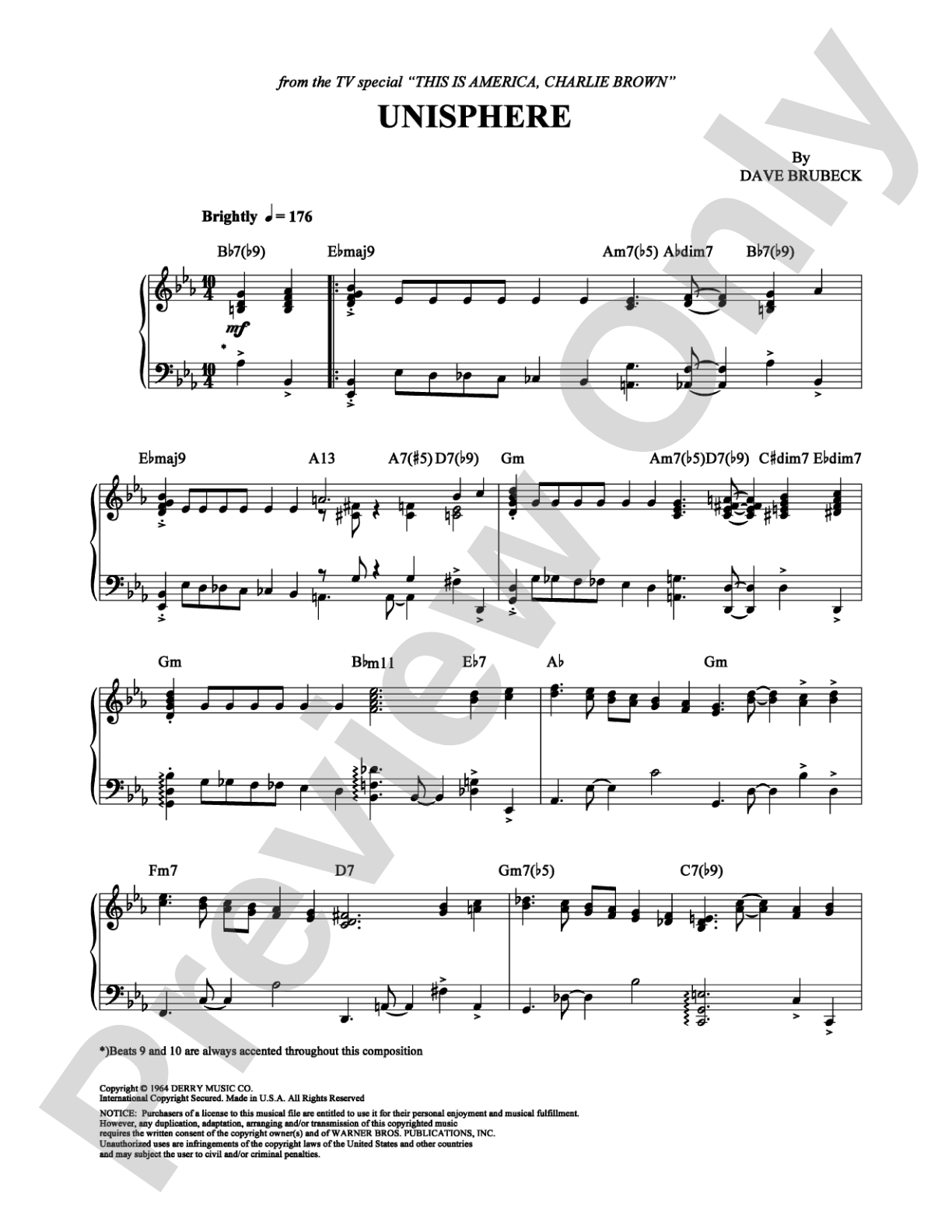
Unisphere: Piano Digital Sheet Music

Unisphere: Piano Digital Sheet Music

Dave Brubeck

Item: 00-PS-0000890

Digital Download
$3.99
Description

Unisphere: Piano Digital Sheet Music isn't in MakeMusic Cloud just yet...but it could be. Let us know you'd like to see it, and you'll help shape what comes next. In the meantime, start a free trial and dive into thousands of interactive titles your students can play along with today.

Sample Audio
No sample audio found.
Sample Video
Additional Details
SKU: 00-PS-0000890

More about this title

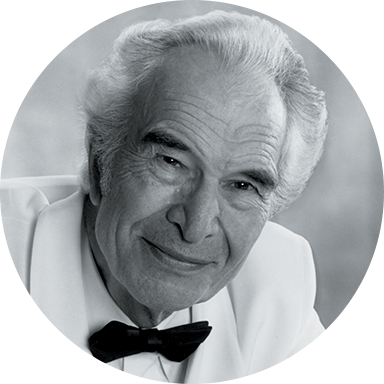
About the Artist: Dave Brubeck

Dave Brubeck

Dave Brubeck built his reputation as a pianist and composer by synthesizing jazz vernacular with classical forms. His education under Darius Milhaud at Mills College shaped a compositional voice that honored both traditions, and his improvisational command became legendary in live performance. Beyond his iconic recordings, Brubeck wrote prolifically across genres: choral works, orchestral pieces, chamber music, and ballet suites that demonstrated the full range of his artistic vision.

His cultural impact extended far beyond the bandstand. Brubeck was instrumental in dismantling racial barriers in mid-20th-century America, and his 1959 album "Time Out" became the first jazz recording to sell over a million copies. His sacred works, including the mass "To Hope!" and various oratorios, have been performed and recorded internationally by major ensembles. Throughout a career spanning decades, Brubeck received recognition including a Grammy Lifetime Achievement Award, a Presidential Medal of the Arts, and induction into the American Classical Music Hall of Fame.

Why we love this

Brubeck's piano writing balances jazz vocabulary with structural clarity, making "Unisphere" accessible to pianists who want to explore jazz language without losing sight of the score. The piece rewards both strict adherence to the notation and thoughtful interpretation, offering pianists room to develop their own voice within a fully realized composition. Programming this piece signals to audiences that jazz and classical music belong in the same recital space.

What to expect

"Unisphere" unfolds with the conversational ease of great jazz while maintaining the structural dignity of a fully realized composition. The piece has an exploratory quality, as though the pianist is thinking through harmonic possibilities in real time, yet every note serves a purpose in the larger architecture. There is elegance here, and intelligence, without a trace of pretense.

Who it's for

Advanced intermediate through advanced pianists who are comfortable reading jazz voicings and want to deepen their understanding of composition beyond lead sheets. This piece suits pianists preparing for recitals, auditions, or students of jazz piano who seek repertoire that bridges notated composition and improvisational thinking.

How to get the most out of it

  • Study the harmonic movement carefully before diving into interpreting the rhythmic nuances; Brubeck's voicings often contain the emotional core of each phrase.
  • Practice hands separately to lock in the independence between lines, then gradually blend them with the touch and dynamic control needed to shape melodic ideas.
  • Listen to Brubeck's own recordings as a starting point, but treat them as inspiration rather than a definitive version; allow your interpretation to develop through repeated playing.
  • Pay attention to tempo relationships and breath points; this music breathes like vocal music, even when the lines are purely instrumental.

How to use it

Position this piece in a recital as a bridge between classical and jazz repertoire, or program it alongside other 20th-century American concert music to highlight the jazz tradition's contribution to art music. It works equally well in a jazz piano recital with classical training, where it demonstrates the compositional sophistication that earned Brubeck a place in concert halls worldwide.

Skills your students will build

  • Reading and voicing jazz harmony within a classical framework
  • Maintaining rhythmic independence between hands across syncopated lines
  • Interpreting articulation and dynamics in jazz-influenced textures
  • Balancing structural form with improvisational sensibility

You May Also Like