
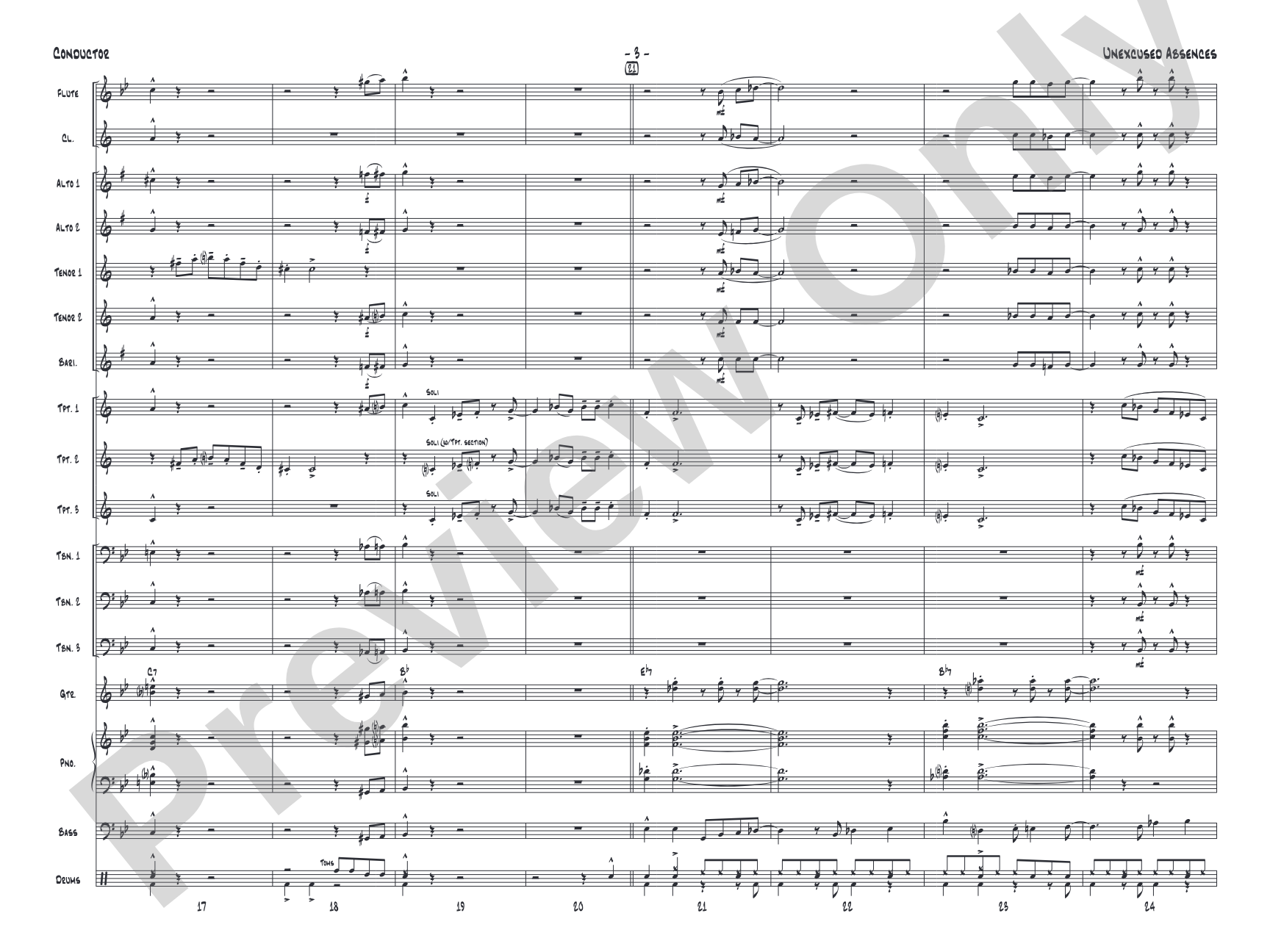
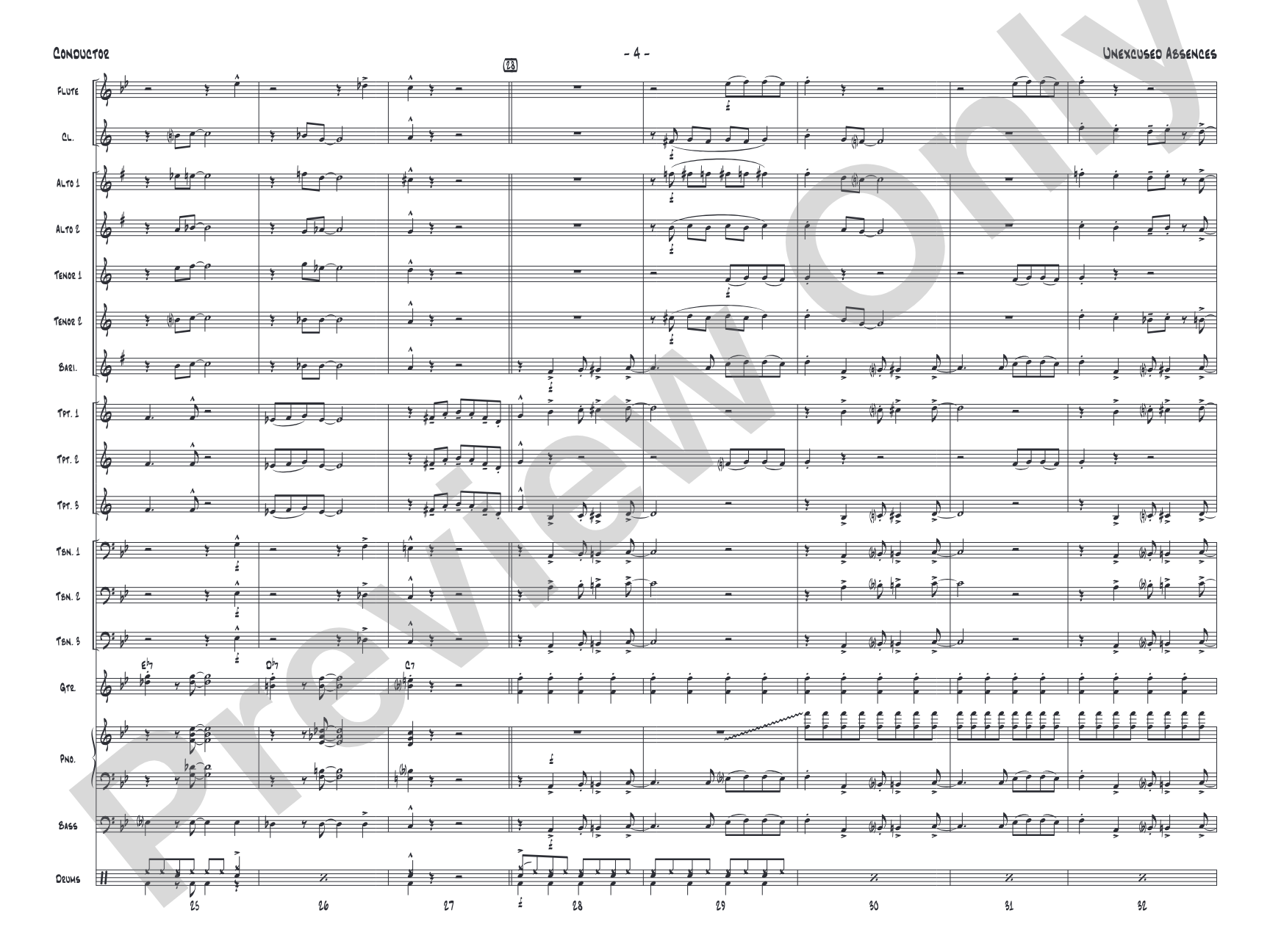
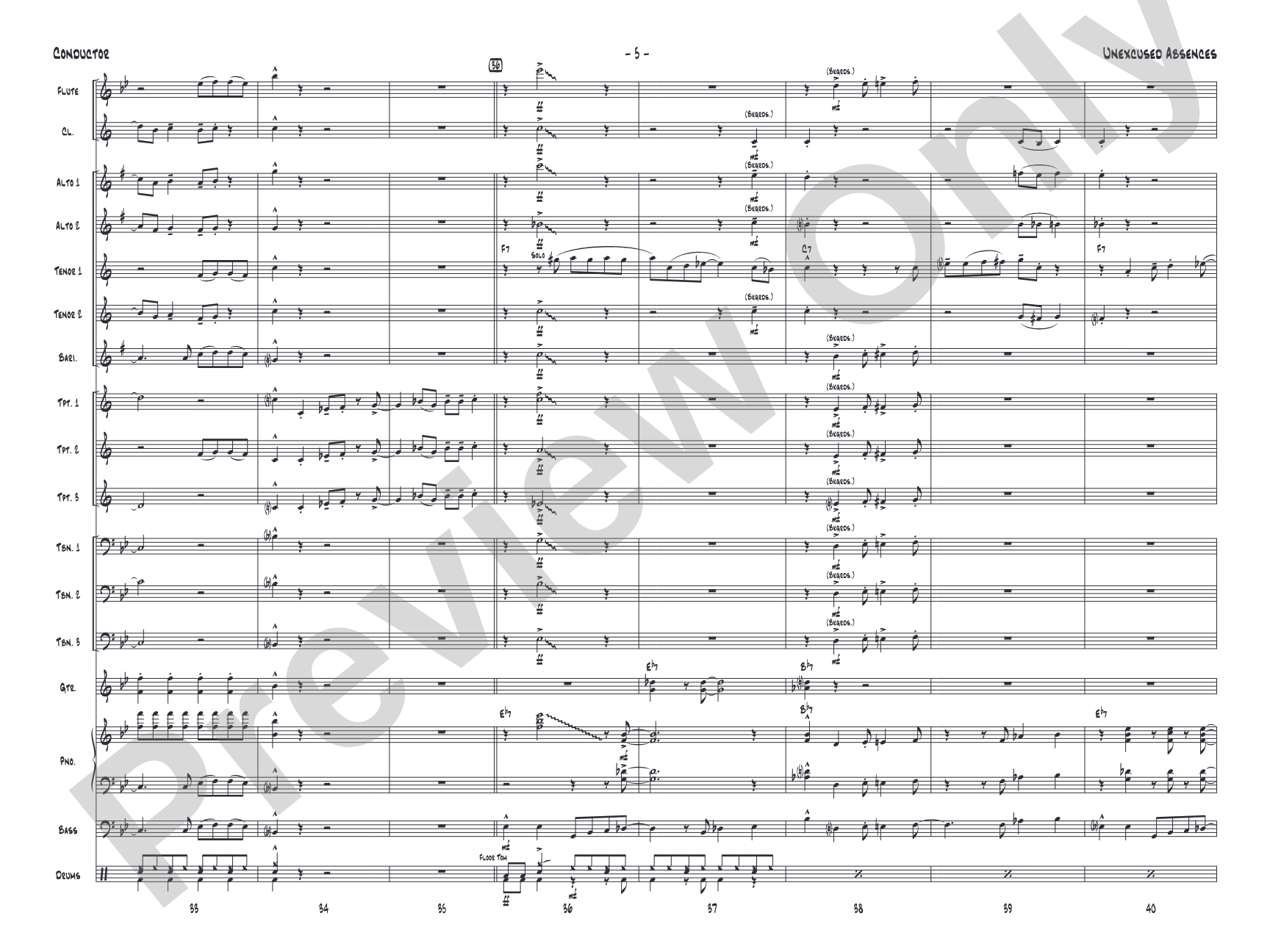
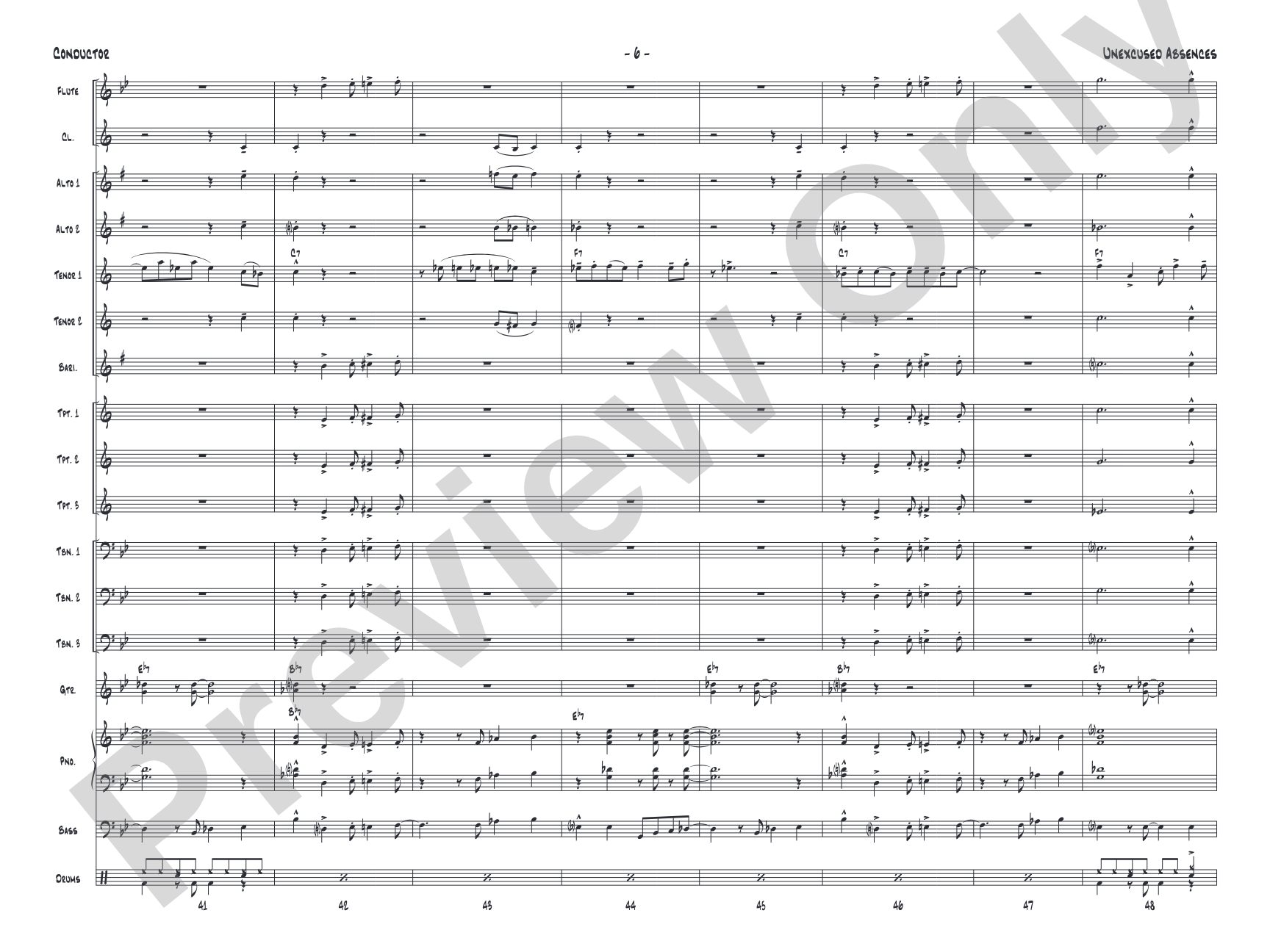
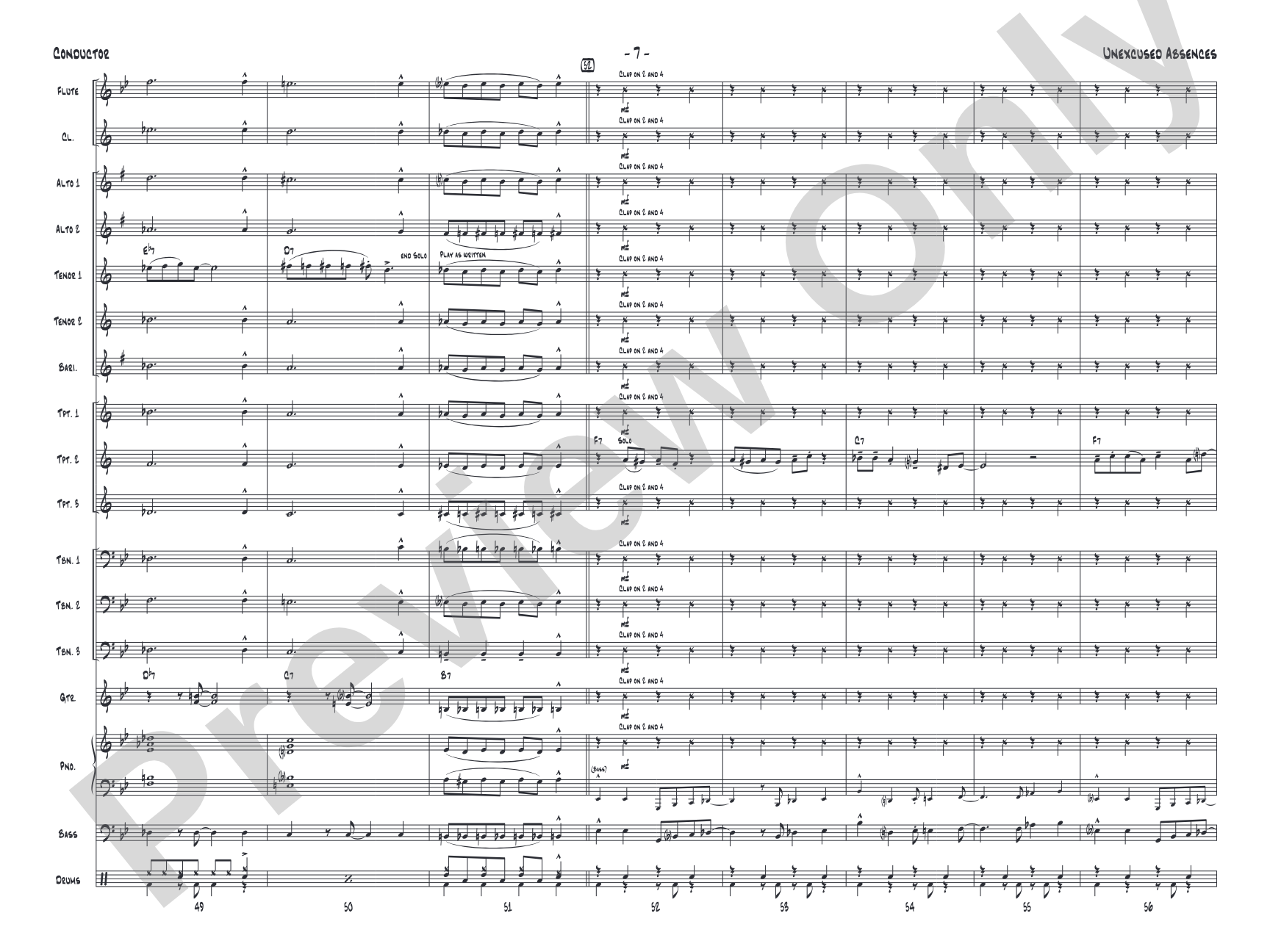
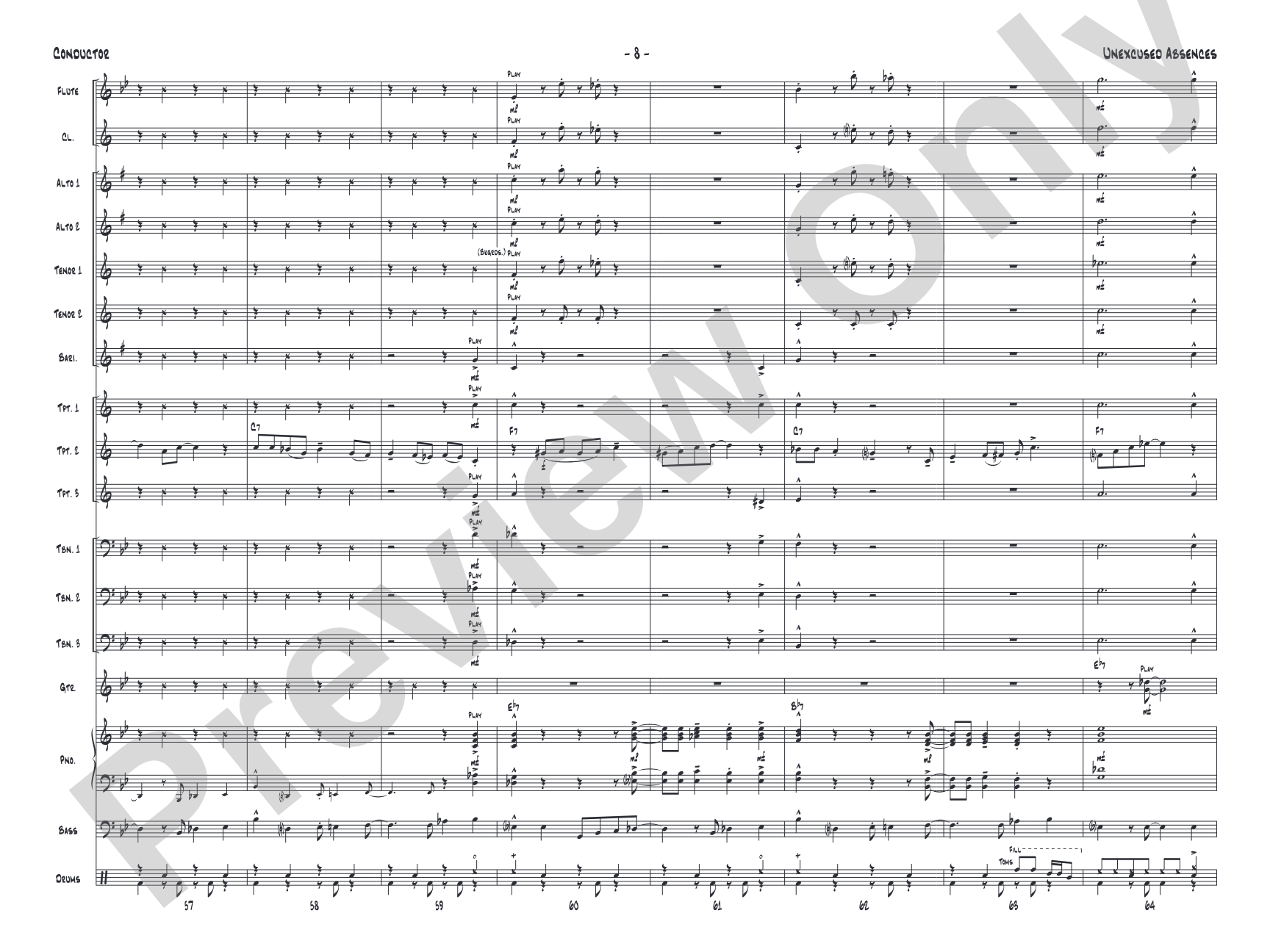
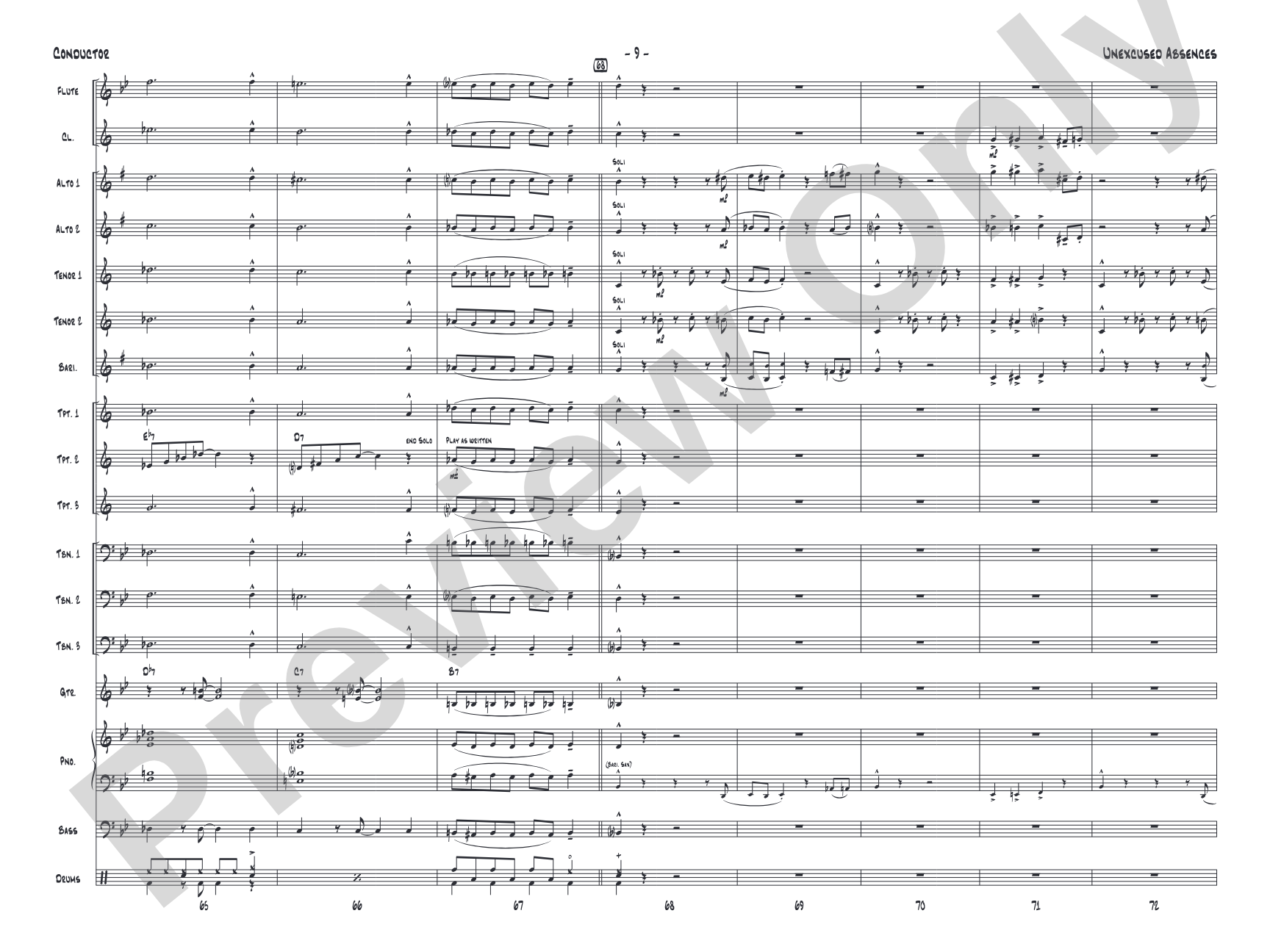
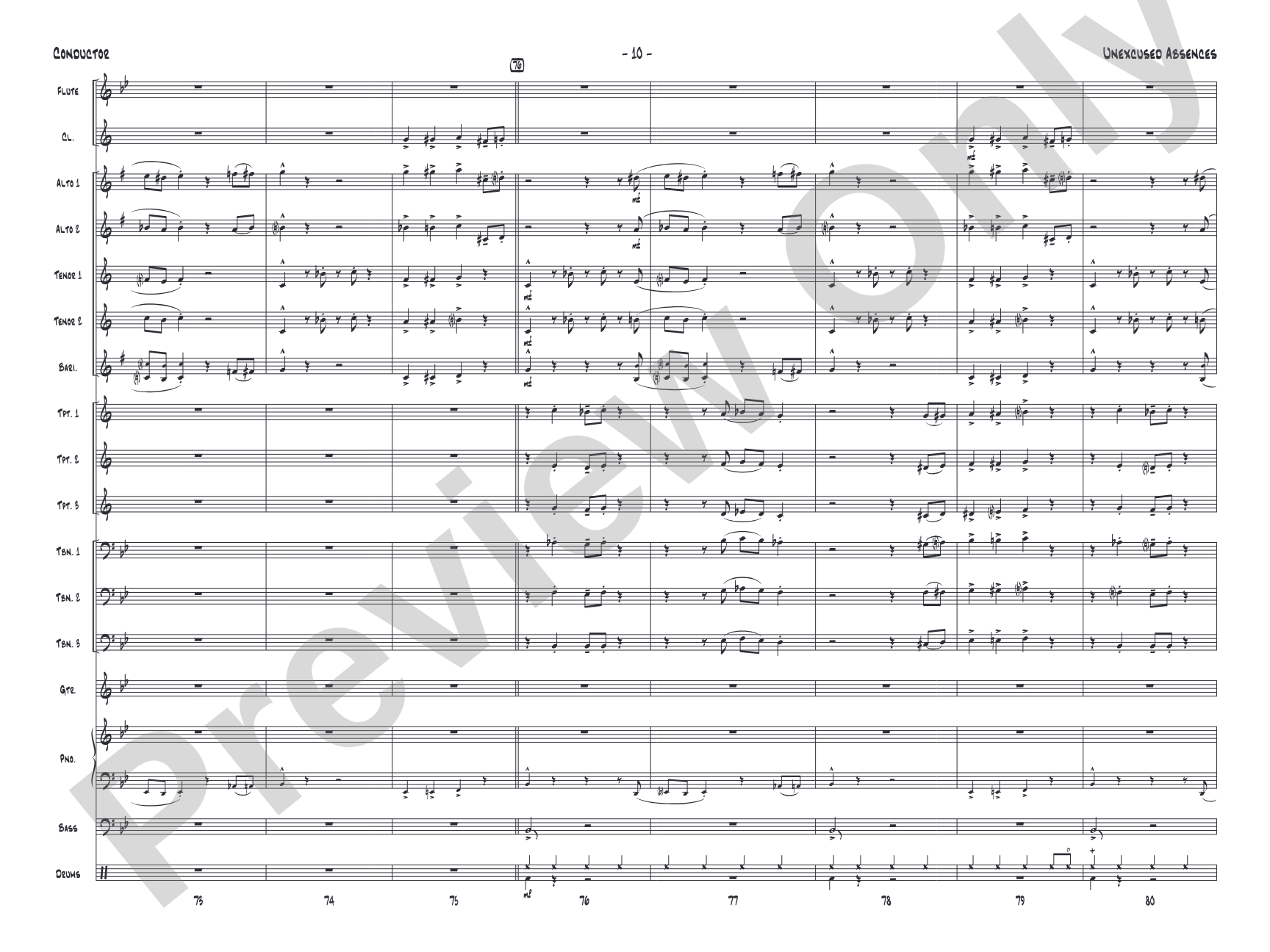
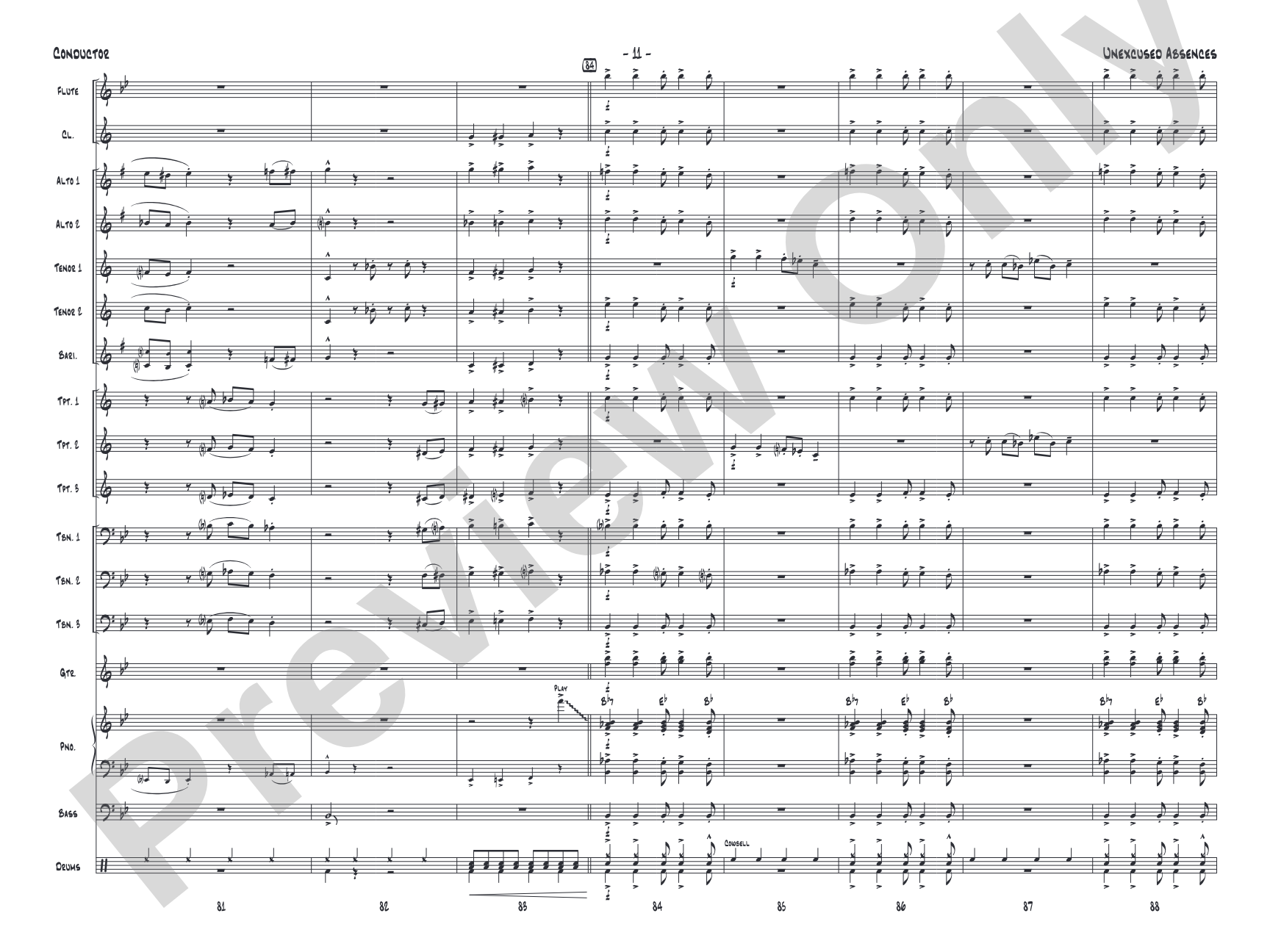
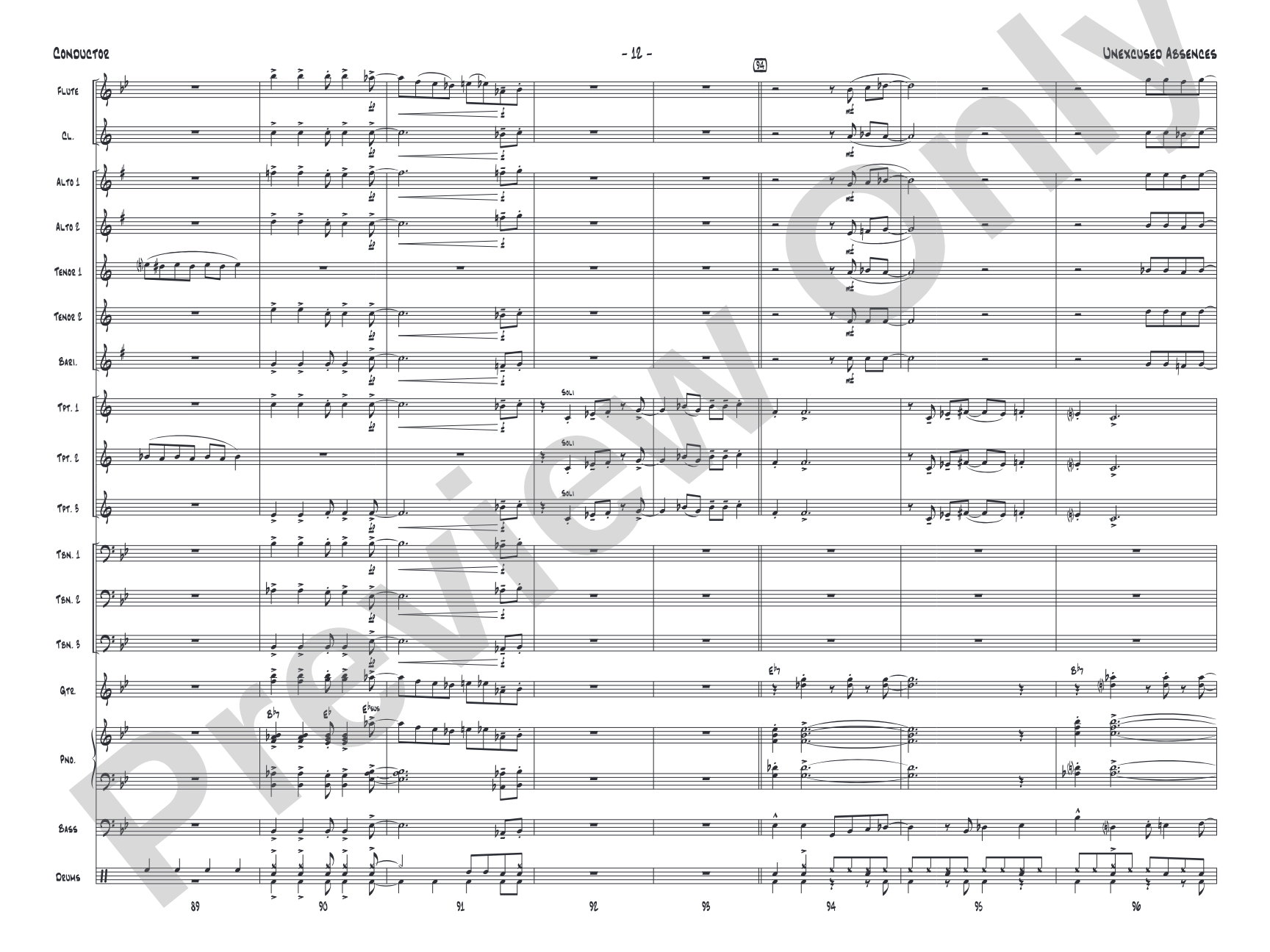
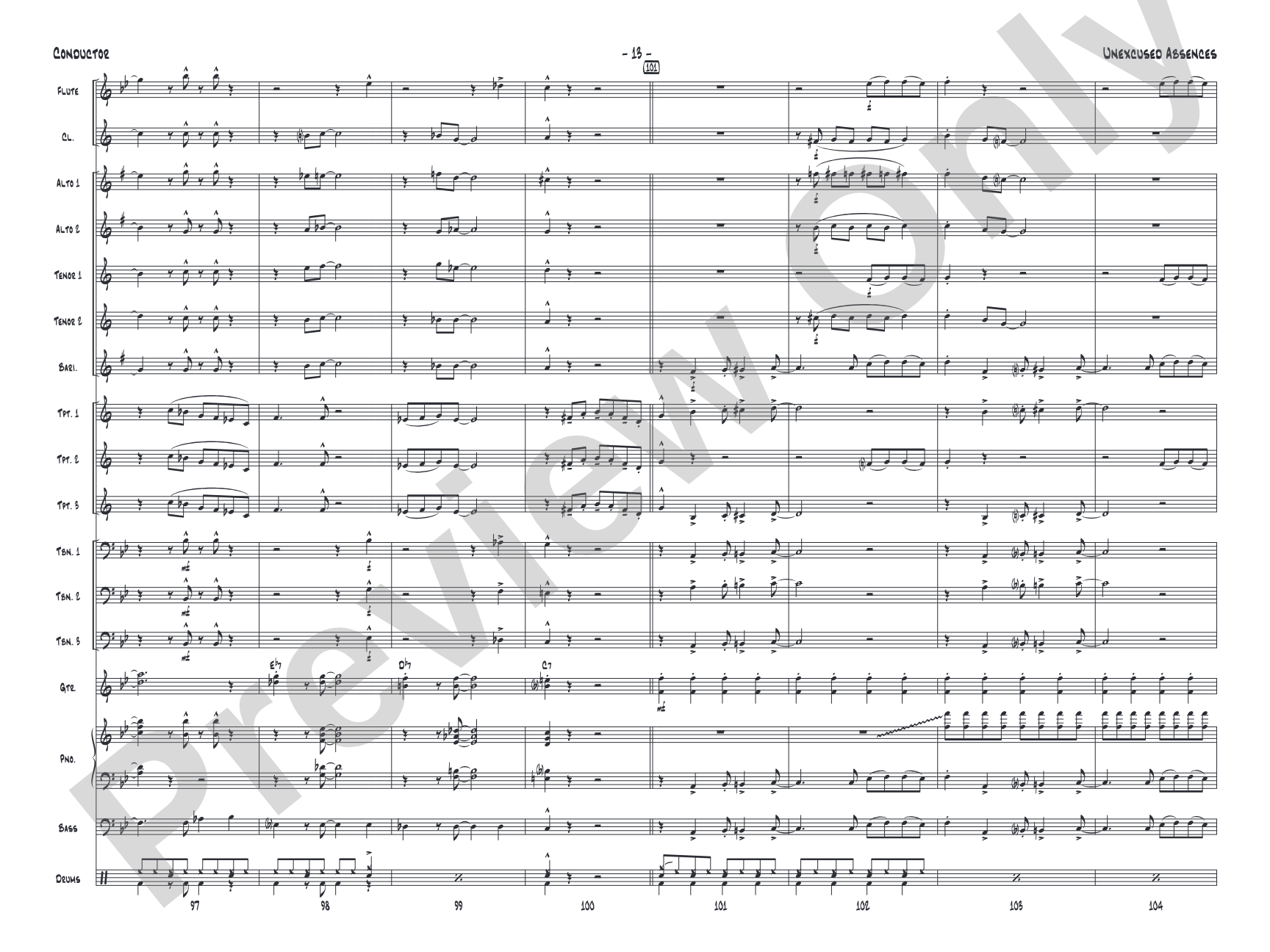
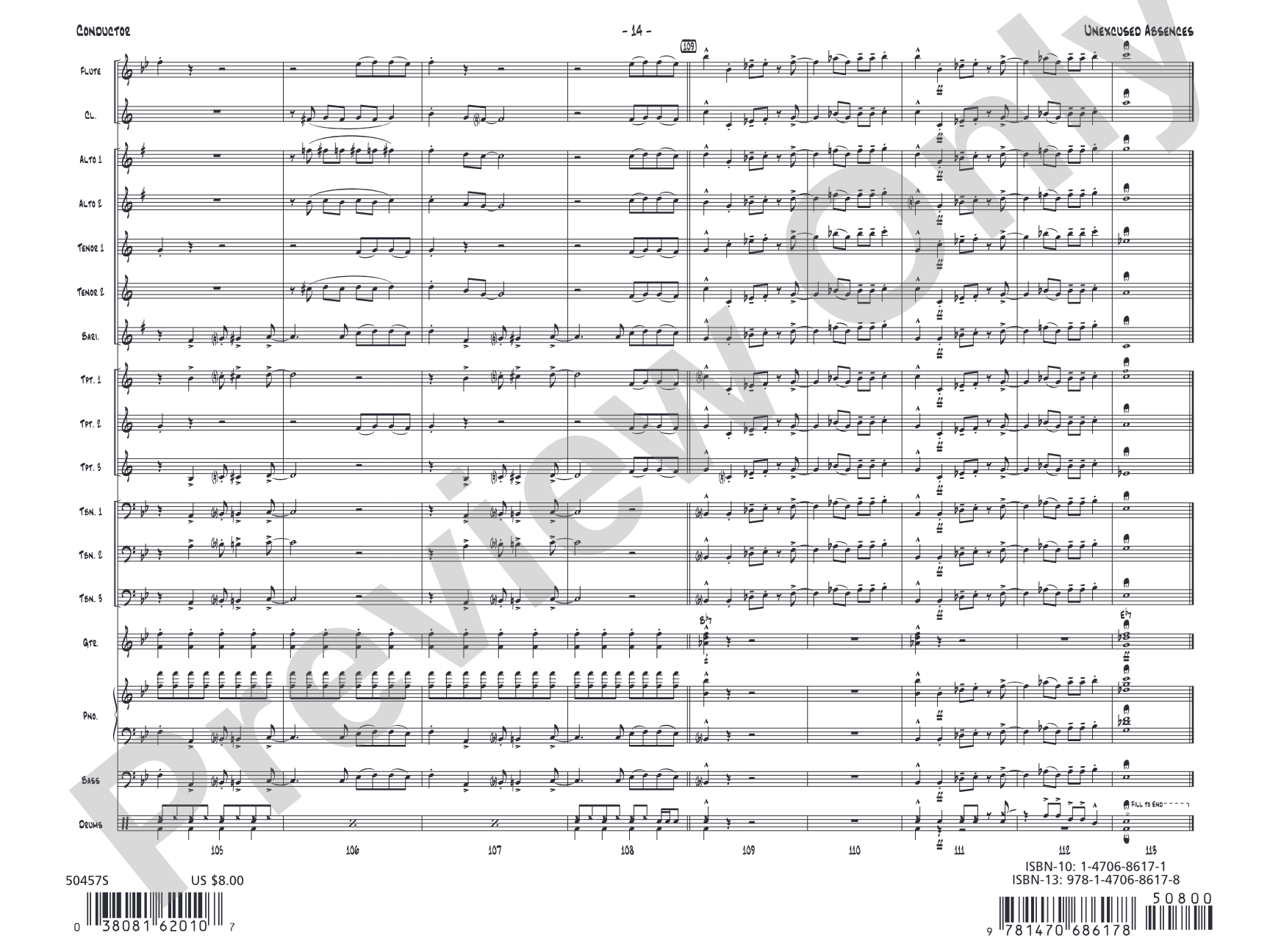

Unexcused Absences: Jazz Ensemble Conductor Score & Parts
By Zachary Smith
Grade: 1.5
Item: 00-PK-0009568
$47.00
Pickup currently not available
Buy Extra Parts (Digital PDF Download)
Parts Added to Cart!
Description
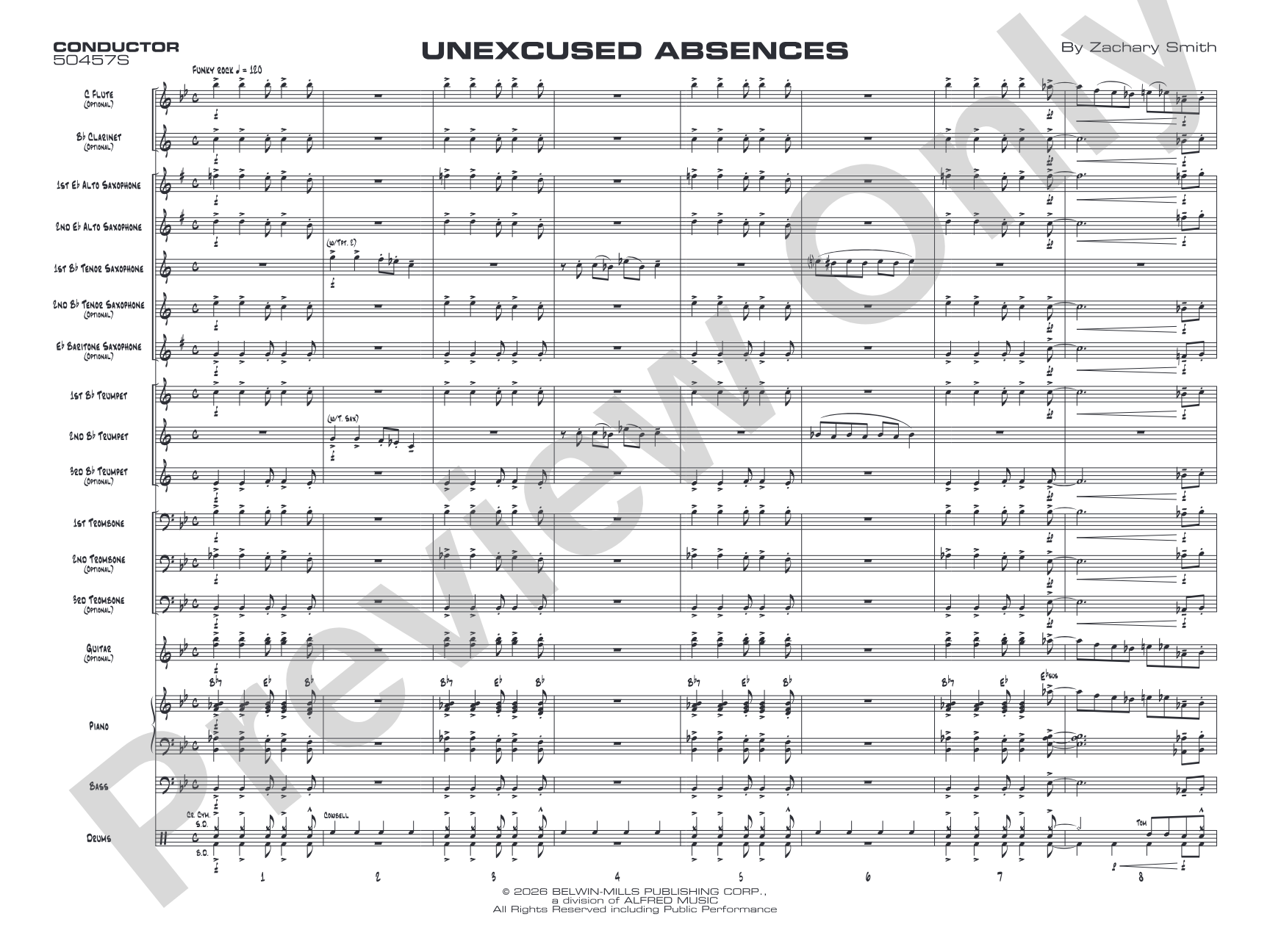
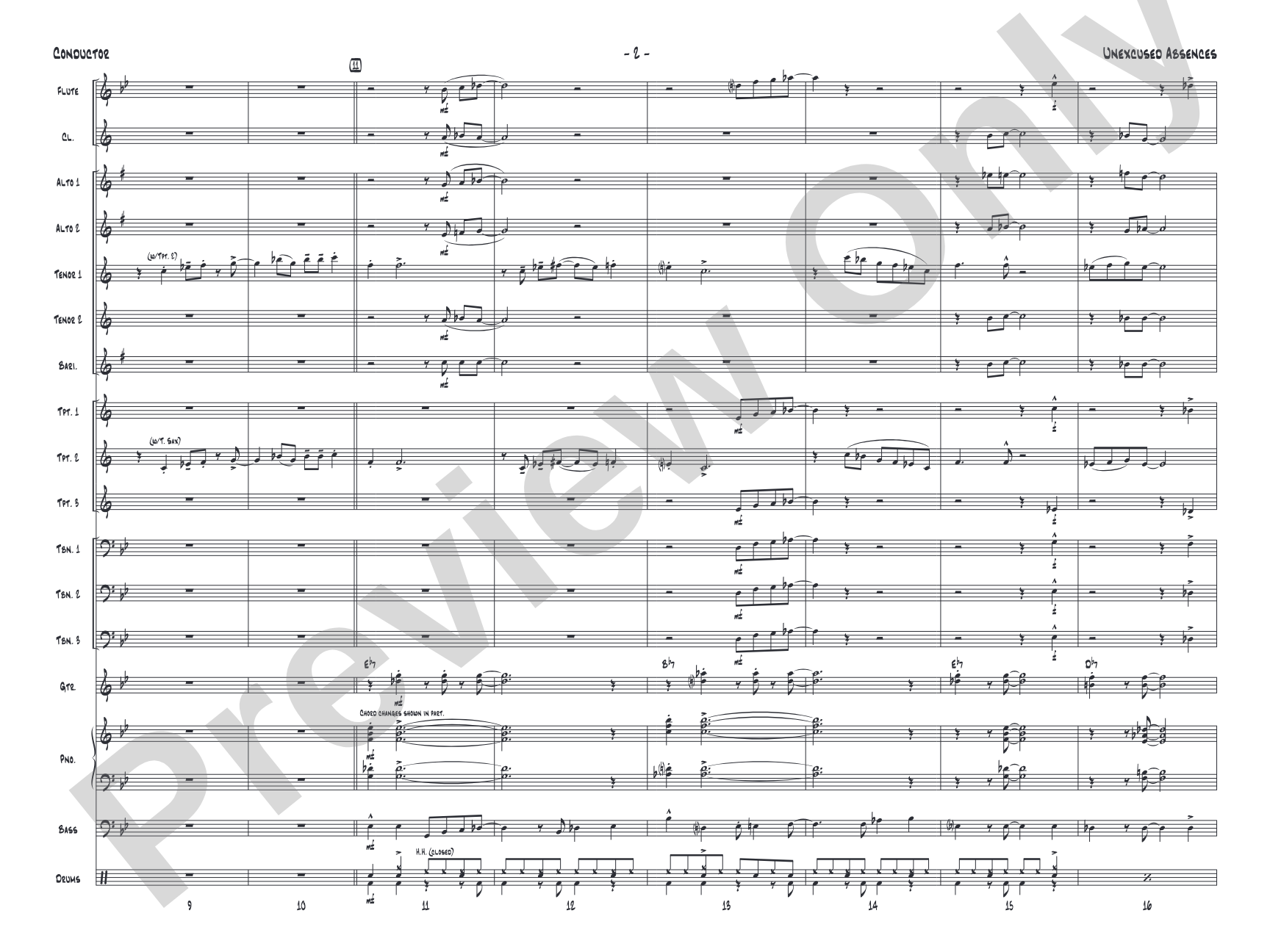
A funky rock groove played around 120 BPM. Solos provided for tenor sax and trumpet. Trumpet 1 range to written D fourth line. Check out this catchy chart, it's excellent!


Unexcused Absences: Jazz Ensemble Conductor Score & Parts isn't in MakeMusic Cloud just yet...but it could be. Let us know you'd like to see it, and you'll help shape what comes next. In the meantime, start a free trial and dive into thousands of interactive titles your students can play along with today.
Request This Title
Tell us you want it.
Start Your Free Trial
Explore everything that's ready to play right now.
Sample Audio
1
Audio File
--:--
0:00
0:00
Sample Video
Additional Details
Series:
Belwin First Year
Publisher:
Alfred Music
SKU:
00-PK-0009568
More about this title
Why we love this
A first-year jazz ensemble piece that actually swings without requiring advanced harmonic reading or complex rhythmic subdivisions. The funky rock groove sits at a tempo that keeps things loose and fun while the solo spots for tenor sax and trumpet give your best improvisers a real moment to shine without overwhelming younger players.
What to expect
Funky and unpretentious, with a rock edge that feels current rather than dusty. The chart breathes ease while keeping the energy bouncy, making it approachable enough for newer players without sacrificing the genuine groove that makes jazz fun to play.
Who it's for
First-year jazz ensemble players who are ready to tackle rhythm section grooves and want exposure to solo opportunities early. This works best for groups with at least one secure tenor saxophonist and trumpet player who can handle improvisation or who are eager to start learning it.
How to get the most out of it
- Lock the rhythm section into the pocket early. Have the bass and drums dial in the 120 BPM groove together before the full ensemble comes in so the whole band sits comfortably on the backbeat.
- Coach the soloists to listen to the harmonic comping underneath. Even first-year improvisers benefit from hearing where the changes land, not just playing over the beat.
- Balance the trumpet section so Trumpet 1 can cut through on the melody without drowning out the ensemble. Keep dynamics in check and use dynamics as a tool to feature the written D as a moment of clarity rather than blast.
How to use it
Use this as a concert opener or closer to set a high-energy, accessible tone for your audience. It works especially well on a program that mixes jazz and contemporary styles, and it's casual enough to break up a heavier setlist without feeling out of place.
Skills your students will build
- Reading and executing funk/rock grooves in 4/4
- Playing syncopated rhythms on the backbeat
- Listening to and responding to harmonic changes as a section
- Solo construction and basic jazz improvisation
- Trumpet range reading to the fourth line staff