
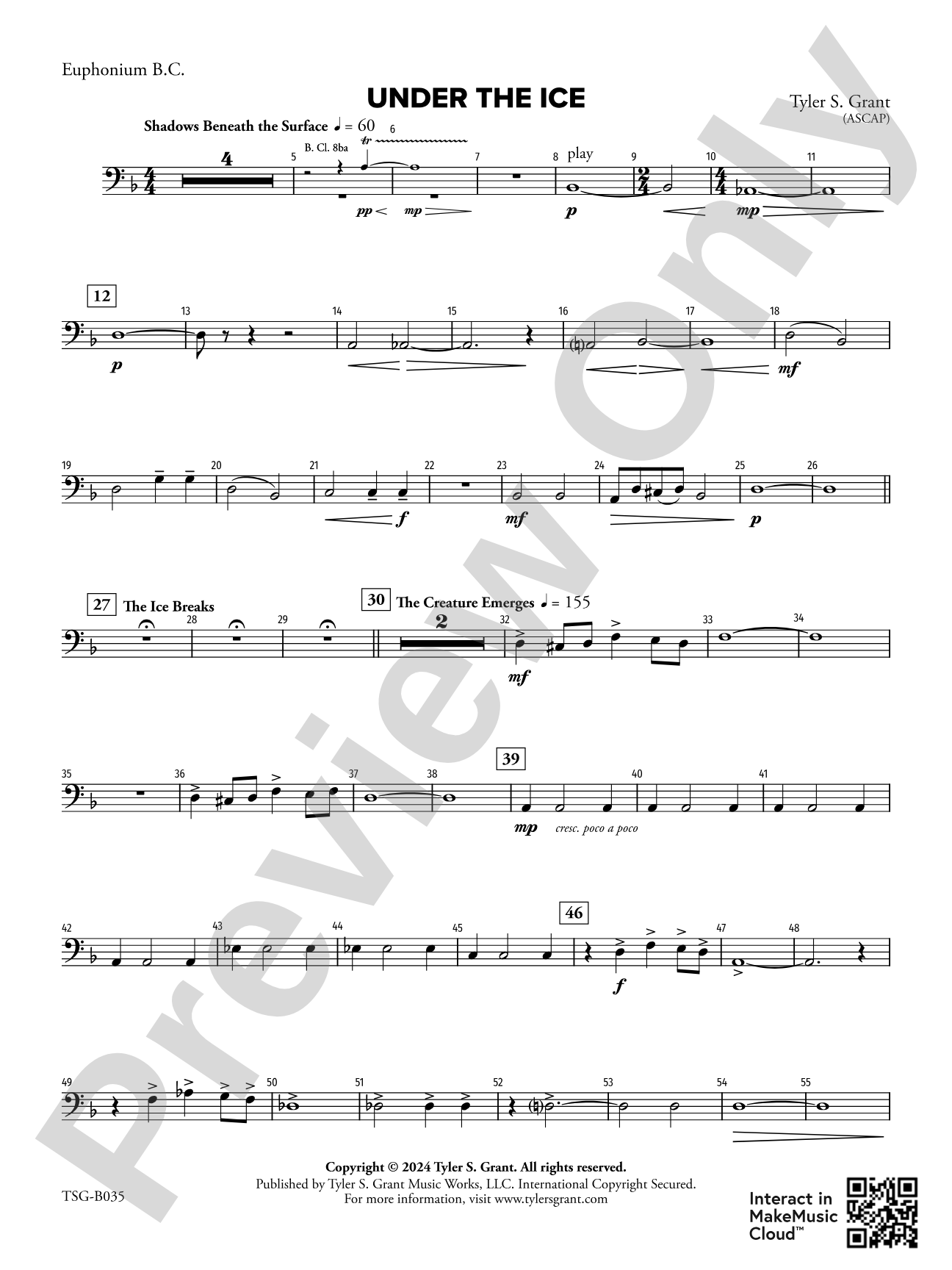

Under the Ice: Euphonium B.C.
By Tyler S. Grant
Grade: 2
Item: 98-PC-TGB035_BBC1
$4.50
Pickup currently not available
Description
What lurking beneath the frozen surface!? Only one way to find out. Tyler S. Grant's Under the Ice is a thrilling programmatic adventure of monster and myth! Beginning with a mysterious introduction to the timid tundra, the music depicts shadows beneath the ice surface. The audience will feel the ice break beneath their feet, followed by an adrenaline-filled chase scene to outrun the monster's attack. Programmatic writing at its finest! (4:00)
Original Item#: TSG-B035


Original Item#: TSG-B035
Discover MakeMusic Cloud: thousands of interactive titles your students can play along with today.
Sample Audio
1
Audio File
--:--
0:00
0:00
Sample Video
Additional Details
Series:
Tyler S. Grant Music Works
Publisher:
Tyler S. Grant Music Works, LLC.
SKU:
98-PC-TGB035_BBC1
More about this title
About the Composer: Tyler S. Grant

Tyler S. Grant has established himself as a prolific voice in contemporary wind band music, earning commissions and performances from honor ensembles and professional groups across North America since 2010. His works appear regularly on prestigious lists and festival programs, with performances at venues ranging from Carnegie Hall to the Macy's Thanksgiving Day Parade. He studied instrumental music education and conducting at the University of Alabama under Professor Randall Coleman and has cited composer Brian Balmages as essential to his development.
Beyond the page, Grant maintains an active presence as a conductor and clinician, having worked with over 100 school programs across more than 15 states. He contributed to Alfred Music's Sound Innovations: Ensemble Development series and shares his insights through interviews and published articles in music education periodicals. His work Panoramic Fanfare won the Dallas Wind Symphony's 2014 Call for Fanfares Competition and has since circulated widely among collegiate and professional ensembles.
Why we love this
Grant delivers genuine storytelling through instrumentation and pacing, building tension and release in ways that keep students engaged while maintaining musical substance. The programmatic arc moves directors beyond a concert opener into something with real dramatic stakes. Grade 2 accessibility paired with contest-viable writing means you're not sacrificing artistic merit for ensemble readiness.
What to expect
The music opens in hushed uncertainty, with delicate textures painting a frozen landscape before something stirs beneath. A sudden shift propels the ensemble into a breathless race against mythic danger, full of urgency and kinetic energy. The contrast between these worlds creates a visceral emotional journey that lands with memorable impact.
Who it's for
Concert bands at the Grade 2 level seeking repertoire that combines accessibility with genuine engagement and dramatic arc. Directors who program for festivals and contests will find this piece meets both entertainment and adjudication criteria, while those building ensembles appreciate writing that holds students' attention through narrative rather than technical virtuosity.
How to get the most out of it
- Shape the introduction with deliberate restraint; the mystery pays off only if the band plays with genuine quiet and focus during the timid tundra section.
- Mark clear sectional transitions during rehearsal so players understand when the texture shifts from ominous to propulsive. The ice-breaking moment needs ensemble precision to land the dramatic effect.
- Build the chase scene with gradual dynamic intensity rather than jumping straight to fortissimo. Let the adrenaline mount measure by measure so the climax feels earned.
- Balance programmatic storytelling against musical clarity; each section should stand on its own musically while serving the narrative.
How to use it
Open a concert with this piece to grab immediate audience attention and set a storytelling tone for the rest of your program. Its 4:00 length and Grade 2 accessibility make it an ideal festival selection that showcases your ensemble's ability to balance musicianship with theatrical communication. Pair it with contrasting repertoire (lyrical ballad, march, or classical arrangement) to highlight the programmatic writing's distinctiveness.
Skills your students will build
- Dynamic control across contrasting sections (mysterious introduction, dramatic chase)
- Ensemble balance when managing texture changes from sparse to densely scored
- Rhythmic precision during fast-paced passage work
- Responding to programmatic cues in the score to shape musical narrative
- Sustaining focus and intonation through extended lyrical sections