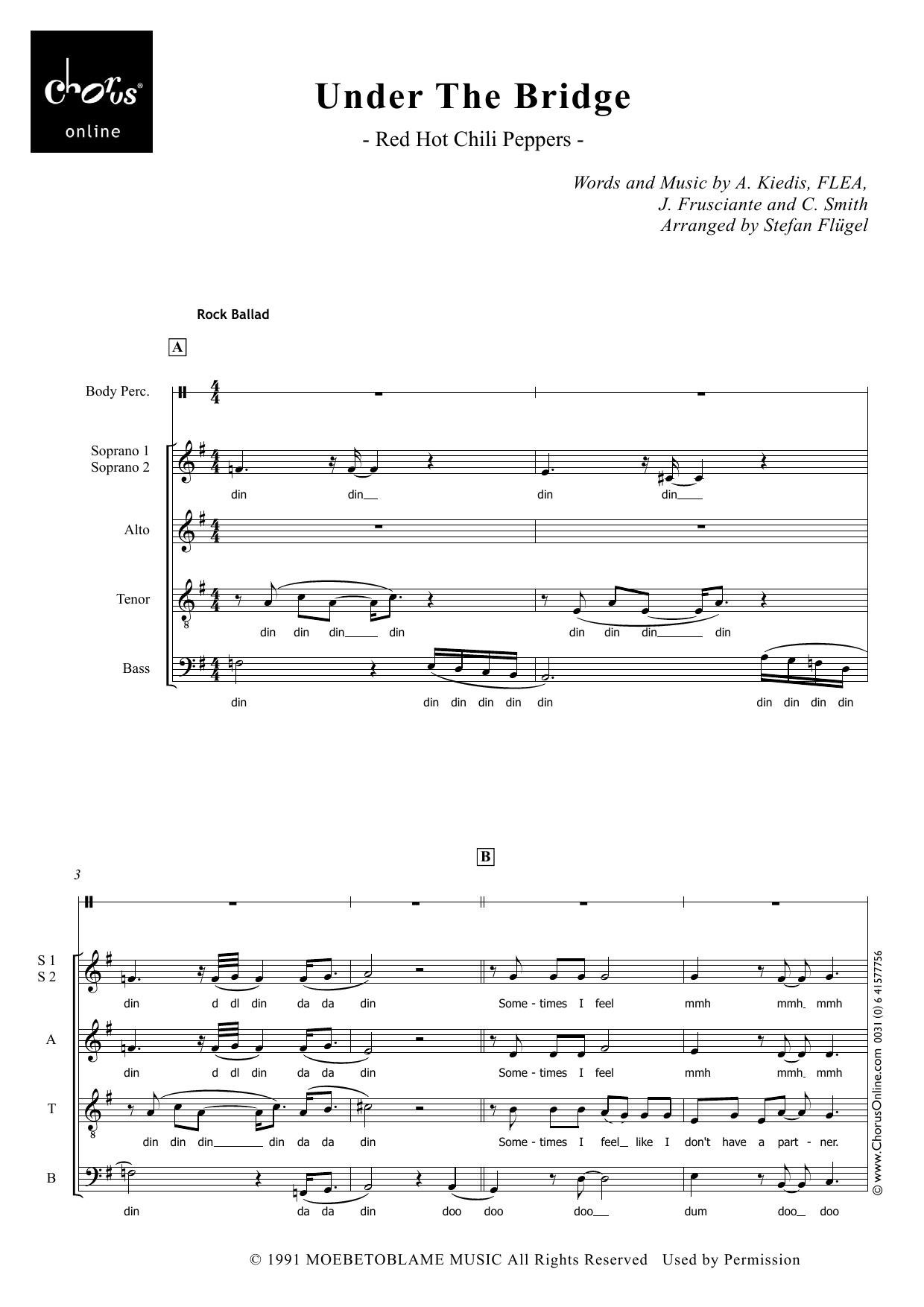
Under The Bridge (arr. Stefan Flügel) Sheet Music Preview

Under The Bridge (arr. Stefan Flügel): SSATB Choral Octavo

As performed by Red Hot Chili Peppers / Arranged by Stefan Flügel

Item: 35-DS00489045

Digital Download
$2.99
Description

Under The Bridge (arr. Stefan Flügel): SSATB Choral Octavo isn't in MakeMusic Cloud just yet...but it could be. Let us know you'd like to see it, and you'll help shape what comes next. In the meantime, start a free trial and dive into thousands of interactive titles your students can play along with today.

Sample Audio
No sample audio found.
Sample Video
Additional Details
Publisher: Hal Leonard
Page Count: 11
SKU: 35-DS00489045

More about this title

About the Artist: Red Hot Chili Peppers

The Red Hot Chili Peppers emerged from Los Angeles in the 1980s and became one of rock music's most influential ensembles, known for blending funk grooves, rap vocals, and emotional melodic writing across four decades of recording. Their 1991 album Blood Sugar Sex Magik marked a commercial and artistic breakthrough, establishing the band as major voices in alternative rock while maintaining their foundation in improvisational musicality and genre fusion.

In the classroom, their catalog offers accessible entry points to contemporary songwriting and arrangement. Songs like "Under The Bridge" demonstrate how rock and pop songwriters construct memorable melodies over strong harmonic progressions, making them valuable teaching tools for understanding modern composition and performance practice.

Why we love this

Stefan Flügel's arrangement captures the introspective quality of the original while making smart choices for five-part voicing that don't require soloists. Choirs consistently respond to this song because students recognize it, the melody sits beautifully across the parts, and the harmonic language is straightforward enough to learn quickly but interesting enough to hold attention in performance.

What to expect

The arrangement maintains the introspective, almost confessional quality of the original. The voicing creates space and openness in the verse before the harmonies thicken through the chorus, building emotional resonance that feels earned rather than forced. This is music that invites singers to listen to themselves and each other.

Who it's for

Directors looking for contemporary material that connects with student performers without sacrificing musical substance. High school choirs and collegiate ensembles will find this accessible for concert programming or informal performances, and it works equally well as an a cappella piece or with light accompaniment.

How to get the most out of it

  • Balance the top line carefully during the verse; the soprano carries the primary melody but shouldn't overwhelm the alto and tenor foundation underneath. The arrangement's strength comes from how the parts interweave rather than stack vertically.
  • Work the text intelligently, especially in the chorus. The emotional weight of "Under the bridge downtown" depends on singers understanding the song's vulnerability. Rehearse for clarity of articulation rather than power.
  • Establish a steady harmonic foundation by locking the alto and tenor parts first in rehearsal. Once those middle voices are secure, the soprano melody and baritone roots will settle naturally into place.
  • If performing with accompaniment, resist the impulse to let the track dominate. This arrangement works best when the voices have presence and the piano or backing track supports from underneath.

How to use it

Consider this for a concert that explores songs meaningful to your students' generation, paired alongside traditional repertoire to show stylistic range. It also works as a thoughtful finale to a show, particularly one addressing themes of connection or belonging. The eleven pages suggest it's substantial enough for a concert-closing slot rather than filler material.

Skills your students will build

  • Reading contemporary chord progressions and voice leading across five parts
  • Balancing within a mixed voicing where no part doubles another completely
  • Sustaining emotional expression through unfamiliar (to classical musicians) textual content
  • Adjusting blend and intonation in arrangements that prioritize openness over doubling

You May Also Like