
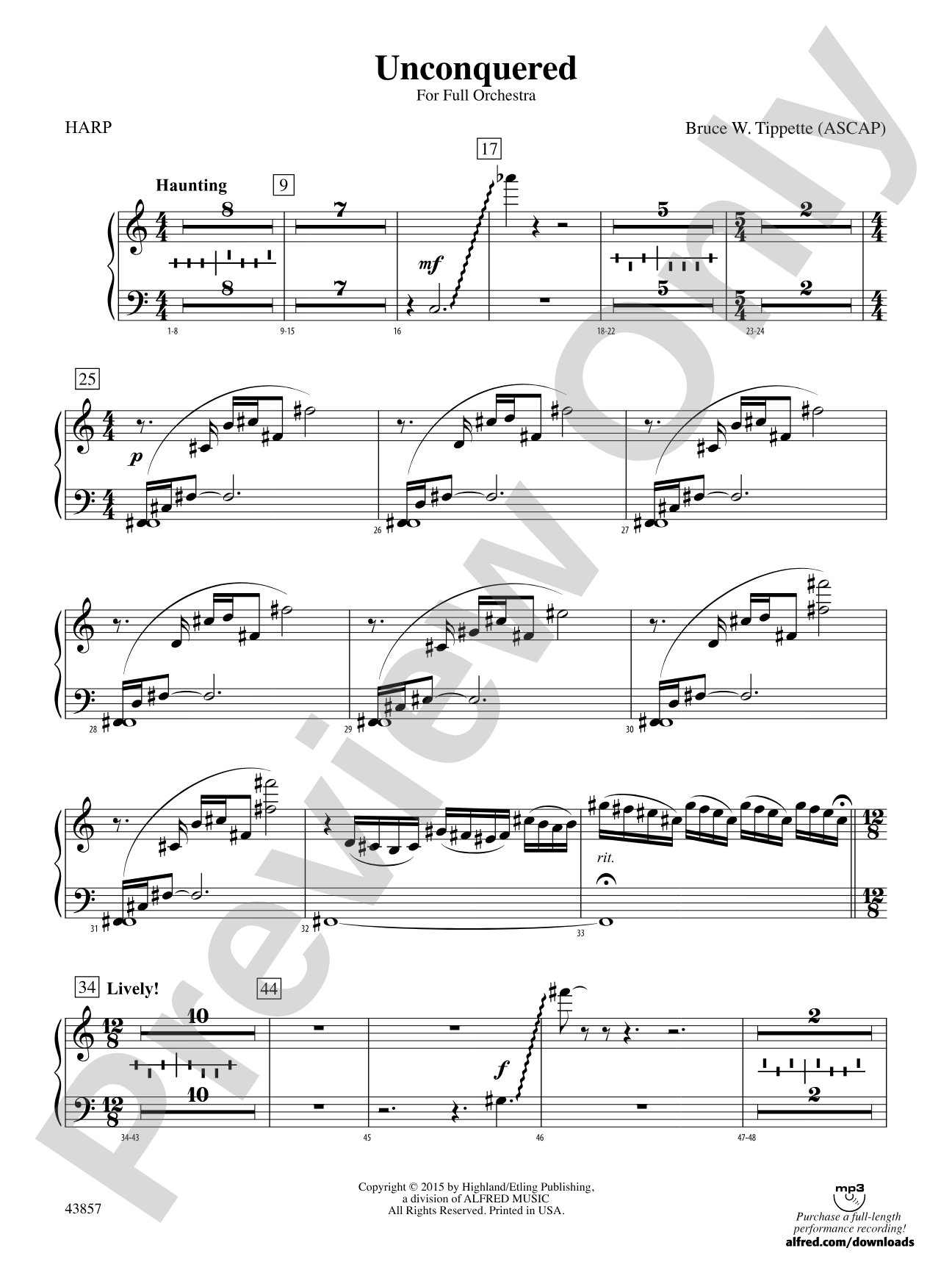

Unconquered: Harp
By Bruce W. Tippette
Grade: 5
Item: 00-PC-0016951_H
$3.00
Pickup currently not available
Description
This original composition first fell upon the ears of excited, rambunctious, elementary-aged children as part of an educational concert series geared toward teaching the sections of the orchestra. The room quickly grew silent and the audience was captivated by the haunting melodies and clashes of bold chords, intertwined with moments of tranquility and wonder. Each and every section of the orchestra will feel equally important as it tackles this challenging, yet appealing piece! (5:15)


Don't just read it, hear it, play along with it, and watch your students grow with it. In MakeMusic Cloud, Unconquered: Harp comes alive with professional accompaniment, adjustable tempo, and built-in practice tools that turn solo practice into real progress.
Open in the Player
Jump straight in and assign it today.
Start Your Free Trial
Open this title and explore the full library in minutes.
Sample Audio
1
Audio File
--:--
0:00
0:00
Sample Video
No sample videos found.
Additional Details
Series:
Highland/Etling Full Orchestra
Publisher:
Alfred Music
Page Count:
256
SKU:
00-PC-0016951_H
More about this title
About the Composer: Bruce W. Tippette

Bruce W. Tippette completed his Master of Music in composition at the University of North Carolina School of the Arts and earned dual bachelor degrees in composition/theory and music education from Appalachian State University. His compositions span concert works, choreography, film, and collaborative projects, with commissions from both choral and instrumental ensembles performed internationally.
Tippette's orchestral work Unconquered won the 2012 Mary Starling Composition Competition and has received multiple subsequent performances, including four additional performances by the Winston-Salem Symphony. He was selected in 2012, 2013, and 2014 to compose works for an experimental partnership between Cirque du Soleil and UNC School of the Arts. As an educator, he teaches composition, theory, piano, and voice at the Community Music School of UNCSA and serves as Youth Music and Handbell Director at Augsburg Lutheran Church. He also works as a collaborative pianist in the School of Drama at UNCSA and as a freelance engraver.
Why we love this
Tippette crafted this piece specifically for young orchestral musicians, which means every section gets genuine musical responsibility rather than filler parts. The balance of haunting melodic passages with striking harmonic moments and quiet introspective writing creates the kind of piece that teaches ensemble sound awareness through its own architecture, not through lecture.
What to expect
Unconquered unfolds as a journey between contrasting emotional landscapes. Haunting, introspective melodies shift unexpectedly into bold harmonic statements, then recede into moments of wonder and tranquility, creating a narrative arc that holds an audience's attention and reflects the emotional range young musicians are capable of expressing.
Who it's for
This work belongs in the hands of Grade 5 orchestras ready for meaningful compositional challenges. Students encounter authentic orchestral writing where their individual parts matter to the whole, not showcase pieces that require advanced technique but this composition demands musical maturity and collaborative listening.
How to get the most out of it
- Give the string sections space to bloom during the tranquil passages; these moments require precise dynamic control and demonstrate that orchestral power comes in many forms.
- Use the bold harmonic clashes as rehearsal landmarks. Mark these turning points clearly so the ensemble understands the architecture and can build toward them intentionally.
- Ensure the quieter episodes aren't rushed or buried. Young musicians often fear silence and empty space; conduct these sections with the same deliberation you give the forte sections.
- Balance the competing melodic lines across sections during moments of intertwined writing. This teaches listening skills that transfer to every piece they'll encounter.
How to use it
Feature this as a centerpiece on a concert celebrating orchestral maturity and ensemble growth. Its five-minute length works well in a mixed program following lighter fare or preceding a shorter, contrasting work. The piece also performs excellently at festivals where judges appreciate original writing that respects young musicians' developing musicality.
Skills your students will build
- Balancing multiple melodic lines within a full ensemble texture
- Dynamic control across sustained passages and sudden harmonic shifts
- Sectional independence within a collaborative orchestral context
- Ensemble listening and response to conductor interpretation
- Understanding how individual orchestral sections contribute to overall narrative arc