Unchain My Heart Sheet Music Preview

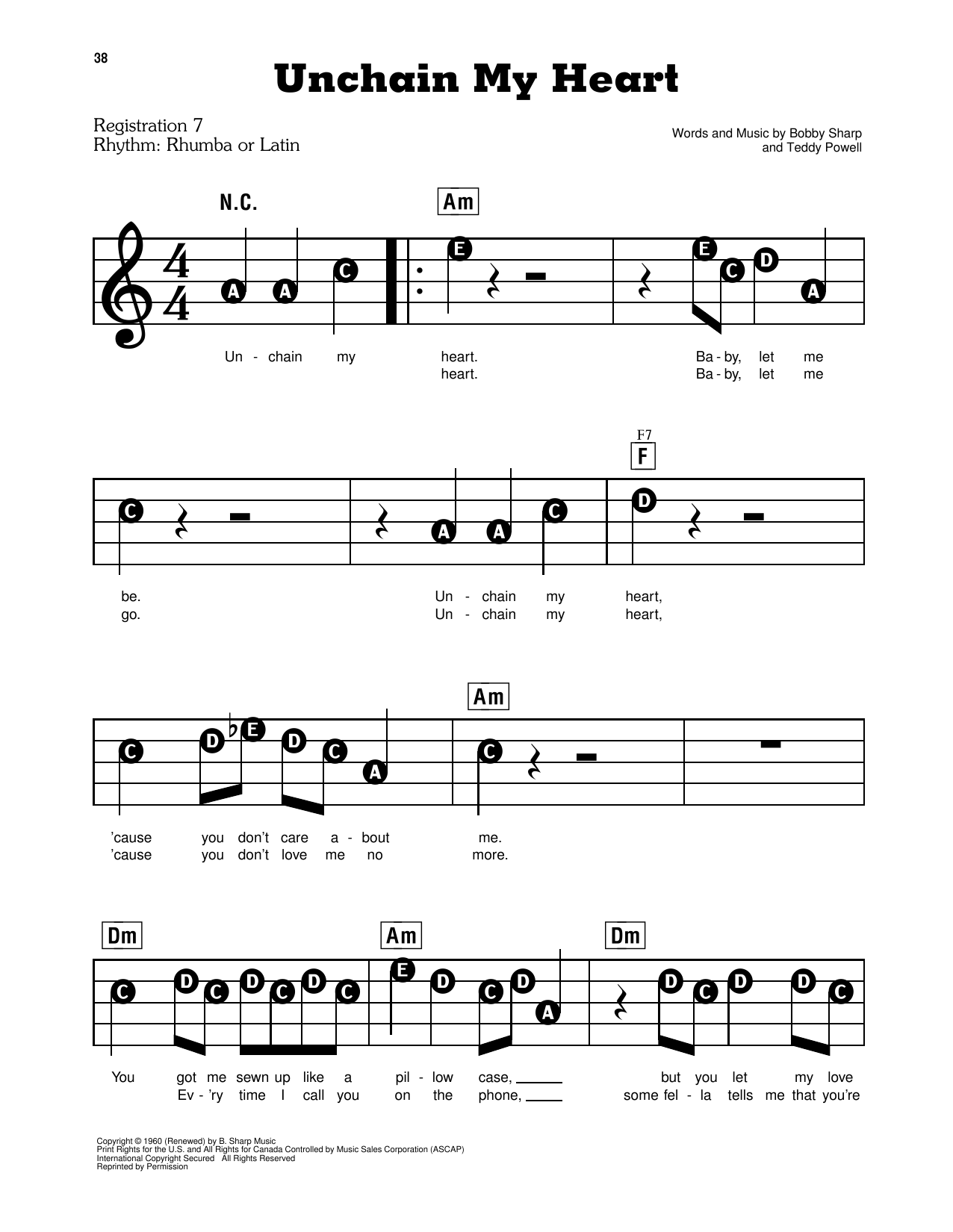
Unchain My Heart: E-Z Play Today

As performed by Ray Charles

Item: 35-DS00755360

Digital Download
$4.99
Description

Unchain My Heart: E-Z Play Today isn't in MakeMusic Cloud just yet...but it could be. Let us know you'd like to see it, and you'll help shape what comes next. In the meantime, start a free trial and dive into thousands of interactive titles your students can play along with today.

Sample Audio
No sample audio found.
Sample Video
Additional Details
Publisher: Hal Leonard
Page Count: 3
SKU: 35-DS00755360

More about this title

About the Artist: Ray Charles

Ray Charles revolutionized American music by fusing jazz, blues, gospel, and R&B into a deeply personal sound that transcended genre boundaries. His influence on keyboard playing spans decades; his sophisticated harmonic vocabulary and ability to swing any melody made him a model for pianists working across multiple styles.

Why we love this

Unchain My Heart captures Charles at his most accessible without sacrificing the harmonic richness his playing demanded. The arrangement sits perfectly for pianists who want to explore jazz comping and voicings in a three-page format that doesn't overwhelm; it's substantial enough to develop real musicianship but focused enough for a single rehearsal unit.

What to expect

Soulful and direct. The song moves with unhurried confidence, its emotional weight coming not from technical flash but from the sincerity of the melody and the warmth of well-voiced chords. There's a freedom in the phrasing that invites personal expression within a clear harmonic structure.

Who it's for

Piano students comfortable with jazz voicings and interested in learning how standards work in a jazz idiom. Teachers building repertoire that connects classical piano training to contemporary popular music will find this valuable for students transitioning into jazz or heading toward music theater work.

How to get the most out of it

  • Listen closely to how Charles phrases against the beat on the melody. His rubato isn't random; it serves the lyrical shape of the song. Study the recording to internalize this timing before locking into tempo.
  • The left-hand comping requires listening as much as reading. Keep voices moving independently rather than playing block chords; this creates the swing and forward motion the piece needs.
  • Balance melody and accompaniment carefully. The tune deserves clarity, but the harmonic movement underneath shouldn't disappear into the background.

How to use it

Position this in a jazz or standards concert where it can stand alongside other Charles material or as a bridge piece that shows how piano-driven pop and jazz share common ground. It works particularly well in a spring or end-of-year program focused on American songbook repertoire, offering both performers and audience members immediate connection to the music.

Skills your students will build

  • Jazz chord voicings and substitutions
  • Rhythmic phrasing and swing interpretation
  • Left-hand comping independence
  • Balancing melody legibility with harmonic complexity
  • Reading and performing from a lead sheet with jazz notation

You May Also Like