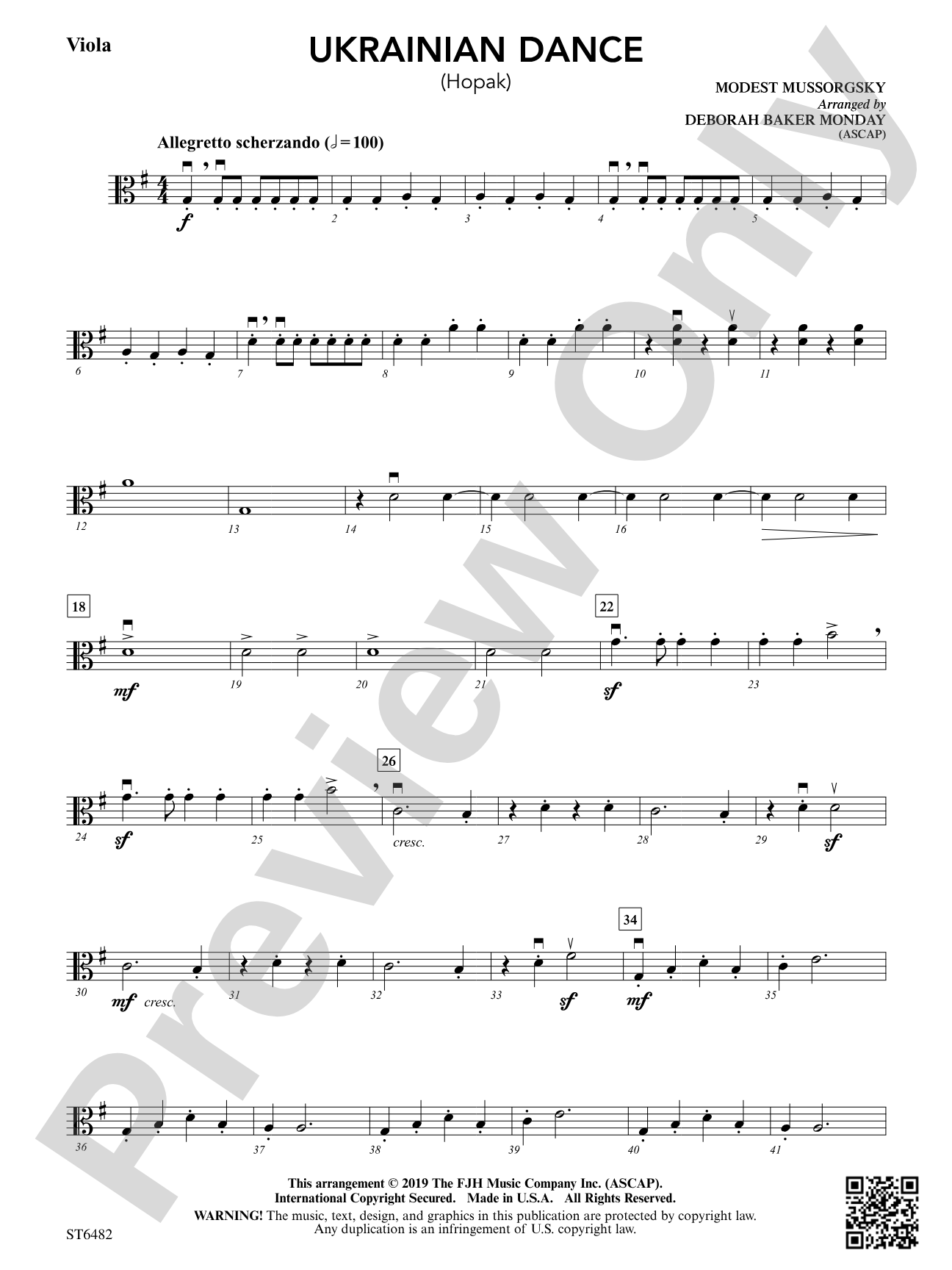
Ukrainian Dance: Viola Sheet Music Preview

Ukrainian Dance: Viola

By Modest Mussorgsky / arr. Deborah Baker Monday

Grade: 2

Item: 98-PC-DST6482_VA1

Digital Download
$7.00
Description
This energetic and lively dance features some of the most delightful themes from Mussorgsky's original. Based in G Major, this arrangement also showcases some of the composer's harmonic vocabulary while using very few accidentals. A perfect selection to change the pace of your concert, especially after a heavy work. (1:45)

Ukrainian Dance: Viola isn't in MakeMusic Cloud just yet...but it could be. Let us know you'd like to see it, and you'll help shape what comes next. In the meantime, start a free trial and dive into thousands of interactive titles your students can play along with today.

Sample Audio
0:00
0:00
Sample Video
Additional Details
Series: FJH Developing Strings
Publisher: The FJH Music Company, Inc.
SKU: 98-PC-DST6482_VA1

More about this title

About the Composer: Modest Mussorgsky

Modest Mussorgsky (1839–1881) was a Russian composer who rejected formal conservatory training in favor of self-directed study, a choice that shaped his distinctive harmonic language and fearless approach to orchestration. His works draw deeply from Russian folk traditions, Orthodox chant, and the expressive possibilities of instrumental color, making him a pivotal figure in Russian nationalism and a composer whose influence extends far beyond his lifetime.

Mussorgsky's catalog includes some of the most performed works in orchestral and piano literature, yet he struggled with alcoholism and financial instability throughout his life. His legacy rests not on prolific output but on the radical originality of what he composed, including Pictures at an Exhibition and Boris Godunov, both works that continue to inspire arrangers and captivate audiences across skill levels.

Why we love this

This arrangement captures the infectious energy of Mussorgsky's original melodic writing while remaining accessible to young orchestras. The G Major tonality and minimal accidentals mean your students can focus on rhythmic precision and ensemble balance rather than wrestling with complex key changes, yet the harmonic language still reflects Mussorgsky's distinctive voice. It's the ideal palette cleanser for a concert program, delivering genuine compositional substance without the technical burden of more complex works.

What to expect

Mussorgsky's dance pulses with rhythmic vitality and folk character, full of melodic hooks that stick in the ear. The scoring remains transparent throughout, letting each section hear its own voice while contributing to a unified, joyful sound that feels both earthy and sophisticated.

Who it's for

This arrangement fits Grade 2 string orchestras seeking genuine repertoire that moves beyond exercise material. It works equally well for ensembles building confidence with standard tonalities and for conductors programming concerts that require substantive pieces at accessible levels.

How to get the most out of it

  • Bring out the rhythmic vitality in the main themes by keeping the tempo buoyant and the ensemble articulation clean; this piece thrives on rhythmic clarity rather than lush sustained tone.
  • Balance the inner voices carefully during harmonic shifts so Mussorgsky's orchestration choices remain transparent rather than muddled.
  • Use the arrangement's straightforward key signature as an opportunity to drill intonation in G Major, since few accidentals means fewer excuses for pitch issues.
  • Shape the piece's dynamic arc intentionally; the lively character can mask a flat dynamic range, so plan specific crescendos and resets to keep the listener engaged through the 1:45 duration.

How to use it

Program this after a heavier work to reset audience energy without sacrificing musical substance. Its brisk duration and festive character also make it a natural fit for concert openings or mid-program transitions where you want forward momentum and clear tonal contrast.

Skills your students will build

  • Maintaining rhythmic precision in a folk-dance idiom
  • Reading and playing in G Major with minimal accidentals
  • Balancing harmonic voices to showcase orchestration clarity
  • Shaping lyrical lines within a fast tempo context

You May Also Like