

Ubi Caritas: SATB, a cappella Choral Octavo
By Joseph Gentry Stephens
Item: 00-PO-0003184
$1.90
Minimum order quantity: 20 copies
Pickup currently not available
Related Items
Ubi Caritas: SATB, a cappella Choral Octavo |
$1.90
|
View |
Description
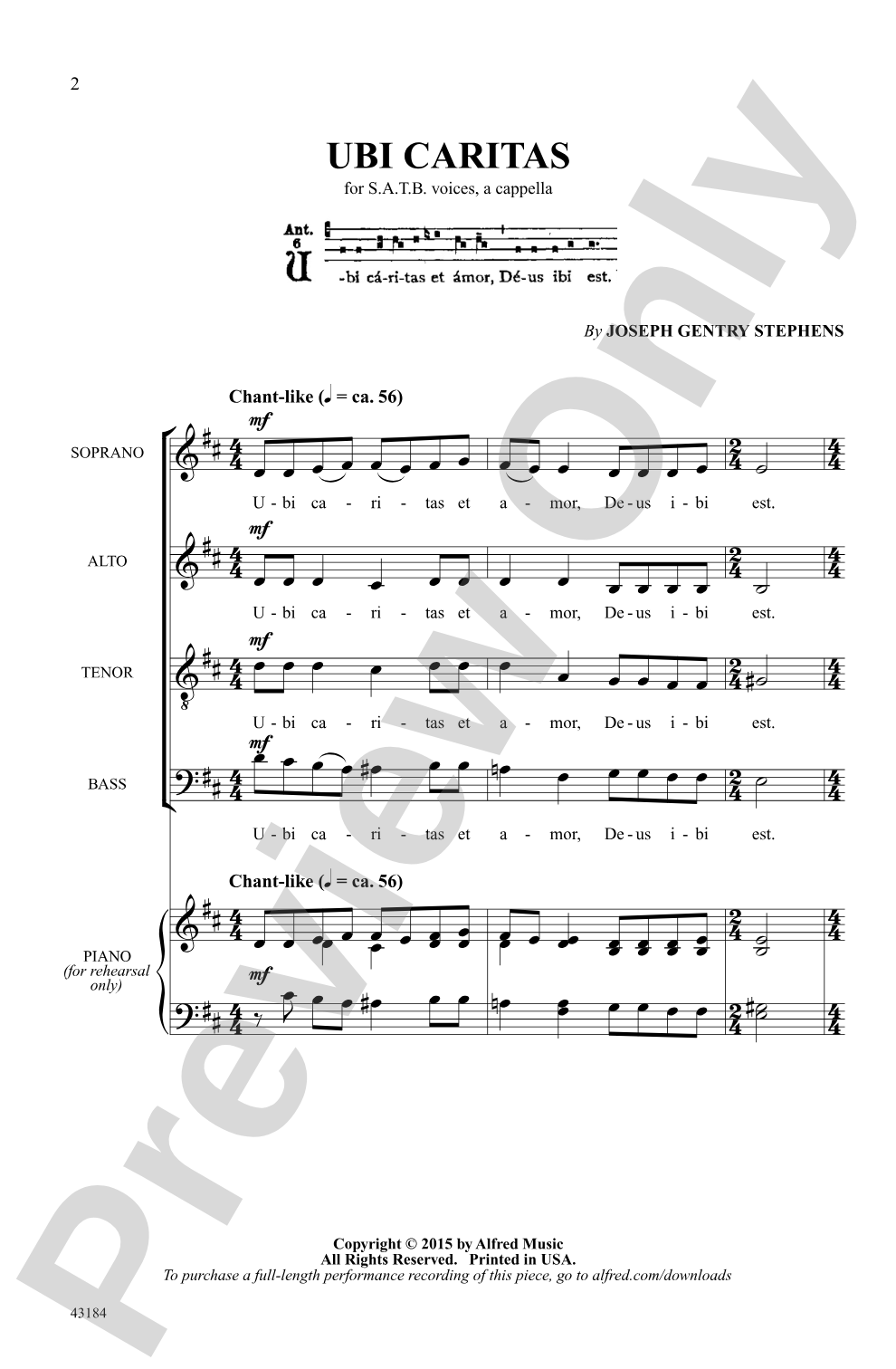
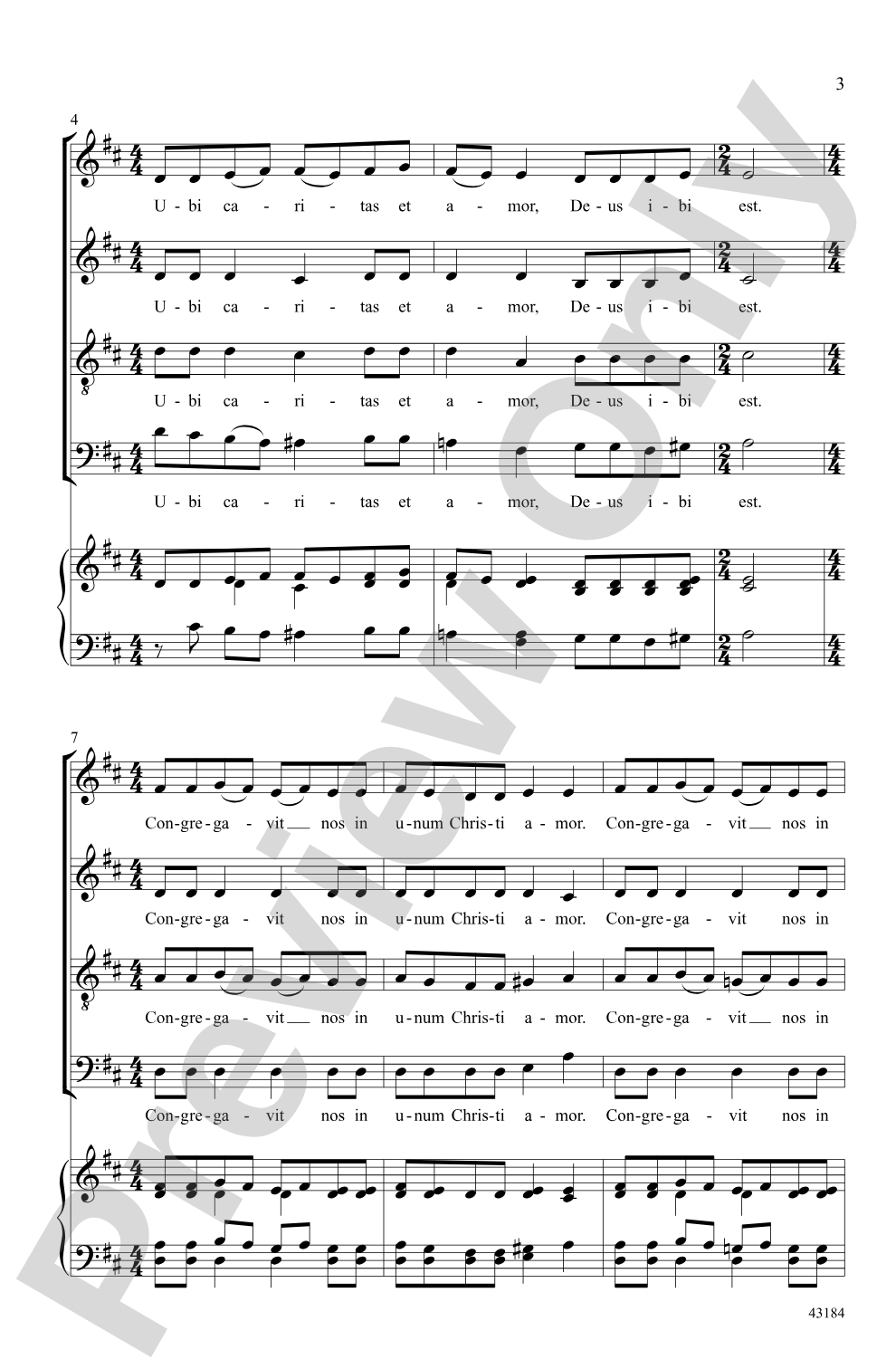
Based on the early Gregorian melody, this graceful ABA setting will work both in concert or worship service. A dramatic addition to any program.


Ubi Caritas: SATB, a cappella Choral Octavo isn't in MakeMusic Cloud just yet...but it could be. Let us know you'd like to see it, and you'll help shape what comes next. In the meantime, start a free trial and dive into thousands of interactive titles your students can play along with today.
Request This Title
Tell us you want it.
Start Your Free Trial
Explore everything that's ready to play right now.
Sample Audio
1
Audio File
--:--
0:00
0:00
Sample Video
No sample videos found.
Additional Details
Series:
Lawson-Gould
Publisher:
Alfred Music
Page Count:
8
SKU:
00-PO-0003184
More about this title
About the Composer: Joseph Gentry Stephens

Joseph Gentry Stephens composes for choral ensembles across liturgical and concert settings. His musical foundation began as a percussionist at age eleven in Texarkana, Texas, where he studied with respected local musician Dave Daily and performed in school bands across multiple genres. His formal training in vocal performance (University of Arkansas at Monticello) and choral conducting (University of Northern Colorado) shaped his distinctive voice in sacred choral writing.
Stephens has received commissions from churches and schools throughout the United States, including works for Saint Francis Xavier Catholic Church in Buffalo, Minnesota and Houston High School in Germantown, Tennessee. His compositions have been recognized in national competitions, with "Rise Up, My Love, My Fair One" reaching finalist status in the Ithaca College 36th Annual Composition Contest.
Why we love this
Stephens grounds this setting in the historical Gregorian melody while crafting an ABA structure that feels both reverent and expressive. The a cappella writing sits comfortably across all four voices without sacrificing harmonic depth, making it accessible for singers of varied ability while remaining musically substantial. It serves equally well in a liturgical context or as a concert anchor, which gives programming flexibility many directors need.
What to expect
The piece unfolds with the quiet dignity of its Gregorian source, offering reverence without severity. Harmonies shift beneath the ancient melody in ways that feel inevitable yet unexpected, creating moments of emotional depth that linger after the final chord.
Who it's for
This octavo serves experienced community choirs, church chancel choirs, and upper-level high school ensembles with secure intonation and blend skills. Directors programming sacred music in concert seasons or leading worship services will find this piece adaptable to both contexts. The eight-page score indicates moderate length and complexity suited to singers comfortable with SATB textures.
How to get the most out of it
- Balance the opening phrase so the ancient melody emerges clearly; resist the urge to let upper voices dominate, as the piece's power comes from collective resonance rather than individual line prominence.
- Shape the middle section with careful dynamic control to mark the formal shift without losing the piece's intrinsic calm; this creates architectural interest in the overall arc.
- Establish a steady, unhurried tempo from the start; rushing undermines the meditative quality that makes this work in both sacred and concert settings.
- Tune the vertical sonorities during rehearsal by isolating each chord and listening across all four parts; a cappella writing exposes intonation immediately, and time invested early pays dividends.
How to use it
Schedule this in a concert where it can anchor a sacred or contemplative set, whether paired with modern works or classical settings of similar liturgical texts. It also works as a processional or recessional in worship contexts, where its eight-page length allows for full musical development without disrupting liturgical flow. The ABA structure makes it memorable for congregations unfamiliar with contemporary choral music.
Skills your students will build
- Singing a cappella with secure intonation across all four parts
- Balancing historical melodic lines with modern harmonic language
- Shaping longer phrases through subtle dynamic variation
- Understanding formal architecture (ABA) as it unfolds in real time