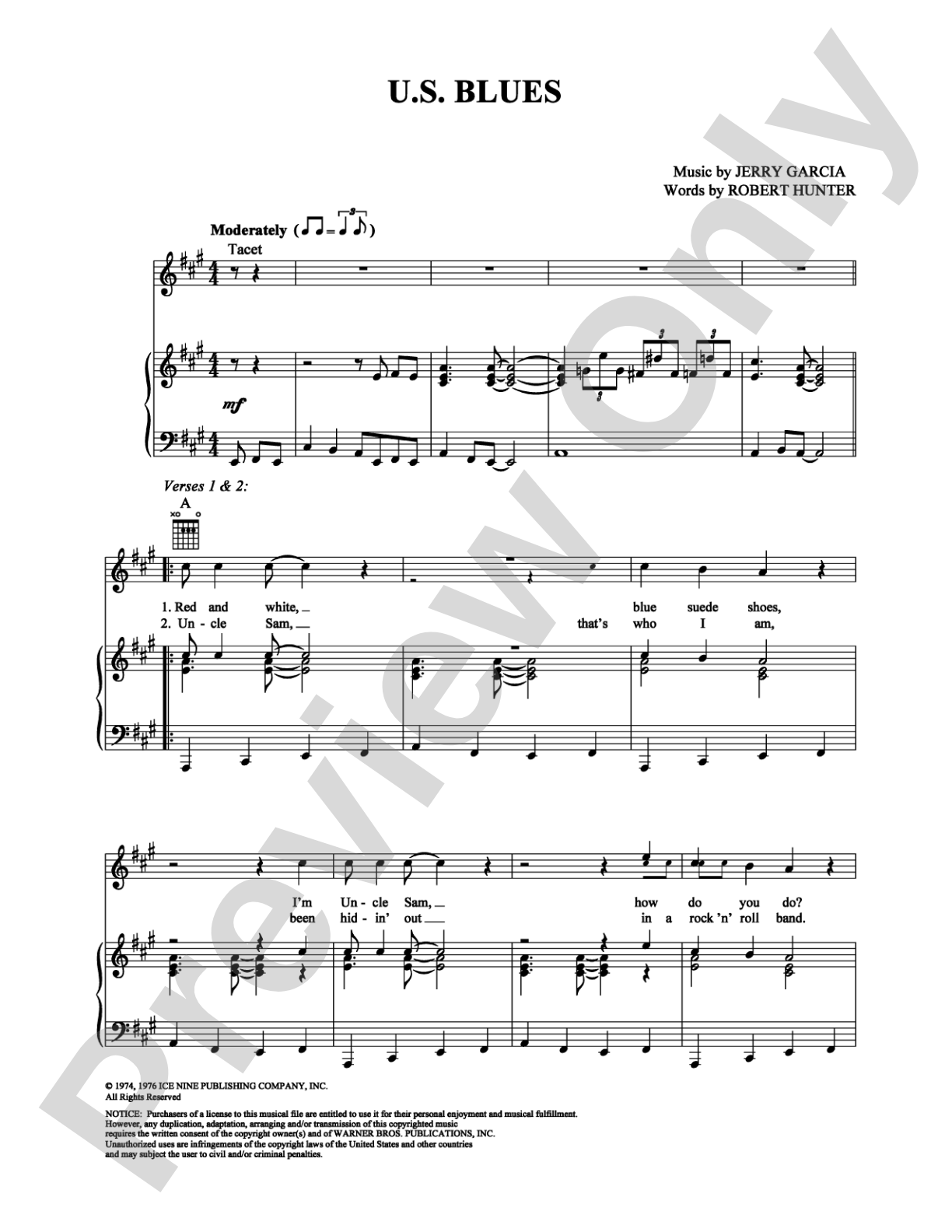
U.S. Blues: Piano/Vocal/Chords Digital Sheet Music

U.S. Blues: Piano/Vocal/Chords Digital Sheet Music

Jerry Garcia, Grateful Dead

Item: 00-PS-0004246

Digital Download
$2.95
Description

U.S. Blues: Piano/Vocal/Chords Digital Sheet Music isn't in MakeMusic Cloud just yet...but it could be. Let us know you'd like to see it, and you'll help shape what comes next. In the meantime, start a free trial and dive into thousands of interactive titles your students can play along with today.

Sample Audio
No sample audio found.
Sample Video
Additional Details
SKU: 00-PS-0004246

More about this title

About the Artist: Grateful Dead

The Grateful Dead emerged from the San Francisco Bay Area in the mid-1960s and became one of the most influential live rock bands in American music history. Known for their improvisational approach, intricate musicianship, and devoted fanbase, the band blended rock, folk, blues, and country influences into a distinctive sound that prioritized spontaneity and ensemble interplay. Their catalog spans decades and includes songs that have become standards in American popular music, studied and performed across genres and contexts.

The band's compositional legacy, much of it credited to Jerry Garcia and Robert Hunter, reflects deep roots in American musical traditions. Their work demonstrates how rock music can sustain harmonic complexity, lyrical storytelling, and collaborative musicianship at the highest level.

Why we love this

This piece gives singers and pianists access to a rock standard with genuine harmonic substance. The chord progression and melodic contour invite musical ownership, whether you're arranging it for a jazz ensemble, featuring it in a pop vocal recital, or exploring it in a contemporary music context.

What to expect

U.S. Blues carries an easy, conversational quality that masks its harmonic sophistication. The melody flows with the naturalness of speech over chord changes that feel inevitable yet complex enough to reward close listening. There's an underlying optimism in the tune, a sense of rootedness in American musical tradition.

Who it's for

This digital sheet music serves singers preparing for recitals, auditions, or casual performance settings; pianists building their repertoire of American rock standards; and music educators looking to incorporate contemporary popular music with real harmonic depth into their curriculum. It's equally valuable for jazz singers exploring the Great American Songbook's modern cousins and for students studying song structure and chord progression.

How to get the most out of it

  • Listen to multiple recorded versions to hear how tempo and groove can shift while the core melody and harmony remain anchored. Consider what tempo best suits your vocalist's range and phrasing.
  • Lock the piano accompaniment into a steady rhythmic pocket rather than playing it too literally from the page. The song thrives when the rhythm section feels inevitable.
  • Pay attention to the lyrical phrasing and let it guide your rubato, especially in verses. The words should breathe naturally even when the chord changes are happening around them.
  • Explore the dynamic range available in the arrangement. This piece benefits from restraint in quiet sections and fullness when the song builds.

How to use it

Include this in a concert exploring American songwriting across genres, pairing it with folk, country, or jazz standards to show continuity and divergence in how musicians approach melody and harmony. For a vocal recital, it works well as a contemporary counterpoint to classical art songs, offering a different kind of authenticity. In a songwriting or jazz history unit, use it to discuss how rock composers approach traditional harmonic vocabulary.

Skills your students will build

  • Reading and interpreting piano/vocal/chord notation
  • Balancing melodic line with accompaniment texture
  • Sustaining musical phrasing over changing harmonies
  • Collaborating between voice and piano as equal partners
  • Understanding contemporary approaches to American song structure

You May Also Like